


 » Dassault Mirage F1 van de Libische luchtmacht op het luchthaven van Malta AFP
Toegevoegd: maandag 21 feb 2011, 18:15
Update: maandag 21 feb 2011, 23:10
Voor de nieuwste ontwikkelingen, bekijk hieronder:


klik op bovenstaand logo
http://english.aljazeera.net/news/middleeast/2011/02/2011210172519776830.html
http://english.aljazeera.net/news/africa/2011/02/20112202148108558.html
Libya clashes spread to Tripoli |
|||||
Clashes between anti-government protesters and Gaddafi supporters escalate as army unit ‘defects’ in Benghazi.Last Modified: 20 Feb 2011 22:05 GMT
|
|||||
Security forces have shot dead scores of protesters in Libya’s second largest city, where residents said a military unit had joined their cause.
While Libyan leader Muammar Gaddafi attempted to put down protests centred in the eastern city of Benghazi against his four-decade rule, Al Jazeera began receiving eyewitness reports of “disturbances” in the capital Tripoli early on Monday as well. There were reports of clashes between anti-government protesters and Gaddafi supporters around the Green Square. “We are in Tripoli, there are chants [directed at Gaddafi]: ‘Where are you? Where are you? Come out if you’re a man,” a protester told Al Jazeera on the phone. A resident told the Reuters news agency that he could hear gunshots in the streets and crowds of people. “We’re inside the house and the lights are out. There are gunshots in the street,” the resident said by phone. “That’s what I hear, gunshots and people. I can’t go outside.” An expatriate worker living in the Libyan capital told Reuters: “Some anti-government demonstrators are gathering in the residential complexes. The police are dispersing them. I can also see burning cars.”
There were also reports of protesters heading to Gaddafi’s compound in the city of Al-Zawia near Tripoli, with the intention of burning the building down. Meanwhile the head of the Al-Zuwayya tribe in eastern Libya has threatened to cut off oil exports unless authorities stop what he called the “oppression of protesters”, the Warfala tribe, one of Libya’s biggest, has reportedly joined the anti-Gaddafi protests. Speaking to Al Jazeera, Shaikh Faraj al Zuway said: “We will stop oil exports to Western countries within 24 hours” if the violence did not stop. The tribe lives south of Benghazi, which has seen the worst of the deadly violence in recent days. Akram Al-Warfalli, a leading figure in the Al Warfalla tribe, one of Libya’s biggest, told the network: “We tell the brother (Gaddafi), well he’s no longer a brother, we tell him to leave the country.” The tribe lives south of Tripoli. Protests have also reportedly broken out in other cities, including Bayda, Derna, Tobruk and Misrata – and anti-Gaddafi graffiti adorns the walls of several cities. Anti-government protesters in the eastern Libyan city of Benghazi have reportedly seized army vehicles and weapons amid worsening turmoil in the African nation. A local witness said that a section of the troops had joined the protesters on Sunday as chaos swept the streets of the city, worst hit by the uprising against Muammar Gaddafi’s 42-year old rule. Mohamed, a doctor from Al Jalaa hospital in Benghazi, confirmed to Al Jazeera that members of the military had sided with the protesters. “We are still receiving serious injuries, I can confirm 13 deaths in our hospital. However, the good news is that people are cheering and celebrating outside after receiving news that the army is siding with the people,” he said. “But there is still a brigade that is against the demonstrators. For the past three days demonstrators have been shot at by this brigade, called Al-Sibyl brigade.” The witness reports came on a day in which local residents told Al Jazeera that at least 200 people had died in days of unrest in Benghazi alone. The New York-based Human Rights Watch on Sunday put the countrywide death toll at 173. The rights group said its figure was “conservative”. ‘Massacre’ News of the rising death toll came as residents of Benghazi, Libya’s second largest city, reported renewed gunfire from security forces in the city. Sadiq al Ghiryani, a Libyan religious leader, told Al Jazeera a “massacre” was under way in the city and troops firing shots were mostly mercenaries.. Kamal Hudethifi, a judge, described the killings as “ethnic cleansing”. The Reuters news agency said at least 50 people had been killed in Benghazi since Sunday afternoon. Moftah, a Benghazi resident , who requested Al Jazeera use only his first name, said the city had become a “war zone” in recent days. Residents have barricaded the streets with overturned trash cans and debris, and security forces have largely confined themselves to two compounds, though snipers continue to target protesters, he said. The forces who remain are “thugs” loyal to Gaddafi, Moftah said, and they are firing high-calibre ammunition at protesters. The eyewitness report came a day after security forces opened fire at a funeral in the eastern coastal city on Saturday, killing at least 15 people and injuring scores more. A group of six alleged mercenaries – reportedly brought in from Tunisia and other African nations to bolster pro-Gaddafi forces – were captured and arrested by demonstrators in the city of Shahat. Appeal for calm Against this backdrop of violence, opposition groups said some 50 Libyan Muslim leaders have urged security forces to stop killing civilians. “This is an urgent appeal from religious scholars, intellectuals, and clan elders from Tripoli, Bani Walid, Zintan, Jadu, Msalata, Misrata, Zawiah, and other towns and villages of the western area,” the appeal, signed by the group of leaders, stated. “We appeal to every Muslim, within the regime or assisting it in any way, to recognise that the killing of innocent human beings is forbidden by our Creator and by His beloved prophet of compassion, peace be upon him … Do not kill your brothers and sisters. Stop the massacre now!” Around the world, people have been gathering in solidarity with the protesters at Libyan consulates and at the White House in Washington, DC, the US capital. Libya’s government has responded to the international criticism by threatening retaliation against the European Union. It said on Sunday that it would stop co-operating with efforts to try and stop illegal migrants heading to Europe. Communication cut Verifying news from Libya has been difficult since the protests began, because of restrictions on journalists entering the country, as well as internet and mobile phone blackouts imposed by the government. The Libyan government has blocked Al Jazeera’s TV signal in the country – and residents have also reported that the network’s website is inaccessible from there. This affects viewers on Arabsat and Nilesat at 26 degrees east and 7 degrees west, where alternative frequencies have now been set up. A spokesman for the network said whoever was causing the interference must be using large outstations to simultaneously interfere with several platforms on the two orbital positions of Arabsat and Nilesat. “We have set up alternative frequencies for viewers and are investigating the source of the problem, though cooperation would be needed from governments to precisely determine this,” said the network. “We believe that whoever is doing this is operating with sophisticated and large equipment.” In addition to TV signal jamming, internet service has been cut, said a US company that monitors web traffic. Massachusetts-based Arbor Networks said data collected from 30 internet service providers worldwide showed that online traffic in and out of Libya was disconnected abruptly at 2:15am local time on Saturday. The data also showed two partial service interruptions earlier in the day. As of Sunday, it was still possible to reach Libyans by phone, and some in Tripoli had internet access. |
|||||
|
Source:
Al Jazeera and agencies
|
http://english.aljazeera.net/news/africa/2011/02/201122111127102872.html
Highlights of Gaddafi son’s speech |
||
Al-Islam blamed the unrest in Libya on tribal factions and drunken or drugged Islamists acting on their own agendas.Last Modified: 21 Feb 2011 01:39 GMT
|
||
Saif al-Islam Gaddafi, a son of Libyan leader Muammar Gaddafi, addressed the people of Libya early on Monday in a televised speech broadcast on state TV. In his speech, al-Islam blamed the unrest in Libya on tribal factions and drunken or drugged Islamists acting on their own agendas. He also promised reforms and said the alternative would be civil war causing no trade and no oil money for the country. On reported deaths in the unrest, he said: “There were some planning errors. Errors from the police … and the army that was not equipped and prepared to confront angry people and…to defend its premises, weapons and ammunition.” “Each party has its own version of the story…But the unfortunate bottom line is that sons of Libya have died. This is the tragedy.” On the demands of the protesters: He said he agreed with and understood the “clear political agenda and demands” by political organisations, trade unions and lawyers whom he said were behind the events in the east of Libya. “These do not represent a problem. We understand and agree with their opinions.” On the people he blamed for the unrest: “They have started by attacking army camps, have killed soldiers, officers…and taken weapons”. “The security forces…have arrested dozens in Libya who unfortunately were among our brother Arabs and among the African expatriates…who were used in these events at these times to create problems…Some wealthy (businessmen) and tradesmen spent millions on them to use these people”. “There are groups that want to rule, there are groups that want to form the state in eastern Libya and rule…in Benghazi and Baida… “There are groups that have formed a government in Benghazi and groups that have set up an Islamic emirate in Baida … and another person who declared himself to be the ruler of the Islamic Republic of Darna”. “They now want to transform Libya into a group of (Islamic) emirates, small states and even (cause) separatism. They have a plot. Unfortunately, our brother Arabs (allowed) their media, their stations and the inflammatory coverage.” |
||
|
Source:
Agencies
|
http://english.aljazeera.net/news/africa/2011/02/20112212175256990.html
Profile: Libya’s Saif al-Islam |
||
Saif al-Islam was given the task of defending his father’s government on national television.Last Modified: 21 Feb 2011 03:02
|
||
Described last year by the New York Times as “the Western-friendly face of Libya and symbol of its hopes for reform and openness,” Saif al-Islam Gaddafi, 38, is a fluent English speaker with a PhD from the London School of Economics. The second of Libyan leader Muammar Gaddafi’s seven sons, Saif al-Islam was given the task of defending his father’s government in a televised address early on Monday after the worst unrest of the elder Gaddafi’s four-decade rule. In his address, he accused exiles of fomenting violence and promised a dialogue leading toward reforms. Widely seen as belonging to a camp that aims to open Libya’s economy, Saif al-Islam helped lead talks with Western governments that in the past 10 years saw Libya renounce nuclear weapons and end decades of isolation as a foe of the West, paving the way for large-scale investment in its oil sector. Saif al-Islam has clashed publicly with the ruling elite over proposals for reforms. Some analysts believe his conservative opponents have the backing of his brothers Mutassim, a national security adviser, and Khamis, a senior military leader. In December, he took the unusual step of denying a family feud with his brothers. His turf war with conservatives has escalated in the past few months, with many Libya-watchers seeing signs of his influence being held in check. Twenty journalists working for al Ghad, a media group which had been linked to him, were briefly arrested. The head of the group stepped down and its flagship newspaper stopped printing. Much of his influence was wielded through his position as the head of a charity. Late last year the charity said it was withdrawing from politics and his post of chairman was being made into an honorary role. |
||
|
Source:
Reuters
|
||
http://english.aljazeera.net/news/africa/2011/02/201122013428971616.html
Moroccans march to seek change |
||
Demonstrators demand large-scale political and economic reforms in the North African kingdom.Last Modified: 20 Feb 2011 14:18 GMT
|
||
Calls for change sweeping the Arab world have now spread to the kingdom of Morocco, where thousands of people have taken to the streets in the capital to demand a new constitution. The demonstrators shouted slogans calling for economic opportunity, educational reform, better health services and help in coping with rising living costs during the march on central Hassan II Avenue in Rabat on Sunday. A protest organiser said the turnout at the rally was more than 5,000. But police said fewer than 3,000 people had marched. Many in the crowd waved Tunisian and Egyptian flags, in recognition of the uprisings that toppled the two country’s long-standing rulers. ‘Down with autocracy’ Uniformed police kept their distance from the protest, but plain-clothes officers with notebooks mingled with the crowd, amid chants of “The people reject a constitution made for slaves!” and “Down with autocracy!” Some called on Abbas El Fassi, the prime minister, to leave but placards and slogans made no direct attacks on the king. “This is a peaceful protest to push for constitutional reform, restore dignity and end graft and the plundering of public funds,” said Mustapha Muchtati of the Baraka (Enough) group, which helped organise the march. The protest was initiated by a group calling itself the February 20 Movement for Change, which has attracted 19,000 followers on the social networking website Facebook Demonstrations were also planned in Morocco’s other main cities, including Marrakesh, the top tourist destination. Salaheddine Mezouar, the finance minister, urged citizens to boycott the march, warning that any “slip may in the space of a few weeks cost us what we have achieved over the last 10 years”. Morocco is officially a constitutional monarchy with an elected parliament. But the constitution empowers the king to dissolve the legislature, impose a state of emergency and have a key say in government appointments including the prime minister. |
||
|
Source:
Agencies
|
http://english.aljazeera.net/news/middleeast/2011/02/2011220191453117646.html
Tunisia seeks Ben Ali’s extradition |
||
Officials have formally requested the extradition of former president from Saudi Arabia, where he fled last month.Last Modified: 20 Feb 2011 19:40 GMT
|
||
Tunisia is seeking the extradition of former President Zine El Abidine Ben Ali from Saudi Arabia to face charges stemming from the violent crackdown on protesters last month, Tunisia’s foreign ministry has said. Tunisia wants to try Ben Ali over his role in the deaths of protesters killed by security forces during the uprising, which brought an end to his decades-long rule, the foreign ministry said in a statement carried by state media on Sunday. Ben Ali fled Tunisia to Jeddah on January 14, after weeks of protests ended his 23-year-old rule. The interim government, which is preparing the country for national elections, has asked Saudi Arabia to provide “as soon as possible” information on Ben Ali’s health, the state news agency TAP reported. The 74-year-old former leader is reportedly very ill in hospital after suffering a stroke. Rumours are rife that the former leader might be dead. |
||
|
Source:
Agencies
|


http://english.aljazeera.net/news/africa/2011/02/2011220213334554610.html
Concern over rising Libya violence |
||
Top US diplomats condemn crackdowns on protesters but stopped short short of calling for a change of government.Last Modified: 21 Feb 2011 02:54 GMT
|
||
Western countries have expressed concern at the rising violence against demonstrators in Libya. The United States said it was deeply concerned by credible reports of hundreds of deaths and injuries during protests in Libya, and urged the government to allow demonstrators to protest peacefully. “The United States is gravely concerned with disturbing reports and images coming out of Libya,” State Department spokesman P.J. Crowley said. “We have raised to a number of Libyan officials … our strong objections to the use of lethal force against peaceful demonstrators.” The State Department said US embassy dependents were being encouraged to leave Libya and US citizens were urged to defer nonessential travel to the country. Secretary of State Hillary Clinton and US ambassador to the UN Susan Rice spoke out against brutal crackdowns on protesters in Libya and Bahrain but stopped short of calling for a change of government in any of the countries facing large protests. British Foreign Secretary William Hague said he spoke to Seif al-Islam Gaddafi by phone on Sunday and told him that the country must embark on “dialogue and implement reforms”. Libya threat Meanwhile, Libya has told the European Union it will stop cooperating on illegal migration if the EU continues to encourage pro-democracy protests in the country, the bloc’s Hungarian presidency said. EU foreign policy chief Catherine Ashton had said during a visit to the region last week that Libya should listen to what protesters were saying and “allow free expression”. EU foreign ministers met in Brussels on Sunday to discuss the uprisings across North Africa and the Gulf with the focus expected to be on Egypt and Libya, where there have been days of protests against President Muammar Gaddafi’s 40-year rule. Italian Foreign Minister Franco Frattini said Italy, which has widespread business interests in Libya, particularly in the energy sector, was concerned about developments. “We are following very closely all the situation. Italy as you know is the closest neighbour, both of Tunisia and Libya, so we are extremely concerned about the repercussions on the migratory situation in southern Mediterranean,” he said. Italian oil giant Eni has invested heavily in the oil-and-gas rich country. Libya’s central bank, meanwhile, has a 4 percent share in Italy’s largest bank UniCredit, which last year won the first international license to operate in the North African country. Premier Silvio Berlusconi, who has hosted Gaddafi lavishly on his frequent visits to Rome, said on Saturday he was concerned about the situation but had not called Gaddafi himself because he did not want to “disturb” him. Libya has frequently threatened to cancel cooperation with the EU on illegal migration in the past. In December, a minister said Libya would scale back efforts to stem the flow of migrants unless the EU paid 5 billion euros ($6.8 billion) a year. The International Organization for Migration estimates that migrants from across Africa account for about 10 per cent of Libya’s six million population, although only a minority of those attempt to travel on to Europe to find work. The European Commission said in October it would spend 50 million euros to help Libya tackle illegal migration and protect migrants’ rights. |
||
|
Source:
Agencies
|
The burning question is, where next? After Ben Ali and Mubarak, others may not fall so easily – but most regimes are candidatesThe world has yet to settle on an agreed term for the great events unfolding across the Middle East. I was in the depths of the French countryside – out of touch, and with a BBC World Service that could only fade in and out of hearing late at night and early morning – during their latest, awe-inspiring Egypt phase. But I was soon persuaded that the designation which, in an article in Le Monde, Gilles Kepel, the noted expert on Islamic fundamentalism, assigned them would prove as accurately encapsulating as any. He dubbed them the “Arab democratic revolution”.
It is definitely, all-encompassingly Arab. The moment one Arab country, Tunisia, lit the spark, it ignited a fire, a contagion, which all Arabs instantly hoped – and its initially mysterious begetters seem to have envisaged or even planned – would spread to the whole “Arab nation”. They all recognised themselves in the aspirations of the Tunisian people, and most appeared to be seized with the belief that if one Arab people could achieve what all had long craved, so could the others.
It is self-evidently democratic. To be sure, other factors, above all the socio-economic, greatly fuelled it, but the concentration on this single aspect of it, the virtual absence of other factional or ideological slogans has been striking. Indeed, so striking that, some now say, this emergence of democracy as an ideal and politically mobilising force amounts to nothing less than a “third way” in modern Arab history. The first was nationalism, nourished by the experience of European colonial rule and all its works, from the initial great carve-up of the “Arab nation” to the creation of Israel, and the west’s subsequent, continued will to dominate and shape the region. The second, which only achieved real power in non-Arab Iran, was “political Islam”, nourished by the failure of nationalism.
And it is doubly revolutionary. First, in the very conduct of the revolution itself, and the sheer novelty and creativity of the educated and widely apolitical youth who, with the internet as their tool, kindled it. Second, and more conventionally, in the depth, scale and suddenness of the transformation in a vast existing order that it seems manifestly bound to wreak.
Arab, yes – but not in the sense of the Arabs going their own away again. Quite the reverse. No other such geopolitical ensemble has so long boasted such a collection of dinosaurs, such inveterate survivors from an earlier, totalitarian era; no other has so completely missed out on the waves of “people’s power” that swept away the Soviet empire and despotisms in Latin America, Asia and Africa. In rallying at last to this now universal, but essentially western value called democracy, they are in effect rejoining the world, catching up with history that has left them behind.
If it was in Tunis that the celebrated “Arab street” first moved, the country in which – apart from their own – Arabs everywhere immediately hoped that it would move next was Egypt. That would amount to a virtual guarantee that it would eventually come to them all. For, most pivotal, populous and prestigious of Arab states, Egypt was always a model, sometimes a great agent of change, for the whole region. It was during the nationalist era, after President Nasser’s overthrow of the monarchy in 1952, that it most spectacularly played that role. But in a quieter, longer-term fashion, it was also the chief progenitor, through the creation of the Muslim Brotherhood, of the “political Islam” we know today, including – in both the theoretical basis as well as substantially in personnel – the global jihad and al-Qaida that were to become its ultimate, deviant and fanatical descendants.
But third, and most topically, it was also the earliest and most influential exemplar of the thing which, nearly 60 years on, the Arab democratic revolution is all about. Nasser did seek the “genuine democracy” that he held to be best fitted for the goals of his revolution. But, for all its democratic trappings, it was really a military-led, though populist, autocracy from the very outset; down the years it underwent vast changes of ideology, policy and reputation, but, forever retaining its basic structures, it steadily degenerated into that aggravated, arthritic,deeply oppressive and immensely corrupt version of its original self over which Hosni Mubarak presided. With local variations, the system replicated itself in most Arab autocracies, especially the one-time revolutionary ones like his, but in the older, traditional monarchies too.
And, sure enough, Egypt’s “street” did swiftly move, and in nothing like the wild and violent manner that the image of the street in action has always tends to conjure up in anxious minds. As a broad and manifestly authentic expression of the people’s will, it accomplished the first, crucial stage of what surely ranks as one of the most exemplary, civilised uprisings in history. The Egyptians feel themselves reborn, the Arab world once more holds Egypt, “mother of the world”, in the highest esteem. And finally – after much artful equivocation as they waited to see whether the pharaoh, for 30 years the very cornerstone of their Middle East, had actually fallen – President Obama and others bestowed on them the unstinting official tributes of the west.
These plaudits raise the great question: if the Arabs are now rejoining the world what does it mean for the world? Will the adoption of a fundamental western value make it necessarily receptive to western policies or prescriptions? Probably not. Democracy itself, let alone Arab resentment over the west’s long record of upholding the old, despotic order, will militate against that.
Practically speaking, the Arabs’ “third way” only means that democracy, a political neutral concept in itself, will henceforth serve as their gateway for the conduct of their politics. It doesn’t mean supplanting the first two ways. For the politics of those cannot but persist into the third. Islamism, the west’s great bugbear, will still be there. A democratic order will find it impossible, on its own or any else’s behalf, to do what Nasser once did in the despotic one, execute some Muslim Brotherhood leaders and harshly suppress their followers. It is bound to accommodate them, openly and electorally ceding to them their true weight in Arab affairs, along with that of all other movements in competition with them.
Nationalism, once the other great western bugbear, will be one of these, and very probably, given the Brotherhood’s less than glorious role in the uprising, it will regain some of the ground it seriously began losing to the Islamists after the shattering Arab defeat of 1967.
A key, perhaps the key, element in America’s now sorely stricken Middle East strategies has always been about the Arab-Israeli conflict. With Islamism and nationalism, not to mention other political forces, freely expressing themselves, an Egyptian democracy will not, cannot, continue to play the role – utterly subservient, if not frankly treasonable, in many Arab eyes – that Mubarak did on behalf of the US and Israel. How significant this particular Egyptian-American divergence becomes remains to be seen. But most Israelis already see it as a calamity in the making, with the ironic consequence that the self-styled “only democracy in the Middle East” now leads the field in proclaiming that democracy should never have been for the Arabs.
But all this is looking ahead. For the time being, the burning questions will be about where the Arab democratic revolution strikes next. Though Europe 1989 is the obvious precedent, the kings and presidents may not fall like dominoes as the Honeckers and Ceausescus did. And, in the wake of Ben Ali and Mubarak, others may not fall so easily or prettily either. That is already apparent from the two latest, and most dramatic, episodes in the almost unceasing pro-democracy turbulence that already grips a good half-dozen Arab countries. The 200-year old Bahraini monarchy may have currently retreated into an attempt at dialogue and reconciliation, but this tight-knit, Sunni-minority regime has already shown how tenacious and tough – and bloody – it can be in the face of its Shia-majority uprising. As for Libya, there could hardly ever have been much doubt that, confronted with his uprising, Colonel Gaddafi, cruellest and most capricious of Arab dictators, would seek to do, in the grand manner, what he has always openly proclaimed he would do to any opponent of his 42-year-old Great Socialist People’s Libyan Arab State of the Masses: which is to “cut them to pieces”.
But most regimes are candidates. Among the few likely exceptions, perhaps the most important, and certainly the most apt, is Lebanon, to which I have now returned. Ever turbulent, ever the most of exposed of Arabs to the consequences of what other Arabs do, it might logically seem destined to be among the first to go. But it isn’t – mainly because, alone in the region, it has always been a democracy of sorts.

Een, zeker vanuit het heden beschouwd, zowel onthullende, maar ook ontluisterende documentaire van Roelof Kiers uit 1969 over de staatsgreep van Gadaffi en de zijnen. Toen nog met enige bewondering en sympathie voor de groep jonge officieren, die een einde maakte aan het semi-koloniale bewind van Koning Idris. Verbijsterend om het, met de wetenschap van nu, terug te zien. Maar achteraf praten is altijd makkelijk
http://english.aljazeera.net/programmes/insidestory/2011/02/2011221111837532726.html
Inside Story |
Crushing Libya’s revolt |
The unrest in Libya started as a series of protests, but was met by a fierce security crackdown.Inside Story Last Modified: 21 Feb 2011 12:59
|
| Across Libya, protesters are still calling for Muammar Gaddafi to leave.More than 200 anti-government protesters were killed during the last few days of violence in the Libyan city of Benghazi.Witnesses from Benghazi say that dozens of people were killed on Saturday when troops opened fire on anti-government protesters in the city.They also spoke of snipers firing at protesters from rooftops and a number of foreign mercenaries from sub-Saharan Africa being brought in to attack protesters.Some of those mercenaries were caught by protesters and confessed that they had received instructions to fire live bullets at demonstrators.Will Muammar Gaddafi’s regime prevail where others fell to the will of the people?Joining us to discuss these issues are: Aly Khan Satchu, a financial analyst and the CEO of Rich Investment; Ian Black, a Middle East editor of The Guardian; and Ashur Shamis, a Libyan opposition activist.This episode of Inside Story aired from Sunday, February 20, 2011. |
|
Source:
Al Jazeera
|
Libya protests spread and intensify |
|||
More than 60 people reported dead in the capital, as anti-government demonstrations escalate across the country.Last Modified: 21 Feb 2011 16:15 GMT
|
|||
More than 60 people have been reported dead after more violence in the Libyan capital as angry protests against Libyan leader Muammar Gaddafi’s 40-year rule escalate across the country.At least 61 people were killed in clashes in Tripoli on Monday, witnesses told Al Jazeera. The protests appeared to be gathering momentum, with demonstrators saying they had taken control of several key towns in the country.News of the spreading violence came as a privately run Libyan newspaper reported that the country’s justice minister had resigned over the deadly force used against protesters.Ahmad Jibreel, a Libyan diplomat, spoke to Al Jazeera on Monday and confirmed that the minister had sided with the protesters.
“I was speaking to the minister of justice just a few minutes ago… he told me personally, he told me he had joined the supporters. He is trying to organise good things in all cities,” he said. Jibreel also told Al Jazeera that key cities near Libya’s border with Egypt were now in the hands of protesters, which he said would enable foreign media to now enter the country. “Gaddafi’s guards started shooting people in the second day and they shot two people only. We had on that day in Al Bayda city only 300 protesters. When they killed two people, we had more than 5,000 at their funeral, and when they killed 15 people the next day, we had more than 50,000 the following day. “This means that the more Gaddafi kills people, the more people go into the streets.” Civil war warning His comments came hours after Saif al-Islam Gaddafi, a son of the Libyan leader, warned of a civil war if anti-government protests continue to spread in the country. Speaking on state television in the early hours of Monday morning, Saif Gaddafi blamed thugs, inmates, foreigners and Islamists for the unrest that has spread across the country since February 14. He promised a conference on constitutional reforms within two days and said Libyans should “forget oil and petrol” and prepare themselves for occupation by “the West” if they failed to agree. The younger Gaddafi contrasted the situation in Libya with revolts earlier this year in Egypt and Tunisia, where longtime rulers were forced step down or fled in the face of mass popular discontent. Protesters in Libya have similarly called for Muammar Gaddafi’s ousting, but his son warned against this, saying “Libya is different, if there is disturbance it will split into several states”. “You can say we want democracy and rights, we can talk about it, we should have talked about it before. It’s this or war. Instead of crying over 200 deaths, we will cry over hundreds of thousands of deaths. “Brothers, there are $200bn worth of projects at stake now. We will agree to all these issues immediately. We will then be able to keep our country, unlike our neighbours. “Or else, be ready to start a civil war and chaos and forget oil and petrol.” But his statements have failed to hinder demonstrations. Protesters say they have taken control of several key towns, including the eastern city of Benghazi. Al Bayda and Sabha were also said to have been taken over by protesters. Tripoli violence Following Saif Gaddafi’s speech, witnesses in Tripoli reported an escalation of violence, as supporters of his father flooded into the city’s central square and confronted anti-government protesters.
Armed men in uniform fired into the crowds, witnesses said, and continuous gunfire could be heard in the background of recorded phone calls from the capital released to journalists by Libyans living abroad. Saif Gaddafi admitted that some military bases, tanks and weapons had been seized and acknowledged that the army, under stress, opened fire on crowds because it was not used to controlling demonstrations. Though human rights groups have said that hundreds of protesters have died, a toll they still described as “conservative,” Saif Gaddafi said that numbers had been exaggerated. He said there were 14 dead in Tripoli and 84 in Benghazi, Libya’s second-largest city and the site of some of the bloodiest security crackdowns. In a new estimate released on Sunday, Human Rights Watch said at least 233 people have died so far. Doctors and eyewitnesses throughout Libya have offered widely varying death toll but have reported many hundreds of injured, even in Benghazi alone. ‘Desperate speech’ Marwan Bishara, Al Jazeera’s senior political analyst, said Saif Gaddafi’s speech appeared “desperate”. “It sounded like a desperate speech by a desperate son of a dictator who’s trying to use blackmail on the Libyan people by threatening that he could turn the country into a bloodbath,” Bishara said. “That is very dangerous coming from someone who doesn’t even hold an official role in Libya – so in so many ways, this could be the beginning of a nightmare scenario for Libya if a despotic leader puts his son on air in order to warn his people of a bloodbath if they don’t listen to the orders or the dictates of a dictators.” “It’s also fascinating how he threatened the West with chaos in Libya and then threatened Libyans with Western intervention, because, as he put it, that would turn Libya into a decentralised country allowing various Islamist groups to take over, which the West would not allow,” Bishara said. Awad Elfeituri from the Libyan Information Centre in Qatar told Al Jazeera that the young Gaddafi “is in a state of panic now. I think he is trying to send a message to the west, I don’t think he was talking to the Libyan people”. Elfeituri said the Gaddafi regime was still trying to do its best to hold onto power. “I don’t think they will surrender easily,” he said. |
|||
|
Source:
Al Jazeera and agencies
|
|||
http://english.aljazeera.net/news/africa/2011/02/201122116042447579.html

Report: Libyan protesters fired on |
Security forces using fighter jets launch operations against anti-Gaddafi march in Tripoli.Yasmine Ryan Last Modified: 21 Feb 2011 16:36 GMT
|
| Reports say live ammuntion is being used against protesters marching on the compound of Muammar Gaddafi, the Libyan leader.The Libyan News Centre (LNC) based in Geneva, Switzerland, announced on Monday afternoon that Libyan security forces were killing protesters in Tripoli.Ahmed Elgazir, a human rights researcher, said the LNC received a call for help from a woman “witnessing the massacre in progress who called on a satellite phone”.Phone lines in the country have been blocked, making it impossible to verify the information. |
|
Source:
Al Jazeera
|
ondertussen:
http://english.aljazeera.net/indepth/opinion/2011/02/201121814292835839.html#
Israeli media ‘fears’ the new Egypt |
||
|
Israel’s media presents Egyptian democracy as a threat, with one commentator lamenting the end of colonialism.
Neve Gordon Last Modified: 21 Feb 2011 16:04 GMT
|
||
Over the past three weeks the Israeli media has been extremely interested in Egypt. During the climatic days of the unprecedented demonstrations, television news programmes spent most of their airtime covering the protests, while the daily papers dedicated half the news and opinion pages to the unfolding events. Rather than excitement at watching history in the making, however, the dominant attitude here, particularly on television, was of anxiety– a sense that the developments in Egypt were inimical to Israel’s interests. Egypt’s revolution, in other words, was bad news. It took a while for Israel’s experts on “Arab Affairs” to get a grip on what was happening. During the early days of unrest, the recurrent refrain was that “Egypt is not Tunis”. Commentators assured the public that the security apparatuses in Egypt are loyal to the regime and that consequently there was little if any chance that President Hosni Mubarak’s government would fall. Media switch Once it became clear that this line of analysis was erroneous, most commentators followed Prime Minister Binyamin Netanyahu’s lead and criticised President Barack Obama’s Administration for not supporting Mubarak. The Foreign News editor of one channel noted that: “The fact that the White House is permitting the protests is reason for worry;” while the prominent political analyst Ben Kaspit expressed his longing for President George W. Bush. “We remember 2003 when George Bush invaded and took over Iraq with a sense of yearning”, Ben Kaspit wrote. “Libya immediately changed course and allied itself with the West. Iran suspended its military nuclear program. Arafat was harnessed. Syria shook with fear. Not that the invasion of Iraq was a wise move (not at all, Iran is the real problem, not Iraq), but in the Middle East whoever does not walk around with a big bat in his hand receives the bat on his head.” Israeli commentators are equivocal on the issue of Egyptian democracy. One columnist explained that it takes years for democratic institutions to be established and for people to internalise the practices appropriate for democracy, while Amir Hazroni from NRG went so far as to write an ode to colonialism: “When we try to think how and why the United States and the West lost Egypt, Tunis, Yemen and perhaps other countries in the Middle East, people forget that. The original sin began right after WWII, when a wonderful form of government that protected security and peace in the Middle East (and in other parts of the Third Word) departed from this world following pressure from the United States and Soviet Union… More than sixty years have passed since the Arab states and the countries of Africa were liberated from the ‘colonial yoke,’ but there still isn’t an Arab university, an African scientist or a Middle Eastern consumer product that has made a mark on our world.” Fear and the brotherhood While only a few commentators are as reactionary as Hazroni, an Orientalist perspective permeated most of the discussion about Egypt, thus helping to bolster the already existing Jewish citizenry’s fear of Islam. Political Islam is constantly presented and conceived as an ominous force that is antithetical to democracy. Thus, in the eyes of Israeli analysts, the protestors- that Facebook and Twitter generation- are deserving of empathy but also extremely naïve. There is a shared sense that their fate will end up being identical to that of the Iranian intellectuals who led the protests against the Shah. Channel Two’s expert on “Arab Affairs” explained that: “The fact that you do not see the Muslim Brotherhood does not mean they are not there,” and another expert warned his viewers not to “be misled by ElBaradei’s Viennese spirit, behind him is the Muslim Brotherhood.” According to these pundits, the Muslim Brotherhood made a tactical decision not to distribute Islamists banners or to take an active part in leading the protests. One commentator declared that if the Muslim Brotherhood wins, then “elections are the end of the [democratic] process, not its beginning,” while an anchorman for Channel Ten asked former Minister Binyamin Ben Eliezer whether “the person who says to himself: ‘How wonderful, at last the state of Egypt is a democracy,’ is naïve?” The Minister responded: “Allow me even to laugh. We wanted a democracy in Iran and in Gaza. The person who talks like this is ignoring the fact that for over a decade there has been a struggle of giants between the Sunni and Shia with tons of blood spilled. The person who talks about democracy does not live in the reality we live in.” Democratic threat Ben-Eliezer’s response is telling, not least because it is well known that Israel supported the Shah regime in Iran and has not proven itself to be a particularly staunch supporter of Palestinian democracy. Democracy in the Middle East is, after all, conceived by this and prior Israeli governments as a threat to Israel’s interests. Dan Margalit, a well-known commentator, made this point clear when he explained that Israel does not disapprove of a democracy in the largest Arab country but simply privileges Israel’s peace agreement with Egypt over internal Arab affairs. Israel, one should note, is not alone in this self-serving approach; most western countries constantly lament the absence of democracy in the Arab world, while supporting the dictators and helping them remain in office. In English this kind of approach has a very clear name – it is called hypocrisy. Neve Gordon is the author of Israel’s Occupation and can be reached through his website. The views expressed in this article are the author’s own and do not necessarily reflect Al Jazeera’s editorial policy. |
||
|
Source:
Al Jazeera
|
||
Dit geluid was al een tijdje herkenbaar bij de diverse pro-Israël bloggers/propagandisten/ Hasbaristen, zoals bijvoorbeeld bij de op dit blog eerder besproken Ratna Pelle (zie https://fhs1973.wordpress.com/2010/01/25/een-repliek-aan-ratna-pelle-beroepspropagandiste-hysterische-zioniste-en-palestijnenbasher/). Op haar blog staan bijvoorbeeld de volgende jammerklachten te lezen:
‘Het is een cliché te stellen dat niemand een maand geleden had kunnen vermoeden dat de Arabische wereld op zijn kop zou staan, en dat massale protesten zouden leiden tot op zijn minst flinke hervormingen, en waarschijnlijk regime change in verschillende Arabische staten. De geschiedenis blijkt keer op keer onvoorspelbaar en grillig. En ook nu hebben we geen idee hoe het er over een maand voorstaat, of de rust is weergekeerd of dat als dominostenen de ene na de andere dictator zal vallen. In zo’n geval vragen de media experts om hun mening, die dan met een ernstig gezicht komen vertellen hoe het zit en dat we ons geen zorgen hoeven maken. In Nieuwsuur legt Bertus Hendriks dagelijks uit dat we niet bang hoeven zijn voor de Moslim Broederschap (MB), want die zijn niet gewelddadig en bovendien heeft de gematigde tak nu de overhand. Ook Frans Timmermans mag regelmatig aanschuiven om te verkondigen dat als het Westen zich eenduidig achter de protesten schaart, het nieuwe regime ons heus goed gezind zal zijn, en Europa wat dit betreft het voorbeeld moet geven. Overigens heeft Amerika Mubarak al laten vallen, en volgens sommigen heeft dat eraan bijgedragen dat hij hoogstwaarschijnlijk binnenkort zal aftreden. Op internet kom ik echter heel andere informatie tegen over de MB, zoals dat zij de jihad tegen zowel Israel als het Westen wel degelijk steunt’ (http://www.zionism-israel.com/blog/archives/00000533.html)
of
‘Avond aan avond laten deskundologen hun speculaties, hoop, bezorgdheid en verwachtingen wat betreft de situatie in Egypte op ons los. Er is een algemeen gevoel dat we getuigen zijn van historische gebeurtenissen. Optimisten maken graag een vergelijking met Oost Europa, pessimisten met Iran. We zijn een pluriform land, met vrijheid van meningsuiting, een vrije pers, een leger aan journalisten en analisten en deskundigen en politici van allerlei gezindten en achtergronden. Tenminste dat dacht ik. Maar als je op Nieuwsuur en Pauw en Witteman afgaat, bekruipt je weleens het gevoel dat wij hier ook een soort staats-tv hebben, waar bepaalde meningen steeds maar weer worden verkondigd en andere nooit te horen zijn.
Voor die andere meningen moet je op duistere blogs en zionistische websites zijn (je neemt me de woorden uit de mond, FS 🙂 ), of er de Israelische kranten op naslaan, ik bedoel, opgoogelen. Daar lees je dan bijvoorbeeld dat de Moslim Broederschap het vredesverdrag met Israel wil opzeggen en democratie slechts als een middel ziet om de macht te grijpen. Daar lees je hoe voor- en tegenstanders van Mubarak Israel de schuld geven van de problemen in hun land, en dat ook de Palestijnse premier, de als zeer gematigd bekendstaande Salam Fayyad, Israel de schuld geeft voor de problemen in Egypte. Daar lees je dat Israel decennialang als zondebok en uitlaatklep voor de onvrede in Egypte (en andere Arabische staten) fungeerde, dat Mubarak dat bewust aanwakkerde en je voor kontakten met Israel in de gevangenis kon belanden. En daar lees je dat Hamas aanhangers nu relatief makkelijk de grens met de Gazastrook oversteken.
Een frappant bericht in de Jerusalem Post meldde dat er nu goederen de Gazastrook UIT worden gesmokkeld om de bevolking in Egypte te voeden. Door de onrust worden de winkels in de Sinaï niet fatsoenlijk meer bevoorraad, en blijkbaar is er na anderhalve week van protesten meer voedsel in ‘concentratiekamp Gaza‘ dan in de Sinaï. Dat lijkt mij toch opzienbarend nieuws, nadat hulporganisaties, journalisten en mensenrechtenactivisten jarenlang de noodklok luidden over de humanitaire ramp in Gaza die door het westen geheel genegeerd zou worden.
Verschillende deskundologen noemden de Moslim Broederschap van de week een soort CDA, CU of SGP, kortom een democratische religieuze partij waar we verder niks van te vrezen hebben. Dat doet niet alleen onrecht aan de huidige standpunten en de geschiedenis van de MB, maar ook aan de verschillen tussen het Midden-Oosten en Nederland. Het is een fout die veel wordt gemaakt. Het is gelukkig uit de tijd om over wilde, primitieve of exotische Arabieren te spreken, maar feit is dat het een heel andere regio is met een andere culturele en religieuze traditie, een andere mentaliteit en een geheel andere manier van politiek bedrijven. Paul Brill maakte dat heel mooi duidelijk in dit vermakelijke stukje.(http://www.zionism-israel.com/blog/archives/00000534.html)
enz. enz. enz…… 🙂 Terug naar Libië
http://blogs.aljazeera.net/middle-east/2011/02/21/what-next-mad-dog-libya
Gaddafi hits with deadly force |
||||
Libya’s official news agency blames Israel for unrest, as security forces attack protesters.Emad Mekay Last Modified: 21 Feb 2011 14:33
|
||||
Libyan leader Muammar Gaddafi has unleashed a bloody crackdown against pro-democracy protestors seeking his ouster, killing dozens of people in only four days of protests. On Sunday, the unrest spread to capital Tripoli from the eastern port city Benghazi. Libyan Internet activists have denounced the international community’s failure to act over the “massacres” in Libya. The Cairo-based Arab Organisation for Human Rights has decried the use of violence against the protestors in Libya and called for an international investigation. The Vienna-based Friends of Humanity said the Libyan regime’s onslaught was tantamount to “war crimes”. There are conflicting reports on the death toll but it is generally believed to be in the hundreds now. Human Rights Watch reports that 173 people had died prior to Monday. The London-based private newspaper Libya Al-Youm quoted a local doctor as saying that 285 people died in the eastern city of Benghazi alone. Some 300 people have been killed in Benghazi, the country’s second largest city, witnesses told Al Jazeera by phone. The crackdown by Gaddafi, who has ruled Libya since 1969, threatens to make the revolt the most costly in terms of human lives and bloodshed in the wave of demonstrations sweeping across the region for greater freedoms. Gaddafi, trying to stave off the fate of the presidents of Tunisia and Egypt who were removed from power after facing similar protests, has resorted to much harsher military tactics than those used in uprisings in neighbouring Egypt or Tunisia. His tactics include cutting off food, fuel and medical supplies as well as electricity to revolting cities. The regime also cut off most communications to try to make sure the unrest does not spread to other cities. But the move failed to prevent protests erupting in capital Tripoli on Sunday. Pan-Arab news outlets report that Gaddafi’s troops have used live ammunition and heavy military equipment such as anti-tank missiles in Benghazi. Late on Sunday fierce clashes were being reported in Tripoli. Libya Al Youm reported on its website on Sunday that the regime was using “heavy weapons” and shooting at random. The newspaper also carried a call for urgent supplies for Benghazi hospitals including blood. “Muammar Gaddafi’s security forces are firing on Libyan citizens and killing scores simply because they’re demanding change and accountability,” said Joe Stork, deputy Middle East and North Africa director at Human Rights Watch. On top of its military response, the Gaddafi regime is trying to paint the revolt as a foreign plot to destabilise the country – a tool used by many other Arab regimes. After a long history of colonisation by Western powers and by Israel in the Palestinian territories, Arab people are deeply mistrustful of foreign interference. The official Libyan News Agency (JANA) reported Sunday that the government was fighting an Israeli-inspired scheme to create anarchy in the country. It said that there were no genuine popular grievances behind the protests. Israel is financing “separation” forces in the Arab region, JANA added. Al-Shams newspaper, which is controlled by an arm of the information ministry in Tripoli, reported online that the government has exposed “foreign network elements” in several Libyan cities. But online posts by Libyans and anti-Gaddafi demonstrators show that the protestors want regime change and democracy. Most of the uprising has so far centred around Eastern cities, especially the Mediterranean city of Benghazi. Protests were also reported in Baida, Ajdabiya, Zawiya and Derna before spreading to Tripoli. The protests started Feb. 17 after Internet activists called for a “Day of Rage” against political and economic conditions for Libyans under Gaddafi. On Sunday, the website, LibyaFeb17.com carried tweets and posts condemning the global indifference over the harsh tactics by Gaddafi’s troops. “It is precisely this silence that is a very serious issue in this terrifying situation,” said one post. The post came after Italian Prime Minister Silvio Berlusconi said Saturday he will not “bother” Gaddafi over the violent incidents. In 2009, the Libyan government invested in Eni, an Italian oil company that has been operating in Libya since 1959. Eni is Libya’s largest foreign oil producer. Britain had said on Friday it was revoking arms export licences for Libya and Bahrain, another Arab country whose government is fighting popular protests. The ban will limit tear gas and ammunition sales that could be used to suppress protests. Gaddafi had tried earlier to appear unruffled over the removal of two of his erstwhile allies, Hosni Mubarak of Egypt and Zine El Abidine Ben Ali of Tunisia. The state-sponsored Al-Jamahiriya TV, beamed via satellite to Arab countries, aired live interviews with officials and pundits calling for calm and “opening a dialogue.” The officials explained that the government was spending “hundreds of millions” of dollars on making Libyans’ life better through investing in infrastructure, roads, schools and universities. Libya’s Al-Jamahiriya 2 was airing songs praising Gaddafi and eulogising his achievements. But the violent reaction is seen as an indication of the threat Gaddafi perceives. A version of this article first appeared on the Inter Press Service News Agency. |
||||
|
Source:
IPS
|
http://nos.nl/artikel/220578-bloedbad-in-tripoli.html
» Dassault Mirage F1 van de Libische luchtmacht op het luchthaven van Malta AFPToegevoegd: maandag 21 feb 2011, 18:15
Update: maandag 21 feb 2011, 23:10
De volksopstand in Libië is ook vandaag uitgelopen op een bloedbad. Op veel plaatsen zijn betogers gedood door het leger in een nieuwe poging de opstand de kop in te drukken.
Straaljagers, helikopters en tanks openden het vuur overal waar demonstranten waren, zeggen ooggetuigen. Alleen al in de hoofdstad Tripoli zouden volgens de zender al-Arabiya 160 mensen zijn omgekomen. “Dit is onvoorstelbaar. Oorlogsvliegtuigen bombarderen het ene gebied na het andere. Er zijn veel, heel veel doden”, zegt de politieke activist Adel Mohamed Saleh. “Ons volk gaat dood, het is de tactiek van de verschroeide aarde.”
Volgens hem was een begrafenisstoet in Tripoli het eerste doelwit van de beschietingen. Nu werd er overal gebombardeerd. “Het gaat maar door, het gaat maar door. Iedereen die beweegt, is een doelwit.”
Eerder kwamen er al berichten dat vliegtuigen met scherp schoten op betogers die zich op het plein voor het paleis van de Libische leider hadden verzameld. Ook zijn er tanks ingezet. Volgens Saleh richten de militairen zich op alles wat beweegt. “Wie met zijn auto de straat op gaat, wordt geraakt.”
Said Kadhafi, de zoon van de Libische leider, ontkent dat de luchtmacht bombardementen heeft uitgevoerd op demonstranten in Tripoli. Hij beweert dat het leger de eigen munitiedepots heeft gebombardeerd in afgelegen gebieden en niet in wijken in Tripoli en Benghazi.
Twee Libische luchtmachtpiloten zijn vanmiddag uit protest tegen het harde optreden van Kadhafi met twee straaljagers uitgeweken naar Malta.
De twee kolonels vertelden de Maltese autoriteten dat zij de opdracht hadden gekregen om betogers in Benghazi te bombarderen. Toen andere piloten daarmee begonnen, veranderden ze van koers en vlogen met hun Mirages naar Malta.
De twee zouden op Malta asiel willen aanvragen.
Ook in andere Libische steden is het nog steeds onrustig. Er zijn overheidsgebouwen in brand gestoken. Ook zijn er meldingen dat gebouwen van de staatsmedia zijn geplunderd. Volgens een Libische krant hebben de protesten zich uitgebreid naar de kuststad Ras Lanuf. Ooggetuigen zeggen dat in Benghazi een aantal militairen door officieren is doodgeschoten toen die weigerden op demonstranten te schieten.
Verschillende bronnen melden dat de betogers de macht in Benghazi en Sert inmiddels hebben overgenomen. Ze zouden overheidsgebouwen hebben bezet.
Omdat Libië geen journalisten toestaat, is het onmogelijk de berichten te verifiëren.
De Libische staatstelevisie meldde vandaag dat veiligheidsdiensten “de schuilplaatsen bestormen van terroristen die Libië haten”.
De Britse minister van Buitenlandse Zaken William Hague zegt dat hij aanwijzingen heeft dat de Libische leider Kadhafi mogelijk op weg is naar Venezuela. Het is niet duidelijk waar minister Hague zich op baseert.
Gisteravond waren er ook berichten dat Kadhafi het land had verlaten. Tegen de verwachting in sprak hij niet zelf het volk toe, maar deed zijn zoon dat. De Libische leider heeft goede banden met de Venezolaanse president Hugo Chávez.
De Libische staatssecretaris van Buitenlandse Zaken ontkent dat Kadhafi is gevlucht naar Venezuela. Ook bronnen binnen de regering van Venezuela ontkennen dat Kadhafi onderweg is naar het land. De minister van Informatie noemt de berichten “onwaar”, maar ging er verder niet op in.
Europe’s interests in Libya |
||
EU countries have criticised Libya for a crackdown on protesters, potentially straining lucrative trade relations.Last Modified: 21 Feb 2011 20:24 GMT
|
||
The European Union has condemned Libya for its crackdown on opposition protesters, but for many nations in the bloc, straining ties with Tripoli presents an awkward situation. Western nations forged close trade ties with the north African nation after Muammar Gaddafi agreed in 2003 to end the production of weapons of mass destruction, ending nearly two decades of sanctions. European energy firms were quick to invest in the holder of Africa’s largest proven oil reserves, the eighth-largest in the world, while many others signed lucrative arms and construction deals. Tony Blair, Britain’s former prime minister, signed a so-called “Deal in the Desert” in March 2004, which paved the way for oil contracts worth billions, leading to a close relationship that has come under increasing criticism. Oil deals It included Anglo-Dutch company Shell signing an agreement worth up to $1bn and three years later BP agreeing its largest exploration commitment to date, in a deal worth at least $900m in Libya. It sparked significant controversy around the world and led to US claims that BP lobbied Britain for the release of Abdelbaset Ali al-Megrahi, the man convicted of the 1988 Lockerbie bombing. The Italian government of Silvio Berlusconi has also strengthened its ties with Tripoli in recent years, taking the largest proportion of oil from Libya for its national needs. At the end of 2008, Italy’s energy company Eni was operating 13 oil and gas permits and its production was 306,000 barrels per day of oil equivalent, about one-fifth of Britain’s total daily oil production. Spain’s Repsol also has rights to 15 hydrocarbon blocks. Defence Arms deals with Libya have also proved contentious, particularly in light of the recent crackdown. In August 2007 France signed contracts with Libya to sell anti-tank missiles and radio communications equipment worth a reported $405m. The European aerospace and defence giant EADS now has an office in Tripoli, and has sold civilian aircraft to the country. According to the Campaign Against Arms trade, the UK licensed over $6m worth of ammunition to Libya, including sniper rifles. Russia also announced a small-arms and weapons deal to the value of $1.8bn in January 2010, worth nearly a quarter of its state arms exports. A building boom in Libya has also seen strong investment from Turkey, which has around 200 construction companies in the country working on projects worth an estimated $15.3bn. Sovereign wealth has also attracted business ties from Europe. Many of the investments made by the $65bn sovereign wealth fund have been in Italian stocks. It holds a 4.6 per cent stake in Italy’s second-biggest bank, Unicredit and has a small stake in car maker Fiat, the Reuters news agency reported. European nations are also interested in preserving relations with Libya for the sake of national security. Italy, the closest entry gate for illegal migrants attempting to enter the EU, is especially concerned about an influx of refugees, following the crisis in Tunisia. Tripoli has already warned it could suspend co-operation in the fight against illegal immigration if European countries continue to criticise its action against protesters. |
||
|
Source:
Al Jazeera and agencies
|
||
http://english.aljazeera.net/news/africa/2011/02/2011221133557377576.html
Libya protests spread and intensify |
||||||
Diplomats resign and air force officers defect as Gaddafi government resorts to shooting and bombing to crush uprising.Last Modified: 21 Feb 2011 22:14 GMT
|
||||||
Scores of people have been reported killed in continuing violence in the Libyan capital, Tripoli, amid escalating protests against Muammar Gaddafi’s 40-year rule across the north African nation. Deep cracks were showing and Gaddafi seemed to be losing vital support, as Libyan government officials at home and abroad resigned, air force pilots defected and major government buildings were targeted during clashes in the capital. At least 61 people were killed in Tripoli on Monday, witnesses told Al Jazeera. The protests appeared to be gathering momentum, with demonstrators saying they had taken control of several important towns and the city of Benghazi, to the east of Tripoli. Protesters called on Monday for another night of defiance against Gaddafi, despite a harsh security crackdown by his government. A huge anti-government march in Tripoli on Monday afternoon came under attack by security forces using fighter jets and live ammunition, witnesses told Al Jazeera. Libyan authorities have cut all landline and wireless communication in the country, making it impossible to verify the report. As violence flared, the Reuters news agency quoted William Hague, the British foreign secretary, as saying he had seen some information to suggest that Gaddafi had fled Libya and was on his way to Venezuela. But Al Jazeera’s Dima Khatib, reporting from the Venezuelan capital, Caracas, said government officials there denied that Gaddafi was on his way to the South American country.
The Libyan deputy foreign minister also denied that Gaddafi had fled the country. With reports of large-scale military operations under way in Tripoli, a spokesperson for Ban Ki-moon said the UN chief held extensive discussions with Gaddafi on Monday, condemned the escalating violence in Libya and told him that it “must stop immediately”. ” … The secretary-general underlined the need to ensure the protection of the civilian population under any circumstances. He urged all parties to exercise restraint and called upon the authorities to engage in broad-based dialogue to address legitimate concerns of the population,” Ban’s spokesperson said. For this part, several Libyan diplomats at the country’s UN mission called on Gaddafi to step down. Ibrahim Dabbashi, the deputy ambassador, said that if Gaddafi did not relinquish power, “the Libyan people [would] get rid of him”. “We don’t agree with anything the regime is doing … we are here to serve the Libyan people,” he told Al Jazeera. Plea for no-fly zone Dabbashi urged the international community to impose a no-fly zone over Libya to prevent mercenaries, weapons and other supplies from reaching Gaddafi and his security forces. He said the Libyan diplomats were urging the International Criminal Court, the Netherlands-based body, to investigate possible crimes against humanity in the Libyan context. Hamad bin Jassim bin Jabr Al-Thani, Qatar’s prime minister and foreign minister, called for an extraordinary meeting of the Arab League to take place on Tuesday. The aim is to discuss the current crisis in Libya and to put additional “pressure” on the government, he told Al Jazeera.
Hamad bin Jassim said the international community must act now. “I feel a big sympathy for the Libyan people. We don’t accept using force in this way or any way against the people or against any nation from their governments,” he said. “And we make our declaration in this space and we think that the international community should also take a stand against what is happening in Libya at the moment.” “I think the [UN] Security Council has to play a role. The condemnation is not enough … I think the five permanent members and others, they should take the responsibility and do something to help the civillian people in Libya, because what is happening is not acceptable in any way.” Earlier in on Monday, Ahmed Elgazir, a human-rights researcher at the Libyan News Centre (LNC) in Geneva, Switzerland, told Al Jazeera that security forces were “massacring” protesters in Tripoli. Elgazir said the LNC received a call for help from a woman “witnessing the massacre in progress who called on a satellite phone”. Earlier, a privately run local newspaper reported that the Libyan justice minister had resigned over the use of deadly force against protesters. Speaking to Al Jazeera, Ahmad Jibreel, a Libyan diplomat, confirmed that the justice minister, Mustapha Abdul Jalil, had sided with the protesters. “I was speaking to the minister of justice just a few minutes ago … he told me personally, he told me he had joined the supporters. He is trying to organise good things in all cities,” he said. In protesters’ hands Jibreel further said that key cities near Libya’s border with Egypt were now in the hands of protesters, which he said would enable the foreign media to enter the country. “Gaddafi’s guards started shooting people in the second day … when they killed two people, we had more than 5,000 at their funeral, and when they killed 15 people the next day, we had more than 50,000 the following day,” he said, adding “the more Gaddafi kills people, the more people go into the streets.” Meanwhile, the US and other European nations, including Portugal, Italy, Austria and the Netherlands have taken steps to begin evacuating their citizens from Libya, as safety concerns within the country are on the rise.
In another development on Monday, two Libyan air force jets landed in Malta and their pilots asked for political asylum, according to a military source. The pilots, who made an unauthorised landing in Malta, claimed to have defected after failing to follow orders to attack civilians protesting in Benghazi in Libya, Karl Stagno-Navarra, an Al Jazeera contributor, said from Valletta. The pilots, who claimed to be colonels in the Libyan air force, were being questioned by authorities in an attempt to verify their identities. The two Mirage jets landed at Malta’s international airport shortly after two civilian helicopters landed carrying seven people who said they were French. Only one of the passengers had a passport. Against this backdrop of escalating violence, Libyan state television reported that Saif al-Islam Gaddafi, a son of the Libyan leader, was forming a committee to investigate the incidents taking place in the country Earlier in the day, Saif al-Islam warned of a civil war if anti-government protests continued to spread in the country. Speaking on state television, he blamed thugs, foreigners and Islamists for the unrest. He promised a conference on constitutional reforms within two days and said Libyans should “forget oil and petrol” and prepare themselves for occupation by “the West” if they failed to agree. The younger Gaddafi contrasted the situation in Libya with revolts earlier this year in Egypt and Tunisia, where longtime rulers were forced step down or fled in the face of mass popular discontent. Protesters in Libya have similarly called for Muammar Gaddafi’s overthrow, but his son warned against this, saying “Libya is different, if there is disturbance it will split into several states”. Following Saif al-Islam Gaddafi’s speech, witnesses in Tripoli reported an escalation of violence, as supporters of his father flooded into the city’s central square and confronted anti-government protesters. Armed men in uniform fired into the crowds, witnesses said, and continuous gunfire could be heard in the background of recorded phone calls from Tripoli released to journalists by Libyans living abroad. |
||||||
|
Source:
Al Jazeera and agencies
|
||||||
http://english.aljazeera.net/indepth/opinion/2011/02/201122120055942895.html
Libya’s falling tyrant |
||
Gaddafi reaps what he has sown during his four-decade rule: terror, nepotism, tribal politics and abuse of power.Larbi Sadiki Last Modified: 21 Feb 2011 23:03 GMT
|
||
Libya cannot escape the infection of democratic revolutionary wind blowing through the Middle East and North Africa. If longtime leader Muammar Gaddafi falls, it will be a sweet victory for the heirs of Omar al-Mokhtar, the legendary anti-fascist and anti-colonial hero. But a lot of blood will spill before the Libyan colonel abandons ship. After Iraq’s Saddam Hussein and Tunisia’s Ben Ali, Gaddafi is the worst of the Arabs’ surviving illegitimate rulers. He is now reaping what he has sown: terror, nepotism, tribal politics, and abuse of power. In Gaddafi’s Libya, the so-called People’s Congress, universities and other regime-affiliated organisations have had to toe the official line: worship of the “brother leader”, read his Green Book, and the brand of Pan-Africanism that no Libyan except Gaddafi and his henchmen believed in. While visiting the country with a group of students from Exeter University, the hollow slogans of Gaddafi’s “Great Revolution” covered all public space. “Partners not salaried” one says. Another declares “People’s rule” (sultat al-sha’ab). Nothing could be further from the truth. Gaddafi has ruled the country with the delusion of grandeur of a man who rose to power in a 1969 coup with fairly acceptable political ideals that got corrupted and abandoned. Gaddafi’s much vaunted socialism turned into distribution in favour of the Colonel’s clansmen. Inner circle An inner circle of Gaddafi’s confidants and close relatives decided and executed the hangings of the 1970s, relying on the fearsome and murderous “revolutionary committees”. No recourse to the people was taken when decisions were made and carried out about war such as in Chad and elsewhere in Africa. The people could not openly complain about the money lavishly disbursed in the pursuit of Gaddafi’s foreign adventurism, including the sponsoring of terrorist organisations. Gaddafi’s regime has been linked to the 1972 Black September killings of Israeli athletes in Germany , the 1978 disappearance in Libya of Shia Imam Musa Al-Sadr, the 1984 murder of British police officer Yvonne Fletcher, the 1986 bombing of Berlin’s La Belle Discotheque, the 1987 arms vessel destined to the Irish Republican Army, and to the hijacking of Pan Am flight 73 in 1986 and the 1988 Pan Am flight 103 bombing. This does not exhaust the list. The US bombing of Tripoli and Benghazi in 1986 or the large amounts of monies paid by Gaddafi to compensate all kinds of claims against Libya have been some of the prices paid by Libyans for their leader’s miscalculation. The sanctions and pariah status have only been eased only in the past 10 years. Carrying the green Libyan passport has made Libyan citizens persona non grata in many parts of the world. Gaddafi’s narcissism was such that very few of his comrades in arms from the original Free Officers cohort that executed the 1969 coup against King Idris have survived his brutality. A few died in mysterious circumstances (Omar Limheshi; Imhammad al-Muqrif). Others withdrew from public life voluntarily (Abd al-Salam Jelloud). Act of public disavowal Like Egypt, the uprising in Libya qualifies as an act of public disavowal of an existing regime. These are countries which had military revolutions and today are experiencing civil revolutions. Like Tunisia, but in a worse fashion, Libya has invested very little in social capital or civic capacity building. All organisations are committed to, and affiliated with, Gaddafi’s Great Revolution. Literally, these are cells that spy on the people or militias bribed to defend the regime. When protesters wave flags, chant pro-Gaddafi or anti-Western slogans, they do so on regime orders. Regardless, Libyans have not been passive. For instance, the Libyan League for Human Rights, the National Conference for the Libyan Opposition (NCLO), and the banned Islamists all have used the internet to express their anger. In some cases, Libyan dissidents used the Internet as a political tool before activists in other part of the Middle East. The NCLO met in London in 2006 and it may plan a role in reforming post-Gaddafi Libya. Attempts at removing Gaddafi began in the mid-1980s. The most famous was the May 1984 Bab Al-Aziziya Barracks coup when the National Front for the Salvation of Libya, made up of military and civilian dissidents, played a leading role. The most serious challenge against Gaddafi’s authority came from the most populous and powerful Libyan tribe, the Warfallah, in October 1993. The rebellion led to kangaroo trials in 1995. Many tribesmen were executed in 1997. The eastern region, Benghazi, has always been a source of dissidence against the regime. Dozens died in protests in 2006.The map of the current mutiny is both tribal and regional. Two tribes have withdrawn allegiance to Gaddafi’s regime, thus settling old scores. Gaddafi is now paying the price for humiliating the Wirfallah tribe, which he has excluded from his favours since the mid-1990s. Similarly, the Tabu tribe in the country’s southeast has suffered appalling discrimination. The misery belts of Libya are now leading the rebellion. Cities like Al-Baida, Derna, Ijdadia are all marginalised and are not beholden to Gaddafi, as they have not gained from his rule. Tripoli’s poorest suburbs, Zintan and Zawiya, which have come under heavy fire, are leading the rebellion in the capital. Why is the revolution that ousted Tunisia’s Ben Ali proving to be infectious? The reasons can be summed up by the following factors: the presence of a Ben Ali-type hegemon; dynastic and nepotistic rot; monarchical republicanism; rampant corruption; the marginalisation of young people; human rights violations; information control and a police state. All of these conditions apply to Libya. The only good in Gaddafi’s Libya is the absence of elections, which spared the Gaddafi’s revolutionary committees the additional misdemeanour of rigging them. In addition to these factors, the eastern region, namely Benghazi, has been deprived of the dividends of petroleum. In a country with one of the longest stretches of coastline and high oil production, income and opportunity should be available to citizens. But this is has not been the case. Now, Gaddafi is reaping what he has sown. Dr Larbi Sadiki is a Senior Lecturer in Middle East Politics at the University of Exeter, and author of Arab Democratisation: Elections without Democracy (Oxford University Press, 2009) and The Search for Arab Democracy: Discourses and Counter-Discourses (Columbia University Press, 2004), forthcoming Hamas and the Political Process (2011). The views expressed in this article are the author’s own and do not necessarily reflect Al Jazeera’s editorial policy. |
||
|
Source:
Al Jazeera
|
|
http://english.aljazeera.net/news/africa/2011/02/2011221222542234651.html
Libyan pilots and diplomats defect |
||
Group of army officers have also issued a statement urging fellow soldiers to “join the people” and help remove Gaddafi.Last Modified: 21 Feb 2011 23:29 GMT
|
||
Two Libyan air force jets landed in Malta on Monday and their pilots have asked for political asylum. The pilots claimed to have defected after refusing to follow orders to attack civilians protesting in Benghazi in Libya. The pilots, who said they were colonels in the Libyan air force, were being questioned by authorities in an attempt to verify their identities. Meanwhile, a group of Libyan army officers have issued a statement urging fellow soldiers to “join the people” and help remove Muammar Gaddafi. The officers urged the rest of the Libyan army to march to Tripoli. Earlier, diplomats at Libya’s mission to the United Nations sided on Monday with the revolt against their country’s leader and called on the Libyan army to help overthrow “the tyrant Muammar Gaddafi.” In a statement issued as protests erupted across Libya, the mission’s deputy chief and other staff said they were serving the Libyan people, demanded “the removal of the regime immediately” and urged other Libyan embassies to follow suit. Gaddafi was waging a bloody battle to hang on to power as the revolt against his 41-year rule reached the capital, Tripoli. The statement issued in New York said hundreds had died in the first five days of the uprising. A spokesman for the UN mission, Dia al-Hotmani, said the statement had been issued by deputy permanent representative Ibrahim Dabbashi and other staff. Other Libyan officials said they did not know the whereabouts of permanent representative Abdurrahman Shalgham, a former Libyan foreign minister, but believed he was not in New York. He was not associated with the statement, they said. Hotmani said that at a meeting on Monday at the mission’s New York offices, staff “expressed our sense of concern about the genocide going on in Libya.” “We are not seeing any reaction from the international community,” he added. “The tyrant Muammar Gaddafi has asserted clearly, through his sons the level of ignorance he and his children have, and how much he despises Libya and the Libyan people,” the Arabic language statement said. It condemned Gaddafi’s use of “African mercenaries” to try to put down the rebellion and said it expected “an unprecedented massacre in Tripoli.” ‘Cut the snake’s head’
The statement called on “the officers and soldiers of the Libyan army wherever they are and whatever their rank is … to organise themselves and move towards Tripoli and cut the snake’s head.” It appealed to the United Nations to impose a no-fly zone over Libyan cities to prevent mercenaries and weapons being shipped in. It also urged guards at Libya’s oil installations to protect them from any sabotage “by the coward tyrant,” and urged countries to prevent Gaddafi from fleeing there and to be on the lookout for any money smuggling. Dabbashi and his colleagues called on The Hague-based International Criminal Court to start an immediate inquiry into war crimes and crimes against humanity they said Gaddafi and his sons and followers had committed. They called on employees of Libyan embassies all over the world to “stand with their people”, especially the mission at the UN European headquarters in Geneva, which they said should seek action by the UN Human Rights Council there. It was not immediately clear how many other Libyan embassies were likely to heed the call, although the country’s ambassador in India, Ali al-Essawi, said he was resigning in protest at the violent crackdown in his homeland. Libya’s ambassadors to the European Union, Bangladesh and Indonesia have also resigned |
||
|
Source:
Al Jazeera and agencies
|
||
http://english.aljazeera.net/indepth/2011/02/201122117565923629.html
In Depth |
||||
Profile: Muammar Gaddafi |
||||
Oil-rich Libya’s eccentric leader has held the country in a tight grip since he led a bloodless coup in 1969.Last Modified: 21 Feb 2011 22:33 GMT
|
||||
In power since 1969, Libya’s Colonel Muammar Gaddafi is the longest-serving leader in both Africa and the Arab world. He led a bloodless coup toppling King Idris at the age of 27, and has since maintained tight control of his oil-rich country by clamping down on dissidents. The ongoing bloody uprising poses the most serious domestic challenge to his rule. Among his many eccentricities, Gaddafi is known to sleep in a Bedouin tent guarded by dozens of female bodyguards on trips abroad. Gaddafi was born in 1942 in the coastal area of Sirte to nomadic parents. He went to Benghazi University to study geography, but dropped out to join the army. After seizing power, he laid out a pan-Arab, anti-imperialist philosophy, blended with aspects of Islam. While he permitted private control over small companies, the government controlled the larger ones. He was an admirer of the Egyptian leader Gamal Abdel Nasser and his Arab socialist and nationalist ideology. He tried without success to merge Libya, Egypt and Syria into a federation. A similar attempt to join Libya and Tunisia ended in acrimony. Crushing dissident In 1977 he changed the country’s name to the Great Socialist Popular Libyan Arab Jamahiriyah (State of the Masses) and allowed people to air their views at people’s congresses. However, critics dismissed his leadership as a military dictatorship, accusing him of repressing civil society and ruthlessly crushing dissident. To this day, the media remains under strict government control. The regime has imprisoned hundreds of people for violating the law and sentenced some to death, according to Human Rights Watch.
Gaddafi played a prominent role in organising Arab opposition to the 1978 Camp David peace agreement between Egypt and Israel. Later shunned by a number of Arab states on the basis of his extreme views on how to settle the Israeli-Palestinian conflict among others, Gaddafi’s foreign policy shifted from an Arab focus to an African focus. His vision of a United States of Africa resulted in the foundation of the African Union. In the West, Gaddafi is strongly associated with “terrorism”, accused of supporting armed groups including FARC in Colombia and the IRA in Northern Ireland. Libya’s alleged involvement in the 1986 bombing of a Berlin nightclub in which two American soldiers were killed prompted US air attacks on Tripoli and Benghazi, killing 35 Libyans, including Gaddafi’s adopted daughter. Ronald Reagan, the then US president, called him a “mad dog”. The 1988 bombing of the Pan Am flight over Lockerbie in Scotland is possibly the most well known and controversial international incident in which Gaddafi has been involved. For many years, Gaddafi denied involvement, resulting in UN sanctions and Libya’s status as a pariah state. Abdel Basset al-Megrahi, a Libyan intelligence agent, was convicted for planting the bomb. Gaddafi’s regime formally accepted responsibility for the attack in 2003 and paid compensation to the families of those who died. Isolation ended Also in 2003, Gaddafi broke Libya’s isolation from the West by relinquishing his entire inventory of weapons of mass destruction. In September 2004, George Bush, the US president at the time, formally ended a US trade embargo as a result of Gaddafi’s scrapping of the arms programme and taking responsibility for Lockerbie. The normalisation of relations with Western powers has allowed the Libyan economy to grow and the oil industry in particular has benefited. However, Gaddafi and Lockerbie came back into the spotlight in 2009, when al-Megrahi was released and returned to Libya. The hero’s welcome al-Megrahi received from Gaddafi on his return was condemned by the the US and the UK, among others. In September 2009, Gaddafi visited the US for the first time for his his first appearance at the UN General Assembly. His speech was supposed to be 15 minutes, but exceeded an hour and a half. He tore up a copy of the UN charter, accused the Security Council of being a terrorism body similar to al-Qaeda, and demanded $ 7.7 trillion in compensation to be paid to Africa from its past colonial rulers. During a visit to Italy in August 2010, Gaddafi’s invitation to hundreds of young women to convert to Islam overshadowed the two-day trip, which was intended to cement the growing ties between Tripoli and Rome. |
||||
|
Source:
Agencies
|
||||
|
http://english.aljazeera.net/news/africa/2011/02/2011221215421542497.html Gaddafi’s hold on Libya weakens |
||||||
Leader appears on state TV briefly to signal defiance in the face of mounting revolt against his 41-year rule.Last Modified: 22 Feb 2011 00:58 GMT
|
||||||
Libyan leader Muammar Gaddafi has appeared on state television to signal his defiance in the face of a mounting revolt against his 41-year rule. “I am in Tripoli and not in Venezuela. Do not believe the channels belonging to stray dogs,” Gaddafi told Libyan state TV, which said he was speaking outside his house on Tuesday
Reports on Monday said Gaddafi had fled to Venezuela. Gaddafi, in his first televised appearance since protests to topple him started last week, was holding an umbrella in the rain and leaning out of a van. “I wanted to say something to the youths at the Green Square (in Tripoli) and stay up late with them but it started raining. Thank God, it’s a good thing,” Gaddafi said in a 22-second appearance. State TV reported earlier that pro-government demonstrations were taking place in Green Square in the capital. Libyan forces loyal to Gaddafi have fought an increasingly bloody battle to keep the veteran leader in power with residents reporting gunfire in parts of the capital Tripoli and one political activist saying warplanes had bombed the city. Scores of people have been reported killed in continuing violence in Tripoli amid escalating protests across the north African nation. Marwan Bishara, Al Jazeera’s senior political analyst, said “in a sense this is a pariah regime that will not have any chance of governing anymore and the international community could come to terms on whether this is a genocide and whether there should be international intervention to protect the Libyan people from the militias of the regime”. “We’ve heard even a NATO spokesman saying that the Libyan regime should stop committing war crimes against its people so I think there is momentum out there but certainly it’s not quick enough.” Deep cracks were showing and Gaddafi seemed to be losing vital support, as Libyan government officials at home and abroad resigned, air force pilots defected and major government buildings were targeted during clashes in the capital. At least 61 people were killed in the capital city on Monday, witnesses told Al Jazeera. The protests appeared to be gathering momentum, with demonstrators saying they have taken control of several important towns and the city of Benghazi, to the east of Tripoli. Protesters called for another night of defiance against the Arab world’s longest-serving leader, despite a crackdown by authorities
A huge anti-government march in Tripoli on Monday afternoon came under attack by security forces using fighter jets and live ammunition, witnesses told Al Jazeera. “What we are witnessing today is unimaginable. Warplanes and helicopters are indiscriminately bombing one area after another. There are many, many dead,” Adel Mohamed Saleh said in a live broadcast . “Anyone who moves, even if they are in their car, they will hit you.” US Secretary of State Hillary Clinton said it was “time to stop this unnacceptable bloodshed” in Libya. A group of army officers issued a statement urging fellow soldiers to “join the people” and help remove Gaddafi. The justice minister resigned in protest at the “excessive use of violence” against protesters and diplomats at Libya’s mission to the United Nations called on the Libyan army to help overthrow “the tyrant Muammar Gaddafi”. Both Libya and Venezuela denied reports that Gaddafi had fled to the South American country. Libyan state television said Gaddafi would give a speech shortly.
Two Libyan fighter jets landed in Malta, their pilots defecting after they said they had been ordered to bomb protesters, Maltese government officials said. Libyan authorities have cut all landline and wireless communication in the country, making it impossible to verify the report. With reports of large-scale military operations under way in Tripoli, a spokesperson for Ban Ki-moon said the UN chief held extensive discussions with Gaddafi on Monday, condemned the escalating violence in Libya and told him that it “must stop immediately”. ” … The secretary-general underlined the need to ensure the protection of the civilian population under any circumstances. He urged all parties to exercise restraint and called upon the authorities to engage in broad-based dialogue to address legitimate concerns of the population,” Ban’s spokesperson said. For this part, several Libyan diplomats at the country’s UN mission called on Gaddafi to step down. Ibrahim Dabbashi, the deputy ambassador, said that if Gaddafi did not relinquish power, “the Libyan people [would] get rid of him”. “We don’t agree with anything the regime is doing … we are here to serve the Libyan people,” he told Al Jazeera. Dabbashi urged the international community to impose a no-fly zone over Libya to prevent mercenaries, weapons and other supplies from reaching Gaddafi and his security forces. Arab League to meet Hamad Bin Jassim Bin Jabr Al-Thani, Qatar’s prime minister and foreign minister, called for an extraordinary meeting of the Arab League to take place on Tuesday. The aim is to discuss the current crisis in Libya and to put additional “pressure” on the government, Al-Thani told Al Jazeera. He said the international community must act now. “I feel a big sympathy for the Libyan people. We don’t accept using force in this way or any way against the people or against any nation from their governments.,” he said on Monday. “And we make our declaration in this space and we think that the international community should also take a stand against what is happening in Libya at the moment.” “I think the security council has to play a role.. the condemnation is not enough.. i think the five permanent members and others, they should take the responsibility and do something to help the civillian people in Libya, because what happens is not accepted in any way.” The comments came just hours after Ahmed Elgazir, a human-rights researcher at the Libyan News Centre (LNC) in Geneva, Switzerland, told Al Jazeera that security forces were “massacring” protesters in Tripoli. Elgazir said the LNC received a call for help from a woman “witnessing the massacre in progress who called on a satellite phone”. Earlier, a privately run local newspaper reported that the Libyan justice minister had resigned over the use of deadly force against protesters. Speaking to Al Jazeera, Ahmad Jibreel, a Libyan diplomat, confirmed that the justice minister, Mustapha Abdul Jalil, had sided with the protesters. “I was speaking to the minister of justice just a few minutes ago … he told me personally, he told me he had joined the supporters. He is trying to organise good things in all cities,” he said. Jibreel further said that key cities near Libya’s border with Egypt were now in the hands of protesters, which he said would enable the foreign media to enter the country. “Gaddafi’s guards started shooting people in the second day … when they killed two people, we had more than 5,000 at their funeral, and when they killed 15 people the next day, we had more than 50,000 the following day,” he said, adding “the more Gaddafi kills people, the more people go into the streets.” |
||||||
|
Source:
Al Jazeera and agencies
|
||||||

http://s.nos.nl/swf/nos_video_embed.swf
http://s.nos.nl/swf/nos_video_embed.swf
recent ‘interview’ met Khadaffi (21-2-2011).
Toegevoegd: dinsdag 22 feb 2011, 01:35
Update: dinsdag 22 feb 2011, 12:05
De Libische leider Kadhafi lijkt de steun in bijna alle lagen van de bevolking te hebben verloren. Libische ambassadeurs keren zich tegen het regime omdat ze het geweld tegen de bevolking onacceptabel vinden.
Volgens de ambassadeur in India zet Kadhafi Afrikaanse huurlingen in om de protesten neer te slaan. In reactie daarop zouden opnieuw Libische militairen zijn overgelopen naar de oppositie.
Een groep officieren riep vannacht het leger op zich aan te sluiten bij het volk en Kadhafi af te zetten. Ze vroegen de militairen mee te doen aan een mars naar Tripoli.
Hoe groot de steun in het leger voor Kadhafi nog is, is onduidelijk. De oostelijke steden al-Bayda en Benghazi zouden in handen zijn van de oppositie. De VN-Veiligheidsraad komt vandaag bijeen om over de situatie in Libië te praten.
In Tripoli hangt een grimmige sfeer. Veiligheidstroepen hebben wijken afgegrendeld.
Kadhafi heeft op de staatstelevisie laten weten dat hij in de hoofdstad is en niet in Venezuela bij zijn vriend Hugo Chavez. Eerder sprak Venezuela al tegen dat Kadhafi naar dat land is uitgeweken.
Kadhafi was 22 seconden in beeld, leunend uit een auto met een paraplu op. Hij riep op niet te geloven wat er wordt gezegd op “zenders die van zwerfhonden zijn”.
Eerder werd aangekondigd dat Kadhafi een toespraak zou houden waarin hij “de kwaadaardige leugens in de media” zou tegenspreken, maar het bleef bij de korte verklaring, zittend in een auto.
Een zoon van Kadhafi zei op de staats-tv dat het leger achter zijn vader staat en zal vechten tot de laatste man. De minister van Justitie besloot gisteren af te treden, uit protest tegen het geweld tegen de betogers.
Bij de volksopstand zijn gisteren veel doden gevallen. Volgens betogers zijn in de hoofdstad alleen al 250 mensen omgekomen, toen straaljagers, helikopters en tanks het vuur openden.
Vandaag komt de VN-Veiligheidsraad bijeen om te praten over de crisis. VN-chef Ban Ki-moon heeft gebeld met Kadhafi en hem dringend verzocht het geweld te stoppen.
De PvdA wil morgen een spoeddebat met minister Rosenthal (Buitenlandse Zaken) in de Tweede Kamer.
http://blogs.aljazeera.net/middle-east/2011/02/17/live-blog-libya
Voor de nieuwste ontwikkelingen, bekijk hieronder:
klik op bovenstaand logo
http://english.aljazeera.net/news/middleeast/2011/02/2011210172519776830.html
http://english.aljazeera.net/news/africa/2011/02/201121755057219793.html
Deadly ‘day of rage’ in Libya |
|||
Reports of more than a dozen deaths as protesters heed calls for mass protests against government, despite a crackdown.Last Modified: 17 Feb 2011 20:30 GMT
|
|||
Libyan protesters seeking to oust longtime leader Moammar Gadhafi have defied a crackdown and taken to the streets on what activists have dubbed a “day of rage”.There are reports that more than a dozen demonstrators have been killed in clashes with pro-government groups.Opponents of Gaddafi, communicating anonymously online or working in exile, urged people to protest on Thursday to try to emulate popular uprisings which unseated long-serving rulers in neighbouring Tunisia and Egypt.”Today the Libyans broke the barrier or fear, it is a new dawn,” Faiz Jibril, an opposition leader in exile, said.
Abdullah, an eyewitness in the country’s second largest city of Benghazi, who spoke to Al Jazeera, said that he saw six unarmed protesters shot dead by police on Thursday. He also said that the government had released 30 people from jail, paying and arming them to fight people in the street. Opposition website Libya Al-Youm said four protesters were killed by snipers from the Internal Security Forces in the eastern city of al-Baida, which had protests on Wednesday and Thursday, AP news agency reported. “Libya is a free country, and people, they can say, can show their ideas, and the main thing is that it has to be in the frame of the law and it has to be peaceful, and that’s it, ” Libyan ambassador to the US, Ali Suleiman Aujali, told Al Jazeera on Thursday. Sites monitored in Cyprus, and a Libyan human rights group based abroad, reported earlier that the protests in al-Baida had cost as many as 13 lives. When asked about the people who had allegedly been killed, Aujali told Al Jazeera “I’m really very busy here … and I have some delegations, and I don’t have time to follow up with every piece of news.” “I am confident that Libya will handle this issue with great respect for the people,” he said. Increasing casualties Mohammed Ali Abdellah, deputy leader of the exiled National Front for the Salvation of Libya, said that hospitals in al-Baida were experiencing a shortage of medical supplies, saying the government had refused to provide them to treat an increasing number of protesters.
Abdellah quoted hospital officials in the town as saying that about 70 people have been admitted since Wednesday night, about half of them critically injured by gunshot wounds. The Quryna newspaper, which is close to Gaddafi’s son, cited official sources and put the death toll at two. It traced the unrest to a police shutdown of local shops that had soon escalated. The interior ministry fired the head of security in Al-Jabal Al-Akhdar province in the aftermath of the violence, in which protesters had torched “several police cars and citizens,” the paper said on its website. Several hundred supporters of Gaddafi also gathered in the capital, Tripoli, to counter calls for anti-government protests and they were joined by Gaddafi himself. ‘Down with Gaddafi’ Clashes also broke out in the city of Zentan, southwest of the capital, in which a number of government buildings were torched. Fathi al-Warfali, a Swiss-based activist and head of the Libyan Committee for Truth and Justice, said two more people were killed in Zentan on Thursday ,while one protester was killed in Rijban, a town about 120km southwest of Tripoli. He said protesters on Thursday in the coastal city of Darnah were chanting “`the people want the ouster of the regime” – a popular slogan from protests in Tunisia and Egypt – when thugs and police attacked them. A video provided by al-Warfali of the scene in Zentan showed marchers chanting and holding a banner that read “Down with Gaddafi. Down with the regime.” Another video showed protests by lawyers in Benghazi on Thursday demanding political and economic reform while a third depicted a demonstration in Shahat, a small town southwest of Benghazi. Government warning Libya has been tightly controlled for over 40 years by Gaddafi, who is now Africa’s longest-serving leader. Thursday is the anniversary of clashes that took place on February 17, 2006 in Benghazi, when security forces killed several protesters who were attacking the city’s Italian consulate. According to reports on Twitter, the microblogging site, Libya’s regime had been sending text messages to people warning them that live bullets will be fired if they join today’s protests. New York-based Human Rights Watch said that Libyan authorities had detained 14 activists, writers and protesters who had been preparing the anti-government demonstrations. Al-Warfali said 11 protesters were killed in al-Baida on Wednesday night, and scores were wounded. He said the government dispatched army commandos to quell the uprising. In a telephone interview with Al Jazeera on Wednesday, Idris Al-Mesmari, a Libyan novelist and writer, said that security officials in civilian clothes came and dispersed protesters in Benghazi using tear gas, batons and hot water. Al-Mesmari was arrested hours after the interview. Media blocked Late on Wednesday evening, it was impossible to contact witnesses in Benghazi because telephone connections to the city appeared to be out of order. Social media sites were reportedly blocked for several hours through the afternoon, but access was restored in the evening. Al Jazeera is understood to have been taken off the state-owned cable TV network, but is still reportedly available on satellite networks. Though some Libyans complain about unemployment, inequality and limits on political freedoms, analysts say that an Egypt-style revolt is unlikely because the government can use oil revenues to smooth over most social problems. Libya accounts for about two per cent of the world’s crude oil exports. Companies including Shell, BP and Eni have invested billions of dollars in tapping its oil fields, home to the largest proven reserves in Africa. If you are in Libya and have witnessed protests then send your pictures and videos to http://yourmedia.aljazeera.net |
|||
Winds of change in the Arab world |
||
|
Inspired by protests in Egypt and Tunisia, rumblings of discontent are growing across the region.
Riz Khan Last Modified: 07 Feb 2011 09:49 GMT
|
||
Could the pro-democracy protests in Egypt generate an unstoppable momentum for political reform across the Arab world?The impact of those demonstrations is being felt in other Arab countries where people are also speaking out against the lack of political rights and freedoms.As the rumblings of discontent grow, leaders in countries such as Yemen, Jordan and Algeria have introduced new policies for political and economic change.
But opposition supporters are calling those measures inadequate and are demanding a complete overhaul. On Monday, we will be discussing the issues with Saadaldeen Talib, the former head of Yemen’s anti-corruption commission and now a critic of President Salah; Syrian human rights and anti-censorship activist Anas Qtiesh and writer and blogger Khalid Lum. |
http://english.aljazeera.net/indepth/opinion/2011/02/201121882356449949.html
| Opinion | ||
Here we go again: Egypt to Bahrain |
||
US pledges for democracy may not extend to Bahrain, even if Obama finally supported Egypt’s rebellion.Mark LeVine Last Modified: 18 Feb 2011 13:04 GMT
|
||
It took until Hosni Mubarak was safely in Sharm El Sheikh and newly free Egyptians were celebrating in Tahrir square, but president Obama finally came out firmly for democracy in Egypt, no qualifiers attached. Obama’s words were eloquent indeed; for my money even more so than his 2009 speech in Cairo. As he explained, what the world had witnessed the previous 18 days was truly “history taking place. The people of Egypt have spoken. Their voices have been heard. And Egypt will never be the same… for Egyptians have made it clear that nothing less than genuine democracy will carry the day.” The president went on to detail a set of expectations: protecting the rights of Egypt’s citizens, lifting the emergency law, revising the constitution and other laws to make this change irreversible, and laying out a clear path to elections that are fair and free. Those expectations are entirely in line with the core demands of the organisers of the protests-turned-revolution. For that, Obama deserves credit, although at least some should be held in reserve until we see how much pressure his administration is willing to put on the military to ensure that it carries out a full transition to democracy. What’s more, in changing themselves, Mr. Obama declared that “Egyptians have inspired us”. They did so in good measure, he rightly explained, through understanding their full worth, as equal members of the larger human history and community. “Most people have discovered in the last few days that they are worth something, and this cannot be taken away from them anymore. Ever.” Putting inspiration to the test Yet this inspiration is already being put to the test all across the region as the protests spread like a “freedom virus,” as one Cairene taxi driver put it to me the day before I left Cairo. As I write this column the Bahraini government is in the process of brutally suppressing the protesters in its own version of Tahrir Square, Pearl Square. If the US is Egypt’s primary patron, in Bahrain it is among the ruling family’s biggest tenants, as the country is home to the Fifth Fleet, one of the US military’s most important naval armadas, crucial to protecting Persian Gulf shipping and projecting US power against Iran. But while Bahrain has long been depicted as relatively moderate compared with its Salafi neighbor, Saudi Arabia, the reality is that the country is repressive and far from free, as citizens have almost no ability to transform their government, which according to the State Department “restricts civil liberties, freedoms of press, speech, assembly, association, and some religious practices.” In the wake of Egypt, where many people harbor resentment against the Administration for its lack of early support for the democracy movement what can Obama do now? Can he in good conscience acquiesce to the brutal suppression of pro-democracy protesters so soon after his eloquent words and late coming to supporting the Egyptian revolution? The larger question is: What is more essential to American security today, convenient bases for its ships, planes and troops across the Middle East, or a full transition to democracy throughout the region? Al-Qaeda ‘failure’ The answer is clearly the latter, as evidenced by the fact that America’s two primary antagonists in the Middle East, al-Qaeda and the Iranian government, have seen their standing sink in proportion to the rise of the pro-democracy movements. In any war, cold or hot, propaganda is crucial, and here it is impossible to lose sight of the fact that al-Qaeda has had little if anything to say about the Egyptian revolution precisely because it was a massive non-violent jihad that succeeded miraculously where a decade of al-Qaeda blood and vitriol have miserably failed. As for Iran, the government’s rhetorical support for the Egyptian revolution while it continues to suppress its own democracy movement is clearly emptying the Iranian regime of any remaining credibility as an alternative to the US-dominated order. In this sense the success-so far-of the Egyptian revolution has presented Obama with a unique window of opportunity to forcefully advocate and press for the same kind of democratic transition across the Middle East and North Africa. The signs on Tuesday were somewhat optimistic, as the President warned all regional leaders that they should “get ahead of the wave of protest” by moving towards democracy as quickly as possible. Yet Obama refused to mention Bahrain by name in his press conference, even as the government was cracking down on the protesters. Instead, the US president argued that “each country is different, each country has its own traditions; America can’t dictate how they run their societies,” an utterly meaningless declaration since it contradicts the very advocacy of democracy that the President has made out of the other side of his mouth. And now, once again, in the wake of government violence against peaceful citizens, the Obama administration stands silent, refusing to openly condemn the Bahraini government. Is the administration incapable of learning from mistakes in the immediate past ? In fact, Bahrain isn’t even the most important country where the ambivalence of US democracy advocacy continues to frustrate real change. From Egypt to Israel Not a single Israeli flag was burned (as far as everyone I know from Tahrir can recall) during the 18 days of protest, but while the Israeli occupation remained tangential to the protests, one of the main sources of initial solidarity and coalition building among the young Egyptians who ultimately helped organise the revolution was the outbreak of the second intifada, which led to the formation of a very active branch in Cairo of the Palestine Solidarity Committee (it’s worth noting here that almost no mainstream media analysis of the roots of the youth movement mentions this fact). Indeed, after I ran into organisers wearing “End the Occupation” t-shirts, it became clear how similar, and interlinked, were the Israeli occupation and the Mubarak “system’s” (as the protesters referred to them in their numerous chants to bring it down) the occupation of Egypt. The reality remains that on its own terms, the Israeli occupation (or rather double occupation, as increasing numbers of Palestinians describe their lives under PA/Hamas and Israeli rule) remains among the most repressive and brutal in the contemporary world, and perhaps its most destabilising. And, as with Mubarak, the United States is the most important supporter and enabler of the occupation’s continued presence against the wishes of the vast majority of the people forced to live under it. And here, as the Palestine Papers released by Al Jazeera reveal, the words and deeds of the Obama administration have run roughshod over its rhetorical commitment to greater democracy and openness. They reveal that senior members of the administration directly threatened Palestinians leaders with a cut-off in aid should they not follow American policies or even resign in response to continued Israeli settlement expansion and other violations of the Oslo agreements. The Obama administration needs to tell us if that is still US policy, and if so why democracy is suddenly okay for Egyptians but not for Palestinians, or at least as of today, for Bahrainis. We also need to know how Obama will respond if the Palestinians take up the mantle of Cairo and march en masse to dismantle sections of the West Bank wall or the Erez crossing in Gaza, in defiance of both Israeli and Palestinian political commands. And the tests don’t get any easier. Bahrain is child’s play compared not merely to Yemen, which is a crucial base of Al-Qaeda (or so it is claimed) but even more so for Saudi Arabia, whose absolutely repressive regime is among the worst in almost every category possible, in direct proportion to its immense oil reserves and wealth. Democracy without hypocrisy One of the most fascinating and uplifting aspects of Tahrir square was the utter lack of hypocrisy within its confines. Authoritarian societies are by definition filled with double-talk, lies of various shades and a broader climate of hypocrisy which becomes the grease, however rancid, that allows the wheels of society to turn, even if they wind up spinning in their tracks for decades. In finally supporting the Tahrir experiment, President Obama was, in effect, pledging to end decades of American hypocrisy in its policies towards the Middle East and larger Muslim world. But in order to live up to this promise he will have to develop one set of policies for all the peoples and countries of the region. And doing that will demand an even more costly break with the past, putting old allies at arm’s length until they respect the rights of their peoples while embracing, however tentatively, groups that once seemed more easily characterised as, if not quite foes, then at least untrustworthy partners in securing American interests. Obama concluded his remarks celebrating the emergence of a new Egypt by saying that the revolution “forever more will remind us of the Egyptian people, of what they did, of the things that they stood for, and how they changed their country and in doing so changed the world.” Let’s hope in changing the world, Egyptians haven’t left the United States and other major powers too far behind. Mark LeVine is a professor of history at UC Irvine and senior visiting researcher at the Centre for Middle Eastern Studies at Lund University in Sweden. He has authored several books including Overthrowing Geography: Jaffa, Tel Aviv and the Struggle for Palestine (University of California Press, 2005) and An Impossible Peace: Israel/Palestine Since 1989 (Zed Books, 2009). The views expressed in this article are the author’s own and do not necessarily reflect Al Jazeera’s editorial policy. |
Nog een wat sceptischer commentaar van Thomas vond der Dunk (De Volkskrant, http://opinie.volkskrant.nl/artikel/show/id/7857/De_problemen_in_Egypte_beginnen_pas_nu ):
Dat was zo in 1989 in Oost-Europa, dat was zo in 1979 in Iran. Rampzalig verloren oorlogen willen bij het ten val brengen van autocratieën ook wel eens helpen – Duitsland in 1918, Rusland in 1917 (en al eerder in 1905), Frankrijk in 1871 – maar in vredestijd is het moeilijker massa’s te bewegen in opstand te komen tegen een bewind dat, omdat het aan de grenzen rustig is, al zijn onderdrukkende kracht kan richten op het binnenland.
Dan moet, omdat het alledaagse leven tenslotte minder dan tijdens een oorlog ontregeld wordt, de woede groter zijn, en tegelijk ook de verwachting dat verbetering haalbaar is – anders rest slechts berusting. Men moet veel meer te winnen (denken te) hebben dan te verliezen.
Boekarest
Dat zagen we in Boekarest twintig jaar terug: Ceaucescu was uit een heel ander hout gesneden dan de bange bureaucraten in Praag of Oost-Berlijn – Ceaucescu liet schieten – maar tegelijk waren de Roemenen zoveel slechter af dat hen dat, toen bij de buren de gevangenismuren bezweken, niet veel meer kon schelen. Sommigen riepen het tijdens de demonstraties letterlijk tegen de alomtegenwoordige Securitate: schiet maar, wij hebben toch niets meer te verliezen. Datzelfde gevoel bestond bij de opstandelingen in Caïro.
Boekarest 1989 – Caïro 2011: volgen er straks meer parallellen? In Roemenië werd de revolutie via een paleisrevolutie gekaapt, waarmee een deel van de oude machthebbers na opoffering van het boegbeeld – Ceaucescu reageerde even koppig als Mubarak – de macht hoopte te behouden. Het ontbreken van een georganiseerde oppositie droeg aan het aanvankelijke succes daarvan bij – en nog steeds is in Roemenië niet bepaald het corruptievrije democratische en rechtsstatelijke paradijs aangebroken.
In Egypte heeft nu een hoogbejaarde oud-militair voor een jongbejaarde oud-militair plaats gemaakt. Overgangsregeringschef of blijvertje? Heeft de vorige dictator slechts voor een volgende plaats gemaakt? Voorlopig heeft er in politiek-maatschappelijk opzicht immers nog geen echte omwenteling plaats gevonden.
Belangen
Wat wil de legerleiding, die gezien haar enorme economische belangen alle baat heeft bij behoud van de maatschappelijke status quo, echt? Treedt zij in de voetsporen van de Anjerrevolutie in Portugal, waar sindsdien de democratie bloeit? Of in die van de Rozenrevolutie in Georgië, waar die bloem toch niet echt tot wasdom gekomen is?
Voor de seculiere demonstranten op het Tahrirplein is er, gezien de van nature geringe democratische neigingen van een hiërarchisch georganiseerd militair apparaat, alle reden om de vinger aan de pols te houden en dus nog even met een omvangrijke afvaardiging in hun basiskamp te blijven.
En wat zij vooral moeten doen, is zich snel ook politiek organiseren, om hun evidente achterstand op de Moslim Broederschap in te halen. Verovering van de staatkundige macht lukt en beklijft alleen door zelf ook een staatkundige macht te vormen. Er zijn in het verleden niet alleen door te veel doortastendheid revoluties ontspoord, zoals die van 1789 in Frankrijk, maar ook wel eens door een gebrek aan doortastendheid mislukt, zoals die van 1848 in Duitsland.
Dat voert tot de vraag, waaruit de overeenkomsten met de gang van zaken bij onze eigen West- en Oosteuropese revoluties van de laatste twee eeuwen bestaan, en waarin de nu nog maar halfvoltooide – dus straks ofwel geheel voltooide dan wel toch mislukte – Egyptische daarvan verschilt.
Verschil
Het belangrijkste verschil met de negentiende eeuw bestaat ongetwijfeld uit de cruciale rol van de media, in tweeërlei opzicht: als bron van kennis over de opstand voor de opstandelingen zelf en voor de buitenwacht – een revolutie live op tv – én als bron van kennis voor de opstandelingen van de wereld van de buitenwacht.
Wat het eerste betreft: hun alomtegenwoordigheid heeft het, net als in 1989, zonder twijfel veel minder makkelijk gemaakt voor de machthebbers om tot grof geweld over te gaan – niet voor niets poogden zij ook nu het Tahrirplein op zwart te zetten. Wat niet weet, wat niet deert, maar wat men wel ziet, zorgt voor verontwaardiging. Daarvoor is een dictatuur die afhankelijk is van westerse steun, zoals de Egyptische, noodgedwongen ook gevoeliger dan een dictatuur die op eigen benen staat, zoals de Chinese.
En al laat zich, zoals Leni Riefenstahl ons heeft geleerd, met behulp van moderne media de macht ook zeker goed verheerlijken, waarbij een Leider goddelijke proporties aannemen kan, over het geheel bekeken is het risico van ongewilde debunking toch sterker. Het tv-scherm vergroot elke onhandige lichaamsbeweging of grimas van machthebbers genadeloos uit.
De koningen die in de negentiende eeuw in Europa omwille van de democrati-sering ten val gebracht moesten worden beschikten nog over een sacrosanct aura, waaraan weinig hedendaagse dictatoren kunnen tippen.
Adellijk
Dat zat hem enerzijds in het idee van een aangeboren hoge adellijke status in combinatie met de godssouvereiniteit, die hen in de ogen van de onderdanen letterlijk tot een aparte mensensoort maakte, waar nu ook de grootste tyran zich op ‘de wil van het volk’ beroept, en ideologisch ook beroepen moet.
Als in Mozarts Zauberflöte – Uuweet, Mozart is tegenwoordig erg populair bij sommige verdedigers van de these dat de joods-christelijke cultuur van nature democratisch haaks op de islamitische staat – de natuurjongen Papageno zich aan Tamino voorstelt “als een mens”, en vervolgens aan Tamino vraagt wie híj is, antwoordt deze: “ik ben een prins”. Dat is kennelijk iets heel anders.
Die laatste stelling viel, anderzijds, omdat fotografie en film nog niet waren uitgevonden, toen ook nog makkelijker vol te houden. U hoeft in de tweede helft van de negentiende eeuw alleen maar de officiële staatsie¬portretten naast de ook gemaakte familiaire foto’s te zetten. Zulke foto’s zijn in pre-fotoshoptijden onve¬biddelijk: daarop worden ook koningen meteen tot gewone burgermannetjes gereduceerd.
Alleen van Wilhelm II wist de hoffotograaf nog iets te maken – maar tegelijk druipt toch de potsierlijkheid ervan af. Dat gevoel krijgt niemand bij een blik op de Napoleons van David of Ingres, of op Rigauds Lodewijk XIV. Menig machtig monach zag er in werkelijkheid niet uit – keizer Leopold I werd in 1665 door een Turkse bezoeker in zijn reisdagboek met een kameel in de dierentuin van Wenen vergeleken – en als hun onderdanen dat hadden geweten, was dat voor hun imago dodelijk geweest.
Niet minder belangrijk dan in hun beïnvloeding van de revolutie door hun aanwezigheid, zijn de moderne media ook in een tweede opzicht, dat vrij weinig aandacht krijgt: als informatiebron voor de revolutionairen over de wereld om hen heen.
Opstandeling
Die wereld om hen heen vormt zonder twijfel een belangrijke stimulans om in verzet te komen. Wat wist de potentiële opstandeling van 1848 van de rest van de wereld? Weinig, vergeleken met nu. En wat in die rest van de wereld vormde een reden om met de eigen wereld geen genoegen meer te nemen? Ook vrij weinig, vergeleken met nu.
Zowel dankzij de massamedia als dankzij de migratie weet men in de Arabische wereld van de vrijheid, de welvaart en de betrouwbaarheid van de overheid in het Westen. En ofschoon men tegelijk het Westen vanwege de steun aan de eigen dictatoren haat, vormen die vrijheid, welvaart en betrouwbaarheid, in het licht van de onderdrukking, armoede en corruptie thuis, een belangrijk ideologisch westers exportproduct.
Miljoenen Arabieren hebben familie in Europa – en bij alle Wildersiaanse hetzes waaraan zij daar bloot staan, weten zij: zo kan het dus ook. En anders weten ze het wel via tv en internet. Dat concrete wenkende alternatief in de vorm van het reëel bestaande democratisme ontbrak anno 1848 in Europa nog nagenoeg geheel: het moest daar toen immers nog op de eigen autocraten veroverd worden. Dat scheelt wezenlijk, omdat het daarom thans veel minder makkelijk meer door potentaten onder het motto ‘ik of de chaos’ als een compleet utopisch hersenspinsel kan worden afgedaan.
En tegelijk vormt juist deze grote stimulans nu ook het grote probleem voor de Arabische revoluties, omdat zij, net als al in Oost-Europa twintig jaar geleden het geval was, tot overspannen verwachtingen inzake de nabije toekomst leiden zal. Dat moet weer onvermijdelijk op een teleurstelling uitlopen, omdat die zo zichtbare achterstand weliswaar de revolutie teweeg heeft gebracht, maar tegelijk die achterstand – juist omdat die zo zichtbaar groot is – onmogelijk snel overbrugd zal kunnen worden.
Eerlijk
Ook als het nieuwe bewind in Caïro zich aan zijn belofte van eerlijke verkiezingen houdt, zal de verhoopte sociaal-economische vooruitgang tijd vergen. Vrijheid op papier valt met een pennestreek te realiseren – maar de welvaart, die men zichzelf op grond van die vrijheid belooft, vereist meer.
De hamvraag is of de bevolking daarvoor het geduld zal hebben: een probleem dat ook bij de Duitse Eenwording speelde, toen veel Oostduitsers er min of meer op stonden dat de hen aangedane achterstand in één klap werd goedgemaakt. Hetzelfde zien wij in Zuid-Afrika, waar het gros van de zwarte bevolking ook na twintig jaar ANC-bewind nog steeds in armoede leeft: het einde van de Apartheid maakte geen einde aan de raciale ongelijkheid, maar schiep slechts de politieke voorwaarden om op termijn door economische ontwikkeling die raciale ongelijkheid uit te bannen.
Dat is de psychologische handicap in de Arabische wereld: men wil het, anders dan onze eigen westerse revolutionairen van 1848 kennis hebbend van het westerse democratische welvaartsparadijs, na de verjaging van de eigen tyran meteen allemaal, en ook allemaal nu. Dat is tenslotte de essentie van de democratische belofte: welvaart voor iedereen.
Wat vergeten wordt is dat het parlementaire systeem in Europa, daarin gelijke tred houdend met gestegen opleidingsniveau van de bevolking, slechts zeer geleidelijk is uitgebreid. Neem Nederland: uit angst voor de revolutie werd Willem II in 1848 in één nacht van conservatief wel liberaal – maar niet democraat. Het nieuwe parlementaire stelsel van Thorbecke bleef gebaseerd op censuskiesrecht – de democratie kwam pas in 1917.
Bataafse Omwenteling
Dat betekent dat, omdat de rechtsstaat zelf zelfs terugging tot de Bataafse Omwenteling van 1795, wij – en voor andere Europese landen geldt iets soortgelijks – een eeuw een soort verlichte parlementaire autocratie kenden, waarvan de historische rol in terugblik blijkt te zijn geweest om de huidige democratie voor te bereiden.
Vanaf de Franse Revolutie waren in West-Europa alle burgers gelijk voor de wet – alleen wat er dan in die wet kwam te staan werd nog door een bovenlaag bepaald. Voor zo’n parlementaire autocratie is in de Arabische wereld geen tijd meer: die kans heeft de zichzelfverrijkende elite ginds, door voor zichzelf meteen – en daarmee noodzakelijkerwijs via beroving van de eigen bevoling – het westers welvaartsniveau op te eisen, verspeeld.
Totale democratie was anno 1848 ook voor de meeste gewone Nederlanders ‘ondenkbaar’, en dus legden zij zich bij die bevoogding neer: algemeen kiesrecht lag voorbij hun geestelijke horizon. Dat is nu anders: de opstandelingen willen geen halve eeuw op politieke gelijkberechtiging wachten. Hun verwachtingen zijn inmiddels hoger dan de Toren van Babel, die, als bekend, door spraakverwarring en overmoed onvoltooid in elkaar is gestort.
Het nieuwe bewind kan die verlangens van de bevolking onmogelijk negeren, maar er ook onmogelijk aan voldoen. Daarom beginnen de échte regeerproblemen in Egypte pas nu.
http://english.aljazeera.net/news/middleeast/2011/02/20112184122210251.html
Bahrain forces fire at protesters |
|||||||||||
Troops open live fire around Pearl roundabout in Manama after nightfall, at least 50 wounded.Last Modified: 18 Feb 2011 18:37 GMT
|
|||||||||||
Shots were fired by soldiers around Pearl roundabout in Manama, the Bahraini capital, a day after police forcibly cleared a protest encampment from the traffic circle. The circumstances of the shooting after nightfall on Friday were not clear. Officials at the main Salmaniya hospital said at least 50 people were injured, some with gunshot wounds.
Some doctors and medics on emergency medical teams were in tears as they tended to the wounded. X-rays showed bullets still lodged inside victims. “This is a war,” said Dr. Bassem Deif, an orthopedic surgeon examining people with bullet-shattered bones. Protesters described a chaotic scene of tear gas clouds, bullets coming from many directions and people slipping in pools of blood as they sought cover. Bahrain’s crown prince, meanwhile, called for calm, saying it was “time for dialogue, not fighting”. “The dialogue is always open and the reforms continue,” Crown Prince Sheikh Salman bin Hamad al-Khalifa said on Bahrain TV. “We need to call for self-restraint from all sides, the armed forces, security men and citizens,” he said. “I urge you, there should be calm. Now is time for calm.” Jalal Firooz, of the Wefaq bloc that resigned from parliament on Thursday, said demonstrators had been elsewhere in the city, marking the death of a protester killed earlier this week. The demonstrators then made for the roundabout, where army troops are deployed. A doctor of Salmaniya hospital told Al Jazeera that the hospital is full of severely injured people after the latest shootings. “We need help! Our staff is entirely overwhelmed. They are shooting at people’s heads. Not at the legs. People are having their brains blown out,” a distraught Dr Ghassan said, describing the chaos at the hospital as something close to a war zone.
He said the hospital was running short of blood and appealed for help to get more supplies. Police had no immediate comment. An Associated Press cameraman saw army units shooting anti-aircraft weapons, fitted on top of armored personnel carriers, above the protesters in apparent warning shots and attempts to drive them back from security cordons about 200 meters from the roundabout. One marcher claimed live ammunition was used against protesters. “People started running in all directions and bullets were flying,” said Ali al-Haji, a 27-year-old bank clerk. “I saw people getting shot in the legs, chest and one man was bleeding from his head.” In the past, security forces had mostly used rubber bullets. Witnesses said about 20 police cars had driven toward the roundabout after the initial shooting. Earlier, troops backed by tanks had locked down Manama and announced a ban on public gatherings. Tanks and armoured personnel carriers were patrolling the streets of Manama and checkpoints set up.
Riot police using clubs and tear gas broke up a crowd of protesters in the city’s financial district in a pre-dawn swoop on Thursday, killing at least four people and injuring more than 200. Al Jazeera’s correspondent, who cannot be named for security reasons, reported from Manama on Friday that thousands of people observed the funerals of those killed in the police raid on the protesters’ tents in the city’s Pearl Roundabout area. Many of those present chanted slogans against Bahrain’s ruling Al Khalifa family. They said they were both grief-stricken and angry at the heavy-handedness of the police, and that they were demanding that the international community take notice of what they call the brutality of the security forces. As Friday prayers commenced, Sheikh Issa Qassem, a prominent Bahraini Shia Muslim religious leader, delivering his sermon in a northwestern village, described Thursday’s violence as a “massacre”. Our correspondent reported that Qassem said the government was attempting to create a “sectarian divide” between Sunnis and Shias. He advocated peaceful protests, saying “violence is the way of the government”, and that protesters should not espouse violent actions. The crowd at the funerals in Sitra were not as large as those seen during previous funerals, our correspondent reported. He said this was because of a heavy security presence on the streets, with police and army closing off roads across the country. No security forces personnel were reported to be present at Sitra on Friday, though a helicopter was seen hovering over the funeral procession. “Many of those who in the past came out [to protests] … are afraid. They’re frightened and they don’t want to turn up at a protest like this because they are fearful for their lives,” he said, citing an incident on February 15 in Manama, when at least one person was killed when police fired on a funeral procession.
Our correspondent further said that while it was “almost impossible” to confirm a figure for those who had gone missing during Thursdsay’s crackdown, one opposition politician put the number at 70. Members of the opposition Al Wefaq party have withdrawn from the country’s parliament. The party says MPs will not rejoin if the government continues to disallow protests. Meanwhile, Bahraini state television showed pictures of a pro-government rally, attended by hundreds, taking place in Manama, despite the ban on public gatherings. Just hours after Thursday’s deadly police action, the military announced the ban, saying on state TV that it had “key parts” of Manama under its control. Khalid Al Khalifa, Bahrain’s foreign minister, justified the Pearl roundabout raid as necessary because the demonstrators were “polarising the country” and pushing it to the “brink of the sectarian abyss”. Speaking after meeting with his Gulf counterparts, he said the violence was “regrettable”. Two people had died in police firing on protesters prior to Thursday’s deadly police raid. Al Jazeera’s correspondent said that hospitals had been full of injured people after police raid, with the injured including nurses and doctors who had rushed to attend to the wounded. After several days of holding back, Bahrain’s Sunni Arab rulers unleashed a heavy crackdown, trying to stamp out the first anti-government upheaval to reach the Arab states of the Gulf since the uprisings in Tunisia and Egypt. During the assault at the Pearl roundabout, police tore down the protesters’ tents, beating men and women inside and blasting some with shotgun sprays of bird-shot. The interior ministry claims that protesters were carrying swords, knives and other bladed instruments. The pre-dawn raid was a sign of how deeply the island’s Sunni monarchy fears the repercussions of a prolonged wave of protests, led by members of the country’s Shia majority but also joined by growing numbers of discontented Sunnis. UK to review arms sale Bahrain is a pillar of US military framework in the region: it hosts the US navy’s Fifth Fleet, which the US sees as a critical counterbalance to Iran’s military power. Bahrain’s rulers and their Sunni Arab allies depict any sign of unrest among their Shia Muslim populations as a move by neighbouring Shia-majority Iran to expand its clout in the region. The army would take every measure necessary to preserve security, the interior ministry said. Against this backdrop of continued unrest, Britain said on Thursday that it was reviewing decisions to export arms to Bahrain. “In light of events we are today formally reviewing recent licencing decisions for exports to Bahrain,” Alistair Burt, a junior foreign minister with responsibility for the Middle East, said. He cautioned that Britain would “urgently revoke licences if we judge that they are no longer in line with the criteria” used for the export of weapons. In a statement, Burt said a range of licences had been approved for Bahrain in the last nine months, including two for 250 tear gas cartridges for the Bahrain Defence Force and National Security Agency “for trial/evaluation purposes”. The protesters’ demands have two main objectives: force the Sunni monarchy to give up its control over high-level government posts and all critical decisions, and address deep grievances held by the country’s Shias, who make up 70 per cent of Bahrain’s 500,000 citizens. But the community claims its faces systematic discrimination and poverty and is effectively blocked from key roles in public service and the military. |
|||||||||||
Ondertussen, het hete hangijzer Israël/Palestina. Zie het bericht hieronder. Voor wie zich nog steeds afvraagt waarom er in de Arabische wereld zoveel wrevel bestaat tegen de VS, al hebben ze hun officiële vriendschap vaak afgekocht bij de diverse Mubaraks (waardoor er ook weer ‘ergernis’ bij de gewone bevolking ontstaat): precies hierom. Zie hieronder:
http://english.aljazeera.net/news/middleeast/2011/02/2011218201653970232.html
US vetoes UN vote on settlements |
|||||||||||||||||||||||||
Washington blocks resolution condemning Israeli buildings on Palestinian land as illegal and calling for quick halt.Last Modified: 18 Feb 2011 22:19 GMT
|
|||||||||||||||||||||||||
The United States vetoed a UN resolution Friday that would have condemned Israeli settlements as “illegal” and called for an immediate halt to all settlement building. All 14 other Security Council members voted in favour of the resolution. British Ambassador Mark Lyall Grant, speaking on behalf of his country, France and Germany, condemned Israeli settlements in the West Bank. “They are illegal under international law,” he said. He added that the European Union’s three biggest nations hope that an independent state of Palestine will join the United Nations as a new member state by September 2011. The Obama administration’s veto is certain to anger Arab countries and Palestinian supporters around the world. An abstention would have angered the Israelis, the closest US ally in the region, as well as Democratic and Republican supporters of Israel in the American Congress. Washington says it opposes settlements in principal, but claims that the UN Security Council is not the appropriate venue for resolving the decades-old Israeli-Palestinian conflict. US ambassador to the United Nations Susan Rice told council members that the veto “should not be misunderstood to mean we support settlement activity. “While we agree with our fellow council members and indeed with the wider world about the folly and illegitimacy of continued Israeli settlement activity, we think it unwise for this council to attempt to resolve the core issues that divide Israelis and Palestinians,” she said. Pressure to drop resolution Earlier, the Obama administration has exerted pressure on the Palestinian Authority to drop the UN resolution in exchange for other measures. Mahmoud Abbas, the Palestinian president, has refused Washington’s request to withdraw a UN Security Council resolution demanding Israel to freeze settlement expansion on occupied Palestinian land. The decision was made unanimously by the Palestine Liberation Organisation’s executive and the central committee of Abbas’s Fatah movement on Friday, at a meeting to discuss US President Barack Obama’s appeal to Abbas by telephone a day earlier. “The Palestinian leadership has decided to proceed to the UN Security Council, to pressure Israel to halt settlement activities. The decision was taken despite American pressure,” said Wasel Abu Yousef, a PLO executive member. Obama, who had said Israeli settlements in territories it captured in a 1967 war are illegal and unhelpful to the peace process, says the resolution could shatter hopes of reviving the stalled talks. In a 50-minute phone call on Thursday, he asked Abbas to drop the resolution and settle for a non-binding statement condemning settlement expansion, Palestinian officials said. ‘Goldstone 2’ “Caving in to American pressure and withdrawing the resolution will constitute Goldstone 2,” said a Palestinian official, speaking on terms of anonymity before the meeting. He was referring to the wave of protest in October 2009 accusing Abbas of caving in to US pressure by agreeing not to submit for adoption a UN report that accused Israel and Hamas of war crimes during the invasion of Gaza two years ago. Abbas maintains he insisted on submitting the report. A second Palestinian official, speaking before the decision was formalised, said it would be “a political catastrophe if we withdraw this resolution”. “People would take to the streets and would topple the president,” he said, noting the wave of protest in the Arab world that swept out the Egyptian and Tunisian presidents. The Palestinians say continued building flouts the internationally-backed peace plan that will permit them to create a viable, contiguous state on the 1967 land, after a treaty with Israel to end its occupation and 62 years of conflict. Israel says this is an excuse for avoiding peace talks and a precondition never demanded before during 17 years of negotiations, which has so far produced no agreement. The diplomatic standoff is complicated by the effects of Middle East turmoil on the Arab League, whose members backed the resolution. Egypt, a dominant member, and Tunisia are preoccupied with their transitions from deposed autocracies, and protests are flaring in Libya, Yemen and Bahrain. Washington is trying to revive peace talks stalled since September over Israel’s refusal to extend a moratorium on settlement building and Abbas’s refusal to negotiate further until the Israelis freeze the illegal buildings. ‘Nothing to lose’ Obama initially pressured Israel to maintain the moratorium only to relent in the run-up to the 2010 US mid-term elections to avoid, some analysts said, alienating key voters. Instead of the resolution, Obama told Abbas he would back a fact-finding visit by a delegation of the Security Council to the occupied territories. One PLO official said the leadership was determined not to cave in “even if our decision leads to a diplomatic crisis with the Americans”, adding: “Now we have nothing to lose.” Kristin Saloomey, Al Jazeera’s correspondent in New York, said that the US has been doing everything it can to stop this vote from happening, including incentives and threats. “Apparently Obama threatened [on the phone to Abbas] that there would be repercussions if this vote actually came to the floor of the UN Security Council,” she said. “Today secretary of state, Hilary Clinton, called president Abbas [to put on more pressure] but none of this is getting through to the Palestinians. “Obama is facing intense domestic pressure not to support the vote. The US is in a tough position, they know that a veto is going to make them look very bad in the Arab world … and also the rest of the world is really in support of this resolution. “All of the Security Council members are on the record saying they are going to vote for this resolution including US allies”. Since 2000, 14 Security Council resolutions have been vetoed by one or more of the five permanent members — Britain, China, France, Russia and the United States. Of those, 10 were US vetoes, nine of them related to the Israeli-Palestinian conflict. |
|||||||||||||||||||||||||
|
Source:
Al Jazeera and agencies
http://english.aljazeera.net/news/middleeast/2011/02/201121821116689870.html |
|||||||||||||||||||||||||
Jordan protest turns violent |
||
Anti-government protests become routine on Fridays in Jordan since popular uprisings swept Egypt and Tunisia.Last Modified: 18 Feb 2011 23:11 GMT
|
||
At least eight people have been injured in clashes that broke out in Jordan’s capital between government supporters and opponents at a protest calling for more freedom and lower food prices. The protest was the seventh straight Friday that Jordanians took to the streets demanding constitutional reform and more say in decision-making. Jordan’s king enjoys absolute powers, ruling by decree: He can appoint and dismiss cabinet and parliament whenever at anytime. Amani Ghoul, a teacher and member of the movement that organised the protests insisted the protests will continue until their demands are met. “We want a complete overhaul of the political system, including the constitution, the parliament dissolved and new free and fair elections held,” she said. Pro-government supporters At least 200 government supporters trailed the anti-government protesters, chanting: “Our blood and souls, we sacrifice for you Abu Hussein” – a reference to Jordan’s King Abdullah II before clashing with the opposition march. Tareq Kmeil, a student at the protest, said: “They beat us with batons, pipes and hurl rocks at us. We tried to defend ourselves, to beat them back.” He said at least eight people suffered fractures to the skull, arms or legs. “Police didn’t do anything to protect us. They just stood on the side watching us getting beaten,” Kmeil said. Police spokesmen were not immediately available for comment. Some pro-government supporters denounced Al-Jazeera, blaming it for fomenting unrest across the Arab world. “Al-Jazeera is behind every sickness,” read some of their signs. Walid al-Khatib, a Bedouin Sheikh, joined at least 300 pro-government supporters in the western town of Theiban, saying he had to come out to profess his support for the king and country. “I love King Abdullah and the stability of Jordan. I don’t want this to ever change,” he said. But not everyone is upbeat about the government. Akhram Ismail, 50, a government employee of 17 years who earns a meagre $140 per month, said his salary was not enough to feed his six children and wants to see changes to aid the poor. Ismail vowed that Jordan would not see an end to the protests anytime soon. “The government recently promised civil servants a pay raise of $28, while politicians play with millions,” he said. |
||
|
Source:
Agencies
|
http://english.aljazeera.net/focus/2009/09/2009913539250274.html
COMMENTARY: LIBYA |
||||||
Gaddafi’s turbulent US relations |
||||||
Libya has become a key player despite decades-long image of political pariah.Rob Reynolds Last Modified: 03 Sep 2009 10:30 GMT
|
||||||
A weedy, overgrown backyard in Englewood, New Jersey seemed likely for a time last week to become the scene of the latest flashpoint in Libyan-US relations. Colonel Muammar Gaddafi, the Libyan leader, is planning his first visit to the US since he seized power in a military coup 40 years ago. He is set to address the yearly UN General Assembly in September. Now, wherever the long-time Libyan leader goes, he likes to take a little bit of Libya with him – in the form of a huge, air-conditioned Bedouin-style tent. He pitched his pavilion in the Kremlin during a visit to Moscow. In Rome, the tent sat prominently in a public park. Gaddafi initially planned to set up camp in Manhattan’s Central Park, but Michael Bloomberg, the mayor of New York, said no dice. So a squadron of gardeners and construction workers descended on the dilapidated estate of Libya’s UN ambassador in lovely Englewood, a suburb of 30,000 people with a large Orthodox Jewish community. You can guess what happened next. Protests were organised. Petitions were passed around. Lawsuits flew hither and yon. Perhaps unexpectedly, Gaddafi backed down. There will be no tent party in Englewood, and the Colonel will stick to Manhattan on his visit. Intense mutual enmity If only all of the disputes between Libya and the US had ended so peacefully. It has been a relationship marked almost from the very start by intense mutual enmity, and both countries have committed many acts of violence toward one another over the decades. Only in very recent years, in a remarkable turnaround, have Libya and the US learnt to live with one another. Shortly after seizing power, Gaddafi expelled foreign military forces from his country, forcing the US to shut down its Wheelus Air Force Base. The Libyan leader quickly became a dabbler and financier in all sorts of radicalism, giving money, training and safe havens to a diverse array of revolutionaries including hard-line Palestinian revolutionary groups like George Habash’s Popular Front for the Liberation of Palestine (PLFP) and the Abu Nidal faction. Gaddafi provided support to Colombia’s M-19 guerrillas, armed Chilean leftist groups, the Irish Republican Army, and a variety of African armed movements. He offered a seaside villa to Sirhan Sirhan, the Palestinian-born assassin of US Senator Robert Kennedy, should he ever be paroled from his life sentence in a California prison. He infuriated Arab leaders ranging from Yassir Arafat to Saudi Arabia’s King Fahd, whom he once referred to as a pig. ‘Sponsor of terrorism’
In 1979, an angry mob burned down the US Embassy in Tripoli. Soon thereafter the US severed diplomatic ties and designated Libya a “state sponsor of terrorism” and enforced economic sanctions on the African state. But within a few years, shooting and bombing replaced diplomatic slaps and name calling. In 1981, two Libyan warplanes fired on US navy jets in the Gulf of Sidra, an area claimed as territorial waters by Libya. The Libyan planes were shot down. The Libyan planes were shot down. Five years later, in a similar incident, the US claimed Libya targeted its aircraft patrolling the Gulf of Sidra. US naval forces sank two Libyan patrol boats and bombed a Libyan missile base. In April 1986, a bomb exploded in the La Belle discotheque in West Berlin, killing three people including two US military personnel. Evidence of Libyan involvement was discovered and years later a Libyan diplomat was convicted of the killings. Ronald Reagan, the then-US president, responded by ordering an air strike on Tripoli and Benghazi. One of the targets was Gaddafi’s residential compound. The Colonel escaped but his adopted 15-month-old daughter was killed. Lockerbie bombing Many conspiracy theories have been expounded about who was really responsible for the Lockerbie bombing of Pan Am flight 103 in 1988. Some contend it was the work of a Palestinian faction, others point to Iran, saying it no coincidence that the Lockerbie explosion came five months after an Iran Air flight was shot down by the US warship Vincennes in the Gulf, killing 290. The facts are, however, that in 1999 Libya handed over two intelligence agents who were tried in a special Scottish court, and in 2003 admitted a measure of responsibility for the Lockerbie bombing that killed 270 people. Whether Libya made a “false confession” in order to get out from under crippling sanctions, as some contend, may or may not be known some day. UN sanctions were lifted in 2003, although some unilateral US sanctions remained in place. George Bush, the former US president, believed his invasion of Iraq served as a warning to Libya, forcing it to bring its behaviour back to within international norms. In December 2003, Gaddafi announced Libya was scrapping its programme to build weapons of mass destruction. A subsequent UN inspection team found no evidence Libya was working on nuclear arms. Back-channel negotiations between the US, UK and Libya had reportedly been underway since 2002. In 2004, The US and Libya resumed diplomatic relations, and the US dropped sanctions. In 2006 the US removed Libya from its list of ‘state sponsors of terrorism’. By 2008, Gaddafi had behaved himself so admirably in the eyes of the US that he was treated to a visit by Condoleezza Rice, the redoubtable US secretary of state . The final touch came in July of this year when Gaddafi, swathed in multiple multicoloured patterned silk robes, shawls and an gold-embroidered red pillbox hat, shook hands with Barack Obama, the US president, at a multinational summit in Italy. While Libya has reoriented its foreign policy and abandoned its overt support for radicals of all stripes, little has changed to make life freer and more democratic for the Libyan people. The Gaddafi dynasty
Gaddafi rules with the help of an insidious and pervasive mukhabarat, or secret police, apparatus. Far from beginning to transition his country toward democratic institutions, the flamboyant Colonel has apparently taken his cue from Syria and North Korea in preparing for a dynastic succession that would put his son Saif Al-Islam Gaddafi in charge. The rapturous ceremony afforded to the cancer-stricken Lockerbie bomber Abdel Basset al-Megrahi on his return to Tripoli after release from Scotland on “compassionate” grounds has somewhat spoilt the newly chummy relationship. Video of the Libyan dictator hugging the convicted Lockerbie bomber did not go down well with the public, or with the US Congress. Obama called the scene “highly objectionable”. It does seem hypocritical of Obama and Gordon Brown, the British prime minister, to appear more upset about al-Megrahi’s welcome-home party than they are over the baffling decision by Scotland’s not-quite-ready-for-prime-time Scottish National Party government to set him free in the first place. And new evidence has emerged, in the form of hitherto secret memorandums, that strongly suggests the UK government leaned on Edinburgh to release Megrahi in order to (surprise!) grease a lucrative oil deal with Tripoli. The Englewood uproar can be seen as a metaphor for how the West now treats Gaddafi. Having lots of Libyan oil on the market certainly is nice, and Western oil companies love having another country to exploit. To sanitise a pungent saying favoured by President Lyndon Johnson, it’s better to have Gaddafi inside the tent spitting out, than outside the tent spitting in. But like the citizens of Englewood, the US certainly doesn’t want Gaddafi setting up his tent in its backyard. The views expressed in this article are the author’s own and do not necessarily reflect Al Jazeera’s editorial policy. |
||||||
| http://english.aljazeera.net/news/middleeast/2011/02/201121914336940622.html |
Protesters retake Bahrain square |
Anti-government protesters back in Pearl roundabout after troops and police withdraw from protest site in capital.Last Modified: 19 Feb 2011 14:24 GMT
|
| [WARNING: This video contains images that some viewers may find disturbing]Thousands of anti-government protesters have reoccupied their former stronghold in the capital, Manama, after troops and riot police retreated from the Pearl roundabout in the centre of the city.The cheering protesters carrying Bahraini flags, flowers and signs that said “Peaceful, peaceful” marched to the square on Saturday. They chanted, “We are victorious”.Protesters kissed the ground in joy and took pictures of about 60 police vehicles leaving the area.Sheikh Salman bin Hamad al-Khalifa, the crown prince, had earlier in the day ordered the military to withdraw, saying that the police would now be responsible for enforcing order, the Bahrain News Agency reported.Soon after the crown prince’s directive, protesters had attempted to stream back to the roundabout, but were beaten back by the police. According to the Reuters news agency, about 80 protesters were taken to a hospital after being hit by rubber bullets or teargas.The protesters, however, were successful in the next attempt, when the riot police withdrew from the traffic circle as well.Symbolic centre The Pearl roundabout, the symbolic centre of the protesters’ uprising, had been the scene of heavy-handed crackdown. Several demonstrators were killed and many injured as security forces cleared the area of protesters in a pre-dawn attack on Thursday morning.It was the scene of shootings again on Friday night when troops opened fire on protesters with live rounds.An Al Jazeera correspondent in Bahrain, who we cannot name for security reasons, said the reoccupation of the roundabout by the protesters left one to wonder what the violence during the previous days was all about. “It makes one ask what those deaths were for,” he said. The withdrawal of the troops and police from the roundabout appeared to be concessions extended by the authorities to the protesters. ‘Time for dialogue’ Ibrahim Mattar, a member of the Wefaq bloc which quit parliament on Thursday, said his party did not believe there was a “serious will for dialogue because the military is in the streets”. Sheikh Hamad ibn Isa Al Khalifa, the King of Bahrain, had earlier asked the crown prince, to start a national dialogue “with all parties”. The tiny kingdom has been in upheaval with the Shia majority taking to the streets in thousands against the Sunni rulers. Also on Saturday, Catherine Ashton, the European Union’s foreign policy chief, called for the dialogue process to begin “without delay”. She also said that she was “deeply concerned” by reports of the use of violence by security forces, and called on all sides to show “restraint”. Speaking on state television on Friday evening, the crown prince called for calm, saying it was “time for dialogue, not fighting”. But protesters have so far shown little appetite to heed his calls, with anger sweeping the streets following the shootings by security forces. US condemns violence He said in a statement that Bahrain must respect the “universal rights'” of its people and embrace “meaningful reform”. The United States condemns the use of violence by governments against peaceful protesters in those countries and wherever else it may occur,” he said. “The United States urges the governments of Bahrain, Libya and Yemen to show restraint in responding to peaceful protests and to respect the rights of their people.” On Friday, thousands observed funerals for the four people killed in a pre-dawn raid on a protest encampment at Manama’s Pearl roundabout a day earlier. At the funerals on Friday, many chanted slogans against Bahrain’s ruling Al Khalifa family. They said that while they would earlier have settled for the prime minister being sacked, they were now demanding the fall of the entire ruling government, including the royal family. Mourners told Al Jazeera that they were both grief-stricken and angry at the heavy-handedness of the police, and that they were demanding that the international community take notice of what they call the brutality of the security forces. Our correspondent reported that Qassem said the government was attempting to create a “sectarian divide” between Sunnis and Shias. He advocated peaceful protests, saying “violence is the way of the government”, and that protesters should not espouse violent actions. “Many of those who in the past came out [to protests] … are afraid. They’re frightened and they don’t want to turn up at a protest … because they are fearful for their lives,” our correspondent said, citing an incident on February 15 in Manama, when at least one person was killed when police fired on a funeral procession. Also on Friday, Bahraini state television showed pictures of a pro-government rally, attended by hundreds of people, taking place in Manama, despite a ban on public gatherings. |
| http://english.aljazeera.net/indepth/features/2011/02/2011217134411934738.html |
Women of the revolution |
|||||||||||||
Egyptian women describe the spirit of Tahrir and their hope that the equality they found there will live on.Fatma Naib Last Modified: 19 Feb 2011 12:11 GMT
When 26-year-old Asmaa Mahfouz wrote on Facebook that she was going to Cairo’s Tahrir Square and urged all those who wanted to save the country to join her, the founding member of the April 6 Youth Movement was hoping to seize the moment as Tunisians showed that it was possible for a popular uprising to defeat a dictator. Mahfouz later explained on Egyptian television that she and three others from the movement went to the square and began shouting: “Egyptians, four people set themselves on fire out of humiliation and poverty. Egyptians, four people set fire to themselves because they were afraid of the security agencies, not of the fire. Four people set fire to themselves in order to tell you to awaken. We are setting ourselves on fire so that you will take action. Four people set themselves on fire in order to say to the regime: Wake up. We are fed up.” In a video she subsequently posted online , which quickly went viral, she declared: “As long as you say there is no hope, then there will be no hope, but if you go down and take a stance, then there will be hope.” Egyptian women, just like men, took up the call to ‘hope’. Here they describe the spirit of Tahrir – the camaraderie and equality they experienced – and their hope that the model of democracy established there will be carried forward as Egyptians shape a new political and social landscape.
The daughter of a political activist who was imprisoned at the time of her birth and the sister of a blogger who was jailed by the Mubarak regime, Mona Seif says nothing could have prepared her for the scale and intensity of the protests. “I didn’t think it was going to be a revolution. I thought if we could [mobilise] a couple of thousand people then that would be great. I was angry about the corruption in the country, [about the death of] Khaled Said and the torture of those suspected but never convicted [of being behind] the Alexandria Coptic church [bombing]. I realised this was going to be bigger than we had anticipated when 20,000 people marched towards Tahrir Square on January 25. That is when we saw a shift; it was not about the minimum wage or emergency law anymore. It became much bigger than this, it turned into a protest against the regime, demanding that Mubarak step down and that parliament be dissolved.
I was amazed by the peoples’ determination to keep this peaceful even when we were under deadly attacks. When we caught the pro-Mubarak thugs, the guys would protect them from being beaten and say: ‘Peaceful, peaceful, we are not going to beat anyone up’. That was when I started thinking: ‘No matter what happens we are not going to quit until Mubarak leaves’. The spirit of the people in Tahrir kept us going. My friend and I had the role of ensuring that all of the videos and pictures from Tahrir were uploaded and as the internet connection was bad in Tahrir, we would use a friend’s nearby flat to make sure the images made it out so everyone could see what was happening in the square. I have never felt as at peace and as safe as I did during those days in Tahrir. There was a sense of coexistence that overcame all of the problems that usually happen – whether religious or gender based. Pre-January 25 whenever we would attend protests I would always be told by the men to go to the back to avoid getting injured and that used to anger me. But since January 25 people have begun to treat me as an equal. There was this unspoken admiration for one another in the square. We went through many ups and downs together. It felt like it had become a different society – there was one Egypt inside Tahrir and another Egypt outside. The moment Tahrir opened up, we saw a lot of people that were not there before and there were reports of females being harassed.
I know that Egypt has changed and we will transfer the spirit of the square to the rest of the country. Before Tahrir if I was [harassed] I would refrain from asking people for help, because there are a lot of people that would disappoint you by blaming you. But I think the spirit of the revolution has empowered us to spread the feeling we established wider and wider. From now on, if anything happens to me, I am going to scream, I am going to ask people to help me and I know that I will find people that will help me. I was in front of the TV building when the news broke about Mubarak stepping down. I found myself swept away with people screaming and cheering. It was an emotional moment that I celebrated with strangers. People were hugging me, shaking my hands, distributing sweets. At that moment we were all one. I no longer feel alienated from society. I now walk the streets of Cairo and smile at strangers all the time. I have gained a sense of belonging with everyone on the streets of Cairo – at least for now. Before January 25 I was tempted to leave the country. This feeling has changed now, I want to stay here. This is an extension of our role in the revolution, we have to stay here and contribute to changing our society.”
Political activist Gigi Ibrahim played an instrumental role in spreading the word about the protests. “I started [my political activism] by just talking to people [who were] involved [in the labour movement]. Then I became more active and the whole thing became addictive. I went to meetings and took part in protests. I learned very quickly that most of the strikes in the labour movement were started by women. I have seen it during the Khaled Said protests in June 2010 when many women were beaten and arrested. Muslim, Christian – all types of women protested. The day-to-day conditions were not easy. Most of us would use the bathroom inside the nearby mosque. Others would go to nearby flats where people kindly opened their homes for people to use.
I was in Tahrir Square on February 2, when pro-Mubarak thugs attacked us with petrol bombs and rocks. That was the most horrific night. I was trapped in the middle of the square. The outskirts of the square were like a war zone. The more things escalated the more determined we became not to stop. Many people were injured and many died and that pushed us to go on and not give up. The women played an important role that night. Because we were outnumbered, we had to secure all the exits in the square. The exits between each end of the square would take up to 10 minutes to reach, so the women would go and alert others about where the danger was coming from and make sure that the people who were battling swapped positions with others so that they could rest before going out into the battle again. The women were also taking care of the wounded in makeshift clinics in the square. Some women were on the front line throwing rocks with the men. I was on the front line documenting the battle with my camera. It was like nothing that I have ever seen or experienced before. But that changed on the day Mubarak stepped down. The type of people who came then were not interested in the revolution. They were there to take pictures. They came for the carnival atmosphere and that was when things started to change. When the announcement came we all erupted in joy. I was screaming and crying. I hugged everyone around me. I went from being happy and crying to complete shock. It took a while for it to sink in.
Having never been politically active, Salma El Tarzi was sceptical about the protesters’ chances of getting their demands met until the day when she stood on her balcony and saw the crowds. She decided to join the protesters and has not looked back since. “I was protesting on my own on the 26th and 27th, but bumped into my younger brother in the crowd by chance on the 28th. We just carried on from then onward. What kept us going was the conviction that we did not have any option – it was either stay and fight for freedom or go to jail. While in Tahrir we were all receiving threatening calls telling us that if we didn’t vacate the square we would be hunted and killed. But we didn’t care at that point. We were at the point of no return.
I was one of many women, young and old, there. We were as active as the men. Some acted as nurses and looked after the wounded during the battles; others were simply helping with distributing water. But there were a great number of women that were on the front line hurling stones at the police and pro-Mubarak thugs. The duties in the square were divided. We were very organised. Something changed in the dynamic between men and women in Tahrir. When the men saw that women were fighting in the front line that changed their perception of us and we were all united. We were all Egyptians now. The revolution woke us up – a collective consciousness has been awoken.” You can follow @FatmaNaib on Twitter |
http://www.guardian.co.uk/world/2011/feb/18/bahrain-libya-yemen-protests-violence
Reports of dozens killed by Gaddafi’s security forces, while Bahrain troops leave scores woundedIan Black, Middle East editor, and Martin Chulov in Manama
Protesters in Tobruk seen knocking over statue of Libyan leader Muammar Gaddafi’s Green Book in footage posted on YouTube Link to this video
Violence in Libya and Bahrain has claimed scores of lives and left many more injured as the two Arab countries were united by popular protests that continue to shake the status quo and sound alarm bells across the region and the world.
A week after Egypt’s president, Hosni Mubarak, was forced to stand down, dozens of Libyans were reported killed by Muammar Gaddafi’s security forces. Meanwhile, Bahraini troops shot dead at least one protester and wounded 50 others after mourners buried four people who were killed on Thursday in the worst mass unrest the western-backed Gulf state has ever seen.
“We don’t care if they kill 5,000 of us,” a protester screamed inside Salmaniya hospital, which has become a staging point for Bahrain’s raging youth. “The regime must fall and we will make sure it does.”
Last night footage was posted on YouTube apparently showing Bahraini security forces shooting protesters.
Western nations have been struggling to adjust their policies in response to the security crackdowns in Arab countries.
But Britain announced that it was revoking 44 licences for the export of arms to Bahrain amid concern over the violent suppression of protests in the Gulf state. The Foreign Office also said that eight arms export licences to Libya had been withdrawn, while a review of arms exports to the wider region continues.
Bahrain’s crown prince Sheikh Salman bin Hamad al-Khalifa went on television to promise a national dialogue once calm has returned. But the country’s most senior Shia cleric, Sheikh Issa Qassem, condemned attacks on protesters as a “massacre” and said the government had shut the door to such dialogue.
While the unrest in Bahrain was broadcast instantly around the world, the unprecedented bloodshed in the remote towns of eastern Libya was far harder for global media to cover.
Amid an official news blackout in Libya, there were opposition claims of 60 dead as diplomats reported the use of heavy weapons in Benghazi, the country’s second city, and “a rapidly deteriorating situation” in the latest – and the most repressive – Arab country to be hit by serious unrest.
Libyans said a “massacre” had been perpetrated in Benghazi, al-Bayda and elsewhere in the region. Crowds in the port city of Tobruk were shown destroying a statue of Gaddafi’s Green Book and chanting, “We want the regime to fall,” echoing the slogan of the uprising in Egypt.
Umm Muhammad, a political activist in Benghazi, told the Guardian that 38 people had died in the city. “They [security forces] were using live fire here, not just teargas. This is a bloody massacre – in Benghazi, in al-Bayda, all over Libya. They are releasing prisoners from the jails to attack the demonstrators.” Benghazi’s al-Jala hospital was appealing for emergency blood supplies to help treat the injured.
News and rumours spread rapidly via social media websites including Twitter and Facebook, but information remained fragmentary and difficult to confirm.
In Yemen at least five people were reported killed when security forces and anti-government protesters clashed for a seventh consecutive day in the capital, Sana’a, Aden and other cities, with crowds demanding an end to President Ali Abdullah Saleh’s 32-year rule.
Barack Obama said he was “deeply concerned” about the reports of violence from Bahrain, a close ally and the base of the US fifth fleet, as well as those from Libya and Yemen, and he urged their rulers to show restraint with protesters.
Navi Pillay, the UN high commissioner for human rights, also condemned the killings of protesters in Algeria, Bahrain, Iran, Iraq, Libya and Yemen. “The Middle East and North Africa region is boiling with anger,” he said. “At the root of this anger is decades of neglect of people’s aspirations to realise not only civil and political rights, but also economic, social and cultural rights.”
In Cairo’s Tahrir Square, the influential Egyptian cleric Sheikh Yusef al-Qaradawi said the Arab world had changed and said Egypt’s new military leaders should listen to their people “to liberate us from the government that Mubarak formed”.
It has also emerged that the Ministry of Defence has helped train more than 100 Bahraini army officers in the past five years at Sandhurst and other top UK colleges.
Een helder verhaal van Bertus Hendriks en Roel Meijer over de ook in Nederland veel besproken Moslimbroederschap (http://religionresearch.org/martijn/2011/02/19/utopische-moslimbroeders-zijn-realisten-geworden/?utm_source=feedburner&utm_medium=email&utm_campaign=Feed%3A+religionresearch%2FuWnN+%28C+L+O+S+E+R%29):
Guest Authors: Bertus Hendriks & Roel Meijer
Het is bijna onmogelijk een nuchter debat te voeren over de politieke islam, waarvan de Moslimbroederschap de belichaming vormt. Een voorbeeld is het artikel van Hala Naoum Nehme over de rol van de Moslimbroederschap in de omwenteling in Egypte (Opinie & Debat, 14 februari). Eens een dief, altijd een dief, zo zou je haar analyse kunnen samenvatten.
De Moslimbroederschap heeft in het verleden inderdaad een revolutionair islamitisch programma uitgedragen. Dit heeft overigens in Egypte nooit tot enig resultaat geleid. Toen de Broederschap in 1954 door de toenmalige Egyptische president Nasser beschuldigd werd van een poging tot staatsgreep, volgde een genadeloze repressie die veel heeft bijgedragen aan de radicalisering van de Broederschap en haar toenmalige chef-ideoloog Sayyid Qutb. Deze is een belangrijke inspiratiebron geworden voor de extreme en gewelddadige jihadstrijders van Gama’at Islamiyya, Jihad Islamiyya en de Al-Qaida variëteit.
Afstand genomen
Maar sindsdien heeft de Broederschap onder Hassan al-Hudeibi, de opvolger van oprichter Hassan al- Banna, nadrukkelijk afstand genomen van de gewelddadige opvattingen van Sayyid Qutb. En is de Broederschap begonnen aan een ‘lange mars door de instituties’ die karakter en opstelling van de Broederschap ingrijpend heeft veranderd.
De afgelopen dertig jaar heeft de Moslimbroederschap geleerd dat politiek bedrijven gepaard gaat met het sluiten van compromissen. Dat bleek niet alleen uit haar deelname aan de verkiezingen van 1984, 1987 en 2005, maar vooral uit de manier waarop de beweging opereerde in beroepsorganisaties als de Journalistenbond, de Artsenbond, de Orde van Advocaten en andere standsorganisaties. Daar heeft ze door haar pragmatische opstelling veel invloed verworven. Ook de wijze waarop de 88 in 2005 gekozen parlementariërs van de Broederschap hebben geopereerd bevestigt dit proces van geleidelijke hervorming. Dat ging niet zonder slag of stoot. Radicale facties hebben zich verbitterd afgescheiden, terwijl vooral jongere kaderleden voor wie de modernisering niet snel genoeg ging, zich afscheidden. Die richtten de Wasat-partij op, door Mubarak eveneens illegaal verklaard. Maar ook onder hen die de Broederschap trouw bleven, woedden discussies; tussen de oude garde en de generatie van mensen als Issam al-Ariaan die nu prominent naar voren treedt, en vervolgens ook tussen die generatie en de nog veel jongere Broederbloggers.
Ontwerpbeginselprogramma
De hervormingstrend en de obstakels daarbij komen ook tot uitdrukking in de heftige discussies rond een ontwerpbeginselprogramma waarin de Broederschap nadrukkelijk ingaat op economische en sociale kwesties en niet alleen de slogan ‘islam is de oplossing’ bezigt. Met deze verschuiving van utopisme naar praktische politiek en belangenbehartiging is het idee van een islamitische staat geleidelijk achter de horizon verdwenen.
Zelfs de invoering van de sharia is op de achtergrond geraakt. Dat was ook niet zo’n issue omdat de Moslimbroederschap zich makkelijk kon vinden in het door Sadat ingevoerde grondwetsartikel dat de sharia de voornaamste bron van wetgeving is. Dit illustreert nog eens de stelling van Olivier Roy, dat de regimes die hun dictatoriale optreden rechtvaardigen met de noodzaak de Moslimbroederschap tegen te houden, de secularisatie allerminst hebben bevorderd. Om het gras voor de voeten van de Broeders weg te maaien, werd de islamisering door het regime juist bevorderd. Daar kunnen de Kopten over meepraten.
18 karaats-democraten
Betekent dit dat de Moslimbroeders nu 18 karaats-democraten geworden zijn? Natuurlijk niet, en dat soort romantische illusies koesteren wij ook niet. Zo huldigt de Broederschap zeer problematische standpunten op het terrein van gelijke rechten voor vrouwen en niet-islamitische minderheden. De meningen zijn intern sterk verdeeld. Terwijl de meest liberale vertegenwoordigers bereid zijn een vrouw of een koptische christen als president te accepteren, is dit voor de oude garde nog een brug te ver.
Niet minder tekenend is de strijd om de voorrang tussen de twee principes van de beweging, namelijk de soevereiniteit van het volk en de sharia. Bepaalt de democratische wil van het volk de wet of moeten alle wetten uiteindelijk toch getoetst worden aan de sharia door een raad van geestelijken? De discussie daarover zal snel beslecht moeten worden nu de Broederschap besloten heeft met een eigen politiek partij aan de verkiezingen deel te nemen. Dat dwingt op deze en andere heikele punten met een concreet en duidelijk standpunt te komen.
Versleten
Al deze ontwikkelingen afdoen als met twee monden spreken van een wolf in schaapskleren is een versleten, maar ook niet te weerleggen argument. Harde taal bewijst immers het extremistische en fundamenteel ondemocratische karakter van de beweging, concrete en zichtbare hervormingen bewijzen alleen maar de geheime agenda van de beweging om de wereld zand in de ogen te strooien. In dit gesloten wereldbeeld heb je altijd gelijk. Maar steeds meer beleidsmakers, van het Arab Reform Project van de Carnegie Foundation tot de CIA, zijn ervan overtuigd dat het toekomstscenario van de Moslimbroederschap het Turkse model is en niet het Iraanse.
Het is belangrijk dat de Broederschap kan meedoen aan eerlijke en vrije verkiezingen waar ze de concurrentie moet aangaan met geloofwaardige, seculiere partijen, voor wie niet ‘islam’ maar ‘Tunesië’ de oplossing is. Die moeten dan wel de tijd krijgen zich te organiseren, dus geen overhaaste verkiezingen waarbij de Broederschap met zijn goed gewortelde netwerk een onevenredige voorsprong geniet.
Er is na de ‘revolutie van de jeugd’ die de Broederschap evenzeer heeft overvallen als het regime, voldoende reden de uitslag van die verkiezingsstrijd met het nodige vertrouwen tegemoet te zien.
Bertus Hendriks en Roel Meijer zijn beiden verbonden aan Clingendael. Roel Meijer is eveneens verbonden aan de afdeling Islam & Arabisch van de Radboud Universiteit Nijmegen en redacteur (met Edwin Bakker) van de bundel The Muslim Brotherhood in Europe: Burdens of the Past, Challenges of the Future (2011).
http://www.lrb.co.uk/blog/2011/02/11/adam-shatz/the-revolution-is-not-over/

Tags: egypt
The demonstrations that have rocked Egypt for the last 18 days have turned into a nation-wide street party, and it is impossible not to be moved by the scenes of Egyptians celebrating their victory. The dictator who ruled Egypt for the last 30 years has been forced from office by non-violent, civil disobedience on a scale not seen since the 1979 revolution in Iran. And the principal agent of transformation – until today, when Mubarak stood down and the army took over – has been the Arab citizen, a striking change in a region where the romanticised figure of ‘resistance’ has been the soldier, the guerilla and, at times, the suicide bomber. At the White House press conference today, Obama and his press officer Robert Gibbs insisted that Egypt’s revolution was really just about Egypt, but they knew better: Washington’s policy during the crisis had been driven by fear of regional instability, and by the fears whispered into the administration’s ears by Israel and the Saudis, and shifted only when Mubarak became a clear liability to American interests.The success of the Egyptian revolutionary model will be studied closely, and its lessons applied. The realisation of the Egyptian dream is the nightmare of Arab despots, and of Binyamin Netanyahu.
But the revolution in Egypt is not over: in fact, it has only begun. Mubarak’s removal from power was only the first objective of Egypt’s demonstrators. It was not just Mubarak but the regime that they want to dislodge, and to replace with a democratic government based on the rule of law. One of the pillars of the regime is the institution that is now improbably cast as the national saviour: the army. The army is respected, even admired by most Egyptians for its role in defending the country’s borders, and for its success in the 1973 war. It has always kept – officially – a discreet distance from the day-to-day running of the country, but it has also acquired a deep investment in the status quo, particularly in the country’s economy: the army is involved in the production of everything from washing machines and heaters to clothing and pharmaceuticals, and is estimated to own about a third of the country’s assets. Nor does it have much incentive to make any changes in foreign policy that might affect the terms of US aid: $1.3 billion per year.
One of the least convincing slogans in Tahrir Square has been ‘the people and the army, standing together’. One can hardly blame the protesters for expressing this hope: it was, arguably, a necessary fiction, without which millions of people would not have dared to turn out to call for Mubarak to stand down. The army played its cards well. Under strong pressure from Robert Gates, it did not fire on demonstrators, and, after Mubarak’s non-resignation speech yesterday – a fantastic tribute to the powers of self-deception – it finally decided to wash its hands of him. But the army did not join the movement, either: a critical phase in classical revolutions. And the communiqués issued by the Supreme Council of the Armed Forces of Egypt have been ambiguous at best, full of vague promises and calls for people to return home. Certainly they indicate no conversion to the principle of civilian rule. The supreme council, now at the helm of power, was chosen and shaped by Mubarak; its chairman is the defence minister, Mohammed Hussein Tantawi, described in a 2008 WikiLeaks cables as ‘aged and change-resistant’. It is not a description that inspires confidence.


Voor de nieuwste ontwikkelingen, bekijk hieronder:
klik op bovenstaand logo
http://english.aljazeera.net/news/middleeast/2011/02/2011210172519776830.html
Hier nog een kleine update van de laatste dagen van de NOS (http://nos.nl/artikel/215322-chronologie-onrust-arabische-wereld.html):
 » Het leger helpt met het verwijderen van tenten op het Tahrirplein in Caïro AFP
Toegevoegd: zondag 30 jan 2011, 15:31
Update: zondag 13 feb 2011, 14:36
Dat zijn zelfverbranding zoveel gevolgen zou hebben, had de Tunesiër Mohammed Bouazizi waarschijnlijk niet kunnen bedenken. Zijn actie leidde niet alleen tot protesten tegen de regering in zijn eigen land, maar ook tegen die in andere landen, zoals Egypte, Jemen, Jordanië en Algerije.
Een chronologisch overzicht van de gebeurtenissen.
13 februari
Twee dagen na het vertrek van Mubarak zijn er nog steeds demonstranten op het plein. Het nieuwe militaire regime wil dat iedereen voor de avond het plein verlaten heeft. Leger en vrijwilligers ruimen samen de rotzooi en barricades op en er rijden voor het eerst sinds de massale protesten weer auto’s op het Tahrirplein.
In Caïro zijn tijdens de betogingen toch belangrijke kunstvoorwerpen uit het Egyptisch Museum gestolen. Het gaat om acht stukken, waaronder een verguld houten beeld van farao Toetanchamon.
In Jemen zijn er voor de derde opeenvolgende dag demonstraties tegen het regime van president Ali Abdullah Saleh. Dat leidde tot een confrontatie tussen de politie en de anti-regeringsdemonstranten.
The false anxiety of influence |
||||
The revolution in Egypt is a unique historical event, seperate from Iran in 1979 or France in 1789, author says.Hamid Dabashi Last Modified: 12 Feb 2011 17:29 GMT
|
||||
Comparisons between Egypt’s current uprising and Iran’s 1979 revolution have become something of a cliché. The mass demonstrations in Egypt against a US-backed dictator have reminded many observers of similar scenes from the Iranian Revolution of 1979, leading some to believe that another “Islamic Revolution” is in the making. This is a false reading of the Iranian Revolution of 1977-1979; and an even more flawed reading of the Egyptian Revolution of 2011. This, above all, is a logically flawed assimilation of a unique historical event that was ignited in Tunisia, has now spread to Egypt and perhaps will expand even farther in the Arab and Muslim world, to the point of even casting aside cliché terms, including and the most colonially pernicious of them all: “the Middle East”. Meydan al-Tahrir in Egypt today, like its counterpart Meydan-e Azadi in Tehran two years ago (the two Arabic and Persian terms mean exactly the same: “Freedom Square”), is the epicenter of a planetary reconfiguration of world politics. Watershed moment Irreducible to no other event, Egyptians gathering at Tahrir Square have staged a global spectacle of the democratic will of a people. The storming of the Bastille and the French Revolution of 1789 is the closest European event that comes near to what is happening in Egypt and its open-ended consequences for the global south. And, when the Bastille was happening, no one knew exactly what a new watershed had been marked in European history. Allowing for its own metaphors gradually to emerge, the Egypt of 2011 is neither Iran of 1979 nor France of 1789 nor any other country of any other time. It is what it is: It is Egypt; and it is 2011. What has happened in Tunisia and now in Egypt and perhaps even beyond is not tantamount to the fall of the Berlin Wall, or by extension what happened in Eastern Europe in the aftermath of the collapse of Soviet Union. The Tahrir Square of 2011 is not the Tiananmen Square of 1989. Such lazy clichés, phony metaphors, and easy allegories send people after a useless goose chase preventing them from properly seeing the events in Tunisia and Egypt. The emerging facts in Tunisia, Egypt, and Iran demand and will exact their own concepts and metaphors, leading to fresh insights, perspectives, and theories. We are all blessed to be present at the historic moment of a massive epistemic shift, not merely in the geopolitics of the region, or the planetary configuration of power, but even more crucially, in the moral and political imagination that we must muster to come to terms with it. False constructions To reach for those fresh insights we must first clear the air of false assimilations and misbegotten metaphors and above all of the whole false anxiety of “influence”. The falsifying trend of comparing the Egyptian revolution of 2011 to the Iranian revolution of 1979 is usually predicated on an ulterior ideological motive. The pro-Isreali neocons in the United States and their Zionist counterparts in Israel compare the Egyptian and Iranian revolutions because they are frightened out of their wits by a massive revolutionary uprising in a major Arab country that may no longer allow the abuse of the democratic will of a people for the cozy continuation of a colonial settlement called “Israel”. Echoing the Israeli Prime Minister Binyamin Netanyahu, the Iranian neocon contingencies like Abbas Milani of the Hoover Institute think tank in California fear that the Muslim Brotherhood will take over the Egyptian revolution and create an Islamic Republic—habitually turning a blind eye to the fact that a fanatical “Jewish Brotherhood” has already created a Jewish Republic for more than sixty years in the same neighborhood. Soon after Binyamin Netanyahu and Abbas Milani, and from precisely the opposite ideological direction, Ali Khamenei, the leader of the Islamic Republic and the vast petrodollar propaganda machinery at his disposal, celebrated what is happening in Egypt as a reflection of Khomeini’s will and legacy and the commencement of an “Islamic awakening”. Not so fast, interjected an almost instant announcement from the Egyptian Muslim Brotherhood. This was not an Islamic Revolution, they explained, but an Egyptian revolution that belonged to all Egyptians—Muslims, Christians, people from other ideological persuasions. Fighting theocracy In between the frightful Zionist propaganda and Islamist wishful thinking myriads of other opinions have been aired over the last two weeks in one way or another measuring the influence of the Islamic Revolution in Iran over the revolutionary uprising in Egypt. This is a false and falsifying presumption first and foremost because what happened in Iran during the 1977-1979 revolutionary uprising was not an “Islamic Revolution” but a violently and viciously “Islamised revolution”. A brutal and sustained course of repression—perpetrated under the successive smoke screens of the American Hostage Crisis of 1979-1981 and the Iran-Iraq War of 1980-1988, and the Salman Rushdi Affair of 1989-1999—is the crucial difference between an “Islamic” and “Islamised” revolution. A cruel crescendo of university purges, cultural revolutions, mass executions of oppositional forces, and forced exile, took full advantage of domestic and regional crisisis over the last three decades to turn a multifaceted, modern, and cosmopolitan revolution into a banal and vicious theocracy. The CIA-sponsored coup of 1953, the massive arming of Saddam Hossein to wage war against Iran, and the creation of the Taliban as a bulwark against the Soviet occupation of Afghanistan, all engineered by the United States, and the continued armed robbery of Palestine by Israel have been the regional contexts in which the Islamic Republic destroyed all its ideological and political alternatives and created a malicious theocracy, consistently and systematically abusing regional crisis to keep itself in power. That historical fact ought to be remembered today so no false analogy or anxiety of influence is allowed to mar the joyous and magnificent uprising of Tunisians and Egyptians to assert and reclaim their dignity in a free and democratic homeland. There is no reason whatsoever to believe that Tunisians or Egyptians will allow such a treacherous kidnapping of their dreams and aspirations by one fanatical ideological absolutism or another. Ideological links What we are witnessing in Tunisia and in Egypt today, as we in fact have been over the last two years in Iran, is a people’s democratic will to retrieve their cosmopolitan political culture, wresting it from colonial (Tunisia), imperial (Egypt), or tyrannical (Iran) distortion, deception, and corruption. Even if we are to indulge in the false anxiety of influence, it is crucial to remember the historical fact that Egypt has had far more enduring influence on Iran than the other way around. The entire Islamic ideology that prefigured the Islamist take over of the Iranian Revolution of 1977-1979, was predicated on the ideas of Egyptian thinkers ranging from Muhammad Abduh to Mahmud Shaltut to Sayyid Qutb. That Muhammad Abduh himself was a disciple of Seyyed Jamal al-Din al-Afghani points to the transnational disposition of our political cultures in the region that cannot be colonially fragmented and falsified. But under no circumstances should we be limited in our understanding of the rich and effervescent political cultures of the region to Islamism of one sort or another, for this particular revolutionary politics has never been the only dimension of interaction among ideas and movements in our region. Global hopes Anticolonial nationalism extending from Jawaharlal Nehru’s India to Mohammad Mossadegh’s Iran to Gamal Abd al-Nasser’s Egypt to Ahmed Ben Bella and Houari Boumediène’s Algeria (extending all the way to the Cuban revolution) has had catalytic consequences for and on each other beyond any colonially manufactured national boundary. The same is true about revolutionary socialist movements where the Popular Front for the Liberation of Palestine (PFLP), for example, has had a far-reaching impact on Marxist movements in the region from Nepal to Morocco, from Afghanistan to Yemen. All these cross-metaphorisation of a defiant politics of hope and struggle point to the regional solidarities that have existed and informed these revolutionary uprisings far beyond the colonially manufactured and racialized nationalism of one sort or another. All of this is only if we were to remain limited, and we must not, within the banal sphere of “influence”. Who influenced whom and under what circumstances, is an exercise in colonial futility that constantly pits one group of Arabs or Muslims or Asians or Africans or Latin Americans against each other. These divisions can be exacerbated by a mindless nationalism that prevents the clear sight of emerging geopolitics. Until it is realised we as a people will never be liberated from the nasty snare of trying to explain ourselves to “the West”, a figment of an arrested colonial imagination that racialised nationalism keeps perpetuating. We must, once and for all, change our interlocutor, and begin to talk to ourselves. From Tehran to Tunis to Cairo and beyond, our innate cosmopolitan cultures are being retrieved, our hidden worlds discovered, above and beyond any anxiety of influence. Egyptians are now achieving our collective future—for all of us. It was not destined for Iranians to do this in 2009–but the victory of Tunisians and the triumphant will of the Egyptians in 2011 will have unequivocal consequences for all other democratic and national liberation movements in the region. Hamid Dabashi is the Hagop Kevorkian Professor of Iranian Studies and Comparative Literature at Columbia University. The views expressed in this article are the author’s own and do not necessarily reflect Al Jazeera’s editorial policy. |
||||
|
Source:
Al Jazeera
|
http://www.thenation.com/article/158498/how-cyber-pragmatism-brought-down-mubarak

What caused the uprising in Egypt that swiftly brought down Mubarak’s thirty-year-old regime? Depending on whom you’re listening to, the Internet had either everything or nothing to do with it.
Rich has a point: some Western media outlets dwelled on the novelty of social media while under-reporting the longer-term social forces that precipitated protests in Egypt. But others, criticized for having credited the Internet with ushering in the wave of protests in Iran, have downplayed social media’s role in bringing down Mubarak.
Oppressive social conditions do stoke a common hunger for change; however, a movement isn’t born until a core group of extraordinarily brave activists take that extra step, translating their outrage into public action. The reality is that social movements arise from a combination of conditions and courage.
What’s been missing in these arguments is a consideration of those early movers. How did they summon the courage to first step into Tahrir Square—and did the Internet embolden them?
In recent days, a young Google employee from Cairo named Wael Ghonim has emerged as the hero of the protest movement. Ghonim—who was arrested on January 28 and secretly detained until February 7—was the then-anonymous founder of the “We Are All Khaled Said” Facebook page that initially called for and organized the January 25 protest. The page, which honors a 28-year-old from Alexandria who was pulled out of an Internet café and beaten to death by police who suspected him of releasing videos of police corruption online, was launched over six months ago. What started as a campaign against police brutality grew into an online hub for young Egyptians to share their frustrations over the abuses of the Mubarak regime. Among the active early participants in the “We Are All Khaled Said” community were human rights activists and dissident bloggers, many of whom knew one another and had been organizing against Mubarak’s policies for years, and some of whom had endured jail time for their activities.
Dalia Ziada, a long-time human rights activist and blogger, was one of these core activists. A few years ago, she came across an American comic book from the 1950s that told Martin Luther King’s story. Inspired by the success of King’s nonviolent tactics, she translated the book into Arabic and published it in print and online.
“MLK was only 29 years old when he launched his campaign and motivated the whole Afro-American community,” Dalia told me. “When people learned about MLK and Gandhi success stories they realized they can do it here too. We have the power to turn our dreams into real tangible facts.” Ziada distributed thousands of print and digital copies of the comic book to her fellow organizers, who took not only inspiration but instruction from the persistence and tactical sophistication of the civil rights movement.
Over time, hundreds of thousands joined the “We Are All Khaled Said” page, sharing stories of police abuse and posting inspirational YouTube videos and photos, while core organizers pushed them to attend a series of nonviolent “silent stand” protests in public. None of these protests, which took place in June and August of 2010, drew more than a few thousand people.
But in the wake of the Tunisia uprising—when activists saw that the nonviolent tactics of King and Gandhi had succeeded in a nearby country—Ghonim and his fellow organizers seized on the collective hope. Calling a protest on January 25, activists quickly began distributing downloadable flyers and detailed instruction manuals that included advice on how to counteract tear gas. To ensure greater numbers, organizers promised one another that they would each bring at least ten non-connected people they knew to the protests. They even agreed on messaging tactics in advance. In order to better succeed at recruiting poorer, less-educated Egyptians to join them, they focused on economic issues as a rallying cry, not torture. “We spoke their language,” said Dalia, “not our language as Internet users.”
“The fact that everything was very organized from the beginning made people feel safe and more willing to participate. For example there were maps to the protest locations and how groups should move and who should be in the front row,” says Dalia. “This gave some sense of safety for the participants. In other words, it was not a random or spontaneous upheaval. No, it was well planned and organized.” This web-based planning was critical, given that the vast majority of people on the “We Are All Khaled Said” page—and those who entered the streets on the 25th—were not veteran human rights activists and bloggers.
Call it “Cyber-Pragmatism.” The Internet has helped activists like Ziada weave history into the present, to promote examples of nonviolent movements that have succeeded elsewhere, learn from those that failed and rapidly evolve their nonviolent tactics as their own movement progresses.
When I asked Kamal Sedra, another Egyptian activist and blogger who has been active in the protests, what he and fellow activists have learned since the movement began, he replied, “There are many, many points we learned… this movement will add a lot to nonviolence civil resistance science.”
Ultimately, activists are developing a kind of movement wiki—one that is being continually re-edited and improved upon by an increasingly expanding web of contributors. In doing so, they have given each other the sense that they just might bend history towards justice.
It’s worth taking a step back to consider that for most ordinary people living under repressive regimes, nonviolent public protest is an absurd, laughable notion. The risk of being beaten, jailed, tortured or killed—as many Egyptian human rights activists have been over the past three decades—is terrifying. The only way a street protest becomes a remotely tenable proposition is if you know that you’re not alone—that many, many people not only share your anger but share your desire to do something about it. And when you see that your fellow protesters have a plan—that they are knowledgeable, organized and prepared—it gives you the confidence that your participation won’t be in vain. This is why the “We Are All Khaled Said” page—and the online organizing through private Facebook messages, e-mail list serves and Google Docs that sprung out of it—was so important for first-time activists.
When these young activists took their collective confidence into the streets—in numbers that hadn’t been seen for decades in Egypt—they showed that nonviolent mass mobilization was possible. Only then did the hundreds of thousands of older and non-connected Egyptians, who silently shared their grievances all along, feel compelled to act, too.
A veteran opposition leader told Sedra, “The youth have done in six days what we’ve been trying to do for thirty years.”

By SARAH EL DEEB, Associated Press Sarah El Deeb, Associated Press – 2 hrs 42 mins ago
CAIRO – Egypt’s military leaders dissolved parliament and suspended the constitution Sunday, meeting two key demands of protesters who have been keeping up pressure for immediate steps to transition to democratic, civilian rule after forcing Hosni Mubarak out of power.
The military rulers who took over when Mubarak stepped down Friday and the caretaker government set as a top priority the restoration of security, which collapsed during the 18 days of protests that toppled the regime. The caretaker government held its first meeting since the president was ousted and before it began, workers removed a giant picture of Mubarak from the meeting room.
The protesters had been pressing the ruling military council, led by Defense Minister Hussein Tantawi, to immediately move forward with the transition by appointing a presidential council, dissolving the parliament and releasing political prisoners.
“They have definitely started to offer us what we wanted,” said activist Sally Touma, reflecting a mix of caution and optimism among the protesters. Thousands have remained in Cairo’s central Tahrir Square to demand immediate steps by the council such as the repeal of repressive emergency laws that give police broad power.
The suspension of the constitution effectively puts Egypt under martial law — where the military makes the laws and enforces them in military tribunals. The ruling council is expected to clarify the issue in upcoming statements and the role of civilian courts remains unclear.
Judge Hisham Bastawisi, a reformist judge, said the latest measures “should open the door for free formation of political parties and open the way for any Egyptian to run for presidential elections” which the constitutional amendments are expected to do.
Hossam Bahgat, director of the non-governmental Egyptian Initiative for Personal Rights, said the military’s steps were positive but warned that Egypt was on uncharted legal ground.
“In the absence of a constitution, we have entered a sort of ‘twilight zone’ in terms of rules, so we are concerned,” he said. “We are clearly monitoring the situation and will attempt to influence the transitional phase so as to respect human rights.”
The ruling council said it will run the country for six months, or until presidential and parliament elections can be held. It said it was forming a committee to amend the constitution and set the rules for a popular referendum to endorse the amendments.
Both the lower and upper houses of parliament are being dissolved. The last parliamentary elections in November and December were heavily rigged by the ruling party, virtually shutting out opposition representation.
The caretaker Cabinet, which was appointed by Mubarak shortly after the pro-democracy protests began on Jan. 25, will remain in place until a new Cabinet is formed — a step that is not expected to happen until after elections. The ruling council reiterated that it would abide by all of Egypt’s international treaties agreed in the Mubarak era, most importantly the 1979 peace treaty with Israel.
“Our concern now in the Cabinet is security, to bring security back to the Egyptian citizen,” Prime Minister Ahmed Shafiq told a news conference after the Cabinet meeting.
Shafiq said the military would decide whether Omar Suleiman, who was appointed vice president by Mubarak in a failed attempt to appease protesters, would play some role in Egypt’s transition.
“He might fill an important position in the coming era,” the prime minister said.
He also denied rumors that Mubarak had fled to the United Arab Emirates, saying the former president remained in the Red Sea resort of Sharm el-Sheikh. He went there just hours after stepping down.
“In a country like Egypt, with a pharaonic legacy, having no president and no head of state is not easy,” said Amr el-Shobaky, a member of the Committee of Wise Men — a self-appointed group of prominent figures who are allied with the protesters.
The police, hated for their brutality and corruption under decades-old emergency laws, marched Sunday through Tahrir Square to the Interior Ministry, which oversees them. They demanded better pay and conditions, but also sought to absolve themselves of responsibility for the police’s attempted crackdown at the start of the protests that killed many demonstrators.
“You have done this inhuman act,” one of the Tahrir protesters said to the police. “We no longer trust you.”
Hearing the accusations, Said Abdul-Rahim, a low-ranking officer, broke down in tears.
“I didn’t do it. I didn’t do it,” he implored. “All these orders were coming from senior leaders. This is not our fault. ”
About 2,000 police demonstrated, at times scuffling with soldiers who tried to disperse them. Some troops fired gunshots in the air, but later withdrew to avoid antagonizing the protesters. A few tanks remained outside the ministry.
“This is our ministry,” the police shouted. “The people and the police are one hand,” they chanted, borrowing an expression for unity.
The interior minister, Mahmoud Wagdy, emerged from the building to talk to the police through a megaphone. He said they had a right to be angry.
“Give me a chance,” he said.
Separately, Egyptian troops scuffled with holdout protesters in Tahrir Square as the caretaker government sought to impose order, but outbreaks of labor unrest, including the police protest, underscored the challenges of steering Egypt toward stability and democratic rule.
There were also protests by workers at a ceramic factory, a textile factory and at least two banks as Egyptians emboldened by the autocrat’s fall sought to improve their lot in a country where poverty and other challenges will take years or decades to address.
Troops took down makeshift tents and made some headway in dispersing protesters who didn’t want to abandon their encampment in Tahrir Square, fearful that the generals entrusted with a transition to democratic rule will not fulfill all their pledges.
Still, the crowds of protesters were thinning out and traffic moved through the area for the first time. Many local residents shouted at the protesters that it was time to go.
The crowd on the square, the center of protests during the 18-day uprising, was down from a peak of a quarter-million at the height of the demonstrations to about 10,000 on Sunday.
The Armed Forces Supreme Council is now the official ruler of Egypt after Mubarak handed it power. It consists of the commanders of each military branch, the chief of staff and Defense Minister Tantawi, who is now the top leader of Egypt.
The military took power after pleas from protesters, and it has promised to ensure democratic change. The institution, however, was tightly bound to Mubarak’s ruling system, and it has substantial economic interests that it will likely seek to preserve.
Egypt’s state news agency said banks will be closed Monday due to strikes and Tuesday for a public holiday.
___
Associated Press writer Maggie Michael contributed to this report.
![[Image by Carlos Lattuf]](https://i0.wp.com/www.jadaliyya.com/content_images/3/k-said.jpg "[Image by Carlos Lattuf]") [Image by Carlos Lattuf]
[Image by Carlos Lattuf]The call for a Day of Rage on January 25, 2011 that ignited the Egyptian revolution originated from a Facebook page. Many have since asked: Is this a “Facebook Revolution?” It is high time to put this question to rest and insist that political and social movements belong to people and not to communication tools and technologies. Facebook, like cell phones, the internet, and twitter, do not have agency, a moral universe, and are not predisposed to any particular ideological or political orientation. They are what people make of them. Facebook is no more responsible for Egypt’s revolution than Gutenberg’s printing press with movable type was responsible for the Protestant Reformation in the fifteenth century. But it is valid to say that neither the Reformation nor the pro-democracy rights’ movements sweeping Tunisia, Egypt, Iran, and much of the region would have come about at this juncture without these new tools. Digital communications media have revolutionized learning, cognition, and sociability and facilitated the development of a new generational behavior and consciousness. And the old guard simply do not get it.
Around the globe, far beyond Egypt and Tunisia, we are witnessing a monumental generational rupture taking place around digital literacy, and the coming of age of Generation 2.0. They take for granted interaction, collaboration, and community building on-line. The digital “non-literate” or “semi-literate” tend to be either the very poor lacking means, access to, or time for digital media, or the older generation, the pre-digitals, who do not see the value in changing their communication habits. Many from the pre-digital generation are quick to deride innovations such as Facebook and Twitter as being tools that indulge the egoistic tendencies of the young or which are colossal time wasters. While these critiques hold some validity, they capture only one side, and a small side, of a complex and epic generational sea change that is underway and that is being facilitated—not driven in some inevitable process—by the availability of new communication technologies and social tools.
A youthful global digital generation is growing in leaps and bounds, and social media, of which Facebook is just one platform, is a decisively important factor in it. Youth use social media for a range of social, academic, political, leisure, personal, creative, sexual, cultural, commercial, and other activities. Some characteristics of this global generation are excessive communication, involving many people in decision making, multitasking, group work, blurring of public and private, sharing, individual expression, and collective identification. Another important distinction between the generations is that the digital generation take what media theorist Clay Shirky calls “symmetrical participation” for granted. In other words, they are not passive recipients of media and messages, as in the days when television and print media ruled, but take for granted that they can play a role in the simultaneous production, consumption, interaction with, and dissemination of on-line content. Youth in the Middle East and North Africa share the features of their global generational counterparts but with some important additions and differences.
In politically authoritarian states like Egypt, Tunisia and Iran, youth have been fashioning Facebook into a vibrant and inclusive public square. They also use it to maintain their psychological well being as a space to metaphorically breath when the controls and constrains of the social world become too stifling. A 22 year old blogger and avid Facebook user explains, “It’s such a release to go on Facebook. I feel so liberated knowing there’s a place I can send my thoughts.”
The Rise of the “El-Face” Generation
In October and November 2010 I was in Egypt conducting research with university students in Alexandria and Cairo from diverse social class backgrounds on their media use. Many of them were using a new colloquial term, “El-Face” when talking about Facebook. These Facebook users carry traits of being politically savvy, bold, creative, outward looking, group regulating, and ethical. And their numbers are fast growing. In March 2008 there were some 822,560 users. After the Arabic version of Facebook was launched in March of 2009 usership jumped. By July 1, 2010 there were some 3,581,460 Facebook members, making for an increase of 357.2% in a two year period. The site has become increasingly Arabized, though many users show dexterity in using both English and Arabic.
In the months running up to the parliamentary elections in November 2010 there was much speculation about a possible shut down of Facebook. Adult pundits in the more mainstream media (semi-governmental newspapers, popular Arabic television talk shows) took up the cause of Facebook. They expressed their paternalistic concern about the potentially corrupting force of Facebook on the youth in a familiar moral panic mode. On her popular television talk show, for instance, Hala Sarhan lamented the lawlessness of Facebook, asserting it to be a dangerously free zone in need of restrictions. Others argued that without adult supervision, youth could be lured and tricked by dangerous elements into sedition (fitna). They worried Facebook was fueling sectarian tensions between Christians and Muslims that could lead to violence.
These public Facebook experts are mainly sexagenarian and septuagenarian educators, policy makers, government officials, and academics of a pre-digital age. They are using a pre-digital political cognition and institutional understanding to discuss new media today, and they are direly off the mark. Drawing on older understandings of the media they view Facebook as the new space of ideological control, the place to capture the minds and hearts of the citizens; like state television but accessible through the internet. Some of them are sincere in their worry that dangerous elements, like radicals and criminals, will try to befriend youth on Facebook and lure them in subversive activities. Others are clearly more interested in maintaining raw power and want to find effective ways to keep youth in their fold and under their thumbs. The ones vying to maintain control of the youth reason that if youth are spending time on Facebook, then all the government needs to do is go in and set up its propaganda machinery there, capture and control the hearts and minds of youth on Facebook, it’s that simple. The government has established a presence on Facebook, though a somewhat pitiful one, setting up pages for the National Democratic Party (158 people “like” it), Gamal Mubarak (the page has been removed since the uprising), Hosni Mubarak, and other government figures and causes. But these are not picking up traction. The youth are not buying it, and the more the regime people interlope into Facebook the more they lose legitimacy.
The community of “El-Face” is developing a cultural, political, and ethical universe of its own. It has its own codes and is a regulated space to some degree. There are certain red lines, as Hoda and Amir, both 21 year old university students at Alexandria University, that should not be crossed: you should not use the space to insult each other’s religion, for pornography or sexual harassment, for advertising or selling things, for spreading false rumors, or for spying. When a Facebook friend crosses these lines others intervene by way of posting a corrective comment on their wall, starting a conversation on the post in question, or by defriending them.
Last October many youth were worried that the government would close down Facebook. In discussions with a group of students from the Political Science department at Cairo University, they explained that the government feared the flurry of critical political activity that would invariably precede an election. Though many expressed that turning off Facebook would be akin to suffocating them, as one young man put it, it would be like “blocking the air to my lungs”, they insisted they would not ease up on their pre-election Facebook activities. These included mocking the president, his son, the system, and the whole electoral process. They stood defiant. A 21 year old female student proclaimed, “We don’t care! We’re not afraid of them. What are they going to do, arrest millions of us?”
Their Facebook activities also included a commitment to demanding justice for the brutal killing of one of their own, Khaled Said. It was striking last October how every youth I encountered in and out of the university was talking about Khaled Said. His story, which came out of Facebook, not Al-Jazeera, the newspaper, or any other media, has by now received much international coverage. The events leading to Khaled’s killing originated when he supposedly posted a video of two police officers allegedly dividing the spoils of a drug bust. This manner of citizen journalism has become commonplace and youth are getting more emboldened to expose the festering corruption of a police force that acts with impunity. On June 6, 2010, as Khaled Said was sitting in an internet café in Alexandria, two police officers entered and asked him for his I.D.. He refused to produce it and they proceeded to drag him away and allegedly sadistically beat him to his death as he pleaded for his life in the view of witnesses. The officers claimed that Khaled died of suffocation after swallowing a packet of drugs. His family released a photograph to an activist of the broken, bloodied, and disfigured face from Khaled’s corpse. This photo, and a portrait of the gentle soft skinned face of the living Khaled, went viral. The power of photographic evidence combined with eyewitness accounts and popular knowledge of police brutality left no doubt in anyone’s mind that he was senselessly and brutally murdered by police officers, the very people who are supposed to act in the interest of public safety.
A Facebook page, “We are all Khaled Said” was set up and we now know that activists from the Facebook group 6 of April Youth Movement, and Google executive Wael Ghoneim who is becoming a national hero as instigator of the Day of Rage (see below), were involved in this. The page led to a movement, first for justice to bring the killers to court to pay for their crime, and then, something much bigger. On the heels of the Tunisian revolution and fleeing of the dictator Zine El Abidine Ben Ali, the “We are all Khaled Said” group called for a Day of Rage, a march against “Torture, Corruption, Poverty and Unemployment” for January 25, 2011, the date the Regime designated to “celebrate” the police. Scores of Facebook users changed their profile pages to show their support for this march. Below are some of the samples of their profiles pictures.


The uprising took off in a way that no one anticipated. On January 27, Facebook, along with telephones and internet, went off. Nevertheless the revolution grew and persisted. When the internet came back up on February 2 there was a conspicuous fluttering of pro-Mubarak profile pictures scattered around college students’ friends’ lists that had the uncanny look of iron curtain style propaganda posters. Though this is pure speculation, it is highly likely that a committee from the Ministry of Information got together to try to decipher how to infiltrate and conquer Facebook. Operating on a pre-digital mindset, they designed and released a poster about 25 January to appropriate the Day of Rage and rewrite history. That poster (Image #4) reads: “Day of Allegiance to the Leader and Commander. We are all with you and our hearts are with you. The campaign for Mubarak, Security for Egypt.”

Another profile photo which showed up among university students after the blackout was one that reads: “With all my heart I love you Egypt, and I love you oh President.”

These posters lacked the spontaneity, show of emotion, creativity of the other profile posters, and smelled of infiltrators, something not well tolerated in the Facebook public square. This pitiable attempt to turn back history and try to capture the allegiance of youth through manipulating Facebook was a sign of how desperately out of touch the regime has become. It is also indicative that it has lost its grip on the ideological state apparatuses, and once that occurs there is nothing left at its disposal but the use of force; or surrender.
Within three days these images of 25 of January as a day of loyalty to the President disappeared from Facebook. On Feburary 8, a new profile photo among Egyptian youth began spreading spontaneously. It was the image of one of their own, Wael Ghoneim, on the day of his release after twelve days disappearance (he was detained by police). The image is from a game-changing interview conducted with him on February 7, 2011 on a satellite channel. This interview, where he admits to organizing the initial protest, set to rest doubts that the revolution was the plot of enemy foreign agents. His display of emotion for the martyrs of the revolution touched the nation, and beyond. That may very well have been the nail in the coffin of the state’s media wars.

What is happening in Egypt is not a Facebook Revolution. But it could not have come about without the Facebook generation, generation 2.0, who are taking, and with their fellow citizens, making history
Een samenvattende documentaire van Al-Jazeera English
Published on The Nation (http://www.thenation.com)
Saudi Arabia’s Fear of Egypt
Robert Dreyfuss | February 13, 2011
Not surprisingly, many American media reports have focused on the impact of the revolution in Egypt on Israel, whose security policy is centered on the three-decade-old peace treaty between Israel and Egypt. But the country that really ought to be worried is Saudi Arabia
Throughout the entire period of Egypt’s uprising, Saudi Arabia disparaged the rebels, backed ex-President Mubarak, and called for “stability.” No wonder. For Saudi Arabia, a reborn Egypt is their worst nightmare. Think of it like this: imagine Saudi Arabia as a wealthy, gated community, whose lavish homes are built behind stone walls, with swimming pools and tennis courts. But next door—right next door, just outside the gates—is Egypt, a vast and sprawling slum, whose residents jealously catch glimpses of the kleptocrats next door as they board jets for Dubai and the French Riviera. Now you understand why Saudi Arabia might be worried.
But Egypt, the new Egypt, might turn out to be angry at Saudi Arabia, because of the kingdom’s unabashed support for the fallen Mubarak. And an angry Egypt might help—overtly, covertly or just by example—to undermine the stability of the Saudi royal family. Consider some history.
For decades, Saudi Arabia has invested billions of dollars to neuter and neutralize Egypt. In the 1950s and 1960s, President Gamal Abel Nasser and his all-powerful Voice of the Arabs radio station thundered against Saudi corruption and greed. Back then, Egypt supported a group called the Free Princes who rebelled against the royal family’s grip on power. And from 1962–69 Egypt fought a proxy war against Saudi Arabia in Yemen, with Egypt backing republican rebels and the Saudis, naturally, backing the reactionaries. So when Nasser died in 1970 and Anwar Sadat succeeded him, the Saudis moved in strongly behind Sadat, helping the upstart leader crush Egypt’s Nasserists, socialists and communists. Helping Sadat was the right-wing Muslim Brotherhood, which had been suppressed by Nasser but unleashed by Sadat. Kamal Adham, the head of Saudi intelligence, who was also a business partner with Sadat’s corrupt wife, brought the leaders of the Brotherhood back to Egypt in 1971, and the Saudis bankrolled Sadat as he kicked out 20,000 Soviet troops, launch the 1973 Ramadan War and used the Brotherhood to smash the left on campuses and in Egypt’s professional societies.
But now that Egypt is flexing its muscles, the Saudis are panicking.
For Arab nationalists, the story is always the same: Arab countries with populations, but no oil—such as Egypt, Syria and Jordan—must join with Arab countries with oil but no people, such as Saudi Arabia, Kuwait and the UAE. Coupling the gulf states’ resources with the intellectual capital of Cairo, Damascus and the Palestinians is the quickest way to progress for the Arabs. But then United States, and earlier, for the UK, helping the gated
communities of the gulf stave off the demands of their poorer cousins has been a central plank of Western foreign policy since the cold war.
Things may be changing.
As the New York Times reported last week [1], “It was no coincidence that the most outspoken proponents of Mr. Mubarak’s rule were Israel and Saudi Arabia who, with Egypt, formed the spine of American dominance in the region.” During the crisis, US officials received [2] “daily calls from Israel, Saudi Arabia and others who feared an Egypt without Mr. Mubarak would destabilize the entire region.” Whenever they got the chance, the Saudis told the United States to avoid undermining Mubarak [3].
The Saudis fumed and raged and protested. When rumors surfaced that the United States might cut off its military aid to Egypt, amounting to about $1.3 billion a year, Saudi Arabia told President Obama that it would step in [4] and replace US cash [5] without blinking, and the ailing king of Saudi Arabia, King Abdullah, reportedly [6] told Obama so directly in a “testy” January 29 phone call.
The Saudis didn’t hide their anger at the United States. Prince Saud, the foreign minister, openly blasted [7] the “flagrant interference of some countries,” meaning the United States, in Egypt’s crisis, in what the Wall Street Journal said [8] “was interpreted as a rare attack on US policy.” King Abdullah, mad as hell, vilified the protesters [7], saying “some infiltrators, in the name of freedom of expression, have infiltrated into the brotherly people of Egypt, to destabilize its security and stability.” And Prince Saud elaborated [8] with another direct attack on Obama’s support for the revolution: “We are astonished at what we see as interference in the internal affairs of Egypt by some countries. We are shocked to see that there are countries pre-empting even the will of the Egyptian people.” By “countries,” of course, Saud meant the United States.
There are early signs of unrest in Saudi Arabia, too, though it is far from clear that conditions in the kingdom are conducive to a revolt along the lines of Tunisia’s or Egypt’s. Still, as Steven Stills might say [9], “Somethin’s happenin’ here.” On January 28, about 50 Saudis held a brief protest [10] in Jeddah, and on February 7, some fifty women demonstrated [10] outside the ministry of the interior to protest detentions of male relatives, while ten “professors, businessmen and religious scholars” petitioned [10] to create a moderate Islamist political party. According to Reuters, the founders of the proto-political party said, in a letter to King Abdullah: “You know well what big political development and improvement of freedom and human rights is currently happening in the Islamic world. It’s time to bring this development to the kingdom.” One of the signers of the letter, lawyer Abdul-Aziz al-Wahhabi, said: “You cannot just have the royal party governing the country. We want to raise this issue with government officials and persuade them.”
Social networking sites are buzzing [8] in Saudi Arabia. Anwar Eshki, the director of the Middle East Institute for Strategic Studies in Jeddah, Saudi Arabia, said [11]: “The Arab leaders are in a race against time: either they quickly adopt liberal changes, or they suffer the same fate as [the leaders] of Tunisia and Egypt.”
Time will tell.
On Friday, at a conference sponsored by the New America Foundation, I asked Shibly Telhami if Saudi Arabia ought to be worried about an angry Egypt. “Every single government in the Arab world is nervous,” he said. He suggested that Saudi Arabia will try to manage the Egyptian revolt. “Their first attempt will be to coopt it. That’s how they deal with uncertainties. They’re shocked, and surprised, and they’re reassessing.”
It remains to be seen, of course, if the Egyptians want to be coopted.
Like this Blog Post? Read it on the Nation’s free iPhone App, NationNow. [12]
Source URL: http://www.thenation.com/blog/158523/saudi-arabias-fear-egypt
Links:
[1] http://www.nytimes.com/2011/02/12/world/middleeast/12revolution.html?scp=3&sq=saudi egypt&st=cse
[2] http://www.nytimes.com/2011/02/13/world/middleeast/13diplomacy.html?scp=7&sq=saudi egypt&st=cse
[3] http://www.nytimes.com/2011/02/09/world/middleeast/09diplomacy.html?_r=1&ref=saudiarabia
[4] http://economictimes.indiatimes.com/articleshow/7469098.cms
[5] http:// http://news.blogs.cnn.com/2011/02/09/saudi-arabia-considers-matching-u-s-military-aid-to-egypt/
[6] http://nation.foxnews.com/barack-obama/2011/02/09/saudis-told-obama-not-humiliate-mubarak
[8] http://online.wsj.com/article/SB10001424052748703786804576138321598498188.html
[9] http://www.lyrics007.com/Stephen Stills Lyrics/For What It’s Worth Lyrics.html
[12] http://itunes.apple.com/us/app/nationnow/id399704758?mt=8
http://english.aljazeera.net/news/middleeast/2011/02/2011214925802473.html
Bahrain activists hold Day of Rage |
||
Reports of violence from parts of the kingdom as security forces remain on alert during day of protests.Last Modified: 14 Feb 2011 09:53 GMT
|
||
Small-scale clashes have been reported from parts of Bahrain amid heightened security over planned protests by the kingdom’s Shia Muslim majority. Protesters had called for a Day of Rage to be observed on Monday, inspired by anti-government uprisings in Egypt and Tunisia. Helicopters circled over the capital Manama, where protesters were expected to gather in the afternoon, and there was greater police presence in Shia villages. At least 14 people were injured in clashes overnight and on Monday, news agencies reported. Khalid Al-Marzook, a Bahraini member of parliament, told Al Jazeera that one person was killed and three others in critical condition in hospital following the clashes. News agency reports said police used tear gas and rubber bullets to disperse marchers in the mostly Shia village of Newidrat in the southwest region of the island kingdom – a key Western ally. The marchers were demanding the release of those detained during earlier protests. Nabeel Rajab of the Bahrain Centre for human rights told Al Jazeera: “We are only asking for political reforms, right of political participation, respect for human rights, stopping of systematic discrimination against Shias. “All the demands are to do with human rights and nothing to do with the ruling family and their regime.” However, he warned that if the government resorted to violence then the people might be forced to even demand for a regime change. “We call on all Bahraini people – men, women, boys and girls – to share in our rallies in a peaceful and civilised way to guarantee a stable and promising future for ourselves and our children,” activists said in a statement issued on Twitter. Marginalised Shias The Bahraini ruling family had offered cash payouts in the run-up to the protest to prevent Shia discontent from bubbling over as popular revolts spread in the Arab world. Diplomats say Bahrain’s demonstrations, organised on the social media websites Facebook and Twitter, will be a gauge of whether a larger base of Shias can be drawn on to the streets. The big test will be if demonstrations take hold in Manama, where demonstrations are rare. Shias account for 70 per cent of the population but they allege discrimination at the hands of Bahrain’s Sunni rulers. Big protests in the Gulf Arab island state could embolden other marginalised Shias in nearby Saudi Arabia, political analysts say. There was no immediate comment from Bahraini authorities. Police clashed late on Sunday with residents in Karzakan village, where security forces regularly skirmish with Shia youths, and one protester was injured, witnesses said. Police said three officers were hurt. |
http://english.aljazeera.net/news/middleeast/2011/02/201121484520923682.html
Palestinian cabinet resigns |
|||||||||
President Mahmoud Abbas re-assigns Salam Fayyad, who also resigned, to form new government.Last Modified: 14 Feb 2011 08:59 GMT
|
|||||||||
The cabinet of the Palestinian Authority (PA) led by Salam Fayyad, the prime minister, has resigned and President Mahmoud Abbas has accepted the resignations, officials have said. Following the resignations on Monday, Abbas re-assigned Fayyad to form the new government. Abbas directed Fayyad to consult with different Palestinian factions, institutions and members of the civil society. He thanked Fayyad and the members of his ex-cabinet for their efforts. The resignations came amid calls for reform in the Arab world, triggered by the ouster of Hosni Mubarak, the Egyptian president, after a popular revolt. The shake-up was long demanded by Fayyad and some in Abbas’ Fatah faction. “The cabinet resigned today and the formation of a new cabinet will take place as soon as possible,” Ali Jarbawi, minister of planning, told Reuters news agency. An analyst told Al Jazeera: “For the past 50 years, people have been living in fear of their leaders but now the leaders are living in fear of the people, this is incredibly telling of the situation across the region.” ‘Backroom bargaining’ Al Jazeera’s Cal Perry, reporting from Ramallah, said: “The new government will take shape over the next two weeks, it will be interesting to see which Fatah members take which portfolio. “Some of the most powerful portfolios include, the foreign ministry, the justice ministry, the interior ministry…these are the ones that we will see some backroom bargaining for.” Monday’s development follows the resignation of Saeb Erekat, the Palestine Liberation Organisation’s chief negotiator, on Saturday, after it emerged that the source of the Palestine Papers, a set of leaked documents that was released by Al Jazeera, was in his own office. The leaks showed the concessions that Palestinian negotiators were willing to grant to Israel, contrary to their public posture. Bankrolled by international donors and engaged in security co-ordination with Israel, the Palestinian Authority has a limited mandate in the occupied West Bank. It lost control of the Gaza Strip to rival group, Hamas, in a 2007 civil war. Abbas’ credibility has been further sapped by long-stalled negotiations with Israel on an accord founding a Palestinian state. Hamas spurns permanent co-existence with the Jewish state. Of the 24 posts in Fayyad’s outgoing cabinet, only 16 were staffed. Two ministers resigned and six are marooned in Gaza. Of those present in the cabinet, some face allegations of incompetence. The PA announced on Saturday it would seek new legislative and presidential elections by September. Hamas has rejected the call and said it would not take part in the poll, nor recognise the results. |
|||||||||
|
Source:
Al Jazeera and agencies
|
En ontluisterend protret van Hosni Mubarak (via de site van Stan van Houcke ):
by Christopher Dickey Info

Hosni Mubarak and his family were convinced everything they did was for the good of Egypt and never understood that it was time for them to leave, writes Christopher Dickey in this week’s Newsweek.
The night before he finally stepped down as Egypt’s president, the protesters in Tahrir Square heard Hosni Mubarak deliver his final address as their head of state. “A speech from a father to his sons and daughters,” he called it, and like many of his orations in the past, it was filled with lies, although he may have believed some of these himself. He would stay as president until September, he promised, because the country needed him for a transition to democracy. This, after three decades of autocracy. The hundreds of thousands gathered in the square wanted to hear him say only one word: “Goodbye.” Amid their screams of fury, one woman could be heard shouting into a phone, “People are sick of the soap opera!”
The protesters had reason to be weary of the president’s final, delusional public performance. But there was another long drama coming to an end that night, mostly out of public view—a personal story that helps to explain the president whose stubborn incomprehension of his “sons and daughters” dragged Egypt so close to ruin. Former U.S. Ambassador to Egypt Daniel Kurtzer has called it the “tragedy” of the Mubaraks. As Kurtzer says of the Egyptian president, “He really did feel he was the only one holding the dike”—as if beyond Mubarak lay the deluge.
Mubarak’s fall is not a story like the one that unfolded in Tunisia, of a dictator and his kin trying to take their country for all it was worth. Although there have been widely reported but poorly substantiated allegations of a $40 billion to $70 billion fortune amassed by the Mubarak family, few diplomats in Egypt find those tales even remotely credible. “Compared to other kleptocracies, I don’t think the Mubaraks rank all that high,” says one Western envoy in Cairo, asking not to be named on a subject that remains highly sensitive. “There has been corruption, [but] as far as I know it’s never been personally attached to the president and Mrs. Mubarak. They don’t live an elaborate lifestyle.”
On the contrary, vanity more than venality was the problem at the top in Egypt. Despite the uprising of millions of people in Egypt’s streets, despite their ringing condemnations of secret-police tactics and torture, the Mubarak family remained convinced that everything the president had done was for the country’s own good. “We’re gone. We’re leaving,” the deeply depressed first lady, Suzanne Mubarak, told one of her confidantes as the crisis worsened last week. “We’ve done our best.”
When Mubarak’s beloved grandson died, he no longer enjoyed his work or his position or his future, but he held on anyway. He had come to believe that no one could replace him.
 Former Egyptian President Hosni Mubarak. (Photo by Sean Gallup/Getty Images)
The man at the heart of the story, the patriarch, had never imagined he would hold the presidency—and when that came true, he couldn’t imagine it ending. As commander of the Egyptian air force, he had been a hero of the 1973 war against Israel, so when President Anwar Sadat summoned him to the palace in 1975, he thought maybe he was going to be rewarded with a diplomatic post, but no more than that. (Friends say Suzanne told him to try to get a nice one in Europe.) Instead, Sadat named him vice president. And on Oct. 6, 1981, as Sadat and Mubarak sat side by side watching a military parade, radical Islamists opened fire, killing Sadat and making Mubarak the most powerful man in the land. Egypt was a different country in those days, one where the government’s lies to the people went unquestioned and the police routinely intimidated the public into submission. The only television was state television, and the primary contact with the outside world was via sketchy phone lines. Some international calls had to be booked days in advance. As Mubarak’s reaction to the protests made clear, he failed to understand how the country had changed in 30 years.
• Peter Beinart: America’s Proud Egypt Moment
• Niall Ferguson Blasts Obama’s Egypt DebacleHis partner in the family tragedy was Suzanne Mubarak, the daughter of a Welsh nurse and an Egyptian doctor, who married Hosni when he was a young air force flight instructor and she was only 17. By the time she was in her late thirties, when her boys were teenagers and her husband was vice president, she set about reinventing herself as a social activist in Egypt and on the international stage. “Suzanne is 10 times smarter than her husband,” says Barbara Ibrahim of the Civic Engagement Center at the American University of Cairo. “She’s got nuance, she’s got sophistication.” As Egypt’s first lady, she helped to bring dozens of nongovernmental organizations to the country to try to improve Egyptian life. More than her husband and more than his inner circle of intelligence officers and military men, Suzanne had a sense of the world outside the palace.
But she also had ambitions within it. None too secretly, Suzanne guided the fortunes of her children and grandchildren, looking to establish a political dynasty that might endure for generations. The older son, Alaa, is a businessman who prefers soccer to the game of politics—a fact that has brought him occasional surges of popularity over the years as a big-name, big-mouthed fan of Egypt’s national team. The younger son, the handsome, aloof Gamal, was for years the apparently anointed but undeclared heir to the presidential palace. When writing about his rise, British tabloids never failed to mention the pharaohs’ ancient dynasties. Gamal himself, half-joking with friends and acquaintances even as he ritualistically denied presidential aspirations, preferred to speak of the Kennedys, the Bushes, and the Clintons.
But in the spring of 2009, the family’s plans and strategies unraveled. The turning point came with the death of a child.
As the year opened, the 80-year-old Mubarak appeared firmly in control. America had a new president, Barack Obama, but Mubarak knew about U.S. presidents. He had seen four of them come and go, every one convinced that Mubarak was the only man in Egypt who could keep the biggest population in the Arab world quiet, extremists at bay, and his army at peace with Israel. Even after the Bush administration’s brief push to democratize the Arab world, Egypt’s seemingly eternal president looked as solid as the Sphinx. The old man’s great joy in life—what put a smile on that stony face and kept him going—was his 12-year-old grandson, Mohamed, the first-born son of Alaa. A dark-haired, dark-eyed charmer, Mohamed often appeared with the president in official palace photographs. The cover of Hosni Mubarak’s official biography showed him seated with toddling Mohamed, about 2, standing in front of him. Another palace picture showed the well-groomed little Mohamed a few years later talking on the phone as if playing president. At soccer matches he sat at his grandfather’s side. In mid-May of 2009, the boy spent the weekend with gidu Hosni (grandfather Hosni) and grandmama Suzanne, as he had done many times before. But when Mohamed went home to his parents the next day, he started to complain of a pain in his head. And then he slipped into a coma.
Mohamed died a few days later in a Paris hospital, reportedly from a cerebral hemorrhage. The devastated Egyptian president canceled a planned trip to visit Obama in Washington and could not even bring himself to attend Mohamed’s funeral. When Obama flew to Cairo a few days later to deliver a landmark speech to the Arab and Muslim world, Mubarak did not attend. And the Egyptian people, as sentimental as any on earth, regarded their president’s heartbreak with deep sympathy. Israeli journalist Smadar Peri remembers people in Egypt’s streets clamoring to speak with reporters, wishing only to express their condolences. “We are one family, and Mubarak is everyone’s father,” they told her.
“That was a moment of glory,” a close friend of the Mubarak family recalls. “If the president had stepped down, people would have begged him to stay.” But Mubarak did not step down. Amid speculation that he was losing his grip, that he was literally dying of a broken heart, he stayed. Peri, who interviewed Mubarak a few weeks later, told me afterward that he had lost none of his mental capacity, but that the spark behind his eyes was gone. He no longer enjoyed his work or his position or his future, but he held on anyway. It was then, as much as last week, that he first failed to see a way out. He had come to believe that no one could replace him, not even Gamal.
The president’s younger son had spent nearly a decade studying the art of politics in his father’s ruling National Democratic Party ever since returning from London, where he had worked for Bank of America and then run his own company, Medinvest. He imported organizational ideas and administrative techniques from abroad, especially from Britain’s Labour Party. (“Tony Blair has taken more vacations in Egypt than God,” a friend of the family notes in passing.)
The scheme might have worked except for one thing: Gamal was not a politician. “Gamal is a nerd,” says Ziad Aly, a mobile-communications entrepreneur and an old schoolmate of the Mubarak boys from the American University in Cairo. “He was a very clever type of 4.0 student. And he continued to be clever all his life. He reads a lot. He learns a lot. And Gamal was a good investment banker. He was always at it.”
Hier verder lezen

Bij de demonstraties op het Tahrirplein in Cairo tegen het bewind van de Egyptische president Mubarak bevond zich ook de inmiddels bijna 80-jarige Egyptische schrijfster Nawal El Saadawi. Al in de zomer van 2010 voorspelde ze al dat een breed volksverzet tegen Mubarak op gang zou komen.
Villa VPRO van 20 augustus 1980 zond een interview uit met Saadawi: arts, gyneacologe, psychiater, politiek activiste en schrijfster. Haar boeken waren in de meeste Arabische landen verboden, maar werden overal gelezen. Aanleiding voor dit interview was het verschijnen van haar nieuwste boek ‘De gesluierde Eva’, over de positie van de vrouw in islamitische landen.
Het interview met haar vindt plaats op de Vrouwenconferentie in Kopenhagen, waar ze workshops leidt over cliterodectomi (vrouwenbesnijdenis).
Beluister het interview met Saadawi, gemaakt door Kiki Amsberg:
Interview terugluisteren op de site Grote aanrader!
Hier twee artikelen uit het feministische tijdschrift Ozij over Nawal al-Saadawi (http://www.opzij.nl/Nieuws-Opinie/Nieuws-Opinie-Artikel/Egyptisch-feministe-Nawal-Al-Saadawivoorspelde-revolutie-via-twitter-en-internet.htm):
voorspelde revolutie via twitter en internet

Vorige zomer deed de Egyptische feministe Nawal Al Saadawi al een oproep aan jongeren uit de hogere en middenklasse om hun sociale netwerken en internet in te schakelen om democratische veranderingen in Egypte door te zetten.
Al Saadawi is een activiste die met vooruitziende blik een half jaar geleden al wist dat de werkelijke veranderingen onder het volk zouden plaats vinden. In de opmars naar de verkiezingen in september liepen de gemoederen toen al hoog op. ‘Jongeren die handig met internet zijn zullen eerder liberale veranderingen bewerkstelligen dan de huidige machthebbers,’ zei Al Saadawi. Zij denkt niet dat de veranderingen zullen komen van de huidige regeringspartij, het Moslim Broederschap of zelfs maar van voormalig nucleaire waakhond Mohammed El Baradei. ‘De veranderingen zullen komen van jongeren die met hun netwerken campagne gaan voeren.’
Daar lijkt zij nu gelijk in te krijgen.
Na de onafgebroken demonstraties en protesten van de afgelopen dagen verwacht de oppositie dinsdag 1 februari een demonstratie van meer dan een miljoen mensen op de been te krijgen. Wat er dan met Moebarak zal gebeuren blijft onzeker. Gevreesd wordt dat de 82-jarige president de macht zal overdragen aan zijn zoon Gamal, die nu al een vooraanstaande positie heeft in de regeringspartij. Dankzij het internet en de sociale netwerken kunnen alle mensen die zich tegen de regering keren organiseren. ‘Zij kunnen het land veranderen,’ aldus Nawal Al Saadawi, die zelf in de jaren zeventig gevangen werd gezet onder het bewind van Moebarak omdat zij zich uitsprak tegen vrouwenbesnijdenis.
‘Gebruik internet voor democratische verandering’

De verkiezingen voor een nieuwe president zijn pas volgend jaar september in Egypte. Maar nu al lopen de gemoederen hoog op als het gaat om de opvolger van de huidige president Hosni Moebarak. Moebarak is inmiddels 82 jaar en als sinds 1981 aan de macht in het dichtst bevolkte land van de Arabische wereld.
Volgens activiste Nawal Al Saadawi is het ‘time for a change’. En die verandering zal komen van hoogopgeleide jongeren die hun sociale netwerken op internet inzetten om mensen te mobiliseren. ‘Jongeren die handig met internet zijn zullen eerder liberale veranderingen bewerkstelligen dan de huidige machthebbers,’ meent Saadawi. Volgens haar zullen de veranderingen niet van de huidige regeringspartij komen, niet van het conservatieve Moslim Broederschap en zelfs niet van de voormalige UN nucleaire waakhond Mohamed El Baradei, die ook een campagne begonnen is voor constitutionele verandering.
El Baradei is volgens haar te lang weg uit het land om ook maar iets te bewerkstelligen. ‘Ik begrijp niet dat iemand die zijn hele leven in het buitenland heeft gewoond denkt dat hij hier terug kan komen om president te worden. Bovendien heeft El Baradei geen politiekprogramma, hij heeft helemaal geen programma,’ zei Nawal dinsdag in een interview.
Onderwijs schuld van opkomst radicale moslims
De 79-jarige doctor, feministe en schrijfster werd in de jaren zeventig in de gevangenis gezet vanwege haar uitgesproken mening tegen vrouwenbesnijdenis en voor scheiding van kerk en staat.
De academica is van mening dat vooral het onderwijs de schuld is van de opkomst van radicale moslims. ‘Als het onderwijs zelfstandig denken, lezen en onderzoeken blijft ontmoedigen en in sommige gevallen zelfs verbiedt is dit een voedingsbodem voor extreem radicale religiositeit. De staat heeft de Egyptenaren opgesloten in een gevangenis van onwetendheid en creëert slaafse werknemers. Educatie is hier gebaseerd op uit het hoofd geleerde feiten en het herhalen van wat al voorgekauwd is.’
Al Saadawi die zichzelf sociaal feministe noemt, gelooft dat democratische veranderingen voornamelijk uit de middenklasse zal komen. ‘Jongeren die met hun netwerken campagne gaan voeren.’
Als Moebarak zich niet verkiesbaar stelt, zal hij waarschijnlijk de macht overdragen aan zijn zoon Gamal die nu al een vooraanstaande positie heeft in de huidige regeringspartij. Tegengeluiden worden door de Egyptische regering nauwelijks geduld. En hard optreden van de politie tijdens demonstraties op straat, heeft er nu al voor gezorgd dat veel jongeren hun toevlucht tot het internet hebben genomen. ‘Als al die mensen zich zouden organiseren, dan kunnen zij het land veranderen,’ aldus Nawal Al Saadawi
C L O S E R
|
| Verantwoordelijkheid en Schuldgevoel – Volksprotesten in het Midden-OostenPosted: 14 Feb 2011 06:21 AM PST
Guest Author: Evert van der Zweerde Volksprotest in Tunis, Egypte, Amman en Jemen. Hoe lang hebben zij gewacht totdat ze in opstand kwamen tegen de gehate regimes die er enkel zitten omdat “het Westen” denkt dat dat het eigen belang dient? Wiens belang? Niet het mijne. Twee jaar geleden was ik in Caïro. Ik at kip nuggets in de Kentucky Fried Chicken aan midan tahrir en keek mijn ogen uit naar de prachtige jonge Egyptische meiden, met kleurige hoofddoeken als ze moslima waren, zonder als ze kopt waren, in niqab als ze streng-gelovig waren. Arm-in-arm ondanks die verschillen, zoals ze nu zij-aan-zij staan. Zoals kopten nu tijdens het middaggebed een cordon vormen rond de moslims op het plein om te voorkomen dat het gespuis van Mubarak dat moment van kwetsbaarheid uitbuit. Twee jaar geleden sprak ik met de hoofdredacteur van al-misri al-yawm, toen een in de marge getolereerd dagblad, nu de spreekbuis van het nieuwe Egypte. Ik sprak met de voorzitter van de oppositiepartij al-wasat, “het midden”, wiens grote voorbeelden de Duitse CDU en de Turkse AKP waren. Ik sprak met de hoogstbejaarde Gamal al-banna, wiens broer Hassan de Moslim-Broederschap oprichtte. Hij droomde van een liberale socialistische islamitische democratische republiek. Van zo’n soort republiek droom ik ook weleens. Hopelijk leeft hij nog en droomt hij verder. De gebeurtenissen hebben hem ingehaald. De Egyptenaren die nu vrijheid en democratie willen zijn mensen zoals u en ik die afwillen van dictator en geheime politie, die corruptie en nepotisme beu zijn, die werk, betaalbare gezondheidszorg en goed onderwijs willen. Ja, de Moslim Broederschap levert dat al en ontleent daaraan haar populariteit. Ja, veel Egyptenaren vinden politieke inspiratie in islamitische idealen van rechtvaardigheid en gelijkheid. Ja, velen in het Midden Oosten zijn boos op de Westerse regeringen die, geplaagd door post-Holocaust schuldgevoel, al decennia lang met twee maten meten wanneer het om Israël en Palestina gaat. Ze zijn niet tegen Joden, ze zijn tegen zionisme en tegen de wijze waarop “wij” de compensatie van ons schuldgevoel op hen afwentelen. Dat schuldgevoel moeten wij, Hannah Arendt indachtig, omzetten in het nemen van verantwoordelijkheid voor een andere loop van de geschiedenis, voor zover dat in onze macht ligt. Om te begrijpen wat de mensen in Caïro willen, en vooral: niet willen, hoef ik niet te weten of ze moslim zijn of iets anders en het maakt mij niet uit of een deel van hen gelooft in het ideaal van een hersteld kalifaat. De helft van de Franse résistance tijdens de Tweede Wereldoorlog geloofde in een door de Sovjet-Unie geleide wereldrevolutie en de komst van een communistische samenleving. Wat ze deden was het bestrijden van de Nazi’s en van het gehate Vichy-regime van maarschalk Pétain. Mij hoeft het niet uit te maken of een demonstrant een T-shirt met Che Guevara draagt of “Allahu akbar” roept. Wat zij of hij wil snap ik ook zonder die heilige grootheden. De eerste versie van deze column schreef ik op een schrijfblok van een demokratski seminar dat ik 10 jaar geleden met mijn collega Machiel Karskens in Belgrado bezocht. Daar gingen toen, zoals ook nu, mensen de straat op om een einde te maken aan corruptie en nepotisme -daar heet dat “mafia”-, om werk en om een fatsoenlijk bestaan. Sommigen riepen en roepen daarbij dat het Orthodox-christelijke Servische volk al eeuwenlang slachtoffer is en dat dat afgelopen moet zijn. Dat klinkt eng, maar om te begrijpen wat de mensen in Belgrado willen, en vooral: niet willen, hoef ik niet te weten of ze Servisch-orthodox zijn of iets anders en het maakt mij niet uit of een deel van hen gelooft in een rechtvaardige theocratische heilsstaat. Wat ik wèl moet weten is dat “het Westen” mede schuld is aan de ontstane situatie door tijdens de burgeroorlog in voormalig Joegoslavië met twee maten te meten, het rooms-katholieke Kroatië klakkeloos te erkennen, Belgrado te bombarderen en de Bosnische moslims op een verschrikkelijke manier in de steek te laten. Historische schuld leidt tot schuldgevoel, maar schuldgevoel is nooit een constructieve politieke passie. Waar het om gaat is verantwoordelijkheid nemen en versnelde opname van Servië en van Bosnië-Herzegovina in de EU na te streven. Waar het om gaat is de neerbuigende postkoloniale houding ten opzichte van regeringen en bevolkingen in Tunis, Caïro en elders te vervangen door principiële gelijkwaardigheid. Het gaat niet aan om te roepen dat democratie een recht van ieder volk is en vervolgens op de rem te gaan staan wanneer een groepering de verkiezingen dreigt te gaan winnen die “ons” om welke reden dan ook niet bevalt. Waar het ook om gaat, ten slotte, hier en daar en overal, is op te houden religie te misbruiken om af te leiden van werkelijke problemen. Prof. dr. Evert van der Zweerde is hoogleraar Politieke filosofie aan de Radboud Universiteit Nijmegen. Deze tekst sprak hij afgelopen donderdag uit als column tijdens het actualiteitencollege over de crisis in het Midden-Oosten. Afgelopen vrijdag hieldt Evert van der Zweerde zijn oratie, getiteld “Het is ook nooit goed…” Democratie vanuit politiek-filosofisch perspectief |
http://english.aljazeera.net/indepth/opinion/2011/02/2011213201140768988.html
Opinion |
||
The toxic residue of colonialism |
||
The overt age of grand empires gave way to the age of covert imperial hegemony, but now the edifice is crumbling.Richard Falk Last Modified: 14 Feb 2011 15:44 GMT
|
||
At least, overtly, there has been no talk from either Washington or Tel Aviv – the governments with most to lose as the Egyptian revolution unfolds – of military intervention. Such restraint is more expressive of geopolitical sanity than postcolonial morality, but still it enables some measure of change to take place that unsettles, temporarily at least, the established political order. And yet, by means seen and unseen, external actors, especially the United States, with a distinct American blend of presumed imperial and paternal prerogatives are seeking to shape and limit the outcome of this extraordinary uprising of the Egyptian people, long held in subsidised bondage by the cruel and corrupt Mubarak dictatorship. What is the most defining feature of this American-led diplomacy-from-without is the seeming propriety of managing the turmoil, so that the regime survives and the demonstrators return to what is perversely being called “normalcy”. I find most astonishing that President Obama so openly claimed the authority to instruct the Mubarak regime about how it was supposed to respond to the revolutionary uprising. I am not surprised at the effort, and would be surprised by its absence – but merely by the lack of any sign of imperial shyness in a world order that is supposedly built around the legitimacy of self-determination, national sovereignty, and democracy. And almost as surprising, is the failure of Mubarak to pretend in public that such interference in the guise of guidance is unacceptable – even if, behind closed doors, he listens submissively and acts accordingly. This geopolitical theatre performance of master and servant suggests the persistence of the colonial mentality on the part of both coloniser – and their national collaborators. The only genuine post-colonial message would be one of deference: “Stand aside, and applaud.” The great transformative struggles of the past century involved a series of challenges throughout the global south to get rid of the European colonial empires. But political independence did not bring an end to the more indirect, but still insidious, methods of control designed to protect economic and strategic interests. Such a dynamic meant reliance on political leaders that would sacrifice the wellbeing of their own people to serve the wishes of their unacknowledged former colonial masters, or their Western successors – the United States largely displacing France and the United Kingdom in the Middle East after the Suez crisis of 1956. And these post-colonial servants of the West would be well-paid autocrats vested with virtual ownership rights in relation to the indigenous wealth of their country, provided they remained receptive to foreign capital. In this regard, the Mubarak regime was a poster child of post-colonial success. Western liberal eyes were long accustomed not to notice the internal patterns of abuse that were integral to this foreign policy success – and if occasionally noticed by some intrepid journalist, who would then be ignored, or if necessary discredited as some sort of “leftist”. And if this failed to deflect criticism, they would point out, usually with an accompanying condescending smile, that torture and the like came with Arab cultural territory – a reality that savvy outsiders adapted to without any discomfort. Actually, in this instance, such practices were quite convenient, Egypt serving as one of the interrogation sites for the insidious practice of “extreme rendition”, by which the CIA transports “terrorist suspects” to accommodating foreign countries that willingly provide torture tools and facilities. Is this what is meant by “a human rights presidency”? The irony should not be overlooked that President Obama’s special envoy to the Mubarak government in the crisis was none other than Frank Wisner, an American with a most notable CIA lineage. There should be clarity about the relationship between this kind of post-colonial state, serving US regional interests – oil, Israel, containment of Islam, avoidance of unwanted proliferation of nuclear weapons – in exchange for power, privilege, and wealth vested in a tiny corrupt national elite that sacrifices the wellbeing and dignity of the national populace in the process. Such a structure in the post-colonial era, where national sovereignty and human rights infuse popular consciousness can only be maintained by erecting high barriers of fear, reinforced by state terror, designed to intimidate the populace from pursuing their goals and values. When these barriers are breached, as recently in Tunisia and Egypt, then the fragility of the oppressive regime glows in the dark. The dictator either runs for the nearest exit, as did Tunisia’s Zine El Abidine Ben Ali, or is dumped by his entourage and foreign friends so that the revolutionary challenge can be tricked into a premature accommodation. This latter process seemed to represent the one of latest maneuverings of the palace elite in Cairo and their backers in the White House. Only time will tell whether the furies of counterrevolution will win the day, possibly by gunfire and whip – and possibly through mollifying gestures of reform that become unfulfillable promises in due course if the old regime is not totally reconstructed. Unfulfillable – because corruption and gross disparities of wealth amid mass impoverishment can only be sustained, post-Tahrir Square, through the reimposition of oppressive rule. And if it is not oppressive, then it will not be able for very long to withstand demands for rights, for social and economic justice, and due cause for solidarity with the Palestinian struggle. Here is the crux of the ethical irony. Washington is respectful of the logic of self-determination, so long as it converges with the US grand strategy, and is oblivious to the will of the people whenever its expression is seen as posing a threat to the neoliberal overlords of the globalised world economy, or to strategic alignments that seem so dear to State Department or Pentagon planners. As a result there is an inevitable to-ing and fro-ing as the United States tries to bob and weave, celebrating the advent of democracy in Egypt,complaining about the violence and torture of the tottering regime – while doing what it can to manage the process from outside, which means preventing genuine change, much less a democratic transformation of the Egyptian state. Anointing the main CIA contact and Mubarak loyalist, Omar Suleiman, to preside over the transition process on behalf of Egypt seems a thinly disguised plan to throw Mubarak to the crowd, while stabilising the regime he presided over for more than 30 years. I would have expected more subtlety on the part of the geopolitical managers, but perhaps its absence is one more sign of imperial myopia that so often accompanies the decline of great empires. It is notable that most protesters, when asked by the media about their reasons for risking death and violence by being in the Egyptian streets, responded with variations on the phrases: “We want our rights” or: “We want freedom and dignity”. Of course, joblessness, poverty, food security – and anger at the corruption, abuses, and dynastic pretensions of the Mubarak regime offer an understandable infrastructure of rage that undoubtedly fuels the revolutionary fires. But it is “rights” and “dignity” that seem to float on the surface of this awakened political consciousness. These ideas, to a large extent nurtured in the hothouse of Western consciousness and then innocently exported as a sign of good will, like “nationalism” a century earlier, might originally be intended only as public relations move, but over time, such ideas gave rise to the dreams of the oppressed and victimised – and when the unexpected historical moment finally arrived, burst into flame. I remember talking a decade or so ago to Indonesian radicals in Jakarta who talked of the extent to which their initial involvement in anti-colonial struggle was stimulated by what they had learned from their Dutch colonial teachers about the rise of nationalism as a political ideology in the West. Ideas may be disseminated with conservative intent, but if they later become appropriated on behalf of the struggles of oppressed peoples, such ideas are reborn – and serve as the underpinnings of a new emancipatory politics. Nothing better illustrates this Hegelian journey than the idea of “self-determination”, initially proclaimed by Woodrow Wilson after World War I. Wilson was a leader who sought above all to maintain order, believed in satisfying the aims of foreign investors and corporations, and had no complaints about the European colonial empires. For him, self-determination was merely a convenient means to arrange the permanent breakup of the Ottoman Empire through the formation of a series of ethnic states. Little did Wilson imagine, despite warnings from his secretary of state, that self-determination could serve other gods – and become a powerful mobilising tool to overthrow colonial rule. In our time, human rights has followed a similarly winding path, sometimes being no more than a propaganda banner used to taunt enemies during the Cold War, sometimes as a convenient hedge against imperial identity – and sometimes as the foundation of revolutionary zeal, as seems to be the case in the unfinished and ongoing struggles for rights and dignity taking place throughout the Arab world in a variety of forms. It is impossible to predict how this future will play out. There are too many forces at play in circumstances of radical uncertainty. In Egypt, for instance, it is widely believed that the army holds most of the cards, and that where it finally decides to put its weight will determine the outcome. But is such conventional wisdom not just one more sign that hard power realism dominates our imagination, and that historical agency belongs in the end to the generals and their weapons, and not to the people in the streets? Of course, there is a blurring of pressures as the army could have been merely trying to go with the flow, siding with the winner once the outcome was clear. Is there any reason to rely on the wisdom, judgment, and good will of armies – not just in Egypt whose commanders owe their positions to Mubarak – but throughout the world? In Iran the army did stand aside, and a revolutionary process transformed the Shah’s edifice of corrupt and brutal governance. The people momentarily prevailed, only to have their extraordinary nonviolent victory snatched away in a subsequent counter-revolutionary move that substituted theocracy for democracy. There are few instances of revolutionary victory, and in those few instances, it is rarer still to carry forward the revolutionary mission without disruption. The challenge is to sustain the revolution in the face of almost inevitable counter-revolutionary projects, some launched by those who were part of the earlier movement unified against the old order, but now determined to hijack the victory for its own ends. The complexities of the revolutionary moment require utmost vigilance on the part of those who view emancipation, justice, and democracy as their animating ideals, because there will be enemies who seek to seize power at the expense of humane politics. One of the most impressive features of the Egyptian revolution up to this point has been the extraordinary ethos of nonviolence and solidarity exhibited by the massed demonstrators, even in the face of repeated bloody provocations of the baltagiyya dispatched by the regime. This ethos refused to be diverted by these provocations, and we can only hope against hope that the provocations will cease, and that counter-revolutionary tides will subside, sensing either the futility of assaulting history or imploding at long last from the build up of corrosive effects from a long embrace of an encompassing illegitimacy. Richard Falk is Albert G. Milbank Professor Emeritus of International Law at Princeton University and Visiting Distinguished Professor in Global and International Studies at the University of California, Santa Barbara. He has authored and edited numerous publications spanning a period of five decades, most recently editing the volume International Law and the Third World: Reshaping Justice (Routledge, 2008). He is currently serving his third year of a six year term as a United Nations Special Rapporteur on Palestinian human rights. The views expressed in this article are the author’s own and do not necessarily reflect Al Jazeera’s editorial policy. |
||
|
Source:
Al Jazeera
|
||
http://www.eutopiainstitute.org/2010/11/bloggers-in-the-arab-world/
Redactie | Monday 22 November 2010

 In the Arab world, as elsewhere, the Internet opens up new freedoms and opportunities for democracy. However, as in China and Iran, it also gives rise to opposition from the authorities. Anyone active on the Internet lives dangerously; blogging involves playing with fire.
“Power is founded on Justice” proclaim large golden letters in the foyer of the court building at Hadayeq al-Qobba in the north of Cairo. For the group of young people assembled here this morning, this sounds like pure mockery. Some laugh bitterly when they catch sight of the inscription.
However, on this early Thursday morning, they still hope that perhaps this promise might be fulfilled – that justice, rather than arbitrariness and tyranny, is the foundation of power.
Police harassment
One member of the group in particular is hoping for justice: Wael Abbas. The 35-year-old is charged with having cut off his neighbour’s Internet connection, which would entail six months in prison.
In November, a twenty-man squad of security police in six vehicles turned up in front of Abbas’ house to arrest him. They threatened his mother and forced their way into the flat without a warrant for his arrest or authorisation to search the place. “This was extremely tough action,” says attorney Gamal Eid of the Arabic Network for Human Rights Information (ANHRI).
The only reason Abbas wasn’t arrested was because he was sitting in Beirut Airport at the time. “I still don’t know whether the charge was an act of personal revenge or whether it has a political dimension,” he says. Gamal Eid, however, is sure that the government is behind it. “They want to arrest him, but they’re waiting for the right moment.”
Since 2005, Wael Abbas has been one of Egypt’s most active bloggers. His name and his blog are known throughout the Arab world. It was he who published on his website photos of sexual assaults on women in Cairo and videos showing torture in Egyptian police stations, which led to a scandal and made him famous.
Abbas reports regularly on abuses in his country. He is one of the most vocal activists in Egypt, denouncing, accusing and demanding change, and in doing so he has made himself a thorn in the side of the government.
Over the past ten years, the Egyptian government and Arab states in general have invested a great deal in Internet infrastructure. However, it was probably not clear to most regimes that this would open a door to democratic development.
“One Social Network – With a Rebellious Message”, the most recent publication by the Arabic Network for Human Rights Information, quotes from a study by the American RAND Institute: “The basis for an information revolution is free expression of opinion with exchange of and general access to information.”
ANHRI then writes: “Not even the greatest hypocrite would maintain that Arab governments respect, let alone support, free expression of opinion, or that they uphold the right to access to and circulation of information.” It is thus self-evident that the rift between governments and Internet activists grows daily with the latter struggling for democracy by way of the Internet.
According to ANHRI, there are around 58 million Internet users in the Arab world, 15 million of them in Egypt alone. The total number of blogs is estimated at 600,000, but only around 150,000 are actively used.
Most Arab blogs (around one-third) come from Egypt, followed by Saudi Arabia, Kuwait and Morocco. The bloggers are usually aged between 25 and 35 and write about political and religious topics as well as personal matters.
“Egyptian bloggers try to use their blogs to break through political constraints and are known for their bitter criticism of the government despite its attempts to suppress them.” (ANHRI)
Enemies of the Internet
Internet activists in all Arab countries must expect repression. There is scarcely any other part of the world where the Internet is subject to such tight surveillance as here, where bloggers are so intimidated and persecuted, or anywhere where they are so frequently arrested and even tortured. Every year, Reporters without Frontiers publishes a list of “Enemies of the Internet”; in 2009, there were four Arab countries on the list of twelve: Egypt, Saudi Arabia, Tunisia and Syria.
ANHRI lawyers also represent, among others, Kareem Amer, probably the best-known imprisoned blogger in the Arab world. Amer was arrested in November 2006 and condemned the following February to four years in prison: three years because he supposedly defamed Islam in his online articles and one year for allegedly insulting President Mubarak in what he wrote.

His lawyers have not managed to get his sentence reduced and now they are not even allowed to visit him any more. “The authorities have been refusing us access to him,” says Gamad Eid.
Nevertheless, constant government threats, controls and intimidation have not stopped most bloggers from continuing to struggle against corruption, tyranny and autocracy and for free expression of opinion. “I have a voice and I want this voice to be heard,” is how Wael Abbas explains his commitment.
Autocratic regimes can only win their battle against people like Abbas if they ban the Internet completely, but that has become virtually impossible.
Ethan Zuckermann, a leading online activist, promotes a “Cute Cats Theory”. In a Princeton lecture entitled “Internet Censorship: How Cute Cats Can Help”, he explains how Web 2.0, which allows everyone to publish on the net and to communicate with others, helps political activism.
To simplify somewhat, the millions of “naïve” Internet users who publish photos of their cats and babies on Facebook, YouTube and Flickr constitute a virtual protective shield for politically-active users. Zuckermann argues that very few governments can afford to block Facebook or YouTube just because they want to prevent political activism, as they would then arouse the hostility of millions of citizens who utilise these social networks for personal activities.
Social networks
In the Arab world, Facebook is used by at least twelve million people, with more joining every day. The Web 2.0 social networks have become among the most important means of communication for young Arabs – and not just the politically active. However, they also, of course, serve as a significant means of mobilisation for activists.
Many bloggers, particularly the pioneers, increasingly employ micro-blogging for communication. Instead of spending a great deal of time in front of their computer writing blog entries, they now send Twitter news from mobile phones, reaching their entire network within seconds as a text message or on their computers.
The best example of the utilisation of social networks for political activism is the “6 April” Facebook group. The movement originally came into existence when a young Egyptian woman, Israa Abdel-Fattah, expressed solidarity with the workers’ strike on 6 April 2008 by calling for others to take similar strike action on that day. Within a very short time the group had over 70,000 members.
Through Facebook and Twitter, the call for a general strike, which adopted the slogan “Stay at Home”, spread like wildfire and was a huge success in the eyes of many observers. On 6 April 2008, Cairo’s streets were absolutely empty, and the initiator of the campaign was arrested for a while – a sure sign that the Egyptian government would prefer to put a stop to such actions in the future.
The Internet and Web 2.0′s social networks have irreversibly broken open the old structures of Arab society. The Internet is an open space, giving a voice to people who previously had none, a place for communication and the exchange of knowledge that empowers all its users: the power to know, to find out and to change. The Internet does away with hierarchies and breaches taboos, particularly in autocratic societal structures.
Opportunity for women
It is primarily women who benefit from the Internet, having opened a hitherto closed door in Saudi Arabia, one of the world’s most autocratic regimes. Excluded from all political life, women have conquered a place on the Internet that allows them the possibility to express freely their views on all topics.
It is therefore scarcely surprising that almost 50% of Saudi bloggers are female. Very few use their real name. Najla Barasain is a great exception. This 24-year-old mostly writes about women’s themes and is one of the most prominent female bloggers in the country. Her family supports her in this hobby, which is rare in the conservative kingdom.
“To begin with, I had problems with a male cousin because I use my real name, but now they’ve all got used to it,” says Najla Barasain, grinning. “I’m simply the intellectual in the family and a bit controversial.”
Up to now, online activism in Saudi Arabia has mainly limited itself to Internet campaigns intended to draw attention to existing abuses. In Egypt, however, activists have already taken campaigns out of the virtual world onto the streets.
That is the real challenge for online activists. Their striving for more democracy and a pluralistic society will only have a chance if they succeed in turning a digital democratic campaign, initiated by just a few people, into a broad-based democratic movement that also takes in the many millions without Internet access.
But that is the greatest of all dangers for the existing regimes in the Arab world, which will obviously do everything possible to block such a development. Particularly in Egypt, where presidential elections are scheduled for 2011, advocates of human rights anticipate that the Mubarak regime will take even tougher action against activists than they have to date.
“The months ahead will be hard,” fears Gamal Eid. In the republic of the Nile, which has been governed under a state of emergency for almost thirty years now, it is very easy to resort to arbitrary means to get rid of unwelcome opponents.
That is why the young lawyers, journalists and activists who have gathered in the Abbaseyya court building this hot February morning in support of their friend and colleague Wael Abbas, do not believe that justice is the foundation of all action in Egypt.
When Wael Abbas appears before the judge with his three lawyers just before midday, the possibility of six months in prison floats over him like the sword of Damocles. However, the exonerating evidence his lawyer presents to the judge is absolutely irrefutable. After a short time the judge waves away the defence team and writes a single word on the file: “Innocent”.
“The charge was fabricated in order to intimidate me and get me out of the way,” says Wael Abbas. Nonetheless, his experience did have one positive note: “The judgement has restored my faith in the Egyptian legal system.”
Amira al-Ahl
eutopia©Qantara.de
Amira al-Ahl is a German journalist in Cairo.
This entry was posted in Islam, Midden-Oosten and tagged Amira al-Ahl, China, Egypt, Wael Abbas. Bookmark the permalink.
Redactie | Monday 22 November 2010

Deaths stoke Bahrain tension |
Offering apology, king says incidents will be investigated, but opposition group suspends parliamentary participationLast Modified: 15 Feb 2011 21:59 GMT
|
| Al Jazeera’s correspondent in Manama reports on the ongoing unrest in the Bahraini capital |
At least one person has been killed and several others injured after riot police in Bahrain opened fire at protesters holding a funeral service for a man killed during protests in the kingdom a day earlier.
The victim, Fadhel Ali Almatrook, was hit with bird-shotgun in the Gulf state’s capital, Manama, on Tuesday morning, Maryam Alkhawaja, head of foreign relations at the Bahrain Centre for Human Rights, told Al Jazeera.
“This morning the protesters were walking from the hospital to the cemetery and they got attacked by the riot police,” Alkhawaja said.
“Thousands of people are marching in the streets, demanding the removal of the regime – police fired tear gas and bird shot, using excessive force – that is why people got hurt.”
Meanwhile on Tuesday, the US said it was “very concerned” by recent violence in protests in Bahrain and urged all sides to exercise restraint.
“The United States is very concerned by recent violence surrounding protests in Bahrain,” state department spokesman PJ Crowley said in a statement. “We also call on all parties to exercise restraint and refrain from violence.”
At least 25 people were reported to have been treated for injuries in hospital.
The crowds chanted “The people demand the fall of the regime!” as they poured into Manama’s Pearl Roundabout after marching from the funeral on the city’s outskirts.
An Al Jazeera correspondent in Bahrain, who cannot be named for his own safety, said that police took a very heavy-handed approach towards the protesters.
“Police fired on the protesters this morning, but they showed very strong resistance,” our correspondent said.
“It seems like the funeral procession was allowed to continue, but police were playing a cat-and-mouse game with the protesters.”
 |
| Police reportedly fired tear gas and rubber bullets at the funeral procession [Mahmood Nasser Al-Yousif] |
Angered by the two deaths, al-Wefaq, Bahrain’s main Shia Muslim opposition group, announced it was suspending its participation in the parliament.
“This is the first step. We want to see dialogue,” Ibrahim Mattar, an al-Wefaq parliamentarian, said. “In the coming days, we are either going to resign from the council or continue.”
Al-Wefaq has a strong presence inside the parliament and within the Shia community.
The protesters say their main demand is the resignation of Sheikh Khalifa bin Salman al-Khalifa, the prime minister, who has governed Bahrain since its independence in 1971.
An uncle of the king, he is seen as a symbol of the wealth of the ruling family.
The protesters say they are also demanding the release of political prisoners, which the government has promised, and the creation of a new constitution.
Tuesday’s violence came a day after demonstrators observed a Day of Rage, apparently inspired by the recent uprisings in Egypt and Tunisia.
Thousands came out on the streets on Monday to protest, sparking clashes with riot police.
Video from YouTube showing riot police firing on largely peaceful protesters during that demonstration.
Poverty, high unemployment and alleged attempts by the state to grant citizenship to Sunni foreigners to change the demographic balance have intensified discontent among Bahrain’s Shias.
Around half of the tiny island kingdom’s 1.3 million people are Bahraini, with the rest being foreign workers. The majority of citizens are Shia.
She said that people from all backgrounds and religions were behind the ongoing protests.
Opinion |
||
US vs UN on Israeli settlements |
||
Vetoing UN resolutions condemning Israeli settlements violates broader US interests.MJ Rosenberg Last Modified: 15 Feb 2011 16:54 GMT
|
||
Anyone who thought that the United States has learned anything from the various revolutions upturning the Arab world has another think coming. We didn’t. On Thursday, as the Egyptian revolution was culminating with the collapse of the Mubarak regime, the Obama administration announced that it intends to veto a United Nations Security Council resolution, sponsored by 122 nations, condemning Israeli settlement expansion. This is from AFP’s report on what Deputy Secretary of State James Steinberg told the House Foreign Affairs Committee.
There is so much wrong with Steinberg’s statement that it is hard to know where to start. First is the obvious. Opposition to Israeli settlements is perhaps the only issue on which the entire Arab and Muslim world is united. Iraqis and Afghanis, Syrians and Egyptians, Indonesians and Pakistanis don’t agree on much, but they do agree on that. They also agree that the US policy on settlements demonstrates flagrant disregard for human rights in the Muslim world (at least when Israel is the human rights violator). Accordingly, a US decision to support the condemnation of settlements would send a clear message to the Arab and Muslim world that we understand what is happening in the Middle East and that we share at least some of its peoples’ concerns. The settlement issue should be an easy one for the United States. Our official policy is the same as that of the Arab world. We oppose settlements. We consider them illegal. We have repeatedly demanded that the Israelis stop expanding them (although the Israeli government repeatedly ignores us). The administration feels so strongly about settlements that it recently offered Israel an extra $3.5bn in US aid to freeze settlements for 90 days. It is impossible, then, for the United States to pretend that we do not agree with the resolution (especially when its language was carefully drafted to comport with the administration’s official position). So why will we veto a resolution that expresses our own views? Steinberg says that “We do not think the Security Council is the right place to engage on these issues.” Why not? It is the Security Council that passed all the major international resolutions (with US support) governing Israel’s role in the occupied territories since the first one, UN Resolution 242 in 1967. He then adds, with clear pride that:
Very impressive. The United States has had no success whatsoever in getting the Netanyahu government to stop expanding settlements — to stop evicting Palestinians from their homes in East Jerusalem to make way for ultra-Orthodox settlers — and no success in getting Israel to crack down on settler violence, but we have had “some success” in keeping the issue out of the United Nations. The only way to resolve the settlements issue, according to Steinberg, “is through engagement through the parties, and that is our clear and consistent position”. Clear and consistent it may be. But it hasn’t worked. The bulldozers never stop. Of course, it is not hard to explain the Obama administration’s decision to veto a resolution embodying positions that we support. It is the power of the American Israel Public Affairs Committee (AIPAC), which is lobbying furiously for a US veto (actually not so furiously; AIPAC doesn’t waste energy when it knows that its congressional acolytes — and Dennis Ross in the White House itself — will do its work for them). The power of the lobby is the only reason we will veto the resolution. Try to come up with another one. After all, voting for the resolution (or, at least, abstaining on it) serves US interests in the Middle East at a critical moment and is consistent with US policy. But it would enrage the lobby and its friends who will threaten retribution in the 2012 election. Simply put, our Middle East policy is all about domestic politics. And not even the incredible events of the past month will change that. That is why US standing in the Middle East will continue to deteriorate. We simply cannot deliver. After all, there is always another election on the horizon and that means that it is donors, not diplomats, who determine US policy. MJ Rosenberg is a Senior Foreign Policy Fellow at Media Matters Action Network. The above article first appeared in Foreign Policy Matters, a part of the Media Matters Action Network.
The views expressed in this article are the author’s own and do not necessarily reflect Al Jazeera’s editorial policy.
|
http://english.aljazeera.net/news/africa/2011/02/20112167051422444.html
Violent protests break out in Libya |
||||
Clashes reported in eastern city of Benghazi as security forces and government supporters confront demonstrators.Last Modified: 16 Feb 2011 09:06 GMT
|
||||
Protesters have clashed with police and government supporters in the eastern Libyan city of Benghazi, reports say. Demonstrators gathered in the early hours of Wednesday morning in front of police headquarters and chanted slogans against the “corrupt rulers of the country”, Al Jazeera’s sources said. Police fired tear gas and violently dispersed protesters, the sources said without providing further details. The online edition of Libya’s privately-owned Quryna newspaper, which is based in Benghazi, said the protesters were armed with petrol bombs and threw stones. According to the newspaper, 14 people were injured in the clashes, including three demonstrators and 10 security officials. In a telephone interview with Al Jazeera, Idris Al-Mesmari, a Libyan novelist and writer, said that security officials in civilian clothes came and dispersed protesters by using tear gas, batons and hot water. Al-Mesmari was arrested hours after the interview, unconfirmed reports say. ‘Day of rage’ called Anti-government protesters have also called on citizens to observe Thursday as a “Day of Rage”. They are hoping to emulate recent popular uprisings in Egypt and Tunisia to end Colonel Muammar Gaddafi’s 41-year-old rule. The rare protests reportedly began after relatives of those killed in a prison massacre about 15 years ago took to streets. They were joined by scores of other supporters.
The relatives were said to have been angered by the detention of Fathi Terbil, human rights lawyer and official spokesman of the victims’ families, who was arrested by the Libyan security forces, for no apparent reason. However, Terbil was later released, according to reports. Twelve-hundred prisoners were killed in the Abu Slim prison massacre on June 29, 1996, after they had objected to their inhumane conditions inside the prison. Those killed were buried in the prison’s courtyard and in mass graves in Tripoli. The families of the victims have been demanding that the culprits be punished. Mohammed Maree, an Egyptian blogger, said “Gaddafi’s regime has not listened to such pleas and continues to treat the Libyan people with lead and fire.” “This is why we announce our solidarity with the Libyan people and the families of the martyrs until the criminals are punished, starting with Muammer and his family.” Libyan state television reported that rallies were taking place all over the country early this morning “in support of the rule of the people by the people”. Signed statement A group of prominent Libyans and members of human rights organisations have also demanded the resignation of Gaddafi. They said that the Libyans have the right to express themselves through peaceful demonstrations without any threat of harassment from the regime. The demands came in a statement signed by 213 personalities from different segments of the Libyan society, including political activists, lawyers, students, and government officials. Meanwhile, a local human rights activist told Reuters news agency that the authorities have decided to release 110 prisoners jailed for membership of banned organisation, the Libyan Islamic Fighting Group. The prisoners to be freed on Wednesday, are the last members of the group still being held and will be set free from Tripoli’s Abu Salim jail, Mohamed Ternish, chairman of the Libya Human Rights Association said. Hundreds of alleged members of the group have been freed from jail after it renounced violence last year. |
||||
|
Source:
Al Jazeera and agencies
|
http://english.aljazeera.net/indepth/opinion/2011/02/2011212122746819907.html#
| Opinion | ||
Unblocking Syria’s social media |
||
Some wonder if Syria’s decision to allow access to facebook and blog sites is just a new way to track activists.Jillian York Last Modified: 12 Feb 2011 13:09 GMT
|
||
Until recently, Tunisia held the worst record for Internet filtering in the Arab world, blocking everything from political opposition to video-sharing sites. But along with Tunisia’s revolt came increased Internet freedom: The interim government now blocks far fewer sites, mainly those considered “obscene”, and Internet users attempting to access such sites now encounter a block page rather than a blank one, demonstrating an increased degree of transparency. Syria, formerly the runner-up to Tunisia, appears to be taking a similar turn. On Wednesday, Syrian authorities granted access to Facebook, Blogspot, and YouTube, and for the first time since 2007, users of those sites could get to the social networking sites freely, without use of a proxy. The Internet in Syria has long been censored. Frequently named an “enemy of the Internet” by watchdog group Reporters Sans Frontières, the country blocks not only social media sites but political opposition, sites with human rights information, Kurdish sites, anonymisers, and the website of the banned Muslim Brotherhood. Tech-savvy Syrian Internet users utilize VPN services, web-based proxies and other tools to circumvent the blocks, though the export of those tools from the United States is also prohibited without a license from Treasury and Commerce departments, due to long-standing sanctions. Western sanctions The sanctions on the country also affect Syrian censorship, as US companies like Google are prohibited from marketing their products within the country. Syrians cannot download tools like Google Chrome and Google Earth, nor can they buy licensed versions of Microsoft and other software. Though the unblocking is only a small step–Syrians have reported that the keywords “facebook” and “proxy” are still blocked on some Internet Service Providers (ISPs), as are Amazon.com and the Arabic version of Wikipedia–it may be a step in the right direction for a regime that is trying to garner further popular support in light of the recent events in the region. The move could also curry favor for Syria in Washington. In 2010, the State Department sent a delegation of executives from major US tech firms–most of which are constrained by US export control policy from doing business in Syria–to meet with the Syrian president and his cabinet. The meeting was focused on a number of issues, including intellectual property, but undoubtedly also involved talk of Internet freedom. Of course, free access to these networks is not without danger: Though the average Syrian user may have little cause for concern, the newfound freedom could pose risks to activists. Despite promised reforms from President Bashar al-Assad, Syria remains a repressive political climate. Though the Syrian constitution guarantees freedom of expression, the country’s emergency law–in place since 1962–strips citizens of most constitutional protections. While the ban on Blogspot was still in place, no fewer than four bloggers using the service were arrested for content published on Blogspot blogs, including 19-year-old Tal al Mallouhi, charged with espionage in December 2010 for her writings on Palestine and local affairs. Access versus expression Activists should remember that free access does not mean freedom of expression. Social media tools have been used for surveillance in a number of countries, and are easily exploited. In Tunisia, reports that the government had phished user passwords for Facebook and Gmail emerged in December, while in the United States, Facebook has been used by creditors to track down people with outstanding debt. Though phishing may be uncommon, and can be prevented by using HTTPS to connect to Facebook (a feature just rolled out to all users), activists who accept friend requests from people they don’t know personally are taking a risk. Creating a profile is an easy process, and Facebook’s platform allows anyone to add any individual as a friend, unless they’ve adjusted their security settings to avoid it. Some Syrian Facebook users have speculated that the move could make it easier for the government to monitor their usage of the site. For its part, the State Department has commented on the concern as well, with Secretary of State Clinton’s Senior Advisor for Innovation Alec Ross tweeting: “Welcome positive move on Facebook & YouTube in #Syria but concerned that freedom puts users at risk absent freedom of expression&association.” Others, such as Mazen Darwish, from the Syrian Centre for Media and Freedom of Expression, see the move as a positive step. Speaking to the Guardian, Darwish stated that: “After what happened on the 4th and the 5th, the authorities now know that the Syrian people are not the enemy.” Jillian York is a writer, blogger, and activist based in Boston. She works at Harvard Law School’s Berkman Centre for Internet & Society and is involved with Global Voices Online. The views expressed in this article are the author’s own and do not necessarily reflect Al Jazeera’s editorial policy. |
||
|
Source:
Al Jazeera
|
What makes a revolution succeed? |
||
While the aspirations are different, Egyptians could take five lessons from Iran’s 1979 revolt.Roxane Farmanfarmaian Last Modified: 14 Feb 2011 13:14 GMT
|
||
On February 12, 32 years this week, Iran proclaimed its revolution a success: the Shah was gone, the military had been decimated, and a new era could dawn. Although what followed turned out very differently than what the Egyptians are hoping for, Iran’s was one of the great revolutions of the 20th century, and Egyptians might well look to it for inspiration in their effort to oust an entrenched regime and gain new rights. Today, the Egyptian military has assumed command, with promises of free and fair elections. Does this mean the demonstrators can go home and trust their army? Egypt and Iran are very different, their aspirations and media eons apart, and, one hopes, the future the Egyptians construct will be more democratic and safe for those reaching for popular victory. Nonetheless, for those along the Nile facing quickly changing events, the Iranian revolution offers some useful lessons. Lesson one: Revolutions take time From the day when the Iranian revolution is generally thought to have begun, sparked by the death of 400 people in a theatre fire in Abadan, Iran’s main oil city, to the pronouncement of victory on February 12, 1979, a year and a month had elapsed. Demonstrations took place both in winter snow and searing summer heat, people were shot, the uprisings after their initial newsworthiness was no longer featured by the international media. But the rallies continued and grew, the people hung on, the sacrifices they had already made driving them to over-turning a military regime. In Egypt, we are seeing the demands shift as the true purpose of the uprising becomes clear – to remove the regime, not just its many Gorgan-like heads. Mubarak’s resignation, and the shift into military hands, may mean little. Changing a regime is a lengthy process, requiring vision and organisation, and, as the Iranian demonstrators discovered, tenacity. Lesson two: Entrenched regimes don’t leave quietly After three weeks of upheaval, Mubarak may, or may not, be truly gone. Significantly, he is still in Egypt; ousted presidents, such as Tunisia’s Ben Ali, are usually not really ‘gone’ until they are in exile. The Shah hung on for a year despite the continuous chants of “Death to the Shah”. In his last days, like Mubarak, the Shah attempted to create a transitional government drawn from the existing regime, replacing his prime minister with a new though trusted face. The Shah, in fact, went through three prime ministers – first one with a democratic reputation, then a general, finally a member of one of Iran’s great tribes and leader of the main opposition party – the National Front (though by then, it was but a shell). The people in the streets accepted none of them. Like Egypt’s vice president Omar Suleiman, the Shah’s hand-picked leaders made small concessions accompanied by threats: the people had to go home, the military was in control and running out of patience, democracy Western-style was not appropriate for Middle Easterners. For Iranians, like Egyptians, the important point was to rid themselves of an elitist, corrupt regime, whoever was at its helm. And so the demonstrations continued even after the Shah fled, ensuring the existing edifice in its entirety was at last swept away. Lesson three: The army is not reliable Unlike in Egypt so far, the Iranian military – at the time considered the fifth most powerful in the world – did not refrain from turning on its people. The Friday Massacre in October 1978 was only one of many instances when the army shot live ammunition into the crowds. And, although to date, the Egyptian military has refrained from such outright attacks, the risk of it turning violent hangs perpetually over the people in the streets. The army, which now commands the government, has made strong calls for stability, indicating the risk is chaos if rallies continue. Yet, despite similar statements from the army in Iran, the demonstrators continued. Though there had been bloodshed, demonstrators there refused to turn their ire on the army, and eventually, they wore the soldiers down. Flowers were hung from the barrels of their guns. Families, friends and neighbours hugged and chatted with the soldiers as they marched by them in the streets, draping banners across the tanks parked on the sidewalks, spraying slogans on their metal sides, and festooning them with posters. For Egyptians, this is an important lesson. The military retains significant fire-power, and today is giving mixed signals – a possibly dangerous moment. There are reports of younger members of the corps joining the demonstrators, even as the old guard has dug in. Staying peaceful in the face of military power is perhaps one of the greatest tools in the hands of the demonstrators, and one not to be squandered. Lesson four: Strikes are key to success In Egypt, one of the game-changing developments over the past week has been the wave of strikes in provincial towns by factory workers demanding better pay and benefits. In Iran, the strikes, which began in the oil fields and spread across the country, were critical in bringing the regime to its knees. The shortages of gas and kerosene (which many Iranian households depended on for heating during a winter far more inclement than Egypt’s) led to lines that snaked for blocks from the gas stations, many of them with waits lasting 48 hours. Through the night, drivers sat patiently in their cars, and under their motorbikes and hand-carts, despite the government insisting that Iranians had no stomach for such deprivation. Only the elite and military obtained petrol, and drove almost proudly through the nearly empty streets, a move that strengthened popular resolve against them. Strikes, though not always continuous, spread to factories, industrial complexes, and critically, to electrical plants, which cut power for four hours everyday. This coincided with the state television-controlled evening news hour, a strategic move; Iranians ate dinner to candlelight and got their news instead through the radio, mainly the BBC. The strikes gave backbone to the movement – while enabling the strikers to join the demonstrations. They carried economic as well as psychological power, and the Iranians, like the Egyptians, showed a willingness to live with hardship to obtain the departure of the regime. Lesson five: State-controlled media drift is an important accomplishment In Egypt, the upheaval has reflected the times: the demonstrations began with blogging and tweeting, and gained momentum through live webcasts, Facebook and mobile phone. Even when Mubarak shut down the internet and cellular networks, the high-tech communications continued. Naturally, Iran benefited from none of this. However, the drift of the state-run media is a bell-weather of how events are proceeding. Iran’s Kayhan and Etela’at newspapers, much like Egypt’s al-Ahram, were government mouthpieces. When Kayhan and Etela’at first showed people in the streets burning the ubiquitous pictures of the Shah, which until then had hung on every office wall and family hallway, the grip of the state was viscerally understood to be slipping. The same has happened with al-Ahram, which, this past week, reported the news more even-handedly. For Egyptians, this is a milestone, and the wedge toward true media freedom. Of the many freedoms being sought, free speech, and the right of free assembly, are the first marks of real success. The Nile Wave may appear victorious – but so far, there are few guaranteed changes coming to Egyptian lives. Despite the jubilation, the same old military faces remain in place. If the movement is to gain its just reward, Iran’s past may help to bring a dose of reality to the present, and with luck, brighten Egypt’s future, even as its own remains en-shadowed. Dr Roxane Farmanfarmaian is an affiliated lecturer in the Department of Politics and International Studies at Cambridge University. She is also a Visiting Scholar at the Middle East Center of the University of Utah. She lived in Iran during the Revolution and Hostage Crisis. The views expressed in this article are the author’s own and do not necessarily reflect Al Jazeera’s editorial policy. |
||
|
Source:
Al Jazeera
|
||
http://english.aljazeera.net/news/middleeast/2011/02/20112169518348693.html
Iran funeral triggers new clashes |
|||
Government supporters and opposition activists clash at funeral procession for student killed in Tehran.Last Modified: 16 Feb 2011 13:12 GMT
|
|||
Clashes have broken out between supporters of the Iranian government and apparent members of the opposition at the funeral for a student killed in recent protests, state television has reported. “Students and people participating in the funeral of martyr Sane’e Zhale in Tehran Fine Arts University are clashing with a few apparently from the sedition movement,” the website of broadcaster Irib said on Wednesday. Zhaleh was shot dead during an opposition rally in Tehran, the capital, on Monday, a killing the government blamed on anti-government protesters. But opposition groups say it was carried out by security forces. The violence broke out during the funeral procession from the art faculty at Tehran’s university, where Zhaleh was a student, Irib said. The broadcaster added that government backers were chanting “Death to Monafeghin”, a reference to an outlawed opposition group, which “forced them [opposition supporters] out of the scene”. However, Iranian bloggers reported that loyalist forces were brought into the campus who then took over the faculty, while riot police were deployed across the city. Others have also written on social networking site Twitter that some roads in the city have been blocked and that thousands of people were out on the streets of Tehran, demonstrating both for and against the government. There are also reports that authorities have blocked foreign media from working. Government supporters have insisted that Zhaleh was a member of the Basij militia – a volunteer force connected to the elite Revolutionary Guards, while opposition groups say he came from their ranks. Rahesabz.net, an opposition website, said Zhaleh was “pro-Mousavi and a member of the Green Movement,” referring to the group led by Mir Hossein Mousavi, which refuses to acknowledge the presidency of Mahmoud Ahmadinejad. “His family was under pressure to say he is Basiji and pro-government,” the website said. Calls for Friday rally Government supporters have called a rally in Tehran on Friday to express “hatred” against the opposition movement. “The noble people of Tehran will take to Enghelab Square after Friday prayers with their solid and informed presence,” the Islamic Propagation Co-ordination Council said on Wednesday. It said those joining the rally will “scream out their hatred, wrath and disgust against the savage crimes and evil movements of sedition leaders, their Monafeghin [hypocrites] and their monarchist allies.”
Iran’s prosecutor general Gholam Hossein Mohseni Ejeie warned that action would be taken against Mousavi and Mehdi Karroubi, another opposition leader. “The heads of seditions are the people who should be punished for their criminal acts and God willing actions in this regard are being taken,” Mohseni Ejeie said, according to Fars news agency. Meanwhile Mousavi and Karroubi both made statements online on Wednesday criticising authorities and calling for further protests against the government. Karroubi, in a statement posted on his website Sahamnews.org, said he was “ready to pay any price” in his fight. “I am warning that before it is too late, take out the buds from your ears and listen to the voice of the people. Forcing violence and opposing peoples’ wishes will last only for a certain time,” he said. In a separate statement on his own website Kaleme.com, Mousavi praised protesters for turning out in Monday’s rally in Tehran. “The glorious rally on 25th Bahman [February 14] is a great achievement for the great people of a great nation and for the Green Movement,” he said. Execution threats The comments by Mousavi and Karroubi, who have been under house arrest for the last week, come a day after Iranian politicians called for their execution. “Mousavi and Karroubi should be executed! Death to Mousavi, Karroubi and Khatami!” ministers shouted in parliament. They also accused the United States, Britain and Israel for orchestrating the protests through the opposition leaders. Two people, including Zhaleh, were killed in the capital on Monday and dozens wounded, after riot police fired tear gas and paintballs at demonstrators. Nine security forces were injured, state television said, while between 150 and 1,500 people were detained, according to official media and human rights groups. In a statement issued late on Tuesday, President Ahmadinejad said that the “enemies” who planned the anti-government protests in Tehran will fail to achieve their goals. “It is evident and clear that the Iranian nation has enemies because it is a country which wants to shine and achieve its peak and wants to change relations [between countries] in the world,” he said in a live interview on state television. |
|||
|
Source:
Al Jazeera and agencies
|
|||
| http://english.aljazeera.net/indepth/opinion/2011/02/20112171917741164.html |
A tale of two protests |
||
The subdued US reaction to events in Egypt sits in sharp contrast to its previous support for Iranian protesters.Mohammed Khan Last Modified: 01 Feb 2011 09:39 GMT
|
||
Cast your minds back to June 2009 and the aftermath of Iran’s disputed presidential elections. Months of unrest following the re-election of Mahmoud Ahmadinejad and severe crackdowns meted out by the state security apparatus captured the airwaves not only in the Middle East but across the globe. International news organisations devoted considerable time and energy to Iran’s supposed “Green Revolution”. Western governments, already ramping up pressure on the Iranian leadership over the latter’s controversial nuclear programme, piped in with further vitriol against the Islamic Republic, condemning the leadership for its suppression of protesters. Here is what the US president said back then: “I strongly condemn these unjust actions [by the Iranian state]” against the protesters. The US and the entire world are “appalled and outraged” by Iran’s efforts to crush the opposition. While denying that the US was seeking to interfere in Iran’s domestic affairs, Barack Obama added: “But we must also bear witness to the courage and dignity of the Iranian people, and to a remarkable opening within Iranian society.” The Iranian authorities responded by attempting to stop those channels of communication that best captured modern protests: Social networking sites such as Facebook and Twitter were targeted for closure. What did the American authorities do in return? They pressed Twitter to continue providing services in Iran by abandoning a scheduled maintenance shutdown in order to aid the demonstrators. According to a state department official at the time: “One of the areas where people are able to get out the word is through Twitter. They [Twitter] announced they were going to shut down their system for maintenance and we asked them not to.” So far so good. The US government relentlessly pursued the “rights” of Iranians to protest peacefully and without intimidation and continued to castigate the Iranian authorities for the mass round up and ill treatment of demonstrators. Such was the vehemence with which the US made its feelings known, that the Iranian leadership in turn accused the Americans of instigating the protests in an effort to topple the regime. With over 30 years of bad blood between the two countries, there was little surprise that the instability unleashed in post-election Iran provided a convenient opportunity for the US to unsettle Iran’s rulers. Selective hearing? Now fast-forward by less than two years to the present. On January 25, 2011 mass demonstrations broke out in Cairo against a despotic regime which has been politically suffocating a population of some 80 million people for almost 30 years. Having lived under emergency rule since 1981, the people of Egypt finally rallied for liberty, and in the process braved the worst excesses of a police state. On that day alone, around 860 protestors were hounded by the much-feared secret police, arrested and beaten. Another three were killed. A number of foreign journalists also felt the full force of Egyptian “law”. The popular revolution train which many “freedom-loving” nations across the world had so keenly anticipated had finally arrived in Egypt. So you would expect the “leader of the free world”, the US, to welcome the cry for freedom in Egypt, right? Well, not quite. After berating the Iranian government for its heavy-handedness against civilians, senior US officials entered the Egyptian fray with a completely different attitude. Hillary Clinton, the US secretary of state, offered a particular gem of advice to Egyptians, which inevitably had the effect of rubbing salt in the protesters’ wounds. While urging “all parties” to “exercise restraint” (why the actions of the demonstrators were equated to those of the security forces is anyone’s guess), Clinton added the following caveat: “Our assessment is that the Egyptian government is stable and is looking for ways to respond to the legitimate needs and interests of the Egyptian people.” Two days later, as the demonstrations showed little sign of ebbing, Clinton’s kid-gloves handling of the Egyptian government similarly showed little signs of wavering. This time, she said, the Egyptian government was facing “an important opportunity to implement political, economic and social reforms that respond to legitimate needs and interests of the Egyptian people”. Many an Arab dictator must similarly be relishing the “important opportunities” ahead to implement change! As for the need to keep open all communications channels for protesters, reports quickly surfaced that the Egyptian authorities were blocking access to Facebook and Twitter. “We urge the Egyptian authorities not to prevent peaceful protests or block communications including on social media sites,” Clinton retorted. The generous “urge” was unlikely to be heeded. As the determination of the Egyptian protesters stiffened and the country witnessed an unprecedented bout of “people power” – despite the repression thrust upon them by Mubarak’s ill-disciplined police units – the US found itself increasingly walking a shaky tightrope. With phone conversations between US and Egyptian officials accelerating, Mubarak was now being “urged” to take “concrete steps” for reform. After five days of unrelenting protests, and sensing that the Egyptian masses were not buying into the US’ expression of concern, American officials finally dropped what to Mubarak would have sounded like a bombshell: “We want to see an orderly transition so that no-one fills a void, that there not be a void, that there be a well thought-out plan that will bring about a democratic participatory government,” Clinton announced. An “orderly transition” can mean a myriad of things but Clinton was careful to balance her words with a warning against moving to a new government where “oppression” could take root, a not too subtle attempt to taint Egypt’s most popular movement, the Muslim Brotherhood. Policy by ideology US policy in the Middle East is naturally driven by ideology and self-interest. It is a policy built on defining allies and foes. Those that have traditionally demonstrated antipathy to US pursuits in the region have been deemed outcasts and vilified whilst those who have acquiesced, to the point of subservience, are flushed with cash and platitudes. The examples of Iran and Egypt are striking in this regard. Since the Iranian revolution in 1979, relations between the Islamic Republic and the US have been practically non-existent. Given that the revolution itself was fervently anti-American with Iran ridding itself of US influence, the bitterness that ensued is self-evident. Little in the way of compromise has been reached since the early days of the revolution and any rapprochement (however limited) has been met with suspicion and half-heartedness. That the US blames Iran for a plethora of the Middle East region’s problems and Iran continues to harbour deep distrust of the “Great Satan” is unlikely to change anytime soon. So despite Iran having a political system which arguably allows for real popular representation (the country’s presidency has changed hands six times since 1979, mostly through elections – and no that does not mean that it is liberal democratic) the US is transfixed on finding the smallest fault with Iran and badgering the country into submission. Some distance west of Iran sits the Arab world’s most populous nation, Egypt. Since the ascension of Hosni Mubarak as president in 1981, the country has been ruled by an iron fist. Not only does Mubarak not tolerate dissent but his regime has imprisoned opponents with such audacity that his antics make Iran look moderate. Having sat on the presidential throne for almost three decades, Mubarak is showing little inclination to renounce his position or to loosen his grip. Prior to the latest civil unrest, the Mubarak clan was gearing up to the potential elevation of the president’s son, Gamal, as the next ruler. The severe clampdown on street protesters has brought to the fore the depth of repression which the Mubarak regime has unleashed over many years. Given the disgust with which the president is held in the country, you would think that the global forces of “liberation” would be rallying to the Egyptian people’s cry for help. How wrong, again. Egypt is the second largest recipient of US military and economic aid (after Israel) in the world, to the tune of some $1.5bn annually. It is the standard-bearer of the “moderate” Middle East camp, as defined by the US. It is only one of two (Jordan being the other) major Arab countries to have signed a peace deal with Israel. It is enforcing the isolation of the Palestinian Hamas movement in the Gaza Strip. It is vehemently opposed to Iran. It does not tolerate Islamic movements and the regime is seen as a bulwark against “Islamism,” notably by suppressing the Muslim Brotherhood. It is a haven for foreign investment and liberal economic policies. All in all, Egypt’s authoritarian leadership is befitting of US policy in the region and therefore Egypt’s interests are the US’ interests. That the regime can willy-nilly abuse and silence its population is of little concern. Now that the public have spoken, we are told this presents an “important opportunity” for Mubarak to implement reform; reform that has been lacking for decades. What will happen next in Egypt is uncertain. The street protesters are refusing to be silenced and their brazenness in the face of a well equipped security force is admirable. The people of Iran will most likely be following events as they unfold in Egypt with keen interest, whether on their satellite receivers or through Facebook and Twitter. As for the Egyptian people, time will tell whether they will break the shackles of despotism. One thing that is becoming clear to them, however, is this: The US government is proving to be no friend of theirs. Mohammed Khan is a political analyst based in the UAE.
The views expressed in this article are the author’s own and do not necessarily reflect Al Jazeera’s editorial policy.
|
||
| http://english.aljazeera.net/programmes/empire/2011/02/20112875931593543.html | ||
Pax Americana |
|
Empire looks at the dramatic changes taking place in the Arab world and their strategic implications.
Empire Last Modified: 08 Feb 2011 09:42 GMT
|
| The fear factor has been broken, the genie is out of the bottle. Arabs have taken to the streets demanding freedom. As the winds of change blew across the Arab world, the US, the power that has long dominated the region, has been particularly absent.With all its allies crumbling one after another, what will the US do to maintain its influence in the region? And what can be expected of Israel, the country’s closest ally in the region?Will the spread of democracy lead to a peaceful end to decades of autocratic rule in the Middle East or will the fear of Islamist extremism galvinise Washington’s resolve to reinforce Pax Americana?Our guests today are: Rashid Khalidi, a professor of Modern Arab Studies at Columbia University; Seymour Hersh, a Pulitzer-winning author; and Thomas Pickering, the former US under secretary of state.
Our interviewees are: Clovis Maksoud, the director of the Center for the Global South; and Rob Malley, the Middle East director of International Crisis Group. This special episode of Empire aired from Monday, February 7, 2011. |
http://www.thedailybeast.com/blogs-and-stories/2011-02-13/egypts-facebook-freedom-fighter/
by Mike Giglio
Wael Ghonim worked a day job at Google, but at night he was organizing a revolution. In this week’s Newsweek, Mike Giglio on how the man once known only as El Shaheeed sparked an uprising.
The telephone call from Cairo came late on Thursday, Jan. 27. “I think they’re following me,” the caller told the friend on the other end. “I’m going to destroy this phone.”
And then the line went dead.
Soon after, so did cellphones across Egypt, and then the Internet, as authorities cut communication in a last-ditch effort to halt the protests gripping the country.
The only trace the caller left was in cyberspace, where he had delivered a haunting message via Twitter: “Pray for #Egypt.”
Three days later in Washington, D.C., Nadine Wahab, an Egyptian émigré and media-relations professional, sat staring at her computer, hoping rumors of the caller’s disappearance weren’t true.
Suddenly his screen name flashed to life. She stared at the message.
“Admin 1 is missing,” it said. “This is Admin 2.”
Admin 1 was the caller, the anonymous administrator of a Facebook page that had played a crucial role in inspiring the uprising in Cairo. He had left Wahab with a contingency plan. If he disappeared, Wahab should wait until Feb. 8, two weeks from the date of the first protest, before she revealed his identity and sounded the alarm. At all costs, she was to maintain the appearance of normalcy on the page.
The contingency plan had made no mention of an Admin 2, and Wahab worried that the message might be a trap.
For the next week, Wahab and her small cadre of online associates became immersed in what seemed like a shadowy cyberthriller. At its center was a bespectacled techie named Wael Ghonim, a 30-year-old father of two, and Google’s head of marketing in the Middle East.
“My purpose,” wrote Wael Ghonim, “is to increase the bond between the people and the group through my unknown personality. This way we create an army of volunteers.”
 Khaled Desouki / Getty Images
Months of online correspondence between Ghonim and Wahab, parts of which were provided to Newsweek, as well as telephone and online conversations with the magazine, reveal a man who adopted a dead man’s identity to push for democracy, taking on a secret life that nearly consumed him.
Ghonim had received a master’s degree in marketing and finance from American University in Cairo and began working for Google in late 2008. In little more than a year, he was promoted to head of marketing for the Middle East and North Africa, a position based in Dubai, where he and his family moved into a house in one of the city’s affluent suburbs.
Ghonim and Wahab met electronically last spring, after Ghonim volunteered to run the Facebook fan page of Mohamed ElBaradei, the Egyptian Nobel Prize winner who had emerged as a key opposition leader; Wahab offered to help with PR. Ghonim had a strong tech background, having already founded several successful Web ventures. But it was his marketing skills that would fuel his transformation into Egypt’s most important cyberactivist.
Under Ghonim, ElBaradei’s page, which promoted democratic reform, grew rapidly. He surveyed its fans for input, pushing ideas like crowdsourced video Q&As. “Voting is the right way to represent people in a democratic way,” he wrote Wahab in May. “We use it even inside Google internally. Even when our CEO is live, if someone posts a tough question and others vote, he must answer it.”
http://english.aljazeera.net/news/africa/2011/02/201121755057219793.html
‘Day of rage’ kicks off in Libya |
||||
Protesters have reportedly taken to the streets in four cities despite a crackdown, heeding to calls for mass protests.Last Modified: 17 Feb 2011 07:55 GMT
|
||||
Protesters in Libya have defied a security crackdown and taken to the streets in four cities for a “day of rage,” inspired by uprisings in Egypt and Tunisia, reports say. Several hundred supporters of Muammar Gaddafi, the country’s longtime leader, have also reportedly gathered in the capital on Thursday to counter online calls for anti-government protests. New York-based Human Rights Watch said that Libyan authorities had detained 14 activists, writers and protesters who had been preparing the anti-government protests. Libya has been tightly controlled for over 40 years by Gaddafi, who is now Africa’s longest-serving leader. According to reports on Twitter, the microblogging site, Libya’s regime had been sending text messages to people warning them that live bullets will be fired if they join today’s protests. Thursday is the anniversary of clashes that took place on February 17, 2006, in the country’s second largest city of Benghazi when security forces killed several protesters who were attacking the city’s Italian consulate. Ibrahim Jibreel, a Libyan opposition member based in Barcelona, told Al Jazeera, “I think the demonstrations are going to be rather serious. “Libyan people have been oppressed for more than 41 years and they see to the west and to the east of them, people have been able to rise and to change their fate.” At least two people were killed in clashes between Libyan security forces and demonstrators on Wednesday, in the town of al-Baida, east of Benghazi. The victims were identified as Khaled ElNaji Khanfar and Ahmad Shoushaniya. Angry chants Wednesday’s deaths come as hundreds of protesters reportedly torched police outposts while chanting: “People want the end of the regime.” At least 38 people were also injured in the clashes, including 10 security officials. “All the people of Baida are out on the streets,” a 25-year-old Rabie al-Messrati, who said he had been arrested after spreading a call for protests on Facebook, said. Violent protests were also reported earlier in the day in Benghazi. In a telephone interview with Al Jazeera, Idris Al-Mesmari, a Libyan novelist and writer, said that security officials in civilian clothes came and dispersed protesters in Benghazi using tear gas, batons and hot water. Al-Mesmari was arrested hours after the interview.
Late on Wednesday evening, it was impossible to contact witnesses in Benghazi because telephone connections to the city appeared to be out of order. State media reported there were pro-Gaddafi protests too across the country, with people chanting “We sacrifice our blood and souls for you, our leader!” and “We are a generation built by Muammar and anyone who opposes it will be destroyed!” However, Jibreel said, “There are few who come out in support of the dictator in Libya and they are not going to succeed. “We are trying to get the voices out of Libya, we are trying to get media attention to the plight of the Libyan people, to get the media to focus on the injustices that are happening in Libya. “We are urging the governments and diplomatic missions that are in Libya to act as observers, to document the abuses that are going to happen and we know that they are going to happen because this is a totalitarian, brutal regime,” he added. As the wave of unrest spread south and westwards across the country, hundreds of people marched through the streets in the southern city of Zentan, 120km south of the capital Tripoli. They set fire to security headquarters and a police station, then set up tents in the heart of the town. Chants including “No God but Allah, Muammar is the enemy of Allah,” can be heard on videos of demonstrations uploaded to YouTube. Independent confirmation was not possible as Gaddafi’s government keeps tight control over the movements of media personnel. Online activism In a country where public dissent is rare, plans for Thursday’s protests were being circulated by anonymous activists on social networking sites such as Facebook and Twitter. One Facebook group urging a “Day of Anger” in Libya, which had 4,400 members on Monday, saw that number more than double to 9,600 by Wednesday. Social media sites were reportedly blocked for several hours through the afternoon, but access was restored in the evening. Al Jazeera is understood to have been taken off the state-owned cable TV network, but is still reportedly available on satellite networks. People posting messages on opposition site www.libya-watanona.com, which is based outside Libya, urged Libyans to protest. “From every square in our beloved country, people should all come together in one city and one square to make this regime and its supporters afraid, and force them to run away because they are cowards,” said a post on the website. Also calling for reforms are some of Libya’s eminent individuals. A group of prominent figures and members of human rights organisations have demanded the resignation of Gaddafi. The demands came in a statement signed by 213 prominent Libyans from different segments of the society, including political activists, lawyers, students, and government officials. Oil factor Though some Libyans complain about unemployment, inequality and limits on political freedoms, analysts say that an Egypt-style revolt is unlikely because the government can use oil revenues to smooth over most social problems. Libya accounts for about 2 per cent of the world’s crude oil exports. Companies including Shell, BP and Eni have invested billions of dollars in tapping its oil fields, home to the largest proven reserves in Africa. |
||||
Een sceptisch geluid van Maarten van Rossem (http://www.maartenonline.nl/00/mt/nl/0/weblog/432/Na_de_euforie.html):


Het was ontroerend hoe de mensen in Egypte op het Tahrirplein en elders feest vierden na het vertrek van president Mubarak. We waren via de televisie steeds live getuige van de gebeurtenissen; wellicht hebben de kijkers ook nog een traantje weggepinkt.
Maar wat is er nu eigenlijk structureel veranderd in Egypte? Afgezien van het vertrek van Mubarak weinig. De ware machthebber is het leger dat sinds 1952 aan de macht is en sindsdien steeds een sterke man naar voren schoof als Sadat en Mubarak. Ook nu de laatste weg is, is aan die basissituatie niets veranderd.
Het leger bezit een sterke – in feite de enige – echte machtspositie in de samenleving. En er is nog geen enkele indicatie dat het nu afstand wil doen van de macht. De militairen hebben het dan ook slim gespeeld. Ze leken de afgelopen weken op de hand van het volk en onthielden zich van geweld tegen de burgers.
De belangen van leger en volk lopen sterk uiteen. Egypte kent geen ontwikkeld systeem van politieke partijen, geen democratische traditie, geen rechtsstatelijke traditie en er bestaat niet zoiets als een georganiseerd maatschappelijk middenveld. Ook zijn de verschillen in inkomen tussen arm en rijk zeer groot.
De vraag is wat democratie Egypte zou brengen. Ik denk vooral narigheid. De structurele problemen van het land zijn nauwelijks op te lossen. Er is een omvangrijke bevolking, met veel jongeren waarvoor geen werk is. Er is wel enige economische groei, maar die is onvoldoende om al deze jongeren aan werk te helpen. Het is een recept voor aanhoudende ontevredenheid. In een prille democratie zou het leger bij onrust en verwarring waarschijnlijk al snel weer naar de macht grijpen.
Zo bezien was er geen revolutie in Egypte, want de structuur van de samenleving is niet veranderd. Het leger heeft de macht nog altijd stevig in handen, de regering die nota bene onder Mubarak is gevormd heeft het dagelijks bestuur op zich genomen en het parlement is ontbonden. Intussen is de energie van de betogers weggelekt en is het Tahrirplein weer open voor verkeer.
Of andere regimes dan die in Tunesie en Egypte werkelijk ernstig in de problemen zullen komen, moeten we nog maar afwachten. Van de euforische verwachting dat – alles nu anders wordt – blijkt meestal niet veel te kloppen.
http://www.jadaliyya.com/pages/index/616/imperial-feminism-islamophobia-and-the-egyptian-revolution*
![[Image from unknown archive]](https://i0.wp.com/www.jadaliyya.com/content_images/3/nn.jpg "[Image from unknown archive]") [Image from unknown archive]
[Image from unknown archive]“. . . I’m making this video to give you one simply message: We want to go down to Tahrir Square on January 25. If we still have honor and want to live with dignity on this land, we have to go down on January 25. We’ll go down and demand our rights, our fundamental human rights…The entire government is corrupt—a corrupt president and a corrupt security force…If you stay home, you deserve what will happen to you…and you’ll be guilty, before your nation and your people…Go down to the street, send SMS’s, post it post it on the ‘net. Make people aware…you know your own social circle, your building, your family, your friends, tell them to come with us. Bring 5 people, or 10 people; if each of us manages to bring 5 or 10 people to Tahrir Square…talk to people and tell them, this is enough! It will make a difference, a big difference…never say there’s no hope…so long you come down with us, there will be hope…don’t think you can be safe any more! None of us are! Come down with us and demand your rights my rights, you family’ rights. I am going down on January 25th and I will say ‘no’ to corruption, ‘no’ to this regime.”
These are the words of Asmaa Mahfouz, a 26 year old woman whose Jan. 18 vlog is said to have helped mobilize the million that turned up in Cairo and the thousands in other cities on Jan 25. Asmaa’s vlog, like the stories of many Egyptian women of this revolution offer up a challenge to two key questions framing U.S. discourse on the Jan. 25 Egyptian revolution:
1) Where are the women?
2) and…”but what if Islamic extremists take over?”
Often ignored in U.S. discussions on Egypt is how protests led by labor unions—many women-based labor unions in the manufacturing cities of Egypt—have catalyzed the Egyptian revolution (Paul Amar, 02-05-11). The women now holding down Tahrir Square as we speak—are of all ages and social groups and their struggle cannot be explained through Orientalist tropes that reduce Arab women to passive victims of culture or religion or Islam. They are active participants in a grassroots people-based struggle against poverty and state corruption, rigged elections, repression, torture, and police brutality. They are leading marches; attending the wounded, and participating in identity checks of state supported thugs. They have helped create human shields to protect Egyptian Antiquities Museum, the Arab League Headquarters, and one another. They have helped organize neighborhood watch groups and committees nationwide in order to protect private and public property. They are fighting against dictatorship among millions of people-not guided by any one sect or political party—united under one slogan: we want and end to this regime. Master Mimz—protest rapper in the UK best represents my point in the lyrics to her song: Back Down Mubarak…where she states:
“First give me a job—then lets talk about my hijab”
For anyone wondering about the oppression of Arab women, the women of this revolution have indeed suffered—Professor Noha Radwan was attacked and beaten half to death by Mubarak thugs who ripped her shirt open and had stitches in her head. Several women—and men are now martyrs (they are now over 300). Amira, killed by a police officer; Liza Mohamed Hasan, hit by a police car; Sally Zahran, hit by a Mubarak thug in the back of the head with a bat, went home to sleep and never woke up.
Since the demonstrations pushed the police out of the center of Cairo, several women have made statements such as this: “It’s the first time that I have never been harassed in Cairo”—Egyptian police are notorious for sexual harassment and gender-based violence.
Some Egyptian women are also on the frontlines of the war over ideas—fighting the Egyptian state TV and exposing the contradictions between U.S. discourses on democracy and U.S. practices. As Mubarak’s regime pays thugs to run over peaceful demonstrators, stab them and kill them, many women have expressed outraged over Obama and Clinton’s advice that: “both sides need to refrain from violence.”
Aida Seif Al Dawla is a leading human rights activist with Nadeem Center for psychological rehabilitation of victims of violence and torture. By extention, her work, like the work of many Egyptian feminists and human rights activists fighting against state violence, involves confronting U.S. imperial relations with the Mubarak regime. Today, the people of the revolution are outraged over the U.S.’ unanswered loyalty to Mubarak as well as Obama’s backing of vice president Omar Suleiman and the lack of discussion about Suleiman’s role in Egyptian torture and his important role in the US rendition-to-torture program. U.S. leaders have called Suleiman a distinguished and respected man. They use these words to describe the coordinator of the CIA’s extraordinary rendition program, an extrajudicial procedure in which suspected terrorists are transferred illegally to countries like Egypt that are known to use torture during interrogation. Consider, for instance, the case of the Pakistani man Habib—in which the CIA passed Habib to Omar Suleiman in Egypt. Habib was then repeatedly zapped with high-voltage electricity, immersed in water up to his nostrils, beaten, his fingers were broken and he was hung from metal hooks. After Suleiman’s men extracted Habib’s confession, he was transferred back to US custody, where his testimony became the basis of his eventual imprisonment at Guantanamo.U.S. policy helps sustain the structures of torture and violence in Egypt. As Egyptian American media pundit Mona Tehawy puts it: U.S.’ “stability” comes at the expense of freedom and dignity of the people of my or any country.”
Of course a democratic Egypt would benefit women. The government recently passed a law restricting the work of civil society organizations, many of them led by women. The current regime is responsible for widespread human rights violations, including intense forms of harassment and violence against women, which many organizations such as Nazra for Feminist Studies, the Egyptian Center for Women’s Rights, and the Egyptian Association for Community Participation Enhancement
, have well-documented.
So rather than asking, “where are the women,” we might ask:
Why does much of U.S. public discourse frame the revolution through Islamophobia logics and why has the corporate media focused mostly on images of Egyptian men?
Islamophobia fuels popular U.S. discourses on Egypt and drives the question: what if Islamic fundamentalists take over Egypt? And it this very discourse that legitimizes the U.S. administration’s complicity in Mubarak’s violent efforts to quell the revolution. This explains why my public expressions of hope for the success of the revolution and for democratization in Egypt are often been met with a sense of grave concern: “but what if Islamic fundamentalists take over?” These questions must be understood in terms of an imperial psyche, a state of consciousness that is driven by panic over Islamic fundamentalism and that works as a blocking operation, or a rationale against supporting the Egyptian revolution. These questions must be located in the historical trajectory of the post-Cold War era in which particular strands of U.S. liberal feminism and U.S. imperialism have worked in tandem. Both rely upon a humanitarian logic that justifies military intervention, occupation, and bloodshed as strategies for promoting “democracy and women’s rights.” This humanitarian logic disavows U.S.-state violence against people of the Arab and Muslim regions rendering it acceptable and even, liberatory, particularly for women. Islamophobic panic over the future of Egypt similarly de-centers the U.S.-backed Mubarak regime’s past and present repression. It denies historical conditions such as the demographic realities in Egypt, the complex, multidimensional place of the Muslim Brotherhood in the revolution, and the predominance of secular visions for the future of Egypt. Islamophobia thus legitimizes complicity with dictatorship and U.S. empire, producing this message for the Egyptian people: “Its best that you continue to live under tyranny.” Gender fuels Islamophobia, requiring “the Arab woman” to be nothing more than an abject being, an invisible sisters, wife, or mother of “the real revolutionaries.” Islamophobia legitimizes itself through the disappearance of Egyptian women as active agents in the revolution.
I do not intend to be overly celebratory. We have learned from history that following the revolution, women are often pushed back to the sidelines, away from center stage.
We might also then ask, if Egypt enters a democratization period, will the voices of the women of Tahrir remain center stage? And what are the possibilities for a democratization of rights in Egypt– all civic rights—in which women’s participation, the rights of women, family law, and the right to organize, protest, and express freedom of speech remain central? And what are the possibilities for international solidarity with Egyptian women and Egyptian people—amidst a war of ideas that often obstructs the possibility to see Arab or Muslim women and as human– and as rightful agents of their own discourses, governments, and destinies? It has become increasingly clear that this revolution is much greater than a conflict between Egyptian state and non-state actors. Egyptian women’s rights, like the rights of all Egyptians are entangled in the global, imperial relation between the U.S., Israel, Egypt, Jordan, Kuwait, and other repressive regimes of the region and beyond. Only when we can take these local and imperial forces seriously can we begin to understand the oppression millions of Egyptian people are determined to end. The people of Tahrir and all the demonstrators of Egypt have spoken and said, we will not betray the blood of our martyrs–we will not give up until Mubarak steps down. It remains to be seen what the transitional period will look like but one thing is clear: it must be led by the people of Egypt. And as the Egyptian movement for freedom and democracy continues, will U.S. social movements—whether feminist, anti-war, or beyond—forget the imperial past and the blood of the Egyptian martyrs or commit to holding the U.S. and Israel accountable for complicity with dictatorship and thirty-plus years of repression in Egypt?
* I prepared this piece as a public speech for a public event at the University of Michigan, Ann Arbor. Feb. 7, 2011.
nieuws en artikelenoverzicht van de actuele gebeurtenissen in de Arabische wereld deel 4 (zie ook deel 1, deel 2 en deel 3)
|
||||||
Egyptian president vows to remain in office until his term ends in September, and not bow down to ‘foreign pressure’.Last Modified: 10 Feb 2011 21:49 GMT
|
||||||
Hosni Mubarak, the Egyptian president, has refused to step down from his post, saying that he will not bow to “foreign pressure” in a televised address to the nation. Mubarak announced that he had put into place a framework that would lead to the amendment of six constitutional articles in the address late on Thursday night. “I can not and will not accept to be dictated orders from outside, no matter what the source is,” Mubarak said. He said he was addressing his people with a “speech from the heart”.
Mubarak said that he is “totally committed to fulfilling all the promises” that he has earlier made regarding constitutional and political reform. “I have laid down a vision … to exit the current crisis, and to realise the demands voiced by the youth and citizens … without undermining the constitution in a manner that ensures the stability of our society,” he said. Mubarak said he had “initiated a very constructive national dialogue … and this dialogue has yielded preliminary agreement in stances and vews”. He said he would stick by his earlier announcment of not seeking re-election in September, though he did delegate some powers to Omar Suleiman, the vice-president. A state of emergency, which has been in place since Mubarak took power 30 years ago, remains in place, though the president promised to lift it as some unspecified point in the future. “I will remain adamant to shoulder my responsibility, protecting the constitution and safeguarding the interests of Egyptians [until the next elections]. “This is the oath I have taken before God and the nation, and I will continue to keep this oath,” he said. Mubarak said the current “moment was not against my personality, against Hosni Mubarak”, and concluded by saying that he would not leave Egyptian soil until he was “buried under it”. Mubarak’s comments were not well-received by hundreds of thousands gathered at Cairo’s Tahrir [Liberation] Square and in other cities, who erupted into angry chants against him. Pro-democracy protesters had been expecting Mubarak to resign, and their mood of celebration quickly turned to extreme anger as they heard the president’s speech. Rawya Rageh, Al Jazeera’s correspondent in Liberation Square said the “mood completely altered as the president progressed with his speech”, with protesters expressing “frustration and anger” at him. Hundreds took off their shoes and waved them angrily at a screen showing Mubarak’s speech, shouting “Leave, leave!” ‘Go back home’ Omar Suleiman, the vice-president, addressed the nation in a televised address shortly after Mubarak’s speech, and called on protesters to “go back home” and “go back to work”. He said he had been delegated by the president “the responsibilities to safeguard the stability of Egypt, to safeguard its … assets … to restore peace and security to the Egyptian public, and to restore the normal way of life”. He said that a process of dialogue with the opposition had yielded positive results, and that “a roadmap has been laid down to achieve the majority of demands”. The vice-president said that steps had to be taken to “safeguard the revolution of the youth”, but also called for protesters to “join hands” with the government, rather than risk “chaos”. He told Egyptians “not [to] listen to satellite television stations, whose main purpose is to fuel sedition and to drive a wedge among people”. Army meeting Earlier, the Supreme Council of Egyptian Armed Forces had met to discuss the ongoing protests against Mubarak’s government. In a statement entitled ‘Communique Number One’, televised on state television, the army said it had convened the meeting response to the current political turmoil, and that it would continue to convene such meetings. Thurday’s meeting was chaired by Mohamed Tantawi, the defence minister, rather than Mubarak, who, as president, would normally have headed the meeting. “Based on the responsibility of the armed forces and its commitment to protect the people and its keenness to protect the nation… and in support of the legitimate demands of the people [the army] will continue meeting on a continuous basis to examine measures to be taken to protect the nation and its gains and the ambitions of the great Egyptian people,” the statement. Tens of thousands poured into Tahrir Square after the army statement was televised. Thousands also gathered in Alexandria, Egypt’s second city, our correspondent there said. Earlier, Hassan al-Roweni, an Egyptian army commander, told protesters in the square that “everything you want will be realised”. Hassam Badrawi, the secretary general of the ruling National Democratic Party (NDP), told the BBC and Channel 4 News earlier on that he expected Mubarak to hand over his powers to Omar Suleiman, the vice-president during his address. “I think the right thing to do now is to take the action that would satisfy … protesters,” Badrawi told BBC television in a live interview. Ahmed Shafiq, the country’s prime minister, also told the BBC that the president may step down on Thursday evening, and that the situation would be “clarified soon”. He told the Reuters news agency, however, that Mubarak remained in control, and that “everything is still in the hands of the president”. However, Anas el-Fekky, Egypt’s information minister, denied all reports of Mubarak resigning from early in the day. “The president is still in power and he is not stepping down,” el-Fekky told Reuters. “The president is not stepping down and everything you heard in the media is a rumour.” Mubarak met with Suleiman, the vice-president, at the presidential palace ahead of his address.
‘Witnessing history unfold’ Mahmoud Zaher, a retired general in the Egyptian army, told Al Jazeera earlier in the day that Mubarak’s absence from the army meeting was a “clear and strong indication that [Mubarak] is no longer present”, implying that the Egyptian president was not playing a role in governance any longer.
In short comments ahead of a scheduled speech at Northern Michigan University, Barack Obama, the US president, said the US was watching the situation in Egypt “very closely”. Mubarak had not spoken at that time. “What is absolutely clear is that we are witnessing history unfold,” he said, adding that this was a “moment of transformation” for Egypt. “Going forward, we want … all Egyptians to know that America will continue to do everything that we can to support an orderly and genuine transition to democracy.” Binyamin Netanyahu, the Israeli prime minister, responded to reports that Mubarak may resign by saying that he hoped whoever replaced him would uphold Egypt’s peace treaty with Israel, according to an Israeli radio report. Catherine Ashton, the European Union’s foreign affairs chief, said that the 27-nation bloc is ready to help Egypt build a “deep democracy”. “I reiterated that no matter what happens in the next hours and days, the European Union stands ready to hep build the deep democracy that will underpin stability for the people of Egypt,” she said in a statement, referring to a conversation she had with Aboul Gheit, the Egyptian foreign minister, earlier in the day. Protesters had earlier responded to statements from political leaders as indicating that they had been successful in their key demand of wanting Mubarak to step down. Wael Ghonim, the Google executive who has played a key role in helping protesters get organised, said on the microblogging site Twitter on Thursday evening: “Mission accomplished. Thanks to all the brave young Egyptians.” Ahead of the speech, Jacky Rowland, our correspondent in Tahrir Square, described the atmosphere as “electric”, with “standing room only” in the central Cairo area. She said that thousands gathered there were “celebrating a victory which has been anticipated, rather than actually achieved”. In Alexandria, Jamal ElShayyal, our correspondent, said the atmosphere turned “from joyous to now furious” as Mubarak completed his speech. Labour union strikes The developments came as the 17th day of pro-democracy protests continued across the country on Thursday, with labour unions joining pro-democracy protesters. Egyptian labour unions held nationwide strikes for a second day, adding momentum to the pro-democracy demonstrations in Cairo and other cities. Al Jazeera correspondents in Cairo reported that thousands of doctors, medical students and lawyers, the doctors dressed in white coats and the lawyers in black robes, marched in central Cairo earlier on Thursday and were hailed by pro-democracy protesters as they entered Tahrir [Liberation] Square. The artists syndicate and public transport workers, including bus drivers, also joined the strikes, our correspondents reported. Pro-democracy supporters across the country had early on Thursday called for a ten-million strong demonstration to take place after this week’s Friday prayers. |
||||||
|
Source:
Al Jazeera and agencies
|
http://english.aljazeera.net/news/middleeast/2011/02/201121021453441373.html
Mubarak stays, Egypt erupts in rage |
||||
Egyptian leader disappointed and enraged pro-democracy protesters when he did not announce he would quit as they hoped.Last Modified: 10 Feb 2011 23:09 GMT
|
||||
Hosni Mubarak, the Egyptian president, provoked rage on the country’s streets when, in an anticlimactic speech, he said he would hand some powers to his deputy, but disappointed protesters who had been expecting him to announce his resignation altogether after more than two weeks of unrest. “Leave! Leave!” chanted thousands who had gathered in Cairo’s Tahrir Square on Thursday in anticipation that a televised speech would be the moment their demands for an end to Mubarak’s 30 years of authoritarian, one-man rule were met. Instead, the 82-year-old former general portrayed himself as a patriot overseeing an orderly transition until elections in September, when his current term ends. The hush that had swept over the crowd in Tahrir Square at the start of Mubarak’s speech turned into an angry roar halfway through Mubarak’s speech, as it became clear that the defiant president would not be stepping down. Al Jazeera’s Aymen Mohyeldin, reporting from Cairo, said that the speech was received as “patronising” as he referred to Egyptians as his children, and he only re-enforced the idea that he is “entrenched in the notion that he will hold on to power”. Mubarak praised the young people who have stunned the Arab world with unprecedented demonstrations, offering constitutional change and a bigger role for vice-president Omar Suleiman. Rabab Al Mahdi, a professor at the American University in Cairo, told Al Jazeera that the “level of anger and frustration at the square is unprecedented”. “This is putting us into a messy situation that can turn bloody at any moment,” she said, adding that the fact that Mubarak “started a speech for more than 10 minutes, he was talking about himself – very narcissistic, again, giving the message that he’s still in control, and this, in and by itself, offended people.” Feeling the pain “I have felt all the pain you felt,” said Mubarak, who last week had already pledged not to run again in September. “I will not go back on my response to your voice and your call.”
Al Jazeera’s Rawya Rageh, reporting from Cairo said that halfway through Mubarak’s speech, when the president spoke of his years in public service, people began taking off their shoes and waving them in the air in a dramatic Arab show of contempt. “You could also see tears in some of the people’s eyes … a lot of screams of anger, people just breaking down in tears, people just breaking down in pain,” said Rageh. She said that some people began to immediately mobilise for fresh protests on Friday in response to the speech. Egyptian state television was not broadcasting the scenes of anger after Mubarak’s speech. The people’s anger was not restricted to Cairo. In Alexandria, Egypt’s second largest city, crowds began roaring and shouting, heading toward the military base of the northern command to protest. Al Jazeera’s Jamal Elshayyal, reporting from Alexandria said that the pro-democracy protesters were “more offended than ever” at hearing that Mubarak intended to remain in power until September. “They really do not understand how president Mubarak cannot comprehend the strong sentiments which they have been expressing over the past two weeks,” said Elshayyal. The anger on the streets of Cairo and Alexandria, hours ahead of a planned “Day of Martyrs” protest on Friday to commemorate the 300 or more killed by security forces since January 25 appeared ominous in an environment where the army has been on the streets for two weeks, and on Thursday said it was in charge. “He [Mubarak] doesn’t seem to understand the magnitude of what is happening in Egypt. At this point I don’t think it will suffice,” said Alanoud al-Sharek at the International Institute for Strategic Studies. “He has performed quite a sleight of hand. He has transferred authority to Omar Suleiman while somehow retaining his position as ruler.” Suleiman, a 74-year-old former intelligence chief, is not widely popular with protesters who are seeking a complete break with the military-dominated system which has governed Egypt for the past six decades. |
||||
|
Source:
Al Jazeera and agencies
|
http://english.aljazeera.net/news/middleeast/2011/02/201121125158705862.html
Egyptians hold ‘Farewell Friday’ |
|||||
Protesters’ new push to force President Mubarak to step down may test the military’s loyalties.Last Modified: 11 Feb 2011 12:25 GMT
|
|||||
Pro-democracy protesters in Egypt are calling for “millions” to take to the streets across the country in what could become the largest protests so far, a day after President Hosni Mubarak repeated his refusal to step down. Massive crowds gathered in Tahrir Square ahead on Friday, chanting “the army and the people are one, hand in hand”. In a statement read out on state television at midday, the military announced that it would lift a 30-year-old emergency law but only “as soon as the current circumstances end”. The military said it would also guarantee changes to the constitution as well as a free and fair election, and it called for normal business activity to resume. Many protesters had anticipated a much stronger statement. Al Jazeera’s correspondent in Tahrir Square said people there were hugely disappointed and vowed to take the protests to “a last and final stage”. “They’re frustrated, they’re angry, and they say protests need to go beyond Liberation [Tahrir] Square, to the doorstep of political institutions,” she said. Protest organisers have called for 20 million people to come out on “Farewell Friday” in a final attempt to force Mubarak to step down. ‘Anything can happen’ Hossam El Hamalawy, a pro-democracy organiser and member of the Socialist Studies Centre, said protesters were heading towards the presidential palace from multiple directions, calling on the army to side with them and remove Mubarak. “People are extremely angry after yesterday’s speech,” he told Al Jazeera. “Anything can happen at the moment. There is self-restrain all over but at the same time I honestly can’t tell you what the next step will be … At this time, we don’t trust them [the army commanders] at all.” An Al Jazeera reporter overlooking Tahrir said the side streets leading into the square were filling up with crowds. “It’s an incredible scene. From what I can judge, there are more people here today than yesterday night,” she said.
“The military has not gone into the square except some top commanders, one asking people to go home … I don’t see any kind of tensions between the people and the army but all of this might change very soon if the army is seen as not being on the side of the people.” Hundreds of thousands were participating in Friday prayers outside a mosque in downtown Alexandria, Egypt’s second biggest city. Egyptian television reported that large angry crowds were heading from Giza, adjacent to Cairo, towards Tahrir Square and some would march on the presidential palace. Protests are also being held in the cities of Mahala, Tanta, Ismailia, and Suez. In a televised address to the nation on Thursday, Mubarak said he was handing “the functions of the president” to Vice-President Omar Suleiman. But the move means he retains his title of president. “I have decided to stick… by my responsibility in protecting the constitution and the people’s interests until the power and responsibility are handed over to whomever the voters chose next September, in free and fair elections,” the president said. Halfway through his much-awaited speech late at night, anticipation turned into anger among protesters camped in Tahrir Squarewho began taking off their shoes and waving them in the air. ‘Go home’ Immediately after Mubarak’s speech, Suleiman called on the protesters to “go home” and asked Egyptians to “unite and look to the future.” “Youth of Egypt, heroes of Egypt, go back to your homes and businesses. The country needs you so that we build, develop and create,” Suleiman said. “Do not listen to tendentious radios and satellite televisions which have no aim but ignite disorder, weaken Egypt and distort its image.” More than 1,000 protesters moved overnight towards the presidential palace in the upscale neighbourhood of Heliopolis in central Cairo. About 200 of them were there at Friday midday, chanting anti-Mubarak slogans while military commanders behind barbed wire guarded the palace, where several tanks have been deployed. Thousands of protesters have also been surrounding the radio and television building in Cairo, which they see as a mouthpiece for Mubarak’s regime. Union workers have joined the protests over the past few days, effectively crippling transportation and several industries, and dealing a sharper blow to Mubarak’s embattled regime. The US and EU said the announcement to transfer some powers to the vice-president was grossly insufficient and falls short of genuine reforms demanded by the people. “The Egyptian people have been told that there was a transition of authority, but it is not yet clear that this transition is immediate, meaningful or sufficient,” Barack Obama, the US president, said in a statement. Mohamed ElBaradei, a leading opposition figure, said Egypt “will explode” as a result of Mubarak’s defiance and called on the Egyptian army to intervene “to save the country.” |
|||||
|
Source:
Al Jazeera and agencies
|
|||||
http://english.aljazeera.net/news/middleeast/2011/02/20112108715425794.html
Timeline: US indecision on Egypt |
||||||||
Rundown of key statements made by Washington since the protests began against Hosni Mubarak.Last Modified: 10 Feb 2011 19:18 GMT
|
||||||||
January 25 – Day 1 Protests begin in Egypt on the day Barack Obama, the US president, gives State of the Union address to Congress. Obama did not mention Egypt but did refer to protests in Tunisia, saying the US “supports the democratic aspirations of all people”. Hillary Clinton, the US secretary of state, gave the first high-level US response to the Egypt protests, saying: “Our assessment is that the Egyptian government is stable and is looking for ways to respond to the legitimate needs and interests of the Egyptian people.” January 26 – Day 2 Obama did not mention Egypt in prepared remarks during a visit to Wisconsin, as Egyptian police fought with thousands of people who defied a government ban to protest. Richard Gibbs, the White House spokesman, said “Egypt is a strong ally” when asked whether the US still backed Mubarak. Clinton urged Egyptian authorities to not prevent peaceful protests and not block communications.
January 27 – Day 3 As protests spread, Joe Biden, the US vice president, calls Mubarak an ally on Middle East peace efforts, saying: “I would not refer to him as a dictator”. Obama, in a YouTube interview, says reform “is absolutely critical for the long-term well-being of Egypt”. January 28 – Day 4 The White House, in the strongest US reaction so far, said the country would review its $1.5bn in aid to Egypt. “We will be reviewing our assistance posture based on events that take place in the coming days,” Gibbs says. Officials later said no such review was currently planned. Obama spoke with Mubarak after the Egyptian president, in a televised statement, called for a national dialogue to avoid chaos. Obama said he urged Mubarak to undertake sweeping reforms “to meet the aspirations of the Egyptian people”. January 29 – Day 5Obama met his national security team on Egypt, as Mubarak dissolved his government and picked intelligence chief Omar Suleiman as vice president. PJ Crowley, the US state department spokesman, tweeted that the Egyptian leader “can’t reshuffle the deck and then stand pat”.
January 30 – Day 6 Clinton, on television talk shows, dodges questions about whether Mubarak should resign but brings the term “orderly transition” into the official US message for the first time. “We want to see an orderly transition so that no one fills a void, that there not be a void, that there be a well thought out plan that will bring about a democratic participatory government,” Clinton tells Fox News Sunday. January 31 – Day 7 Obama dispatched Frank Wisner, a former US ambassador to Egypt, to tell Mubarak privately that he must prepare for an “orderly transition” of power. Publicly, the White House continues to call for democratic reforms but would not be drawn on Mubarak’s fate. Gibbs said: “We’re not picking between those on the street and those in the government.” February 1 – Day 8The state department orders the departure from Egypt of nonessential US government personnel and their families. Obama made a statement that he spoke with Mubarak after the Egyptian leader pledged not to seek re-election. He said he told Mubarak that “an orderly transition must be meaningful, it must be peaceful and it must begin now”. February 2 – Day 9
The White House condemned the violence in Egypt and said it was concerned about attacks on peaceful demonstrators, following the bloodiest day of protests. US officials were vague on whether Obama’s call for an immediate transition of power meant the Washington wanted Mubarak to step down before the September elections. February 3 – Day 10 The US condemned attacks on journalists. Obama told the US National Prayer Breakfast he is praying “that a better day will dawn over Egypt”. Republican senator John McCain suggests the US should consider suspending aid to Egypt’s military. The US Senate passes a bipartisan resolution calling on Mubarak to transfer power to an inclusive caretaker government. Clinton calls on the Egyptian government and opposition “to begin immediately serious negotiations on a peaceful and orderly transition”.
February 4 – Day 11 The White House called for “concrete steps” toward an orderly transition but again stopped short of demanding Mubarak’s immediate resignation. “Having made that psychological break, that decision that he will not be running again, I think the most important thing for him to ask himself … is how do we make the transition effective, lasting and legitimate,” Obama said. “And my hope is … that he will end up making the right decision.” February 5 – Day 12 Clinton said the US backs a transition process led by Suleiman, and that it must be given time to mature. “The principles are very clear, the operational details are very challenging,” she told a security conference in Munich, adding that radical elements may try to derail the process. Wisner said it is “critical” that Mubarak stay in power for the time being to manage the transition. “We need to get a national consensus around the preconditions for the next step forward. The president must stay in office to steer those changes,” Wisner said. The state department and White House quickly disavowed his comments, saying Wisner spoke in a private capacity. February 6 – Day 13 Obama said Egypt “is not going to go back to what it was” and tells Fox News he is confident an orderly transition will produce a government that will remain a US partner. Clinton said Mubarak had responded seriously to US calls for constitutional change, chiefly through his pledge not to run for president again. She said she will not “prejudge” a bid by the Muslim Brotherhood to enter Egypt’s political process. February 7 – Day 14
“Obviously, Egypt has to negotiate a path and they’re making progress,” Obama said. Crowley, acknowledging doubts about the credibility of the transition process, said: “Our advice would be: test the seriousness of the government and those who are participating to see if it can deliver.” Gibbs said: “The United States doesn’t pick leaders of other countries.” February 8 – Day 15 Biden spoke to his Egyptian counterpart by telephone, setting out steps that the country must take in the face of unrelenting protests against Mubarak. Biden spoke to Suleiman, stressing US support “for an orderly transition in Egypt that is prompt, meaningful, peaceful, and legitimate”. Washington set out four steps the Egyptian government must take, including an end to harassment of protesters and journalists and the immediate repeal of an emergency law allowing detention without charge. Robert Gates, the US defence secretary, said Egypt’s military had behaved in “an exemplary fashion” by standing largely on the sidelines during the demonstrations. February 9 – Day 16 In a sharp escalation of rhetoric, the US government said that Cairo had failed to reach even the “minimum threshold” for reforms in Egypt. Gibbs said “The [Egyptian] government has not taken the necessary steps that the people of Egypt need to see. That’s why more and more people come out to register their grievances.” “What you see happening on the streets of Cairo is not all that surprising when you see the lack of steps that their government has taken to meet their concerns.” Gibbs also criticised the steps taken by Suleiman who is tasked with coming up with a transition plan for Mubarak. “The process for his transition does not appear to be in line with the people of Egypt. We believe that more has to be done,” said Gibbs. Ahmed Abul Gheit, Egypt’s foreign minister, lashed out at the White House for imposiing it’s “will” on its Arab ally. February 10 – Day 17 Noting that he’s watching “history unfold” Obama says that he’s still hoping for an “orderly and genuine” transiton. He did not, however, comment directly on reports that Mubarak might be stepping down. |
||||||||
|
Source:
Al Jazeera and agencies
|
http://english.aljazeera.net/indepth/opinion/2011/02/20112714401412146.html
Opinion |
||
Egypt: An idea whose time has come |
||
Egyptians are finally seizing democracy for themselves, but the country’s immediate fate rests on a smooth transition.Marwa Maziad Last Modified: 11 Feb 2011 12:02 GMT
|
||
Egyptians have revolted. They have done so within an uprising akin to what one could only describe as Egypt’s very own civil rights movement. The youth of Egypt called for a march in support of specific economic and political grievances concerning unemployment, raising minimum wages and ending being in a constant state of emergency law. In response, Egyptians of all walks of life, socio-economic classes, religious backgrounds, and ideological positions have joined the movement and peacefully marched on January 25 in support of specific demands. A display of what a true democracy would look like in Egypt. This was an “exercise in citizenship”. Based on this day, no matter how the current events will be written down in history, one thing is certain: The relationship between “government” and “citizen” in Egypt has changed forever. Origins of revolution On the 25th of January we heard the Egyptian demonstrators chant “Peaceful. Peaceful. Peaceful”, as they pre-emptively stopped any potential clashes with the riot police, showing utmost civility and self-restraint. Without any identifiable leadership, or specific organizers, the Egyptian people in the hundreds of thousands have proved to themselves and to whoever was watching that they can maintain order as they become more resolute about their demands. But as president Mubarak remained silent, with no official response till the end of that first day, perhaps in a typical “business as usual” attitude, the demonstrators had started by then to formulate a collective image of themselves as “constituents” with urgent demands to be met. Expectations became higher and the decision to return on Friday the 28th was made. Christians and Muslims, religious and secularists, rich and poor, peasants and urbanites were to converge at Tahrir Square in the heart of Cairo. By now, the sentiment among Egyptians turned to anger for having not been taken seriously enough by their president. In the few days to follow, since Friday’s “day of rage” till Tuesday’s “million man march”, the State cut off the internet and disrupted phone services. The Egyptian people were separated from the outside world in a gesture that could be be seen as collective punishment. Arguably, that was done in an attempt to isolate, intimidate and terrorize people as they were deliberately shown how prospects of chaos and instability would look like. The police were pulled out; the army was deployed in Egyptian cities. In what looked like a chess game, the State seemed to be “dealing” with the Egyptian people. Violence and clashes ensued due to the disappearance of the police from the Egyptian streets. This could be categorized as “state terror” if indeed reported allegations of the State’s involvement in the acts of violence proved to be true. Yet in response, and despite the dire circumstances, the demands of the Egyptian protesters have only evolved from specific grievances to a general call for an end to Mubarak’s regime. Perhaps, what the regime did not factor in was the proposition heard among many Egyptians: “If Mubarak is still in office and on his watch all this terror and looting occurred, then how could his presidency be synonymous with order and stability?” As Mubarak finally gave his first speech four days after the beginning of the protests, announcing a change in government, this was received by protesters as “too little, too late”. Since this moment onwards Mubarak has been playing catch-up with an intensified sentiment among the Egyptian people that he must step down. Yet Mubarak gave another speech showing no intention of resigning, albeit announcing that he will supervise constitutional reform and that he will not run for another term. This is when the events became even more “fluid” than what White House press secretary Robert Gibbs had described earlier in the week. Following Mubarak’s second speech, where he used rhetoric such as “I was born in Egypt and shall die on its soil”, the Egyptian people started to show signs of sympathy toward Mubarak, resulting in what seemed like divisions on what course of action should be taken next. As the events, Mubarak’s concessions, their details and interpretations became more slippery by the minute, one indication remains clear: There is no going back to where Egypt was before the 25th. Finding a way out of crisis After all the visuals of protesters burning Mubarak’s images, of thugs looting and beating, and of the hundreds of Egyptians killed and injured thus far, the collective memory of the Egyptians cannot be erased. That said, there is still a way out of this crisis. Based on iterations in op-eds published in different sources this week and earlier by distinguished Egyptian national symbols in the sciences, business, and law, such as Ahmed Zewail, Naguib Sawirs, Ahmed Kamal Abul Magd, Farouq Elbaz, and Magdy Yacoub the following could be proposed: First, forming a council of men and women, including Egyptian youth, to write a new constitution based on citizens’ liberties and rights to insure an orderly transfer of power. Second, judiciary independence must be safeguarded. Third, parliamentary elections must be held to account for allegations of fraud in last November’s election. As for the presidency, elections should be held within one year under the supervision of the independent judiciary branch. Fourth, a transitional government must be formed. Current vice president Omar Soliman may play a transitional role until the next elections. In fact, these proposals seem to be agreed upon among most Egyptians. For this to happen the Egyptian people are to remain unified and in solidarity. They are not to internalize the paternalistic attitude that they are not “ready for democracy”, or that they are not keen on “freedom” as if this is a value exclusive to western cultures. Indeed the Egyptian people have started a spontaneous yet orderly series of protests that has remained peaceful and civilized, despite the constant attacks and provocations by state apparatuses. Yet for the vision to succeed, the military must retain its independence and allegiance to the protection of the nation and the people of Egypt and not to Mubarak’s crumbling regime. Additionally, political parties and civil society must assume their roles in Egypt’s democratic future by understanding the core of democracy, which is based on diversity of opinions, ideologies and even collision of agendas, yet – and this is crucial – maintains itself as a democratic system in which those numerous positions and inclinations exist and still function without the monopoly of a single voice over the rest of the voices representing different constituents within the society. Moreover, the demonstrations reflecting tremendous diversity within the Egyptian people show enough evidence that the people of Egypt are ready to peacefully take their country in their own hands. As one of the protestors put it, “We have proven that we can keep this country safe… we have proven that we can take this country forward.” In the end, this has been an “organic” revolution coming from within and will be marked down in history books worldwide, if for no other reasons but its inception. Egyptians today refuse to be locked and burdened by a history to which they have not contributed their own writing. Now they are making history anew. The world needs to follow this tide that has already begun, because Egyptians have made it clear that they are here to stay as free and dignified citizens. Senator John Kerry was right to say there is a need for the United States to align with the new Egypt, for democracy in Egypt is indeed an idea whose time has come. And as Victor Hugo said, nothing is more powerful than an idea whose time has come. Marwa Maziad is a fellow at the Middle East Center and faculty at the Jackson School of International Studies at the University of Washington and also a contributing writer to Egyptian newspaper Almasry Alyoum. |
||
|
Source:
Al Jazeera
|
| Middle East | ||||||||
Hosni Mubarak resigns as president |
||||||||
Egyptian president stands down and hands over power to the Supreme Council for the Armed Forces. |
||||||||
Hosni Mubarak, the Egyptian president, has resigned from his post, handing over power to the armed forces. Omar Suleiman, the vice-president, announced in a televised address that the president was “waiving” his office, and had handed over authority to the Supreme Council of the armed forces. Suleiman’s short statement was received with a roar of approval and by celebratory chanting and flag-waving from a crowd of hundreds of thousands in Cairo’s Tahrir Square, as well by pro-democracy campaigners who attended protests across the country on Friday. The crowd in Tahrir chanted “We have brought down the regime”, while many were seen crying, cheering and embracing one another. Mohamed ElBaradei, an opposition leader, hailed the moment as being the “greatest day of my life”, in comments to the Associated Press news agency. “The country has been liberated after decades of repression,” he said. “Tonight, after all of these weeks of frustration, of violence, of intimidation … today the people of Egypt undoubtedly [feel they] have been heard, not only by the president, but by people all around the world,” our correspondent at Tahrir Square reported, following the announcement. “The sense of euphoria is simply indescribable,” our correspondent at Mubarak’s Heliopolis presidential palace, where at least ten thousand pro-democracy activists had gathered, said. Pro-democracy activists in the Egyptian capital had marched on the presidential palace and state television buildings on Friday, the 18th consecutive day of protests. Anger at state television At the state television building earlier in the day, thousands had blocked people from entering or leaving, accusing the broadcaster of supporting the current government and of not truthfully reporting on the protests. “The military has stood aside and people are flooding through [a gap where barbed wire has been moved aside],” Al Jazeera’s correspondent at the state television building reported. He said that “a lot of anger [was] generated” after Mubarak’s speech last night, where he repeated his vow to complete his term as president. ‘Gaining momentum’ Outside the palace in Heliopolis, where at least ten thousand protesters had gathered in Cairo, another Al Jazeera correspondent reported that there was a strong military presence, but that there was “no indication that the military want[ed] to crack down on protesters”.
She said that army officers had engaged in dialogue with protesters, and that remarks had been largely “friendly”. Tanks and military personnel had been deployed to bolster barricades around the palace. Our correspondent said the crowd in Heliopolis was “gaining momentum by the moment”, and that the crowd had gone into a frenzy when two helicopters were seen in the air around the palace grounds. “By all accounts this is a highly civilised gathering. people are separated from the palace by merely a barbed wire … but nobody has even attempted to cross that wire,” she said. As crowds grew outside the palace, Mubarak left Cairo on Friday for the Red Sea resort of Sharm al-Shaikh, according to sources who spoke to Al Jazeera. In Tahrir Square, hundreds of thousands of protesters gathered, chanting slogans against Mubarak and calling for the military to join them in their demands. Our correspondent at the square said the “masses” of pro-democracy campaigners there appeared to have “clear resolution” and “bigger resolve” to achieve their goals than ever before. However, he also said that protesters were “confused by mixed messages” coming from the army, which has at times told them that their demands will be met, yet in communiques and other statements supported Mubarak’s staying in power until at least September. Army statement In a statement read out on state television at midday on Friday, the military announced that it would lift a 30-year-old emergency law but only “as soon as the current circumstances end”.
The military said it would also guarantee changes to the constitution as well as a free and fair election, and it called for normal business activity to resume. Al Jazeera’s correspondent in Tahrir Square said people there were hugely disappointed with that army statement, and had vowed to take the protests to “a last and final stage”. “They’re frustrated, they’re angry, and they say protests need to go beyond Liberation [Tahrir] Square, to the doorstep of political institutions,” she said. Protest organisers have called for 20 million people to come out on “Farewell Friday” in a final attempt to force Mubarak to step down. Alexandria protests Hossam El Hamalawy, a pro-democracy organiser and member of the Socialist Studies Centre, said protesters were heading towards the presidential palace from multiple directions, calling on the army to side with them and remove Mubarak. “People are extremely angry after yesterday’s speech,” he told Al Jazeera. “Anything can happen at the moment. There is self-restraint all over but at the same time I honestly can’t tell you what the next step will be … At this time, we don’t trust them [the army commanders] at all.” An Al Jazeera reporter overlooking Tahrir said the side streets leading into the square were filling up with crowds. “It’s an incredible scene. From what I can judge, there are more people here today than yesterday night,” she said.
“The military has not gone into the square except some top commanders, one asking people to go home … I don’t see any kind of tensions between the people and the army but all of this might change very soon if the army is seen as not being on the side of the people.” Hundreds of thousands were participating in Friday prayers outside a mosque in downtown Alexandria, Egypt’s second biggest city. Thousands of pro-democracy campaigners also gathered outside a presidential palace in Alexandria. Egyptian television reported that large angry crowds were heading from Giza, adjacent to Cairo, towards Tahrir Square and some would march on the presidential palace. Protests are also being held in the cities of Mansoura, Mahala, Tanta, Ismailia, and Suez, with thousands in attendance. Violence was reported in the north Sinai town of el-Arish, where protesters attempted to storm a police station. At least one person was killed, and 20 wounded in that attack, our correspondent said. Dismay at earlier statement In a televised address to the nation on Thursday, Mubarak said he was handing “the functions of the president” to Vice-President Omar Suleiman. But the move means he retains his title of president. Halfway through his much-awaited speech late at night, anticipation turned into anger among protesters camped in Tahrir Square who began taking off their shoes and waving them in the air. Immediately after Mubarak’s speech, Suleiman called on the protesters to “go home” and asked Egyptians to “unite and look to the future.” Union workers have joined the protests over the past few days, effectively crippling transportation and several industries, and dealing a sharper blow to Mubarak’s embattled regime. |
||||||||
http://english.aljazeera.net/news/middleeast/2011/02/201121125158705862.html
![[Image from Jadaliyya]](https://i0.wp.com/www.jadaliyya.com/content_images/3/hmg2.png "[Image from Jadaliyya]") [Image from Jadaliyya]
[Image from Jadaliyya][Circulating in the Egyptian Public Space]
New word added to Oxford Dictionary:
Mubarak (v.): To stick something, or to glue something.
Triumph as Mubarak quits |
||||||||
Millions celebrate as Egyptian president cedes power to the army, ushering in a new era of optimism in the Arab world.Last Modified: 11 Feb 2011 22:59 GMT
|
||||||||
Hosni Mubarak, the Egyptian president, has resigned from his post, handing over power to the armed forces and ending a 30-year grip on the largest Arab nation.Omar Suleiman, the vice-president, announced in a televised address on Friday that the president was “waiving” his office, and had handed over authority to the Supreme Council of the Armed Forces.Suleiman’s short statement was received with a roar of approval and by celebratory chanting and flag-waving from a crowd of hundreds of thousands in Cairo’s Tahrir Square, as well as by other pro-democracy campaigners who attending protests across the country.
The top figure in Egypt’s new regime is now Field Marshal Mohammed Hussein Tantawi, the country’s defence minister. After the announcement, he drove past Mubarak’s former palace, where crowds cheered him. He stopped briefly to thank and hail the pro-democracy campaigners before driving in. In its third statement to the nation since Thursday, the Supreme Council of the Armed Forces said it was examining the situation “in order to materialise the aspirations of our great nation”. The statement said that “resolutions and statements regarding the … actions to be followed” in order to achieve the demands of the people will be handed down later. In the televised address, the spokesman also extended “greetings and appreciation” to Mubarak for his service to the country, and saluted the “marytrs and those who have fallen” during the protests. ‘Dream come true’ The crowd in Tahrir responded to Suleiman’s statement by chanting “we have brought down the regime”, while many were seen crying, cheering and embracing one another. Mohamed ElBaradei, a leading opposition leader, hailed the moment as being “a dream come true” while speaking to Al Jazeera. “I can’t tell you how every Egyptian feels today,” he said. “We have been able to restore our humanity … to be free and independent”. ElBaradei reiterated that Egypt now needs to return to stability, and proposed that a transition government be put in place for the next year.
The government, he said, would include figures from the army, from the opposition and from other circles. “We need to go on … our priority is to make sure the country is restored as a socially cohesive, economically vibrant and … democratic country,” he said. Ayman Nour, another opposition figure and a former president, told Al Jazeera that he would consider running for the presidency if there was consensus on his candidacy. He called Friday “the greatest day in Egyptian history”. “This nation has been born again. These people have been born again, and this is a new Egypt.” Amr Moussa, the secretary-general of the Arab league, said on Friday that he would resign from his post, one that he has headed for about ten years, “within weeks”. Some analysts say he may well run for the Egyptian presidency when elections are held. Following Mubarak’s announcement, our correspondent in Tahrir Square, said: “Tonight, after all of these weeks of frustration, of violence, of intimidation … today the people of Egypt undoubtedly [feel they] have been heard, not only by the president, but by people all around the world.” ‘Explosion of emotion’ Al Jazeera’s correspondents across the country reported scenes of jubilation and celebration on the streets of major cities.
“The sense of euphoria is simply indescribable,” our correspondent at Mubarak’s Heliopolis presidential palace, where at least ten thousand pro-democracy activists had gathered, said. “I have waited, I have worked all my adult life to see the power of the people come to the fore and show itself. I am speechless,” Dina Magdi, a pro-democracy campaigner in Tahrir Square told Al Jazeera. “The moment is not only about Mubarak stepping down, it is also about people’s power to bring about the change that no-one … thought possible.” In Alexandria, Egypt’s second city, our correspondent described an “explosion of emotion”. He said that hundreds of thousands were celebrating in the streets. Responding to the announcement, Barack Obama, the US president, said his country would “continue to be a friend and partner to Egypt”, and would provide whatever assistance was “necessary and asked for”. He said voice of the Egyptian people had been heard, and that Mubarak had “responded to the … people’s hunger for change”. He said that moving forward, the Egyptian military must ensure the rights of citizens are protected, that the state of emergency is lifted, the constitution revised and a clear path created to free and fair elections. He also praised the army’s conduct so far. Catherine Ashton, the European Union’s foreign policy chief, told Al Jazeera that the 27-nation bloc “respect[ed] the decision that President Mubarak has taken”. She said the EU wanted to “pay tribute to the dignity of” Egyptians’ behaviour at this time, and that Europe was ready to offer its assistance in this transition period in the fields of elections, building civil society and other areas. The Swiss foreign ministry, meanwhile, has confirmed to Al Jazeera that they have frozen assets linked to Mubarak. ‘Farewell Friday’ Suleiman’s announcement came after hundreds of thousands of Egyptians took the streets for the 18th consecutive day, marching on presidential palaces, state television buildings and other government installations.
Pro-democracy activists had dubbed the day ‘Farewell Friday’, and had called for “millions” to turn out and demand that Mubarak resign. Hundreds of thousands were seen to have gathered at Cairo’s Tahrir Square, which has been the focal point of protests, chanting slogans against the government and expressing their dissatisfaction with Mubarak’s statement on Thursday night, when he had reiterated his vow to complete his term. Hundreds of thousands were also seen demonstrating in Alexandria, where several thousand also marched to a presidential palace there. Protests were also reported from the cities of Mansoura, Mahalla, Suez, Tanta and Ismailia with thousands in attendance. Violence was reported in the north Sinai town of el-Arish, where protesters attempted to storm a police station. At least one person was killed, and 20 wounded in that attack, our correspondent said. Earlier in the day, protesters had laid siege to the state television’s offices in Cairo, accusing the broadcaster of being a Mubarak mouthpiece. The military stood aside and allowed them to surround the building, which had been heavily defended in previous days. At least ten thousand also gathered outside Mubarak’s Heliopolis presidential palace, where our correspondent reported that there was a strong military presence throughout the day, but no indication that the army intended to crack down on protesters. As crowds grew outside the palace, Mubarak left Cairo on Friday for the Red Sea resort of Sharm al-Shaikh, according to sources who spoke to Al Jazeera. Army statement Earlier on Friday, before Mubarak’s resignation, in a statement read out on state television at midday on Friday, the military had announced that it would lift a 30-year-old emergency law but only “as soon as the current circumstances end”. The military said it would also guarantee changes to the constitution as well as a free and fair election, and it called for normal business activity to resume. Al Jazeera’s correspondent in Tahrir Square said people there were hugely disappointed with that army statement, and had vowed to take the protests to “a last and final stage”. |
||||||||
|
Source:
Al Jazeera and agencies
|
http://english.aljazeera.net/news/middleeast/2011/02/201121253441731292.html
Post-Mubarak era dawns on Egypt |
||||||||
People power has spoken in the biggest Arab nation just four weeks after Tunisians toppled their own ageing ruler.Last Modified: 12 Feb 2011 05:56 GMT
|
||||||||
Egyptians have woken to a new dawn after 30 years of rule under Hosni Mubarak.As the Muslim call to prayer reverberated across Cairo on Saturday, the sound of horns honking in jubilation could still be heard after a night when millions celebrated the fall of the president, who has handed over power to the military.After 18 days of rallies at Cairo’s Tahrir Square, resisting police assaults and a last-ditch raid by Mubarak supporters, people packed not just the epicentre but, it seemed, every street and neighbourhood of the capital. Similar was the scene in other cities and towns across the country.Fireworks lit the night sky, cars honked under swathes of red, white and black Egyptian flags and people hoisted children above their heads. Some took souvenir pictures with smiling soldiers atop their tanks on city streets.Everyone cried, laughed and embraced in the hope of a new era.Al Jazeera’s Jacky Rowland, reporting from Cairo, said that in the coming days people will have some concerns.“The obvious thing that is going to be concerning many people is to have some kind of a clear roadmap for the progress towards democratic elections,” she said. “After all this was a revolution not only to overthrow President Mubarak, but also to remove the whole system and install it with one where people would have freedom of choice with [regards to who] who runs the country.”It all began when Omar Suleiman, the vice-president, said on Friday in a televised address that the president was “waiving” his office, and had handed over authority to the Supreme Council of the Armed Forces.Suleiman’s 50-word statement was received with a roar of approval and by celebratory chanting and flag-waving from a crowd of hundreds of thousands in Cairo’s Tahrir Square, as well as by other pro-democracy campaigners who were attending protests across the country.
The top figure in Egypt is now Field Marshal Mohammed Hussein Tantawi, the country’s defence minister and head of the supreme council. In its third statement to the nation since Thursday, the council said in a televised address that it was examining the situation “in order to materialise the aspirations of our great nation”. The council spokesman said that “resolutions and statements regarding the … actions to be followed” in order to achieve the demands of the people will be handed down later. He also extended “greetings and appreciation” to Mubarak for his service to the country, and saluted the “martyrs and those who have fallen” during the protests. Nezar al Sayyad, a Middle East specialist, told Al Jazeera that Egypt “is in a very critical stage in terms of what is going to happen next.” “I think it’s extremely important to remember here that although Omar Suleiman made the announcement that Mubarak made the decision to step down, we don’t really know if Mubarak decided to step down or [if] he was forcibly removed by the armed forces and by the supreme council,” Al Sayyad said. He said the next steps taken by Tantawi and other members of the supreme council, will “be extremely important in pushing the country forward”. ‘Dream come true’ The crowd in Tahrir responded to Suleiman’s statement by chanting “we have brought down the regime”. Mohamed ElBaradei, a prominent opposition leader, hailed the moment as being “a dream come true”. “I can’t tell you how every Egyptian feels today,” he said. “We have been able to restore our humanity … to be free and independent”. ElBaradei reiterated that Egypt now needs to return to stability and proposed that a transition government be put in place for the next year.
The government, he said, would include figures from the army, from the opposition and from other circles. “We need to go on … our priority is to make sure the country is restored as a socially cohesive, economically vibrant and … democratic country,” he said. Ayman Nour, another opposition figure and a former presidential candidate, told Al Jazeera that he would consider running for the presidency again if there was consensus on his candidacy. He said Februray 11, 2011 is “the greatest day in Egyptian history”. “This nation has been born again. These people have been born again, and this is a new Egypt.” Amr Moussa, the secretary-general of the Arab League, said that he would resign from his post, one that he has headed for about 10 years, “within weeks”. Some analysts say he may well run for the Egyptian presidency when elections are held. Following Mubarak’s announcement, our correspondent in Tahrir Square, said: “Tonight, after all of these weeks of frustration, of violence, of intimidation … today the people of Egypt undoubtedly [feel they] have been heard, not only by the president, but by people all around the world.” ‘Explosion of emotion’ Our correspondents across the country reported scenes of jubilation and celebration on the streets of major cities.
“The sense of euphoria is simply indescribable,” said our correspondent at Mubarak’s Heliopolis presidential palace, where at least 10,000 pro-democracy activists had gathered. “I have waited, I have worked all my adult life to see the power of the people come to the fore and show itself. I am speechless,” Dina Magdi, a pro-democracy campaigner in Tahrir Square said. “The moment is not only about Mubarak stepping down, it is also about people’s power to bring about the change that no-one … thought possible.” In Alexandria, Egypt’s second largest city, our correspondent described an “explosion of emotion”. He said that hundreds of thousands were celebrating in the streets. ‘Farewell Friday’ Suleiman’s announcement came after hundreds of thousands of Egyptians took the streets for the 18th consecutive day, marching on presidential palaces, state television buildings and other government installations.
They had dubbed the day ‘Farewell Friday’, and had called for “millions” to turn out and demand that Mubarak resign. Hundreds of thousands gathered at Tahrir Square, chanting slogans against the government. Similar numbers were also reported from Alexandria, where some protesters marched to a presidential palace there. Protests were also reported from the cities of Mansoura, Mahalla, Suez, Tanta and Ismailia with thousands in attendance. Violence was reported in the north Sinai town of el-Arish, where protesters attempted to storm a police station. At least one person was killed, and 20 wounded in that attack, our correspondent said. |
||||||||
|
Source:
Al Jazeera and agencies
|
http://english.aljazeera.net/news/africa/2011/02/201121235130627461.html
Algeria protesters break cordon |
||
Pro-democracy demonstrators, inspired by the Egyptian revolution, ignore official ban and march in the capital Algiers.Last Modified: 12 Feb 2011 05:25 GMT
|
||
Algerian security forces and pro-democracy protesters are clashing, as demonstrations got underway in the capital Algiers on Saturday. At least 2,000 protestors were able to overcome a security cordon enforced around the capital’s May First Square, joining other demonstrators calling for reform. Earlier, thousands of police in riot gear were in position to stop the demonstrations that could mimic the uprising which forced out Egyptian President Hosni Mubarak. Security forces have closed all entrances to the capital and already arrested hundreds of protesters, sources told Al Jazeera. At the scene of the protests, blogger and activist, Elias Filali, said human right’s activists and syndicate members were among those arrested. “I’m right in the middle of the march,” he told Al Jazeera. “People are being arrested and are heavily guarded by the police.” Officials banned Saturday’s opposition march, but protesters were determined to see it through. Peaceful protests Filali said the demonstrators were determined to remain peaceful, but he added that the police “want the crowd to go violent and then get them portrayed as a violent crowd”. Protesters are demanding greater democratic freedoms, a change of government, and more jobs. Earlier, police also charged at demonstrators and arrested 10 people outside the Algiers offices of the opposition Rally for Culture and Democracy (RCD), as they celebrated Mubarak’s downfall, Said Sadi, RCD leader, told AFP news agency. “It wasn’t even an organised demonstration. It was spontaneous. It was an explosion of joy,” he said. Mubarak’s resignation on Friday, and last month’s overthrow of Tunisian leader, Zine El Abidine Ben Ali, have electrified the Arab world. Many are left wondering which country could be next in a region where a flammable mix of authoritarian rule and popular anger are the norm. “The timing is absolutely perfect. [Mubarak’s departure] couldn’t have come at a better time,” Filali told Al Jazeera ahead of the protests. “This is a police state, just like the Egyptian regime [was],” Filali said, adding that Algeria’s government was “corrupt to the bone, based on electoral fraud, and repression”. “There is a lot of discontent among young people … the country is badly managed by a corrupt regime that does not want to listen,” he added. Police on alert Said Sadi, the RCD leader, had said earlier that he expected around 10,000 more police officers to reinforce the 20,000 that blocked the last demonstration on January 22, when five people were killed and more than 800 hurt. Police presence is routine in Algeria to counter the threat of attacks by al Qaeda insurgents. But Filali called the heavy police presence in the capital on Saturday “unbelievable”. At May First Square, the starting point for the planned march, there were around 40 police vans, jeeps and buses lined up, Filali said. At several road junctions, the police had parked small military-style armoured vehicles which are rarely seen in the city. Police standing outside a fuel station, about 2 km from the square, were wearing anti-riot body armour. The latest rally is being organised by the National Co-ordination for Change and Democracy (CNCD), a three-week-old umbrella group of opposition parties, civil society movements and unofficial unions inspired by the mass protests in Tunisia and Egypt. Demonstrators have been protesting over the last few months against unemployment, high food costs, poor housing and corruption – similar issues that fuelled uprisings in other north African nations. Earlier this month, Abdelaziz Bouteflika, Algeria’s president, said he would lift emergency powers, address unemployment and allow democratic marches to take place in the country, in a bid to stave off unrest. “The regime is frightened,” Filali said. “And the presence of 30,000 police officers in the capital gives you an idea of how frightened the regime [is] of its people.” Wider implications Widespread unrest in Algeria could have implications for the world economy because it is a major oil and gas exporter, but many analysts say an Egypt-style revolt is unlikely as the government can use its energy wealth to placate most grievances. Meanwhile, in a statement, rights group Amnesty International said “Algerians must be allowed to express themselves freely and hold peaceful protests in Algiers and elsewhere”. “We urge the Algerian authorities not to respond to these demands by using excessive force.” The government said it refused permission for the rally for public order reasons, not because it is trying to stifle dissent. It said it is working hard to create jobs, build new homes and improve public services. Other Arab countries have also felt the ripples from the revolts in Egypt and Tunisia. Jordan’s King Abdullah replaced his prime minister after protests. In Yemen, President Ali Abdullah Saleh promised opponents he would not seek a new term. The Bahraini government has also made several concessions in recent weeks, including promising higher social spending. Activists there have called for protests on February 14, the tenth anniversary of Bahrain’s constitution. |
||
|
Source:
Al Jazeera and agencies
|
http://english.aljazeera.net/indepth/opinion/2011/02/201121115231647934.html
The resurrection of pan-Arabism |
||
The Egyptian revolution has resurrected a new type of pan-Arabism, based on social justice not empty slogans.Lamis Andoni Last Modified: 11 Feb 2011 18:51 GMT
|
||
The Egyptian revolution, itself influenced by the Tunisian uprising, has resurrected a new sense of pan-Arabism based on the struggle for social justice and freedom. The overwhelming support for the Egyptian revolutionaries across the Arab world reflects a sense of unity in the rejection of tyrannical, or at least authoritarian, leaders, corruption and the rule of a small financial and political elite. Arab protests in solidarity with the Egyptian people also suggest that there is a strong yearning for the revival of Egypt as a pan-Arab unifier and leader. Photographs of Gamal Abdel Nasser, the former Egyptian president, have been raised in Cairo and across Arab capitals by people who were not even alive when Nasser died in 1970. The scenes are reminiscent of those that swept Arab streets in the 1950s and 1960s. But this is not an exact replica of the pan-Arab nationalism of those days. Then, pan-Arabism was a direct response to Western domination and the 1948 establishment of the state of Israel. Today, it is a reaction to the absence of democratic freedoms and the inequitable distribution of wealth across the Arab world. We are now witnessing the emergence of a movement for democracy that transcends narrow nationalism or even pan-Arab nationalism and which embraces universal human values that echo from north to south and east to west. This is not to say that there is no anti-imperialist element within the current movement. But the protests in Egypt and elsewhere promote a deeper understanding of human emancipation, which forms the real basis for freedom from both repression and foreign domination. Unlike the pan-Arabism of the past, the new movement represents an intrinsic belief that it is freedom from fear and human dignity that enables people to build better societies and to create a future of hope and prosperity. The old “wisdom” of past revolutionaries that liberation from foreign domination precedes the struggle for democracy has fallen. The revolutionaries of Egypt, and before them Tunisia, have exposed through deeds – not merely words – the leaders who are tyrants towards their own people, while humiliatingly subservient to foreign powers. They have shown the impotence of empty slogans that manipulate animosity towards Israel to justify a fake Arab unity, which in turn serves only to mask sustained oppression and the betrayal of Arab societies and the aspirations of the Palestinian people. The Palestinian pretext
The era of using the Palestinian cause as a pretext for maintaining martial laws and silencing dissent is over. The Palestinians have been betrayed, not helped, by leaders who practice repression against their own people. It is no longer sufficient for regimes in Syria and Iran to claim support for Palestinian resistance in order to stifle freedom of expression and to shamelessly tread on human rights in their own countries.
Equally, it is no longer acceptable for the Palestinian Fatah and Hamas to cite their record in resisting Israel when justifying their suppression of each other and the rest of the Palestinian people. Young Palestinians are responding to the message of the movement and embracing the idea that combatting internal injustice – whether practised by Fatah or Hamas – is a prerequisite for the struggle to end Israeli occupation and not something to be endured for the sake of that struggle.
Events in Egypt and Tunisia have revealed that Arab unity against internal repression is stronger than that against a foreign threat – neither the American occupation of Iraq nor the Israeli occupation galvanised the Arab people in the way that a single act by a young Tunisian who chose to set himself alight rather than live in humiliation and poverty has.
This does not mean that Arabs do not care about the occupied people of Iraq or Palestine – tens, sometimes hundreds, of thousands have taken to the streets across Arab countries at various times to show solidarity with Iraqis and Palestinians – but it does reflect the realisation that the absence of democratic freedoms has contributed to the continued occupation of those countries.
The Arab failure to defend Iraq or liberate Palestine has come to symbolise an Arab impotence that has been perpetuated by the state of fear and paralysis in which the ordinary Arab citizen, marginalised by social injustice and crushed by security apparatus oppression, has existed.
When they were allowed to rally in support of Iraqis or Palestinians it was mainly so that their anger might be deflected from their own governments and towards a foreign threat. For so long, they put their own socio-economic grievances aside to voice their support for the occupied, only to wake up the next day shackled by the same chains of repression.
All the while, both pro-Western and anti-Western governments continued with business as usual – the first camp relying on US support to consolidate their authoritarian rule and the second on anti-Israel slogans to give legitimacy to their repression of their people.
But now people across the region – not only in Egypt and Tunisia – have lost faith in their governments. For make no mistake, when protesters have gathered in Amman or Damascus to express their solidarity with the Egyptian revolutionaries in Tahrir Square, they are actually objecting to their own rulers.
In Ramallah, the protesters repeated a slogan calling for the end of internal Palestinian divisions (which, in Arabic, rhymes with the Egyptian call for the end to the regime), as well as demanding an end to negotiations with Israel – sending a clear message that there will be no room left for the Palestinian Authority if it continues to rely on such negotiations.
In the 1950s and 1960s, millions of Arabs poured onto the streets determined to continue the liberation of the Arab world from the remnants of colonial domination and the creeping American hegemony. In 2011, millions have poured onto the streets determined not only to ensure their freedom but also to ensure that the mistakes of previous generations are not repeated. Slogans against a foreign enemy – no matter how legitimate – ring hollow if the struggle for democratic freedoms is set aside.
The protesters in Cairo and beyond may raise photographs of Gamal Abdel Nasser, because they see him as a symbol of Arab dignity. But, unlike Nasser, the demonstrators are invoking a sense of pan-Arab nationalism that understands that national liberation cannot go hand-in-hand with the suppression of political dissent. For this is a genuine Arab unity galvanised by the common yearning for democratic freedoms.
Lamis Andoni is an analyst and commentator on Middle Eastern and Palestinian affairs.
The views expressed in this article are the author’s own and do not necessarily reflect Al Jazeera’s editorial policy.
|
Ik wil hier ook graag wijzen op een post van blogster Maria Trepp (Univers Leiden) over de, helaas afgelopen jaar overleden, Egyptische hoogleraar Nasr Abu Zayd. Zelf besteedde ik op dit blog ook aandacht aan zijn werk, zie hier. Maar Maria Trepp heeft de afgelopen jaren veel aandacht aan hem besteed. Van de site van Maria Trepp:
| Ik ben verdrietig dat Nasr Abu Zayd (1943-2010) de Egyptische revolutie niet meer heeft meegemaakt.Hij is vorig jaar overleden.Over de ontwikkelingen in Egypte zou hij blij en trots zijn- en sceptisch over de toekomst en de democratisering.Hij was sinds 1995 balling in Nederland nadat hij in Egypte tot geloofsafvallige werd bestempeld. Hij beschouwde de Koran als zowel religieus alsook mythisch en literair werk.Wikipedia: “Abu Zayd gold als groot kenner van de islamitische stromingenin de islamitische wetenschappen en stelde zich tot doel een te ontwikkelen die moslims in staat stelt hun eigen tradities te verbinden met de moderne wereld van vrijheid, gelijkheid, mensenrechten en democratie. Op basis van kritisch onderzoek van de Koran en de hadiethliteratuur kwam Abu Zayd onder meer tot de conclusie dat de juridische positie van de vrouw gelijk dient te zijn aan die van de man.”Ik heb over hem, bevriende wetenschapper, oud-Cleveringahoogleraar en hoogleraar aan de UvH, vele blogs geschreven.Hier een overzicht. |
Het woord kwam de afgelopen weken iedere keer weer terug om de stemming op het Tahrirplein te beschrijven: festivalsfeer. Natuurlijk was er op sommige dagen veel geweld, maar op andere dagen was er juist verbroedering. Mensen aten, dronken en dansten met elkaar. En de tentjes op het plein hadden zo op de campings van Pinkpop of Lowlands kunnen staan.
Bij een festival hoort muziek. En die muziek kwam er dus ook. Op het plein speelden orkestjes. De slogans tegen Mubarak werden soms complete liederen. Bijvoorbeeld vorige week vrijdag, de dag die de demonstranten hadden omgedoopt tot ‘dag van vertrek’.
“Laat Mubarak onze stem horen. We vragen allemaal hetzelfde, vertrek, vertrek, vertrek! Ga, ga, Hosni Mubarak! Het volk wil het einde van het regime. Hij moet vertrekken, wij vertrekken niet. Wij vragen allemaal met één stem: vertrek!”
De demonstraties op het Tahrirplein legden niet het hele land plat, in de Egyptische studio’s werd gewoon doorgewerkt. Ook daar kwamen muziek en clips vandaan. Eén dag voor het vertrek van Mubarak werd deze video geplaatst.
“We hieven onze hoofden en maakten ons geen zorgen meer over honger. Het belangrijkste is nu ons recht. En geschiedenis schrijven met ons bloed. Als jij één van ons bent, zeg ons dan niet dat we weg moeten gaan en onze droom moeten verlaten. Gebruik niet het woord ‘ik’. In elke straat van mijn land wordt geschreeuwd om vrijheid.”
Ook in het buitenland werden muzikanten geïnspireerd door de gebeurtenissen in Egypte. Zoals een groep Afro-Amerikaanse rappers, die het nummer #jan25 maakten. Het nummer is genoemd naar het ‘hashtag’ dat twitteraars gebruikten in hun berichten, om duidelijk te maken dat ze over de Egyptische opstand twitterden.
“Eerst negeren ze je. Dan lachen ze je uit. Dan vechten ze tegen je. En dan win je.”
En ook de wereldberoemde zanger Wyclef Jean maakte een nummer over Egypte.
Maar de opstand in Egypte kon ook reputaties breken. Zoals die van de Egyptische zanger Tamer Hosny, de Arabische ‘King of Pop’. Hij zou betogers vorige week hebben opgeroepen het plein te verlaten, nadat Mubarak ze verschillende toezeggingen had gedaan.
Toen hij een week later weer op het plein verscheen, werd hij uitgefloten en aangevallen. Een filmpje van een huilende Tamer Hosny belandde op Youtube.
“Zij begrijpen me verkeerd, ik weet niet wat er is gebeurd. Ik ben hier gekomen om te zeggen dat ik verkeerd ben voorgelicht. En ik wilde gewoon zeggen dat het mij spijt, tegen het volk. Dat wilde ik ze duidelijk maken.”
De Egyptische opstand kwam er na een soortgelijke opstand in Tunesië. Daar was ook soortgelijke muziek te horen. Wellicht de mooiste van allemaal is van de Tunesische zangeres Amel Mathlouthi. Ze woont al jaren in Parijs, maar kwam voor de opstand terug naar haar geboorteland. Met een kaars in haar hand zong ze haar ‘vrijheidslied’.
“Wij zijn vrij, we zijn voor niemand bang. Wij kennen de geheimen en die zullen niet begraven worden. Ik ben de stem van het volk. Ik ben vrij en mijn woord is ook vrij.”


After Tunisia and Egypt, most Mideastern strongmen worry that social media will help their subjects dislodge them from power. One of them wants it to help him hang in there.
Omar al-Bashir, the president of Sudan, isn’t known for being a technophile. He’s more famous for being an indicted war criminal, owing to his role in the Darfur genocide. But like his northern neighbor Hosni Mubarak, he’s endured two weeks of protests by youths banding together through social networks and text messages. So now Bashir wants to beat them at their own game.
According to the official Sudanese news agency, Bashir today instructed his government to expand rural electrification efforts “so that the younger citizens can use computers and Internet to combat opposition through social networking sites such as Facebook.” (Hat tip: The Awl.)
Where Bashir’s legion of Facebook warriors will come from is something of a mystery. But if Hosni Mubarak’s friends can troll anti-regime Facebook pages, then maybe Bashir’s onto something. This up-with-Sudan Facebook page hosts Bashir’s image, for instance.
Except his connectivity efforts will have to happen rapidly. Only about 10 percent of Sudan’s 41 million people have Internet access. The protests Bashir faces aren’t as massive as those in Egypt, and his goons have arrested opposition figures after texting them anonymously to lure them into traps.
Bashir isn’t the only dictator to embrace social media so it doesn’t strangle him. Today, Syria’s Bashir al-Assad reversed a four-year ban on Facebook and YouTube. These might be hollow efforts to show online activists that they’re not fearful of losing power, but they’ll still have the effect of expanding access to technologies that regional reformers are using to stir unrest.
Photo: Wikimedia
See Also:
http://english.aljazeera.net/news/middleeast/2011/02/201121210345525985.html
Middle East rulers make concessions |
|||||||||
Moves seen as bid to appease people after mass protests in Tunisia and Egypt toppled long-serving presidents.Last Modified: 12 Feb 2011 15:42 GMT
|
|||||||||
Hosni Mubarak stepped down as president of Egypt on Friday, handing over to the army and ending 30 years of rule, bowing to pressure from protesters demanding he go. Protests have spread around the Arab world since starting in mid-December in Tunisia. Here are details of some of the concessions made around the region:
Vice-president Omar Suleiman has said a military council would run the affairs of the Arab world’s most populous nation following the resignation of Mubarak. A military statement later promised Egypt’s 80 million people free and fair elections along with other concessions made earlier by Mubarak.
Bahrain’s king has decided to give $2,650 to each family on the Gulf island, the latest step the Sunni rulers have taken to appease the majority Shia public before protests planned for next week.
Tunisia’s former president Zine El Abidine Ben Ali fled to Saudi Arabia last month after 23 years in charge of a police state. Mohamed Ghannouchi, prime minister under Ben Ali since 1999, now heads an interim government. He appointed opposition figures to a national unity coalition and later, after more violent protests, purged the new cabinet of most of the remnants of Ben Ali’s government. Tunisia’s interior ministry also replaced 34 senior security officials to overhaul the network of police, security forces and spies built up by Ben Ali over two decades. Interim head of state Fouad Mebazza has promised the start of a national dialogue to try to address citizens’ demands.
Algeria’s state of emergency, in force for the past 19 years, is to be lifted soon, official media quoted President Abdelaziz Bouteflika as saying on Thursday. The announcement followed pressure from government opponents who demanded the emergency powers be scrapped. Several Algerian towns including the capital experienced days of rioting and protests last month, provoked by a jump in food prices. Two people died and hundreds were injured, officials said. To calm the situation, Algeria cut the cost of some basic foodstuffs and increased wheat supplies to markets. However, protests erupted again on February 12, with pro-democracy demonstrators ignoring an official ban to march in the capital, Algiers.
Yemen’s opposition has said a dialogue with the government, which was expected to start this week, had been delayed so that it could consult with opposition figures outside the Arabian Peninsula country. President Ali Abdullah Saleh said on February 3 he would not seek to extend his presidency, in a move that would end his three-decade rule when his current term expires in 2013. Saleh also vowed not to pass on the reins of government to his son. He appealed to the opposition to call off protests. Saleh promised direct election of provincial governors and also agreed to re-open voter registration for elections due in April after opposition complaints that around 1.5 million Yemenis were unable to sign up.
King Abdullah of Jordan has replaced his prime minister after protests, but the opposition has dismissed the move as insufficient. The king asked Marouf Bakhit, a conservative former prime minister to head a new government after accepting the resignation of Samir Rifai. He asked the new government to take speedy and tangible steps to launch political reform. Jordan has announced a $225m package of cuts in the prices of some types of fuel and staples including sugar and rice. Rifai also announced wage increases to civil servants and the military in an attempt to restore calm.
The ruler of Kuwait has announced the distribution of $4bn and free food for 14 months to all citizens, although his country is not facing any protests. Each of the 1.12 million native citizens will get $3,572 in cash as well as free essential food items until March 31, 2012, Kuwait’s emir Sheikh Sabah al-Ahmad al-Sabah was reported to have said. |
|||||||||
|
Source:
Al Jazeera and agencies
|
|||||||||
Erekat quits over Palestine Papers |
Chief Palestinian negotiator resigns, saying source of Al Jazeera’s revelations was in his own office.Last Modified: 12 Feb 2011 20:24 GMT
|
| Saeb Erekat, the Palestine Liberation Organisation’s chief negotiator, has resigned from his post, after it emerged that the source of the Palestine Papers leak was in his own office.The decision was announced on Saturday, at the same time as a Palestinian Authority (PA) official announced that the body would be holding presidential and legislative elections before September this year.Erekat said his resignation came as a result of an internal investigation into the Palestine Papers, a set of leaked documents that was released by Al Jazeera.Erekat, who has retained his position in the PLO’s executive committee, said the investigation showed that the papers were leaked from the Negotiations Support Unit, which he heads.Earlier, he had said he would bear all responsibility if any security breach was found in his office.Speaking to Al Jazeera, Mahmoud Zahar, a senior Hamas leader, welcomed the resignation, saying that negotiations led by Erekat had not been “in the national interest”.Al Jazeera’s Cal Perry in Ramallah said that there was a feeling among Palestinians that the peace process was at an impasse.”There is clearly a feeling here on the ground that the peace process has broken down, that there is no more point in negotiating unless the Israelis are willing to bring more to the table,” he said.On the matter of Erekat’s successor, he said that his sources were saying “there’s no point. Why would we have a chief negotiator if there are no negotiations?”Hanan Ashrawi, who is on the PLO’s Executive Committee, told Al Jazeera that the peace talks were in trouble long before the Palestine Papers were released.”There has not been a [peace] process. There have been sporadic attempts by the Americans to replace substance and objectives with negotiations, as though that was the end.”We said no to that; either you make Israel comply to the freeze and stop all settlements and you articulate the objectives and the terms of reference [of the negotiations] with in a specific time frame, or there is no use of entering into an endless process which Israel exploits in order to create facts on the ground and to annex East Jerusalem,” Ashrawi said.
Elections called The news of Erekat’s resignation almost overshadowed the PA’s election announcement. “The Palestinian leadership decided to hold presidential and legislative elections before September,” Yasser Abed Rabbo, a senior aide to Mahmoud Abbas, the PA president, said. Rabbo said the PA was urging all sides to “put their differences aside”, in a reference to the West Bank-based government’s rival Hamas, which governs the Gaza Strip. Hamas has rejected the call for elections. “They cannot do an election in the West Bank, leaving Gaza. Without internal Palestinian reconciliation, nothing can happen here or there. The people who are supporting Hamas in the West Bank are representing the majority of the Palestinian people, and they will not participate,” Hamas’ Zahar told Al Jazeera. “Hamas will not take part in this election. We will not give it legitimacy. And we will not recognise the results,” Fawzi Barhoum, a Hamas spokesman, told the Reuters news agency. He termed the process “invalid”, saying that Abbas had “no legitimacy and is not fit to organise such elections. Members of the Palestine Liberation Organisation (PLO) executive committee said they saw the elections as an opportunity to end divisions. Bassam Salhi, a member of the Palestinian People’s Party, said that whoever gains a majority after the elections will be empowered to make decisions on unresolved issues, including security. Al Jazeera’s Perry said there was “hope [that] by September they can mend those bridges and go forward with the elections”. He added, however, that even local elections that were due to be held on July 9th were currently shrouded in uncertainty, as Hamas does not believe that those polls will be free and fair. Erekat’s ‘responsibility’ Announcing his resignation on Saturday, Erekat said that he was assuming “responsibility for the theft of [the] documents from his office”, which he claimed had been “deliberately” tampered with. Last month, Erekat accused Al Jazeera of taking part in a campaign to overthrow the PA after more than 1,600 confidential files on the negotiations between Palestinian and Israeli officials were made public by the network. The documents, shared by Al Jazeera with the UK’s Guardian newspaper, exposed concessions to Israel in 10 years of secret peace talks, embarrassing and angering the PA leadership. At the time, Erekat accused Al Jazeera of attempting to discredit the peace process and provoke people into “a revolution against their leaders in order to bring down the Palestinian political system”. He insisted that the PA’s position on Jerusalem, refugees and borders during peace negotiations were based on internationally recognised principles. Responding to news of the resignation, PJ Crowley, the US state department’s spokesman, said the matter was an internal Palestinian issue, and that the US would continue to work with the PLO. “Our objective remains the same: to seek a framework agreement on the core issues and to achieve a two-state solution,” he said. |
|
Source:
Al Jazeera and agencies
|
http://english.aljazeera.net/news/middleeast/2011/02/201121211858966496.html
Thousands rally in Yemen’s capital |
|||||||||||||||||
Anti-government protesters inspired by Egypt’s revolution call on Saleh to step down as president.Last Modified: 12 Feb 2011 21:01 GMT
|
|||||||||||||||||
Thousands of protesters have taken to the streets in the Yemeni capital, calling on President Ali Abdullah Saleh to step down. Clashes broke out in Sanaa between groups supporting and opposing the government after men armed with knives and sticks forced around 300 anti-government protesters to end a rally, the Reuters news agency quoted witnesses as saying on Saturday. The Associated Press news agency reported that troops beat some anti-government protesters. Inspired by the Egyptian uprising which toppled Hosni Mubarak, protesters chanted “After Mubarak, it’s Ali’s turn” and “A Yemeni revolution after the Egyptian revolution.” Eyeing protests elsewhere in the Middle East, Saleh, in power since 1978, last week promised to step down when his term ends in 2013. He has also promised not to pass power to his son. His move followed sporadic anti-government protests, and the opposition has yet to respond to his call to join a unity government. The opposition wants talks to take place under Western or Gulf Arab auspices. Yemeni authorities detained at least 10 people on Friday night after anti-government protesters in Sanaa, the capital, celebrated Mubarak’s downfall, US-based Human Rights Watch said. The group said the celebrations turned to clashes when hundreds of men armed with knives, sticks, and assault rifles attacked the protesters as security forces stood by. Witnesses told the AP that police drove several thousand pro-government demonstrators away from Sanaa’s main square on Friday night. Also on Friday, the separatist Southern Movement said police broke up hundreds of Yemenis celebrating in the streets of Aden, where police had been heavily deployed since morning to clamp down on planned separatist protests earlier in the day. Around 3,000 protesters across southern Yemen protested on Friday afternoon to demand secession, though most of the protests were quickly broken up by security forces. Unconfirmed reports said police had opened fire on demonstrators, killing at least one person. Pay raise discussed Reports said Saleh held a meeting with his senior defence, political and security officials on Friday night. They discussed plans to raise salaries for civil servants and the military – a second planned wage increase since last month, when Saleh planned a raise of about $47. Opposition leaders said Saleh’s latest efforts could not quiet discontent. “This is a quick move to try and get rid of popular anger, but Yemenis are not mad about a lack of spending on wages,” Mohamed al-Sabri, a leader of Yemen’s opposition coalition, said. “This decision misreads the situation and is a simplification of what’s happening in Yemen.” About 40 per cent of Yemen’s 23 million people live on less than $2 a day, while a third face chronic hunger. Tens of thousands of demonstrators turned out on February 3 to protest against Saleh’s rule. An equal number of pro-government demonstrators also took to the streets on the same day.
|
http://english.aljazeera.net/news/middleeast/2011/02/2011212152337359115.html
To Mohammad El-Sayed Said |
||
Al Jazeera’s senior political analyst pays tribute to the community organisers who made Egypt’s revolution possible.Marwan Bishara Last Modified: 12 Feb 2011 16:07 GMT
|
||
In much of the world’s media, the story of the popular revolution that transformed Egypt goes like this: an oppressed people who had suffered bitterly in silence suddenly decided that enough was enough and spontaneously rose up to claim their freedom. Like most revolutions, however, this one was a long time coming. The historic takeover of Tahrir Square was the culmination of countless sit-ins, strikes, pickets and demonstrations over the last decade, by Egyptians who have risked and suffered repeated beatings, torture and imprisonment. If we are going to do justice to the immense courage of these people who brought down Mubarak, we need to not only recognise their years of determination, but also to listen to what they are saying about how to bring true democracy to the Middle East – and to back their efforts in any way we can. With their blood – and, in some cases, with their lives – they have earned at least that much. Watching television coverage of the brave people in Tahrir Square over the last two weeks changing their world and our’s, I have seen some familiar faces. Several years ago, while on a book tour, I visited Cairo community centres and non-governmental organisations. One such centre was run by George Ishaq, a charismatic community organiser who has since become a leader of Egypt’s democracy movement. The centre’s large auditorium was filled with a mix of students, trade unionists, Christian nuns and Islamic scholars, as well as human-rights activists and intellectuals. Men and women of all ages: the same kind of mix, in fact, that we have been seeing in Liberation Square. Optimism and audacity
Later that evening, I witnessed first-hand this industrious community leader playing host to – and engaging – neighbourhood organisers, opposition leaders and human-rights activists. It took optimism, audacity and a special brand of Egyptian humour.
[One of the many jokes that night was that Hosni Mubarak’s son Alaa was about to buy apartments in two Cairo neighbourhoods, Zamalek and Ma’adi. “So what’s wrong with that?” asked his father. Well, Ala’a wanted the apartments to connect …]
Over the last few days, I have watched and spoken to other community organisers taking center-stage in Tahrir Square, speaking on behalf of wide coalitions of demonstrators – Kefaya, the April 6 movement, the Coalition for Change and many others.
They are tireless coalition builders who have worked with labour unions and opposition parties old and new, including the Muslim Brotherhood, to bring about political change in Egypt.
One of those coalition builders was the late Mohammad El-Sayed Said. A brilliant thinker and a dedicated community organiser, Said laid down the theoretical foundations for today’s activism in the Arab world, insisting on human rights, the rule of law and the independence of religious institutions as pillars of democracy in the region.
Said helped to found the Cairo Institute of Human Rights Studies and the Egyptian Organisation for Human Rights. His investigative reports systematically presented damning proof of the regime’s violations.
As the English-language newspaper Al-Ahram Weekly pointed out in its obituary: “He wrote a much-acclaimed report about the punishment of dissidents by torture, for which he was punished by being arrested and tortured.”
Toll on health
Years of such ill-treatment at the hands of Mubarak’s regime took a heavy toll on Said’s health. He died last year after a two-year struggle with cancer, and has been much missed in Tahrir Square.
As he showed me during several visits to Egypt over the past two decades, a network was slowly forming of bold community organisers who were bypassing the stale, established opposition parties to mobilise the young and the disaffected against Mubarak’s regime.
Thanks to their hard work, the network spread throughout Cairo and other Egyptian cities.
Part of the media story about Egypt’s revolution is that it was made possible by social networks on the web – as if Egyptians had just discovered Facebook.
But Mohammad El-Sayed Said understood long before many others that technology is good for democracy. His 1997 book Progress Initiative called for Egypt’s transformation with the help of modern technologies, and web communities have long been a part of the opposition networks he helped form.
Ishaq, for his part, knew that Tahrir Square had to be the goal. “If the Egyptian street does not move, there will not be any change,” he told Al Jazeera late last year, soon after the government had rigged the parliamentary elections.
Contrasting visions
The contrast between the visions of Said and Ishaq on the one hand, and that of the deposed Mubarak presidency on the other hand, couldn’t be starker.
Like Mohammad El-Sayed Said, the new national leaders emerging from Tahrir Square seek a state that is neither religious nor neoliberal, capitalist nor socialist, Muslim nor Christian; they are dying, and many have literally, for a united, humane, prosperous, truly democratic Egypt for all.
The professional pundits who were parachuted into Egypt by the international media have brought with them pre-cooked conclusions about “radical Islam”, security threats and what it takes to ensure regional stability.
But ordinary Egyptians have shown them – and us – that we don’t have to sign up for a world of extremes, where Osama Bin Laden and Hosni Mubarak are the only possible choices.
The crowds in Tahrir Square stood firmly in the middle and stood their ground, are finally making room for everyone in Egypt – and giving the world a lesson about democracy in the process.
|
||
|
Source:
Al Jazeera
|
||
http://english.aljazeera.net/indepth/opinion/2011/02/2011261365699895.html
Egypt’s new dawn echoes of 1919 |
||
With jubilation filling Cairo’s streets, a century-old uprising offers its passions, its lessons – and its warnings…Ifdal Elsaket Last Modified: 06 Feb 2011 14:34 GMT
|
||
During last Tuesday’s ‘Million Man March’ and Friday’s ‘Day of Departure’ rallies, the swirling clamour of car horns, famously characteristic of Liberation Square’s soundscape, fell silent, as human cries for freedom, change and justice floated through the air. But the scenes of a new political dawn, and the overwhelming sense of a unified national spirit are not new to Egypt’s history. The anxious jubilation and the revolutionary vivacity that permeated the atmosphere of Egypt’s cities were reminiscent of the events that unfolded during Egypt’s popular uprising of 1919, when, for the first time in the history of the modern Egyptian state, thousands of ordinary Egyptians of all classes, men and women, young and old, Muslim and Christian, took to the streets to demand political change. In that year, after decades of British occupation, political discontent, and worsening economic conditions, the Egyptian nation rose – its people becoming an unwavering force to be reckoned with. While the two uprisings – which both formed part of broader regional and international push for change – are vastly different historical events, they are also strikingly similar – both in the manner in which they have unfolded, and how they effectively mobilised people into action. A look back in time The distribution of petitions by Mohamed ElBaradei’s National Coalition for Change last year, calling for political reform, brings to mind a similar petition drive – the Tawkilat movement – which grew in the months before the 1919 uprising. Back then, Sultan Fu’ad I found a similar petition insulting – and called on the British to help him silence its advocates. When the British happily complied, banishing its Wafdist authors, they ignited a brewing revolution. So too have ElBaradei’s petitions insulted the current regime, which has clamped down heavily on activists found distributing them. The contribution of internet and satellite TV activism in mobilising Egyptians to action in recent years are well documented as 21st century tools of revolution – but they bear parallels to the role played by theatre and music in heightening ebullient passions for change, and stirring the people’s emotions towards liberation in 1919. Just as blogging, Facebooking, and Twittering have been seen as a threat to today’s regime, popular poets, such Bayram al-Tunisi, who was exiled for his subversive writings, and musicians such as Sayyid Darwish, whose politically inflamed songs protestors passionately sang during demonstrations, were noted to be particular threats to the British and Egyptian authorities. In both uprisings, therefore, popular forms of political mobilisation and participation gave deep expression to the nation’s economic and political discontents – and provided an accessible platform for engaging the disenfranchised. In discussing the Tawkilat movement of 1919, historian Marius Deeb argued that by politically engaging a large spectrum of the population, it functioned as a “silent rehearsal” for the ensuing uprising. Much the same can be said about the activism, in both real and virtual platforms, that today’s Egyptian protestors had been participating in over the past few years. Failing to learn from history Against this backdrop of immense political consciousness and involvement, the Egyptian regime today, like the British and the acquiescent Egyptian government in 1919, made a potentially fatal mistake; they went against a politically mobilised people – and insulted their intelligence. In both cases, the people had no other option but to shift their activism to the streets. The scenes of young and articulate Egyptian women, marching in Cairo and Alexandria in recent days – chanting and leading the men in demonstrations – evoke immortalised images of the women who mobilized, marched and rallied crowds in the streets of Egypt’s cities in 1919. Back then, even peasant women in rural regions joined in, breaking railway and telegraph lines in an attempt to disable the mechanisms of control relied on by the British and Egyptian authorities. And, as we celebrate the Christian-Muslim unity displayed in Liberation Square, it would be good to recall the story of Murqus Sergius, a Coptic priest, who in 1919 was famously carried upon the shoulders of student protestors in al-Azhar mosque, becoming the first Christian to deliver a sermon from its pulpit in its almost one-thousand year history. But, just as the show of ‘people power’ today is reminiscent of that 1919 spirit, so too is the violence, the chaos, and the disorder that has ensued. Popular uprisings are seldom glamorous. The 1919 uprisings claimed an estimated 800 lives, as its protestors were brutally attacked by British troops and Egyptian police. The nation was paralysed as the infrastructure was damaged and demonstrations persisted. Already an estimated 300 people have been killed in the past ten days of demonstrations, and the country is at a standstill. This week’s clashes between anti-government protestors and government-supporting thugs, indicate that authorities, just like the British in 1919, are putting up a nasty fight, deploying draconian and scorched earth-like tactics that are as unnerving as they are appalling. The anachronistic sight of a government-hired cavalry of horses, camels and donkeys attacking peaceful protestors a few days ago is a striking metaphor for the decrepit and out-of-touch Mubarak regime. But the parallels between the uprisings are limited. Unity on the streets of Egypt seems to have faltered somewhat in recent days, as many Egyptians, seeking a retreat to normality, asked the anti-government demonstrators to go home. Mubarak’s last stand Unlike the British in 1919, Mubarak can – and has – cleverly conjured people’s sympathies by playing on his “Egyptian-ness” and dramatically declaring his wish to die on Egyptian soil. In a worrying move, state-run television even played on the national insecurity of infiltration by blaming the anti-regime unrest on a foreign plot. The outcomes of this uprising had become unclear. The fault lines have blurred as definitions of what constituted true patriotism and national duty – either to go home and wait for September or struggle on for immediate results – destabilised. It would be good to remember that after the uprisings of 1919, it took three, long, hard-fought years, for Egyptian ‘independence’ to be granted – and when that happened, it did not meet the demands of the demonstrators. While the 1919 popular uprising was a victory on some levels, the political reforms it swept in were merely cosmetic. Some, such as economist Tal’at Harb, whose statue stands not far from Liberation Square, attempted to improve the economic state of the country, and Egyptian parliamentary life seemed somewhat promising – but an authoritarian king and the implacable British still had control, and continued to stall democratic progress. By the late 1930s, disillusionment and crushed hopes reigned supreme. The uprising of 1919 had fallen short of its objectives. Louis de Saint-Just’s frightening words that “those who make revolutions halfway only dig their own grave” perhaps rings true. What will happen next in Egypt remains to be seen; but those in Liberation Square remain determined to carry this revolution out in full. Tellingly, as I write this, and in an expression of profound historical poignancy, one of Sayyid Darwish’s song’s “Biladi”, popular with the protestors of 1919 and adopted in 1979 as the Egyptian national anthem, roars through the Square. At this moment, one can not help but think that perhaps, almost 100 years later, the aspirations of 1919 might finally be fulfilled. Ifdal Elsaket is a PhD candidate at the University of Sydney. Her research focuses on politics of early Egyptian Cinema. The views expressed in this article are the author’s own and do not necessarily reflect Al Jazeera’s editorial policy. |
||
|
Source:
Al Jazeera
|
Het CIDI laat ook van zich horen (http://opinie.volkskrant.nl/artikel/show/id/7808/Help_Egypte_met_echte_democratie ):

 Het Westen moet Egypte helpen een machtsovername van de Moslimbroederschap te voorkomen.
President Mubarak is niet weg, maar het ziet er wel naar uit dat het volksprotest tegen deze moderne farao op korte termijn zal leiden tot een democratischer Egypte. Om die ontwikkeling te stimuleren, moet het Westen Egypte dezelfde speciale relatie aanbieden, als nu al met Israël bestaat. Democratie – echte democratie en niet een slap aftreksel – garandeert immers welvaart en transparantie en zorgt voor grotere stabiliteit dan welk ander regeringssysteem ook. De gebeurtenissen in Egypte tonen aan dat hoe krachtig dictaturen ook lijken, ze niets meer zijn dan een kaartenhuis dat ieder moment kan instorten.
Deze ervaring ligt ten grondslag aan de speciale band die het Westen met Israël, als enige democratie in het Midden-Oosten, heeft. Het gaat daarbij niet alleen om gedeelde waarden en een gezamenlijke geschiedenis, maar vooral ook om de zekerheid dat een overeenkomst met de Israëlische regering een verbintenis is met het Israëlische volk. Dat kan geen enkele dictator bieden.
Buitenaf
De kans is klein dat er, zonder hulp van buitenaf, een volledige democratie zal verrijzen uit de as van Mubaraks regime. Het is in de eerste plaats onzeker of de komende presidentsverkiezingen echt eerlijk zullen verlopen, ook al doen Mubarak en zijn zoon niet meer mee.
Ook als dat wel zo zou zijn, biedt dat nog geen garantie voor een duurzaam democratisch Egypte. Er zijn namelijk te veel regimes die eerlijk gekozen zijn en die op deze manier hun dictatoriale bewind legitimeren. Ondanks het enthousiasme voor het volksprotest in Egypte moeten westerse regeringen dit niet uit het oog verliezen.
Hamas bijvoorbeeld, de Palestijnse afdeling van de Moslimbroederschap, geeft ons een verontrustend beeld van de werking van democratie in het Midden-Oosten. In 2006 won de organisatie de eerste en enige democratische verkiezingen in de Westelijke Jordaanoever en de Gazastrook. Die verkiezingszege wordt nu gebruikt om de onderdrukking van de bevolking in Gaza, onder meer door het verbieden van protesten en door willekeurige arrestaties, te rechtvaardigen. Hamas pleegde in 2007 een staatsgreep en nam het bestuur van Gaza over. Het feit dat de inwoners van Gaza nu geregeerd worden door de door hun gekozen partij maakt het gebied, met zijn shariarechtbanken en mysterieuze verdwijningen van politieke activisten, bepaald nog geen democratie.
Omwenteling
Wil Egypte een echte democratie worden, dan moeten degenen die deze omwenteling begonnen zijn, ervoor zorgen dat de Moslimbroederschap de wind uit de zeilen wordt genomen. De Moslimbroederschap is veruit de best georganiseerde politieke beweging in Egypte en de organisatie is al aan het meeliften op de politieke consequenties van het volksprotest. De leiders steunen de seculiere Mohamed ElBaradei, maar niet omdat zij het eens zijn met zijn politieke ideeën. Mensen zoals ElBaradei worden ‘pakezels van de revolutie’ (hamir al-thawra) genoemd: ze worden gebruikt en dan aan de kant gezet.
Als de Moslimbroederschap inderdaad aan de macht komt, zijn de consequenties voor de regio groot. In de laatste twee weken alleen al heeft de organisatie minstens drie keer laten weten dat het vredesverdrag met Israël ingetrokken moet worden. Een van de leiders, Mohammed Ghanem, ging verder en zei maandag 31 januari tegen het Iraanse tv-station Al Alam dat Egypte moet stoppen met het verstrekken van aardgas aan Israël en dat ‘het Egyptische leger zich moet voorbereiden op een oorlog’ met Israël.
Credo
Het credo van de Moslimbroederschap is niet veranderd sinds zijn oprichting in 1928: ‘Allah is ons doel, de Koran is onze wet, de Profeet is onze leider, Jihad is ons middel en sterven voor Allah is ons grootste verlangen.’ Democratie voor Egypte is wel het laatste dat de Broederschap wil.
De Egyptenaren, gesterkt door de kracht van internet en andere media, kijken vol verwachting naar het Westen. Dat biedt ons een kans hun alle steun te verlenen voor de totstandkoming van de eerste Arabische democratie. We kunnen hun helpen een getrapte machtsovername van de Broederschap, via verkiezingen of anderszins, te voorkomen en uitzicht bieden op meer samenwerking en investeringen. De economische en politieke band die het Westen met de enige andere democratie in het Midden-Oosten, Israël, heeft, kan daarbij als voorbeeld dienen.
Na zo veel jaren onderdrukking, mede mogelijk gemaakt met miljarden Amerikaanse dollars, is dat wel het minste wat we voor het Egyptische volk kunnen doen.
Wilde Beweringen over de Opstand
Posted: 12 Feb 2011 04:12 AM PST
Guest Author: Robbert Woltering
Het artikel dd. 8 februari van CIDI-medewerker Marthe Tholen, waarin deze waarschuwt tegen wat zij ziet als de gevaren van de democratische opstand in Egypte, bevat een aantal fouten. In tegenstelling tot wat zij beweert is Mohammed Ghanem niet een van de leiders van de Moslim Broederschap. Zijn vermeende uitlatingen op een Iraans televisiestation doen dus niet ter zake. De bewering dat de organisatie tot driemaal toe heeft opgeroepen dat het vredesverdrag met Israel moet worden opgezegd, staaft Tholen niet met verwijzingen. Dat komt omdat de bewering niet klopt. Tholen baseert zich waarschijnlijk op een interview dat een middelhoog bestuurslid van de organisatie, ene Rashad al-Bayoumi, zou hebben gegeven aan een Japanse televisiezender. Op basis van uitlatingen gedaan door een dergelijk middenkaderlid kan niet worden beweerd dat dit de mening is van de organisatie. Sterker nog, de gewraakte uitlatingen staan in contrast met de consistente lijn die al lang geleden is ingezet door eersterangs woordvoerders en leidinggevenden zoals Essam al-Erian, Mahmoud Ezzat en Muhammad Badi.
Waar de wilde beweringen voor nodig waren, blijkt wel uit de algehele toonzetting van haar artikel. Van de vele onoprechte en alarmerende reacties op de Egyptische revolte spant deze de kroon. De verwijzing naar de overwinning van Hamas in de Palestijnse verkiezingen toont hoezeer de auteur naar Egypte kijkt met een Israëlische bril, die haar beeld vervormt. De verkiezingen in de Palestijnse gebieden zijn onvergelijkbaar met eventuele verkiezingen in Egypte, omdat Egyptenaren in tegenstelling tot de Palestijnen niet in een oorlogssituatie verkeren, en niet al sinds decennia onder bezetting leven. Dat de auteur die context is ontgaan is wellicht tekenend voor de Israëlische verkleuring van haar kijk op de zaak. Haar voorstel aan het Westen om Egypte ‘dezelfde relatie aan te bieden’ als die het Westen heeft met Israël is tenslotte ridicuul en een gotspe, omdat ze ermee blijkt te bedoelen dat het Westen moet voorkomen dat de Moslimbroeders bij democratische verkiezingen hun politieke aandeel in gaan nemen. Het Westen heeft een bijzondere band met Israël, maar die bestaat er gelukkig niet uit dat het Westen in Israël de verkiezingen manipuleert. Dat Tholen dit voor Egypte wel wenst toont aan dat ze niet alleen de Moslimbroeders slecht kent, maar dat ze ook van democratie weinig heeft begrepen. Ik wil Tholen haar echt op vrije meningsuiting niet ontzeggen, maar van een kwaliteitskrant mag wel verwacht worden dat het ervoor waakt te fungeren als een doorgeefluik van desinformatie.
Robbert Woltering is universitair docent Arabische taal en cultuur aan de Universiteit van Amsterdam.

Van http://doaa910.maktoobblog.com/ . Geeft goed weer wat er in Egypte (en vooral Tunesië) gebeurd is. Zo laat je een dictator struikelen, met dank aan facebook en twitter 🙂
http://english.aljazeera.net/news/middleeast/2011/02/2011212162526150718.html
Iran’s opposition planning protests |
|||||||
Seemingly emboldened by events in Tunisia and Egypt, opposition leaders call for anti- government rallies on Monday.D. Parvaz Last Modified: 13 Feb 2011 00:22 GMT
|
|||||||
Amid reports of a low turnout for the annual march commemorating the anniversary of Iran’s Islamic revolution on Friday, there are calls among opposition leaders for nationwide marches against the government on Monday. Protesters, including university students, truck drivers and gold merchants are said to be organising marches across the country under the umbrella of the country’s Green Movement, apparently inspired by recents demonstrations in Egypt and Tunisia. The movement, also known as the Green Wave, made international headlines after the disputed 2009 presidential elections which saw Mahmoud Ahmadinejad win a second term in office. Monday’s protests have been called at the behest of Mir Hossein Mousavi and Mehdi Karroubi, which the movement backed as opposition presidential candidates in the election two years ago. The governments of both Tunisia and Egypt were successfully toppled via massive and prolonged protests and rallies. Permission to hold rallies in Egypt was sought prior to the demonstrators’ actions but no such permit has not been granted in Iran, and the country’s Revolutionary Guard has already promised to forcefully confront any protesters. Some of the posters advertising Monday’s rally on Facebook refer to February 14 day as a “valentine to Iran’s freedom”. The main Facebook page calling for demonstrations has over 43,000 followers. While the government says that 50 million people turned up for the 32nd anniversary of the revolution, which, on the Iranian calender, takes place on the 22nd day of the month of Bahman, those numbers are disputed by some independent media. On the back of the toppling of Hosni Mubarak, the Egyptian president, on Friday, some Iranian officials have suggested parallels between the February 11, 1979 departure of Iran’s shah and Mubarak’s ousting. Crackdowns While it remains to be seen if Monday’s protests materialise, there are reports that at least 14 activists have been arrested in recent days and that Karroubi has been placed under house arrest.
Among those reportedly arrested are some of Mousavi’s inner circle. Kaleme.com has named them as Mohammad Hossein Sharifzadegan, who is Mousavi’s brother in law and a former welfare minister, as well as Saleh Noghrehkar, who heads Mousavi’s legal team. According to Irangreenvoice.com, they also include Mostafa Mir-Ahamadizadeh, a law professor at Qom University, adviser to Karroubi and an ally of Mohammad Khatami, Iran’s former president and a noted reformist. Irangreenvoice.com says that Mir-Ahamadizadeh has been taken to “a prison run by the Intelligence Bureau of Qom”. The state has also engaged in jamming satellite signals and has blocked the word “Bahman” from search engines. ‘Arab envy’ Kelly Niknejad, founder and editor in chief of news site Tehranbureau.com, told Al Jazeera that it is hard to tell what, if anything, may unfold on Iran’s streets on Monday. “The Iranian government did a very effective job of keeping the protest down,” said Niknejad, referring to the absence of protests in Iran since 2009. “They’ve made it such a high-stakes game to go out and protest.”
As a result, Niknejad says she is surprised that Karroubi and Mousavi have called for the protests. “Perhaps they know Iranians in away that those of us who live on the sidelines don’t … perhaps they know something that we don’t,” she said. Niknejad, who has been in touch with people in Iran, said that while some have said they will go out and protest, many are “are scared to death”. She also says there may be a case of “Arab envy” among some anti-government Iranians. With events in Egypt and Tunisia in mind, it seems that there has been a renewed interest in the opposition movement in Iran – at least in the expatriate community – but while interest outside the country might be a reflection of the mood within Iran’s borders, it will not necessarily translate to action there. “It’s easy to raise your fist from behind the veil of the laptop,” said Niknejad. Vested interests While deposed leaders such as Zine El Abidine Ben Ali, the Tunisian president who fled to Saudi Arabia on January 14, have often fled abroad, Niknejad says she cannot see the same happening to Iran’s leadership should any uprising be successful. “I can’t imagine Mr Khamenei (Iran’s supreme leader) going to a Swiss cottage to live out the rest of his days,” she said. Niknejad said the establishment in Iran will “fight tooth and nail” to remain in power and that it seems unlikely that they would have safe havens outside the country. The powerful Revolutionary Guard in Iran has a major financial stake in Iran, one far greater than even the Egyptian military. It is heavily invested in Iran’s economy, including petroleum development, construction, weapons manufacturing, communication system, and as a result it has been specifically targeted by international sanctions on Iran. Niknejad also points out that compared to Iranian security forces, who “beat Iranians to a pulp” in the 2009 protests, the military in Egypt – where journalists were still able to enter and talk to people at the height of the unrest – was relatively benign. “Egypt on a bad day is better than Iran is on a good day,” she said. Source:
Al Jazeera
|
|||||||

Voor de nieuwste ontwikkelingen, bekijk hieronder:
klik op bovenstaand logo
Van een paar dagen geleden:

Renowned feminist and human rights activist Nawal El Saadawi was a political prisoner and exiled from Egypt for years. Now she has returned to Cairo, and she joins us to discuss the role of women during the last seven days of unprecedented protests. “Women and girls are beside boys in the streets,” El Saadawi says. “We are calling for justice, freedom and equality, and real democracy and a new constitution, no discrimination between men and women, no discrimination between Muslims and Christians, to change the system… and to have a real democracy.” [includes rush transcript]
Zie voor interview http://www.democracynow.org/seo/2011/1/31/women_protest_alongside_men_in_egyptian
Een bijdrage op JOOP waarin ik mij wel enigszin kan vinden:
Voor wie de afgelopen dagen aan het beeldscherm gekluisterd naar Al Jazeera heeft zitten kijken, is het ontnuchterend de Nederlandse kranten te lezen. Het is een ontnuchtering die snel overslaat in schaamte. Wat, geen sperzieboontjes meer uit Egypte?
Al Jazeera levert een kwaliteitsjournalistiek waar CNN bleek bij afsteekt. De zender uit Quatar blijft doorvragen over de dubbele bodems in het Amerikaanse buitenlandse beleid, over de good cop, bad cop strategie van de Egyptische regering, waarbij de ene minister de knokploegen organiseert terwijl de ander zich verontschuldigt en plechtig belooft de dingen tot op de bodem uit te zoeken. Eigenhandig levert Al Jazeera zo een bijdrage aan de democratisering in de wereld, die wel eens vele malen belangrijker zou kunnen zijn dan het gehypte facebook en twitter. De journalisten van Al Jazeera weten dat ze een historisch moment meemaken en handelen daar ook naar.
verder lezen op http://www.joop.nl/opinies/detail/artikel/de_revolutie_in_egypte_en_de_reactie_in_nederland/
En nu ik toch bezig ben, deze zeer terechte (en leuke) bijdrage van Francisco van Jole:
Wat ik de afgelopen tijd toch mis bij berichtgeving over de revoluties in Tunesië en Egypte zijn de ‘echte kenners’ van de Arabische wereld. Ik bedoel de types die de afgelopen tien jaar aan ons zijn opgedrongen. Ineens zijn ze verdwenen. Ik zou bijvoorbeeld graag zien hoe Hans Jansen, de arabist die ons jarenlang mocht inprenten dat moslims geen verlangen naar vrijheid kennen, de tv-beelden zou duiden. Maar helaas, Jansen is in geen velden of wegen te bekennen. Zeker te druk met de voorbereiding van de rechtszaak tegen Wilders.
Over de PVV gesproken: Martin Bosma, de zogenaamde partijideoloog, zien we ook al niet. Die zou toch perfect kunnen uitleggen dat de naar vrijheid smachtende Egyptenaren gewoon moslims zijn die taqiyya bedrijven. Ze doen maar net alsof ze vrij willen zijn, eigenlijk vinden ze het heerlijk om geknecht te worden.
De PVV blijft trouwens opmerkelijk buiten schot in het media-enthousiasme over de Arabische vrijheidsdrift. Is de PvdA volgens Wilders nog steeds de Partij van de Arabieren? Dat is dan een groot compliment. Hadden Rutte en Rosenthal maar zoveel lef. Zou Wilders de revolutie behandelen in Fitna 2, de film waar we al zo lang naar uit kijken? Of hoopt de PVV-leider dat de revolutie-hype snel voorbij is en hij weer over kan gaan tot de orde van de dag: z’n dagelijkse potje islamofobie presenteren aan kiezers die denken dat hij minister is (zie voor dat laatste opmerkelijke detail ook dit blogbericht van Maarten van Rossem, FS).
verder lezen op http://www.joop.nl/opinies/detail/artikel/de_nederlandse_mubarak/
The Arab world at a tipping point? |
||
Egypt’s prospects look better no matter what happens at this point, but its immediate future is still uncertain.Michael C. Hudson Last Modified: 02 Feb 2011 13:23 GMT
|
||
Hosni Mubarak is still president of Egypt, but his days in power are numbered; there will be no Mubarak dynasty either. The authoritarian order in Egypt and throughout the Arab world has been profoundly shaken. The ousting of Ben Ali in Tunisia, a remarkable event in itself, now appears to have been the trigger for a far broader upheaval that is shaking regimes across the region. Since Mohamed Bou’azizi set himself alight in Tunisia on December 17, self-immolations have taken place in Egypt, Algeria, Mauritania, Saudi Arabia and Yemen. Unprecedented demonstrations have since spread to Algeria, Jordan, and Yemen. Remember too that all this was taking place against the backdrop of a tense regional environment: the dangerous paralysis in the Palestinian-Israeli peace process, a simmering crisis in Lebanon, continuing uncertainties over Iraq, and the Iranian nuclear issue. Egypt as a catalyst? Egypt, with a population of over 80 million, is not only the largest country by far in the Arab world, it is also strategically and centrally situated astride Africa and Asia, and has exerted profound political, cultural and social influence in the modernisation of the whole region since the late eighteenth century. During the rule of the charismatic Gamal Abdel Nasser from 1952 to 1970 Egypt dominated the Arab world. To be sure, under his successors Anwar Sadat and Hosni Mubarak, who aligned Egypt with the US, Egypt’s influence in regional affairs waned; but by virtue of its size and history this country commands a privileged place in the Arab imagination. Thus, it has served as a model of authoritarianism for the region and were it to dissolve into chaos or, preferably, a liberal democratic system similar to today’s Turkey the demonstration effect could be significant. That is why Arab ruling elites from the Atlantic to the Gulf must be losing sleep these days. Political scientists who until recently were pronouncing Arab authoritarianism as too deeply rooted to fail are now discovering so many reasons why Mubarak is facing the most serious challenge of his long career. There is the economic argument: despite decent aggregate growth, unemployment and a rising cost of living are fuelling popular protest. There is the administrative argument: corruption and bureaucratic mismanagement have gotten out of hand. There is the social argument: Egypt’s youth are alienated, the educational system is in decay, families and marriages are under stress. But above all there is the political argument: the president and his ruling party have become increasingly authoritarian over time. The respected Egyptian political scientist Mustapha Kamel Al-Sayyid, in a lecture at the Middle East Institute in Singapore a month before the crisis exploded, described the blatantly un-free parliamentary elections staged by the Mubarak regime, which brought its authoritarian habits to a new low. “Stagnation will continue if things remain as they are,” he said, “but they may not remain as they are because people’s reactions show that they do not accept it.” If the people have taken to the streets to demonstrate that they do not accept authoritarianism in Tunisia and Egypt, why should they not do the same thing in other authoritarian Arab countries? A model for other Arab countries? Many of the conditions that help explain the eruptions in Tunisia and Egypt are present in other Arab countries. In the non-oil rich states like Morocco, Algeria, Jordan and Yemen we see the same volatile social cocktail: a youth bulge, vast unemployment, inadequate education, and gross economic inequality. Little wonder that their rulers are belatedly trying to ease conditions that will take years to remedy. Jordan is offering subsidies; Yemen (where tax evasion is endemic!) is cutting taxes. Too little, too late? Will the Arab oil-rich states be immune? Perhaps so if the present upheaval is seen as being driven exclusively by economic deprivation. But there are two other powerful political factors fomenting popular anger: entrenched authoritarianism and subservience to America’s strategic agenda for the Middle East – especially its tacit support for Israel’s oppression of the Palestinians. Petro-rulers as different from each other as Muammar Ghaddafi in Libya and King Abdullah of Saudi Arabia have condemned the popular upheavals, with Ghaddafi voicing support for the disgraced Ben Ali in Tunisia and Abdullah excoriating the protesters on the streets of Egypt as infiltrators, who “in the name of freedom of expression, have infiltrated into the brotherly people of Egypt, to destabilise its security and stability and they have been exploited to spew out their hatred in destruction, intimidation, burning, looting and inciting a malicious sedition.” Might it be said, quoting Shakespeare, that “they doth protest too much?” Is it time to reexamine the proposition often expressed by Western observers that the oil-rich authoritarian monarchies are the ideal model for the Arab world, because they are rooted in a traditional (i.e., patriarchal tribal) culture and seem to convey an image of Islamic legitimacy? Where are the Islamists? And speaking of Islam, where are the Islamists in the recent upheavals in Tunisia and Egypt? There is scant indication that Islamist organisations played a major role. Yet to believe the conservative US media one would understand that what we are seeing is an Islamist terrorist conspiracy. And virtually every Arab regime has fanned this alleged threat in order to win US military, financial and political support. But this is an oversimplification of the complex realities of Arab society and political culture. In Egypt the Muslim Brotherhood has been so slow to get on board the upheaval that it risks its own credibility. As for Al Qaeda, it is nowhere to be seen. The fact is that the protest movement is driven less by the slogan “Islam is the solution” than by a popular revulsion at authoritarianism, corruption, poor governance, and subservience to US strategic priorities (of which Israel is at the top). Certainly the Muslim Brotherhood will emerge as a main player along with others in any new Egyptian political order, but don’t expect the Arabs to welcome an Iranian or Taliban-style regime. Dilemma for the US and Israel
The Obama administration’s confused and timid reaction reflects all too clearly the dilemma it faces. Egypt is a lynchpin of the American security architecture for the greater Middle East. Egypt helps guarantee Israel’s interests. Omar Suleiman played a key role in helping Israel seal off Gaza in their common effort to dislodge the Hamas government there. Successive administrations have poured money into Egypt to secure its regime and reinforce its client status.
A radical Islamic takeover in Egypt would constitute the worst possible scenario for Washington and Tel Aviv. But for Israel even the evolution of a new Egypt along Turkish lines would be anathema. Once again, the US is caught between its professed ideals of promoting democracy and freedom and its perceived interest in a Middle East whose publics (and their anti-American, anti-Israeli opinions) are sidelined from political participation by friendly authoritarian rulers.
So far the protesters in Egypt are not targeting America, and Washington has a moment of opportunity to do the right thing and get behind the transition. But its response so far is weak and hypocritical. If it comes down on the side of the old status quo its real adversaries in the region – Iran and the radical movements – will benefit.
Whither Egypt? Whither the Arab world? The revolution in Egypt has begun. Mubarak is on his way out. General Omar Suleiman, pillar of the intelligence establishment and reliable friend of Washington, looks to be the man in charge of a transitional regime. But transitional toward what? Doubtless the US government, Israel, and the pro-American authoritarian regimes in the Arab world are desperately hoping that he will keep Egypt from falling into the hands of the popular opposition, let alone the Islamist currents. The higher ranks of the Egyptian military must share this orientation, given its historically lucrative ties with the Pentagon. But the middle and lower ranks may be another matter entirely. After all, it was middle-rank officers of Islamist sympathies who assassinated president Anwar Sadat in 1981. And it is hard to believe that the multiple strands of Egypt’s new “people power” are ready to accept Omar Suleiman as an agent of genuine change, even though some of them have viewed him as definitely preferable to a Mubarak dynasty. Egypt is at a turning point. If it turns toward a continuation of military-dominated leadership supported by the business elite we will not have seen the end of turmoil. Popular forces, including the Muslim Brotherhood, cannot continue to be excluded from meaningful participation. One must hope that the transitional government will do the right thing and open up the political arena for full participation and an early (and this time free) election. The Muslim Brothers didn’t make this revolution but they will need to be part of the new order – an order that also includes centrists, leftists, and liberals. Perhaps Mohamed ElBaradei will emerge as the revolution’s representative. A genuinely representative Egyptian government will reject the slavish pro-American, pro-Israeli clientelism of its predecessor. That need not mean that Egypt will become a spearhead for anti-Western, anti-Israeli projects. On the contrary, a genuinely legitimate Egyptian government could set a prominent example for non-authoritarian, participatory government throughout the region and play a decisive role in leading the Middle East out of its present dysfunctional condition. Michael C. Hudson is the Seif Ghobash Professor of Government and International Relations at Georgetown University. He is currently serving as the Director of the Middle East Institute at the National University of Singapore. He has written, edited and contributed to numerous books including Middle East Dilemma: The Politics and Economics of Arab Integration (Columbia University Press), Arab Politics: The Search for Legitimacy (Yale University Press) and The Precarious Republic: Political Modernization in Lebanon (Random House). This article first appeared in the Strait Times (Singapore). The views expressed in this article are the author’s own and do not necessarily reflect Al Jazeera’s editorial policy. |
||
|
Source:
Al Jazeera
|
||
| http://english.aljazeera.net/indepth/opinion/2011/02/20112275944781596.html |

live uitzending (herhaling: 22.30 tot 11 feb – 00:00)
Wij presenteren een avond vol film, hip hop, theater, blogs, skype en discussie.
| Met: Abdelkader Benali (schrijver), Frans Timmermans (PvdA), Monique Samuel (auteur), Hassouna Mansouri (filmcriticus), Sabri Saad El Haamus (artistiek leider theatergroep DNA), Amiad Bajazy (activist), Petra Stienen (auteur van ‘Dromen van een Arabische Lente’), Sami ben Gharbia (digitaal activist), Guido Kleene (artiest) en vele anderen… Houd onze website in de gaten voor een update van gasten en artiesten.Presentatie: Farid Tabarki |
Dit programma is een initiatief van Neil van der Linden en Hassouna Mansouri in samenwerking met De Balie, SICA, Hivos, IKV Pax Christi/PAX it, Amsterdams Fonds voor de Kunsten.
***
World leaders are struggling with revising their approaches and strategies towards the rapid changes within North African and the Middle East. Newspapers, television shows, blogs and tweets are in a rat race for the latest scoop and the most sensational features. Both politicians and the press act surprised by the recent events. However, within the cultural scene in both countries artists have been expressing their own original, opposing and often visionary ideas for years!


 <!– tekst uitklappen [ + ] –>
We offer you an evening full of film, hip hop, theatre, presentations, blogs and discussion.
Op woensdag 9 februari spreken kunstenaars, activisten en diverse specialisten uit Egypte, Tunesië, Nederland & Syrië in De Balie over de revolutie. Maar ook over de voorgeschiedenis en de toekomst van zowel Egypte, Tunesië en de regio vanuit de (underground) artscene in beide landen.
http://www.guardian.co.uk/world/2011/feb/06/egypt-omar-suleiman-talks-opposition
Government offers concessions to groups including Muslim Brotherhood – but critics say proposals do not go far enough
// // Monday 7 February 2011
But opposition leaders said that Egypt’s vice-president and longtime intelligence chief, Omar Suleiman, did not go far enough in his proposals for greater political freedom and pledge of free elections.
In Cairo, demonstrators again packed Tahrir Square to demand President Hosni Mubarak’s immediate removal from office as a prerequisite for any deal, undermining the government’s attempts to get people back to work because of the huge economic losses caused by the crisis.
While the mood was relaxed in the square for much of the day on Sunday, with even a wedding taking place, the army fired warning shots after dark in an apparent confrontation with some protesters. There are concerns that demands by the military to remove barricades blocking roads are a move towards breaking up the demonstration.
A government statement said that Suleiman, who is apparently playing an increasingly powerful role, agreed to a number of measures including the formation of a committee of political and judicial figures to oversee changes to the constitution which would scrap provisions that limit the ability of the opposition to run for the presidency.
The government said it will also immediately release “prisoners of conscience of all persuasions” and end legal restrictions on the press. However, it gave only a partial commitment to lift the state of emergency, which gives the president considerable powers and has been used to jail opponents, saying that it will be rescinded “based on the security situation and an end to the threats to the security of society”.
The meeting was greeted with scepticism by Mohamed ElBaradei, the former head of the UN’s nuclear watchdog, who is now a prominent opposition voice.
“The process is opaque. Nobody knows who is talking to whom at this stage. It’s managed by Vice-President Suleiman. It is all managed by the military and that is part of the problem,” he said on NBC.
Another member of ElBaradei’s group, the National Association for Change, who attended the talks with Suleiman, said they had been “positive” but did not go far enough.
“We demanded a full democratic transformation and not partial reforms,” said Mustafa Naggar. “But Suleiman responded: ‘Democracy comes in stages and I am keen that there is a peaceful transitional period and civilian rule.'”
Suleiman held separate talks with Muslim Brotherhood, currently banned by the government. The Islamist organisation said it did not regard the meeting as negotiations but as an opportunity to hear the government’s position. A Muslim Brotherhood leader, Abdel Moneim Aboul Fotouh, said it was not pleased with the results because Suleiman had failed to respond to the central demand that Mubarak resign. He also said that if the government was serious about political reform it should immediately dissolve parliament, which was elected in a tainted ballot from which the Muslim Brotherhood was banned. The group said it would meet on Monday to decide whether to continue the talks.
The Egyptian prime minister, Ahmed Shafiq, has said that Mubarak would not resign before elections in September.
Washington has backed the talks, with the US secretary of state, Hillary Clinton, “cautiously welcoming” the meeting between Suleiman and the Muslim Brotherhood. But many pro-democracy activists are suspicious of US involvement, fearing that Washington, which backed Mubarak for 30 years as a force for stability in the Middle East, is seeking to perpetuate that policy with its support for Suleiman’s oversight of the political transition.
That view was reinforced by remarks over the weekend by the US special envoy, Frank Wisner, who argued that Mubarak should stay in power through the transition to democracy. The fond tone of his comments, claiming that Mubarak “has given 60 years of his life to the service of his country” and therefore deserved a chance to shape its future, was seen as particularly damaging.
The US state department insisted the remarks, made to an international security conference in Munich, represented the personal opinion of the 72-year-old retired diplomat. But European officials said they seemed to reflect a real shift in Washington’s policy towards acceptance that the transition would be managed by the Egyptian government according to a timetable followed by Suleiman.
Egyptian banks opened for the first time in a week on Sunday, drawing long lines of people desperately short of cash for food and other essentials. But despite the government’s appeal for a return to normality, many shops and factories remained closed, and a plan to open the stock exchange on Monday was called off.
The government estimates that the crisis has cost the country more than $3bn, a large part of it because more than 1m tourists have left.
http://english.aljazeera.net/news/middleeast/2011/02/20112764216497806.html
Talks fail to end Egypt protests |
|||||||
Pro-democracy protests continue at Tahrir Square, a day after government held talks with opposition to end turmoil.Last Modified: 07 Feb 2011 20:41 GMT
|
|||||||
Pro-democracy protesters are continuing their sit-in in Cairo’s Tahrir (Liberation) Square, showing no signs of being appeased by talks held a day earlier between the government and opposition groups.Demonstrators seeking the immediate ousting of Hosni Mubarak, the president, were still camped out in the square on Monday, while life was slowly getting back to normal in other parts of the Egyptian capital following a fortnight of turmoil.The protesters were to be visited by Wael Ghonim, a Google executive who had played a key role in helping the demonstrators get organised, and who was released on Monday by Egyptian authorities after having disappeared on January 27.A symbolic funeral procession was also held in the square for a journalist killed by a sniper during the unrest. The procession was led by the journalist’s wife and daughter.About two thousand pro-democracy protesters also marched in the port city of Alexandria, Al Jazeera’s correspondent there reported.The UN says at least 300 people have been killed in the violence since the demonstrations began, with Human Rights Watch, the international rights group, putting the number killed in the cities of Cairo, Alexandria and Suez at 297 on Monday.An Al Jazeera correspondent said traffic on the streets of Cairo was increasing on Monday, while businesses were beginning to reopen.
“There’s a lot of popular public sentiments in Cairo and wider Egypt regarding what those protesters are trying to achieve but at the same time, people are trying to get back to live as normal lives as possible,” he said. “But some of the shopping malls for example are still closed because they’re afraid of looting, and the banks yesterday were only open for a few hours.” Another correspondent, also in Cairo, said: “There are divisions. On one side, people do agree with the messages coming out of Tahrir Square, but on the other, Egypt is a country where about 40 per cent of the population lives on daily wages.” Tanks continue to guard government buildings, embassies and other important institutions in the capital. The curfew in major Egyptian cities, which has largely been ignored by protesters, has now been shortened to run from 8pm to 6am local time, and the Egyptian stock market is set to reopen for trading on Sunday. The bourse has been closed since January 27, when it plummeted 17 per cent over two days. The Egyptian Financial Regulatory Authority, the national financial regulator, will announce new measures affecting trading, according to a statement. Cabinet meeting On Monday, the government announced that it was raising all public sector salaries and pensions by 15 per cent, as Mubarak chaired the first full meeting of his cabinet since unrest began on January 25, the state MENA news agency reported.
Samir Radwan, the country’s new finance minister, told MENA that increasing pensions will cost the government 6.5 billion Egyptian pounds ($940m), while a five billion pound ($840m) fund has also been created to compensate those affected by looting or vandalism during the protests. While the government is keen on projecting the image of stability returning to the country, however, protesters are unconvinced. “The word ‘stability’ is a word the regime uses all the time – but … what is stability without freedom?” Dr Sally Moore, a representative of the Popular Campaign in Support of Elbaradei (one of six groups that makes the “Youth of the Egyptian Revolution” coalition), told Al Jazeera. “We are in for the long haul. The regime is trying to play us against the people in Tahrir Square, but we always remind them they are our people, our families. “We are talking about freedom … about lost rights for 30 years, … about torture … and I think people want radical change, not only minor reform.” Meanwhile, an Al Jazeera online producer, reporting from the square, said relations between the protesters and the troops had been turning tense. On Sunday night, troops stationed near the National Museum briefly opened fire. Tensions also rose when soldiers attempted to reinforce a barbed wire fence, which the protesters resisted. Agitated protesters staged a sit-in and two of them were detained. ‘People’s revolution’ Omar Suleiman, the country’s newly appointed vice-president, began meetings with six opposition groups on Sunday, including the banned Muslim Brotherhood (MB), in an attempt to end the crisis. However, Salma El-Tarzi, an activist in Tahrir Square, told Al Jazeera that she was indifferent to the talks. “The political parties can do whatever they please because they don’t represent us,” she said. “This is not a revolution made by the parties. The parties have been there for 30 years and they’ve done nothing. This is the people’s revolution.” Some analysts have called the Muslim Brotherhood’s participation in the dialogue a major concession. The group had initially refused to participate in any negotiations unless Mubarak resigned.
Essam El-Erian, a member of the MB, Egypt’s largest opposition group, told Al Jazeera that it has to participate “in any dialogue that can meet the demands of the people”. “This process can encourage more people to be added to protesters in Tahrir Square and all over the country. “We’ve gone to the dialogue to enforce the revolution … to add more pressure on Mubarak and his regime to leave.” However, another member of the movement played down the meeting, saying the MB is not prepared to drop its central demand of calling for Mubarak to resign as president. “We cannot call it talks or negotiations. The Muslim Brotherhood went with a key condition that cannot be abandoned … that he [Mubarak] needs to step down in order to usher in a democratic phase,” Abdul Moneim Aboul Fotouh told Al Jazeera. Reforms pledged According to a statement from Suleiman’s office following the meeting, the government offered to form a committee to examine proposed constitutional amendments, pursue allegedly corrupt government officials, “liberalise” media and communications and lift the state of emergency in the country when the security situation was deemed to be appropriate. But Fotouh said the government had failed to take concrete measures on the ground. “If they were serious, the parliament would have been dissolved, also a presidential decree ending the emergency law”.
Egypt has been under emergency rule since 1981, the year Mubarak assumed power. Barack Obama, the US president, made new remarks on the political situation in Egypt after the meeting. He told the US television network Fox that Egyptians would not permit a repressive government to fill the Mubarak void, adding that the Muslim Brotherhood is only one faction in Egypt. “But here’s the thing that we have to understand, there are a whole bunch of secular folks in Egypt, there are a whole bunch of educators and civil society in Egypt that want to come to the fore as well. “So it’s important for us not to say that our own only two options are either the Muslim Brotherhood or a suppressed people.” In remarks made on the sidelines of a speaking enagement on Monday, Obama said Egypt was “making progress” through the ongoing negotiations. Also on Monday, PJ Crowley, the US state department’s spokesman, said it would be “challenging” for Egypt to hold free and fair elections immediately. He said the US wants an “orderly transition”, though he stopped short of saying that he thought Mubarak should stay as president in the interim. Our correspondent in Cairo said the pro-democracy protesters were still not pleased with Obama’s stance on the crisis. “Protesters tell me Obama still hasn’t come up with any statement that they want to hear,” he said. “They want immediate change and the feeling among many of them is that the way US is handling this crisis is not good for the way America is perceived both here and in general in the wider region.” |
|||||||
|
Source:
Al Jazeera and agencies
|
http://english.aljazeera.net/news/middleeast/2011/02/20112620314460519.html
Suleiman ‘panned’ Egypt opposition |
||
Leaked US cables raise questions over whether vice-president can be honest broker in any talks with Muslim Brotherhood.Last Modified: 07 Feb 2011 01:05 GMT
|
||
Omar Suleiman, Egypt’s recently appointed vice-president, has previously harshly criticised Egypt’s opposition Muslim Brotherhood in his communications with US officials, according to leaked US diplomatic cables. The revelations came as Suleiman met opposition leaders, including the Muslim Brotherhood, on Sunday in an bid to end a political crisis that has seen hundreds of thousands of people take to the streets in opposition to Hosni Mubarak, Egypt’s president. But the leaked cables raise questions over whether the former intelligence chief can be seen as an honest broker in any negotiations. In the cables, obtained by the Reuters news agency through the whistle-blowing organisation WikiLeaks, Suleiman is reported to have told US officials that the Muslim Brotherhood was creating armed groups. He is also said to take “an especially hard line on Tehran”, and in one dated January 2 2008, Suleiman is quoted as saying that Iran remained “a significant threat to Egypt”. In a cable dated February 15, 2006, Francis Ricciardone, then the US ambassador to Egypt, reported that Suleiman had “asserted that the MB [Muslim Brotherhood] had spawned ’11 different Islamist extremist organisations’, most notably the Egyptian Islamic Jihad and the Gama’a Islamiya [Islamic Group]”. ‘Technically illegal’ The cable, which uses the spelling “Soliman”, goes on to say: “The principal danger, in Soliman’s view, was the group’s exploitation of religion to influence and mobilise the public.” It continues: “Soliman termed the MB’s recent success in the parliamentary elections as ‘unfortunate’, adding his view that although the group was technically illegal, existing Egyptian laws were insufficient to keep the MB in check.” The elections referred to were those in November and December in 2005, in which the Brotherhood made substantial gains. Egypt’s president Mubarak has long attempted to paint his rule of Egypt as a counterbalance to an “Islamist threat”. Reuters said the cables implied that US officials were sceptical of Suleiman’s portrayal of the Muslim Brotherhood, but officials have not commented on the issue. The news agency reported PJ Crowley, the US state department spokesman, as saying: “We decline to comment on any individual classified cable.” The inclusion of the Brotherhood in the opposition’s talks with Suleiman on Sunday are considered significant as the group is formally banned in Egypt, although its activities are tolerated. As Sunday drew to a close, opponents of Mubarak dismissed the talks as insufficient and renewed their demands that the president step down. |
Blogger’s release ‘reignites’ Egypt |
||||
Google executive Wael Ghonim speaks after release from Egyptian custody, sparking outpouring of support from protesters.Last Modified: 08 Feb 2011 01:59 GMT
|
||||
Egyptian anti-government protesters have welcomed the release of a Google executive who disappeared in Cairo last month after playing a key role in helping demonstrators organise. Wael Ghonim was released on Monday by Egyptian authorities, sparking a fast and explosive response from supporters, bloggers and pro-democracy activists on the internet. Ghonim’s release came nearly two weeks after he was reported missing on January 28 during protests against Egyptian president Hosni Mubarak. “Freedom is a bless[ing] that deserves fighting for it,” Ghonim, Google’s head of marketing for the Middle East and North Africa, wrote in a message posted on his Twitter account shortly after his release. He said he was seized in the Egyptian capital, Cairo, late last month as he joined tens of thousands of protesters in the city’s Tahrir Square, the focal point of protests aimed at calling on Mubarak to step down from his 30-year-rule in Egypt. Ghonim said he was picked up by three plainclothes men on the street, pushed into a car and taken off for interrogation by state security members. ‘Not a hero’ The prominent blogger spoke to Egypt’s On TV after his release on Monday, pleading with reporters not to call him a hero. “Please don’t make me a hero. I’m not a hero. I have been asleep for 12 days,” he said.
“I hope that we would be able to put an end to all the rubbish in this country. The rubbish really needs to be cleaned up.” Ghonim gave a subsequent, emotional interview to the privately owned Egyptian channel Dream TV later on Monday. “I am not a symbol or a hero or anything like that, but what happened to me is a crime,” he told Dream TV. “If you want to arrest me, that’s your right. But there are laws and I am not a terrorist or a drug-dealer. We have to tear down this system based on not being able to speak out.” Ghonim said he was blindfolded during his 12 days in the custody of state security so that he could not identify his interrogators, but he said that he was not physically tortured. He described his abduction as a “crime which we are fighting”, adding that the law that allows such actions such be changed – a reference to the country’s emergency laws. Al Jazeera’s correspondent in the northern Egyptian city of Alexandria said the interview will “no doubt have a massive impact on the number of pro-democracy protesters” in the country. “I expect their numbers to increase dramatically tomorrow and Friday because of this show,” our correspondent said. “The show also included an interview with a former state TV presenter who dismissed her previous employers as liars and propaganda artists for Mubarak. “The show ended with a plea from her: ‘To all the children watching this show, go to your parents, tell them: mum, dad, if you want me to have a brighter future, a good education, then take me to Tahrir square tomorrow’.” Sparking the uprising Activists said Ghonim was the person behind a page on the social networking site Facebook that is credited for helping spark the uprising in Egypt.
The “We are all Khaled Said” page and Facebook group was named after an Egyptian activist who rights groups said was beaten to death by police in the northern port city of Alexandria. Two officers are now facing trial in the case. Pro-democracy protesters have continued their sit-in in Cairo’s Tahrir Square since mass protests began on January 25. The demonstrations showed no signs of being appeased on Tuesday by talks between the government and opposition groups on Sunday. But the number of protesters in the streets has decreased since the height of the protests on January 28, a day demonstrators billed the Day of Wrath. However, immediately after Ghonim’s interview on Dream TV on Monday, activists asserted that the blogger had breathed new life into the protests. “Left breathless by Wael Ghonim. InshaAllah his sincerity & patriotism, beamed into Egypt’s living rooms, will ignite this revolution #Jan25,” Twitter user Desert_Dals wrote. “My aunt called me crying after Ghonim’s interview saying “I’m going to Tahrir tomorrow! God Bless him! He made us proud!” Twitter user MennaGamal wrote on her account. “Ghonim just became the mayor of Tahrir Square!” Twitter user AngelSavant wrote. DFMorrison, another Twitter user wrote, “If you feel recharged by #Ghonim for the Egyptian Revolution to reach its goals, Retweet! #Tahrir #Egypt #25Jan.” The UN says at least 300 people have been killed in the violence since the demonstrations began, with Human Rights Watch, the international rights group, putting the number killed in the cities of Cairo, Alexandria and Suez at 297 on Monday. Ghonim, in his interview on Monday, paid tribute to those killed. “I want to say to every mother and every father that lost his child, I am sorry, but this is not our fault. “I swear to God, this is not our fault. It is the fault of everyone who was holding on to power greedily and would not let it go.” |
||||
|
Source:
Al Jazeera and agencies
|
||||
Mass protests continue in Egypt |
Pro-democracy supporters hold fresh rallies in Cairo, just hours after the release of a detained Google executive.Last Modified: 08 Feb 2011 11:45 GMT
|
| Al Jazeera’s Sherine Tadros reports on the camaraderie and community inside Tahrir Square in central Cairo |
Protesters in the Egyptian capital are holding mass demonstrations, with a new wave of optimism reaching the pro-democracy camp following the release of the detained cyber activist, Wael Ghonim.
As demonstrations seeking an immediate end to Hosni Mubarak’s rule enter their 15th day, protesters – set up in makeshift tents in central Cairo’s Tahrir [Liberation] Square – are refusing to leave until their demands are met.
In a bid to counter the political challenge, the government offered on Monday a pay rise to public-sector workers, but the pro-democracy camp feels the government has conceded little ground in trying to end the current crisis.
“[The pay rise] doesn’t mean anything,” Sherif Zein, a protester at Tahrir Square told Al Jazeera on Tuesday. “Maybe it will be a short-term release for the workers … but most of the people will realise what this is, it’s just a tablet of asprin, but it’s nothing meaningful.”
Zein said protesters had called for mass demonstrations and he believed the crowds of Egyptians would not let them down.
Mubarak’s message has thus far clearly stated that he has no plans to leave office until his term is up in September.
However, Omar Suleiman, the country’s newly appointed vice-president, announced on Tuesday that Mubarak would set up a committee that would carry out constitutional and legislative amendments to enable a shift of power.
Amid this ongoing contest of wills between the government and protesters, Ghonim’s release on Monday is “highly significant” in the sense that it “could certainly push big numbers into this protest later on”, an Al Jazeera correspondent in Cairo said.
| Suleiman Speech | ||||||||||
|
||||||||||
“Protesters say [Ghonim] is potentially some sort of figurehead for them … they have been looking for a leader.”
Ghonim, a senior executive of the US internet search company Google, may be a candidate for such a position, despite comments he made on Monday saying he did not want to be seen as a hero.
Ghonim, who was responsible for setting up the Facebook page that mobilised the start of the protests, was arrested by government authorities on January 28.
Beyond Tahrir Square, life has been slowly getting back to normal in other parts of Cairo. Some shops and banks were open, and our correspondent said on Monday thattraffic on the streets was increasing.
However, the country’s tourism sector is still suffering, with the area around the pyramids remaining closed.
“There’s a lot of popular public sentiments in Cairo and wider Egypt regarding what those protesters are trying to achieve but at the same time, people are trying to get back to live as normal lives as possible,” our correspondent said.
Another correspondent, also in Cairo, said: “There are divisions. On one side, people do agree with the messages coming out of Tahrir Square, but on the other, Egypt is a country where about 40 per cent of the population lives on daily wages.”
Tanks continue to guard government buildings, embassies and other important institutions in the capital.
Funeral procession
Activists in Tahrir Square held a symbolic funeral procession on Monday for a journalist killed by a sniper during the unrest.
The same day, about 2,000 pro-democracy protesters also marched in the port city of Alexandria, Al Jazeera’s correspondent there reported.
The UN says at least 300 people have been killed in the violence since the demonstrations began, with Human Rights Watch, the international rights group, putting the number killed in the cities of Cairo, Alexandria and Suez at 297 on Monday.
In Monday’s other developments, the government announced it was raising all public-sector salaries and pensions by 15 per cent.
Samir Radwan, Egypt’s new finance minister, told the state MENA news agency that increasing pensions would cost the government 6.5 billion Egyptian pounds ($940m), while a five billion pound ($840m) fund has also been created to compensate those affected by looting or vandalism during the protests.
 |
| Click here for more on Al Jazeera’s special coverage |
The government is keen on projecting the image of stability returning to the country, but protesters are unconvinced.
“The word ‘stability’ is a word the regime uses all the time – but … what is stability without freedom?” Dr Sally Moore, a representative of the Popular Campaign in Support of Elbaradei (one of six groups that makes the “Youth of the Egyptian Revolution” coalition), told Al Jazeera.
“We are in for the long haul. The regime is trying to play us against the people in Tahrir Square, but we always remind them they are our people, our families.
“We are talking about freedom … about lost rights for 30 years, … about torture … and I think people want radical change, not only minor reform.”
Omar Suleiman, the country’s newly appointed vice-president, began meetings with six opposition groups on Sunday, including the banned Muslim Brotherhood (MB), in an attempt to end the crisis.
However, Salma El-Tarzi, an activist in Tahrir Square, told Al Jazeera that she was indifferent to the talks.
“The political parties can do whatever they please because they don’t represent us,” she said.
“This is not a revolution made by the parties. The parties have been there for 30 years and they’ve done nothing. This is the people’s revolution.”
Some analysts have called the Muslim Brotherhood’s participation in the dialogue a major concession.
The group had initially refused to participate in any negotiations unless Mubarak resigned.
Brotherhood’s demand
Essam El-Erian, a member of the MB, Egypt’s largest opposition group, told Al Jazeera that it has to participate “in any dialogue that can meet the demands of the people”.
Another member of the movement played down the meeting, saying the MB is not prepared to drop its central demand of calling for Mubarak to resign as president.
“We cannot call it talks or negotiations. The Muslim Brotherhood went with a key condition that cannot be abandoned … that he [Mubarak] needs to step down in order to usher in a democratic phase,” Abdul Moneim Aboul Fotouh told Al Jazeera.
According to a statement from Suleiman’s office following the meeting, the government offered to form a committee to examine proposed constitutional amendments, pursue allegedly corrupt government officials, “liberalise” media and communications and lift the state of emergency in the country when the security situation was deemed to be appropriate.
But Fotouh said the government had failed to take concrete measures on the ground.
“If they were serious, the parliament would have been dissolved, also a presidential decree ending the emergency law”.
Egypt has been under emergency rule since 1981, the year Mubarak assumed power.
http://english.aljazeera.net/news/middleeast/2011/02/20112851424979539.html
Cables say Israel favours Suleiman |
||
Preference for Egypt’s new vice-president to succeed Mubarak disclosed by leaked documents obtained by WikiLeaks.Last Modified: 08 Feb 2011 10:02 GMT
|
||
Omar Suleiman, Egypt’s recently appointed vice-president, has long long seen by Israel as the favoured successor to Hosni Mubarak, the current president, according to a leaked diplomatic cable obtained by WikiLeaks, the whistleblower website, and published by the UK daily, The Telegraph. The August 2008 cable said David Hacham, a senior adviser at the Israeli ministry of defence (MoD), told US officials the Israelis expected Suleiman, spelt Soliman in some cables, to take over. “Hacham noted that the Israelis believe Soliman is likely to serve as at least an interim president if Mubarak dies or is incapacitated,” the cable sent from the US embassy in Tel Aviv said. “We defer to Embassy Cairo for analysis of Egyptian succession scenarios, but there is no question that Israel is most comfortable with the prospect of Omar Soliman,” the memo cited US diplomats as saying. The cable said Hacham was full of praise for Suleiman, even noting that “a ‘hot line’ set up between the MoD and Egyptian General Intelligence Service is now in daily use”. Suleiman was Egypt’s intelligence chief since 1993 and had been a frequent visitor to Israel and a mediator in its conflict with the Palestinians. He was appointed Egypt’s vice-president late last month following pressure by mass demonstrators in the country calling for an immediate end to Mubarak’s 30-year rule. Hillary Clinton, the US secretary of state, backed Suleiman on Saturday as the best candidate to lead a “transition” government as Mubarak continues to cling to power. Mubarak has said he only intends to leave office in September at the end of his current term. But on Tuesday Suleiman announced that Mubarak would set up a committee that would carry out constitutional and legislative amendments to enable a shift of power. Questions raised The Telegraph’s report followed an earlier one by Reuters news agency on Monday, which also received leaked diplomatic cables via WikiLeaks. Reuters reported that Suleiman had previously harshly criticised Egypt’s opposition Muslim Brotherhood in his communications with US officials. Significantly, Suleiman held a meeting with opposition leaders, including the Muslim Brotherhood, on Sunday in a bid to end a political crisis that has seen hundreds of thousands of people take to the streets in opposition to Mubarak’s rule. The leaked cables raised questions over whether Suleiman could be seen as an honest broker in any negotiations regarding the next steps for Egypt. In the cables obtained by Reuters, Suleiman is reported to have told US officials that the Muslim Brotherhood was creating armed groups, most notably “the Egyptian Islamic Jihad and the Gama’a Islamiya [Islamic Group]” it said. He is also said to take “an especially hard line on Tehran”, and in one dated January 2, 2008, Suleiman is quoted as saying that Iran remained “a significant threat to Egypt”. ‘Technically illegal’ The cable obtained by Reuters went on to say: “The principal danger, in Soliman’s view, was the [Muslim Brotherhood] group’s exploitation of religion to influence and mobilise the public.” It continues: “Soliman termed the MB’s recent success in the parliamentary elections as ‘unfortunate’, adding his view that although the group was technically illegal, existing Egyptian laws were insufficient to keep the MB in check.” The elections referred to were those in November and December in 2005, in which the Muslim Brotherhood made substantial gains. The inclusion of the Brotherhood in the opposition’s talks with Suleiman are considered significant as the group is formally banned in Egypt, although its activities are tolerated. The document’s obtained by the Telegraph also disclosed that Suleiman explored the idea of allowing Israeli troops into the Egyptian border area of Philadelphi in a bid to stop arms being smuggled to Palestinian fighters in Gaza. Mubarak has long attempted to paint his rule of Egypt as a counterbalance to an “Islamist threat”. “In their moments of greatest frustration, (Egypt Defence Minister) Tantawi and Soliman each have claimed that the IDF (Israel Defence Forces) would be ‘welcome’ to re-invade Philadelphi, if the IDF thought that would stop the smuggling,” the cable said. The memo later revealed that Suleiman wanted Gaza to “go hungry but not starve” and for Hamas, the Palestinian group which governs the besieged enclave, to be “isolated”. |
||
|
Source:
Al Jazeera and agencies
|
http://english.aljazeera.net/news/middleeast/2011/02/20112882543596708.html
http://nos.nl/artikel/215322-chronologie-onrust-arabische-wereld.html :
 » De begrafenis van de Tunesiër Mohammed Bouazizi AFP
Toegevoegd: zondag 30 jan 2011, 15:31
Update: maandag 7 feb 2011, 20:19
Dat zijn zelfverbranding zoveel gevolgen zou hebben, had de Tunesiër Mohammed Bouazizi waarschijnlijk niet kunnen bedenken. Zijn actie leidde niet alleen tot protesten tegen de regering in zijn eigen land, maar ook tegen die in andere landen, zoals Egypte, Jemen, Jordanië en Algerije.
Een chronologisch overzicht van de gebeurtenissen.
Het nieuwe kabinet in Egypte heeft een salarisverhoging voor ambtenaren aangekondigd van 15 procent. Ook de pensioenen gaan omhoog.
De dertiende protestdag in Caïro wordt uitgeroepen tot de ‘Dag van de martelaren’ ter ere van de demonstranten die zijn omgekomen. Het openbare leven komt weer op gang. De beurs en de banken zijn voor het eerst in een week weer open en op veel plekken wordt ook de troep op straat opgeruimd.
De Egyptische regering doet in een rondetafelgesprek toezeggingen aan de oppositie. Voor het eerst in de geschiedenis is ook de Moslim Broederschap betrokken bij het overleg. Vicepresident Suleiman belooft persvrijheid en de vrijlating van iedereen die bij de betogingen van de afgelopen twee weken is opgepakt.
De VS willen dat president Mubarak aanblijft totdat er een overgangsregering is. Dat zegt een speciale afgezant van president Obama.
Op het Tahrirplein in Caïro blijft het rustig. President Mubarak overlegt al vroeg met enkele ministers over de staat van de economie in zijn land.
In El Kef, in het noordwesten van Tunesië, worden zeker twee mensen gedood wanneer de politie het vuur opent op demonstranten, die zich hebben verzameld bij het politiebureau. Ze eisen het aftreden van het hoofd van de politie die volgens hen schuldig is aan machtsmisbruik.
In Israël maakt men zich grote zorgen over wat er in het buurland gebeurt. De regering vreest voor een nieuwe vijandige moslimstaat.
Leiders van de Europese Unie roepen Egypte op om snel een brede overgangsregering in te stellen. President Obama roept Mubarak op te luisteren naar het Egyptische volk voor een orderlijke overdracht van de macht.
De Egyptische president Mubarak overleeft de ‘Dag van Vertrek’. Hij zit nog steeds in zijn paleis
http://www.guardian.co.uk/commentisfree/2011/feb/01/egypt-tunisia-revolt
The western liberal reaction to the uprisings in Egypt and Tunisia frequently shows hypocrisy and cynicism
 An Egyptian demonstrator uses his shoe to hit a picture of President Hosni Mubarak during a protest in Cairo. Photograph: Mohammed Abed/AFP/Getty ImagesWhat cannot but strike the eye in the revolts in Tunisia and Egypt is the conspicuous absence of Muslim fundamentalism. In the best secular democratic tradition, people simply revolted against an oppressive regime, its corruption and poverty, and demanded freedom and economic hope. The cynical wisdom of western liberals, according to which, in Arab countries, genuine democratic sense is limited to narrow liberal elites while the vast majority can only be mobilised through religious fundamentalism or nationalism, has been proven wrong. The big question is what will happen next? Who will emerge as the political winner?
When a new provisional government was nominated in Tunis, it excluded Islamists and the more radical left. The reaction of smug liberals was: good, they are the basically same; two totalitarian extremes – but are things as simple as that? Is the true long-term antagonism not precisely between Islamists and the left? Even if they are momentarily united against the regime, once they approach victory, their unity splits, they engage in a deadly fight, often more cruel than against the shared enemy.
Did we not witness precisely such a fight after the last elections in Iran? What the hundreds of thousands of Mousavi supporters stood for was the popular dream that sustained the Khomeini revolution: freedom and justice. Even if this dream utopian, it did lead to a breathtaking explosion of political and social creativity, organisational experiments and debates among students and ordinary people. This genuine opening that unleashed unheard-of forces for social transformation, a moment in which everything seemed possible, was then gradually stifled through the takeover of political control by the Islamist establishment.
Even in the case of clearly fundamentalist movements, one should be careful not to miss the social component. The Taliban is regularly presented as a fundamentalist Islamist group enforcing its rule with terror. However, when, in the spring of 2009, they took over the Swat valley in Pakistan, The New York Times reported that they engineered “a class revolt that exploits profound fissures between a small group of wealthy landlords and their landless tenants”. If, by “taking advantage” of the farmers’ plight, the Taliban are creating, in the words of the New York Times “alarm about the risks to Pakistan, which remains largely feudal,” what prevented liberal democrats in Pakistan and the US similarly “taking advantage” of this plight and trying to help the landless farmers? Is it that the feudal forces in Pakistan are the natural ally of liberal democracy?
The inevitable conclusion to be drawn is that the rise of radical Islamism was always the other side of the disappearance of the secular left in Muslim countries. When Afghanistan is portrayed as the utmost Islamic fundamentalist country, who still remembers that, 40 years ago, it was a country with a strong secular tradition, including a powerful communist party that took power there independently of the Soviet Union? Where did this secular tradition go?
And it is crucial to read the ongoing events in Tunisia and Egypt (and Yemen and … maybe, hopefully, even Saudi Arabia) against this background. If the situation is eventually stabilised so that the old regime survives but with some liberal cosmetic surgery, this will generate an insurmountable fundamentalist backlash. In order for the key liberal legacy to survive, liberals need the fraternal help of the radical left. Back to Egypt, the most shameful and dangerously opportunistic reaction was that of Tony Blair as reported on CNN: change is necessary, but it should be a stable change. Stable change in Egypt today can mean only a compromise with the Mubarak forces by way of slightly enlarging the ruling circle. This is why to talk about peaceful transition now is an obscenity: by squashing the opposition, Mubarak himself made this impossible. After Mubarak sent the army against the protesters, the choice became clear: either a cosmetic change in which something changes so that everything stays the same, or a true break.
Here, then, is the moment of truth: one cannot claim, as in the case of Algeria a decade ago, that allowing truly free elections equals delivering power to Muslim fundamentalists. Another liberal worry is that there is no organised political power to take over if Mubarak goes. Of course there is not; Mubarak took care of that by reducing all opposition to marginal ornaments, so that the result is like the title of the famous Agatha Christie novel, And Then There Were None. The argument for Mubarak – it’s either him or chaos – is an argument against him.
The hypocrisy of western liberals is breathtaking: they publicly supported democracy, and now, when the people revolt against the tyrants on behalf of secular freedom and justice, not on behalf of religion, they are all deeply concerned. Why concern, why not joy that freedom is given a chance? Today, more than ever, Mao Zedong’s old motto is pertinent: “There is great chaos under heaven – the situation is excellent.”
Where, then, should Mubarak go? Here, the answer is also clear: to the Hague. If there is a leader who deserves to sit there, it is him.
Nog een ‘revolutionair clipje’
Tuesday, February 8, 2011
Van de blog van Zeinobia, een van de bloggers waarvan het protest op het Tahrirplein het moet hebben (support this blog):
Among all the photos I stopped at one or two to be accurate : When Khaled Said’s mom met Wael Ghonim , the admin of her son’s group !!
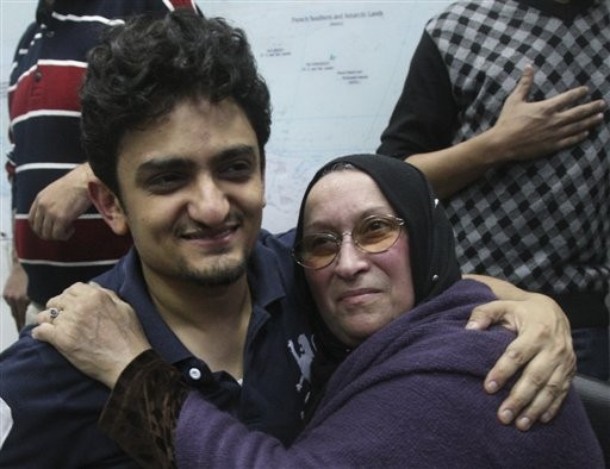

Mrs. Laila did not know that Ghonim was the true knight behind “We are Khaled Said” group just like us.
Yesterday Ghonim said that he would honored to be Khaled when Mona El-Shazly called him Khaled by mistake.
Wael Ghonim spoke today to millions of Egyptians in the square .
Khaled Said’s movement has contributed a lot to this revolution , you can consider Said as our official Mohamed Bou Azizi. Khaled Said was the Alexandrian who made the middle class go and protest his murder silently across the country for one hour standing at the corniche whether the Nile corniche and the sea coniche. History will record the role of Khaled Said movement and group in this revolution , history will record it.
Here is the word Wael Ghonim said today in video after the break :
The blood of martyrs will not be wasted and Mubarak must leave , insh Allah he will leave.
Also here is Ghonim’s translated interview :


French Prime Minister Francois Fillon has said the Egyptian president lent him and his family a plane during a holiday in Egypt at new year.
Hosni Mubarak, who is facing widespread anti-government protests, also paid for Mr Fillon’s holiday accommodation.
Another French minister has faced calls to resign after saying she used a Tunisian businessman’s plane during the country’s uprising.
Foreign Minister Michele Alliot-Marie has said she regretted her actions.
Temple visitA statement from the prime minister’s office, released after the satirical weekly Le Canard Enchaine broke the story, said Mr Fillon took the trip to Egypt between 26 December and 2 January.
“The prime minister was put up during this visit by the Egyptian authorities.”
 Hugh Schofield BBC News, Paris
The French government is mounting a spirited counter-charge after the revelations over Prime Minister Francois Fillon’s holiday in Egypt.
It is not unusual, it states, for heads of government to use official accommodation while visiting foreign countries. Nor is it a sign of particular venality for a prime minister to accept a trip on an Egyptian government jet.
More to the point, Mr Fillon’s trip to Egypt was at new year – more than three weeks before any sign of the popular uprising there. And he is not a prophet.
It is true that next to the charges against Foreign Minister Michele Alliot-Marie, Francois Fillon’s transgressions (if such they are) seem less culpable.
Ms Alliot-Marie was in Tunisia while the uprising there was in full swing – and she twice flew on the private jet of a businessman close to the Ben Ali clan.
However the cumulative effect of the two stories is not good for the French government. The real damage is to the country’s standing in the Arab world. Those who accuse France of cosying up to dictators can claim new evidence.
Mr Fillon, again at the invitation of the authorities, “borrowed a plane from the Egyptian fleet to travel from Aswan to Abu Simbel where he visited a temple”, the statement said.
The prime minister “also embarked on a boat trip on the Nile in the same conditions,” meaning at the expense of the Egyptian authorities, it said.
Mr Fillon met Mr Mubarak during the visit on 30 December in the southern city of Aswan.
For his flight from France to Egypt, Mr Fillon travelled on a French government plane but paid for it “in accordance with the rules he has set himself and which apply to every private trip”, it adds.
At least 300 people have been killed in two weeks of protests seeking to oust Mr Mubarak, who has ruled Egypt for almost 30 years.
Mr Mubarak has said he will not seek re-election in September, but is facing mounting international pressure to begin a political transition immediately.
Mr Fillon has in recent days expressed support for his foreign minister as she fought pressure to step down over her alleged links with the ousted Tunisian leader Zine al-Abidine Ben Ali.
Earlier this week, Ms Alliot-Marie told French radio “it was an error” to fly on a Tunisian plane owned by Aziz Miled, a businessman with close links to Mr Ben Ali.
Mr Ben Ali, who had ruled Tunisia for 23 years, was toppled after widespread protests against his rule.
France had had close ties with Mr Ben Ali when he was in office, but when the long-time leader fled his country French President Nicolas Sarkozy declared he would not be welcome in France.
Egypt VP: Protests must end soon |
||||
A day after offering sweeping concessions, Omar Suleiman expresses impatience with burgeoning pro-democracy protests.Last Modified: 08 Feb 2011 23:34 GMT
|
||||
Omar Suleiman, the Egyptian vice-president, warned on Tuesday that his government “can’t put up with continued protests” for a long time, as tens of thousands of pro-democracy protesters rallied in Cairo’s Tahrir Square for the sixteenth day in a row. In a sharply worded statement reflecting the regime’s impatience and frustration with the mass demonstrations, the newly appointed Suleiman said the crisis must be ended as soon as possible. Increasingly the public face of the embattled government, Suleiman said there will be “no ending of the regime” and no immediate departure for President Hosni Mubarak, according to the state news agency MENA, reporting on a meeting between the vice-president and independent newspapers. The immediate departure of Mubarak is a key demand for the pro-democracy demonstrators. Mubarak’s pledge to not seek another term later this year didn’t tame the angry protests. Meanwhile, the UN secretary-general, Ban Ki-moon added his voice to host of countries calling for “an orderly transition” in Egypt. Speaking at the United Nations headquarters in New York, Moon said Egyptian government must heed the call from its people for greater reform immediately. Subtle threat Suleiman reportedly told the editors of the newspapers that the regime wants dialogue to resolve protesters’ demands for democratic reform, adding, in a veiled warning, that the government doesn’t “want to deal with Egyptian society with police tools.”
At one point in the roundtable meeting, Suleiman warned that the alternative to dialogue “is that a coup happens, which would mean uncalculated and hasty steps, including lots of irrationalities. We don’t want to reach that point, to protect Egypt.” Pressed by the editors to explain the comment, he said he did not mean a military coup but that “a force that is unprepared for rule” could overturn state institutions, said Amr Khafagi, editor-in-chief of the privately-owned Shorouk daily, who attended the briefing. “He doesn’t mean it in the classical way.” “The presence of the protesters in Tahrir Square and some satellite stations insulting Egypt and belittling it makes citizens hesitant to go to work,” he said. Egyptian military, widely hailed for professionalism and restraint, has vowed not to use force against peaceful protesters. President Mubarak, his deputy and the new prime minister, Ahmed Shafiq, are all retired military officers with deep links to the institution. Sticks and carrots Suleiman warned that calls by some protesters for a campaign of civil disobedience are “very dangerous for society and we can’t put up with this at all.” This comes a day after Suleiman announced a slew of constitutional reforms, to be undertaken by yet to be formed committees. Suleiman said that one committee would carry out constitutional and legislative amendments to enable a shift of power while a separate committee will be set up to monitor the implementation of all proposed reforms. The two committees will start working immediately, he said. Suleiman stressed that demonstrators will not be prosecuted and that a separate independent fact-finding committee would be established to probe the violence on February 2. |
||||
|
Source:
Al Jazeera and agencies
|
||||
Een aantal foto’s die ik kreeg toegestuurd van een Iraakse vriend, van hoe de demonstranten op het Tahrirplein zichzelf beschermden tegen de rondvliegende stenen:
Via Closer, de website van Martijn de Koning:
C L O S E R
|
| “Now, it’s gonna be a long one” – some first conclusions from the Egyptian revolutionPosted: 08 Feb 2011 12:34 AM PST
Guest Author: Samuli Schielke Sunday, February 6, 2011 Today is my scheduled day of departure from Egypt. As I sit on Cairo airport waiting for my flight to Frankfurt, it is the first time on this trip that regret anything – I regret that I am leaving today and not staying. I have told to every Egyptian I have met today that I am not escaping, just going for my work at the university and returning soon. But perhaps it has been more to convince myself than them. My European friend who like me came here last Monday is staying for another two weeks. My American friend in Imbaba tells that for months, she has been homesick to go to America and see her parents and family again. But now when the US government would even give her a free flight, she says that she cannot go. This is her home, and she is too attached to the people, and especially to her husband. Two days ago, he was arrested on his way back from Tahrir square, held captive for four hours, interrogated, and tortured with electroshocks. He is now more determined than ever. How could she leave him behind? But today is my scheduled departure, and I only intended to come for a week and then return to do what I can to give a balanced idea of the situation in Egypt in the public debates in Germany and Finland. Tomorrow I will give a phone interview to Deutschlandradio (a German news radio), and on Tuesday I will give a talk in Helsinki in Finland. Right now, I feel that maintaining high international pressure on the Egyptian government is going to be crucial, and I will do what I can. There remains little to be reported about the beginning day in Cairo, but maybe I can try to draw some first conclusion from this week. The morning in Cairo today was marked by a return to normality everywhere except on Tahrir Square itself, where the demonstrations continue. Now that the streets are full with people again, the fear I felt in the past days on the streets is gone, too. If I stayed, today would be the day when I would again walk through the streets of Cairo, talk with people and feel the atmosphere. From what I know from this morning’s short excursion in Giza and Dokki, the people remain split, but also ready to change their mind. As my Egyptian friend and I took a taxi to Dokki, the taxi driver was out on the street for the first time since 24 January, and had fully believed what the state television had told him. But as my friend, a journalist, told him what was really going on, the driver amazingly quickly shifted his opinion again, and remembered the old hatred against the oppressive system, the corruption, and the inflation that brought people to the streets last week. A big part of the people here seem impressively willing to change their mind, and if many of those who were out on the streets on 28 January – and also of those who stayed home – have changed their mind in favour of normality in the past days, they do expect things to get better now, and if they don’t, they are likely to change their minds again. This is the impression I also got from the taxi driver who took me to the airport from Dokki. He, too, had not left his house for eleven days, not out of fear for himself, but because he felt that he must stay at home to protect his family. He was very sceptical of what Egyptian television was telling, but he did expect things to get better now. What will he and others like him do if things don’t get better? As I came to Egypt a week ago I expected that the revolution would follow one of the two courses that were marked by the events of 1989: either a successful transition to democracy by overthrowing of the old regime as happened in eastern Europe, or shooting everybody dead as happened in China. Again, my prediction was wrong (although actually the government did try the Chinese option twice, only unsuccessfully), and now something more complicated is going on. This is really the question now: Will things get better or not? In other words: Was the revolution a success of a failure? And on what should its success be measured? If it is to be measured on the high spirits and sense of dignity of those who stood firm against the system, it was a success. If it is to be measured by the emotional switch of those who after the Friday of Anger submitted again to the mixture of fear and admiration of the president’s sweet words, it was a failure. If the immense local and international pressure on the Egyptian government will effect sustainable political change, it will be a success. But it will certainly not be an easy success, and very much continuous pressure is needed, as a friend of mine put it in words this morning: “Now, it’s gonna be a long one.” In Dokki I visited a European-Latin American couple who are determined to stay in Egypt. He was on Tahrir Square on Wednesday night when the thugs attacked the demonstrators, and he spent all night carrying wounded people to the makeshift field hospital. He says: “What really worries me is the possibility that Mubarak goes and is replaced by Omar Suleyman who then sticks to power with American approval. He is the worst of them all.” Just in case, he is trying to get his Latin American girlfriend a visa for Schengen area, because if Omar Suleyman’s campaign against alleged “foreign elements” and “particular agendas” continues, the day may come when they are forced to leave after all. A few words about the foreigners participating in the revolution need to be said.. Like the Spanish civil war once, so also the Egyptian revolution has moved many foreigners, mostly those living in Egypt since long, to participate in the struggle for democracy. This has been an ambiguous struggle in certain ways, because the state television has exploited the presence of foreigners on Tahrir Square in order to spread quite insane conspiracy theories about foreign agendas behind the democracy movement. The alliance against Egypt, the state television wants to make people believe, is made up of agents of Israel, Hamas, and Iran. That’s about the most insane conspiracy theory I have heard of for a long time. But unfortunately, conspiracy theories do not need to be logical to be convincing. But to step back to the ground of reality, if this revolution has taught me one thing is that the people of Egypt do not need to look up to Europe or America to imagine a better future. They have shown themselves capable of imagining a better future of their own making (with some important help from Tunisia). Compared to our governments with their lip service to democracy and appeasement of dictators, Egyptians have given the world an example in freedom and courage which we all should look up to as an example. This sense of admiration and respect is what has drawn so many foreigners to Tahrir Square in the past days, including myself. |
http://english.aljazeera.net/indepth/features/2011/02/201129103121562395.html
Syria: ‘A kingdom of silence’ |
||||||||||||||||||||||||||||||||||||||||
Analysts say a popular president, dreaded security forces and religious diversity make a Syrian revolution unlikely.AJE staff writer Last Modified: 09 Feb 2011 17:18 GMT
|
||||||||||||||||||||||||||||||||||||||||
Despite a wave of protests spreading across the Middle East, so far the revolutionary spirit has failed to reach Syria. Authoritarian rule, corruption and economic hardship are characteristics Syria share with both Egypt and Tunisia. However, analysts say that in addition to the repressive state apparatus, factors such as a popular president and religious diversity make an uprising in the country unlikely. Online activists have been urging Syrians to take to the streets but the calls for a “Syrian revolution” last weekend only resulted in some unconfirmed reports of small demonstrations in the mainly Kurdish northeast. “First of all, I’d argue that people in Syria are a lot more afraid of the government and the security forces than they were in Egypt,” Nadim Houry, a Human Rights Watch researcher based in Lebanon, says. “The groups who have mobilised in the past in Syria for any kind of popular protest have paid a very heavy price – Kurds back in 2004 when they had their uprising in Qamishli and Islamists in the early 1980s, notably in Hama.” The so-called Hama massacre, in which the Syrian army bombarded the town of Hama in 1982 in order to quell a revolt by the Muslim Brotherhood, is believed to have killed about 20,000 people. “I think that in the Syrian psyche, the repression of the regime is taken as a given, that if something [protests] would happen the military and the security forces would both line up together. I think that creates a higher threshold of fear.” Demonstrations are unlawful under the country’s emergency law, and political activists are regularly detained. There are an estimated 4,500 “prisoners of opinion” in Syrian jails, according to the Haitham Maleh Foundation, a Brussels-based Syrian rights organisation. ‘Kingdom of silence’ As pages on Facebook called for demonstrations to be held in cities across Syria in early February, more than 10 activists told Human Rights Watch they were contacted by security services who warned them not to try and mobilise. “Syria has for many years been a ‘kingdom of silence’,” Suhair Atassi, an activist in Damascus, says, when asked why no anti-government protests were held.
“Fear is dominating peoples’ lives, despite poverty, starvation and humiliation … When I was on my way to attend a sit-in against [the monopoly of] Syria’s only mobile phone operators, I explained to the taxi driver where I was going and why. “He told me: ‘Please organise a demonstration against the high cost of diesel prices. The cold is killing us’. I asked him: ‘Are you ready to demonstrate with us against the high diesel price?” He replied ‘I’m afraid of being arrested because I’m the only breadwinner for my family!” Fawas Gerges, a professor of Middle Eastern politics at the London School of Economics, says Syria is one of the Middle Eastern countries least likely to be hit by popular protests, because of its power structure. He says the allegiance of the army in Syria is different than in both Tunisia, where the military quickly became one of the main backers of the president’s ouster, and in Egypt, where the army still has not taken sides. “The army in Syria is the power structure,” he says. “The armed forces would fight to an end. It would be a bloodbath, literally, because the army would fight to protect not only the institution of the army but the regime itself, because the army and the regime is one and the same.” Popular president But even if people dared to challenge the army and the dreaded mukhabarat intelligence service, analysts say the appetite for change of the country’s leadership is not that big. Many Syrians tend to support Bashar al-Assad, the president who came to power in 2000 after the death of his father Hafez, who had ruled the country for 30 years. “An important factor is that he’s popular among young people,” Joshua Landis, the director of the Center for Middle East Studies at the University of Oklahoma and author of Syria Comment, says.
“Unlike Egypt’s Hosni Mubarak, who’s 83, Bashar al-Assad is young. Young people are quite proud of him. They may not like the regime, they don’t like corruption and a lot of things, but they tend to blame this on the people around him, the ‘old guard’.” A Syrian student echoes these comments. “The president knows that reform is needed and he is working on it”, she says. “As for me, I don’t have anything against our president. The main issues which need to be addressed are freedom of speech and expression as well as human rights. I believe that the president and his wife are working on that. New NGOs have started to emerge. “Also, many things have changed since Bashar came to power, whether it has to do with road construction, salary raises, etc. Even when it comes to corruption, he is trying hard to stop that and limit the use of ‘connections’ by the powerful figures in Syria. However, he won’t be able to dramatically change the country with the blink of an eye.” Al-Assad’s tough stance towards Israel, with which Syria is technically at war, has also contributed to his popularity, both domestically and in the region. Multi-religious society Analysts stress that Syria’s mix of religious communities and ethnic groups differentiates Syria from Egypt and Tunisia, countries which both have largely homogeneous populations. Fearing religious tensions, many Syrians believe that the ruling Baath party’s emphasis on secularism is the best option. “The regime in Syria presents itself as a buffer for various communities, essentially saying ‘if we go, you will be left to the wolves’,” Houry says. “That gives it ability to mobilise large segments of the population.”
Sunni Muslims make up about 70 per cent of the 22 million population, but the Alawites, the Shia sect which President al-Assad belongs to, play a powerful role despite being a minority of 10 per cent. Christians and Kurds are other sizable minorities. Landis says Alawites and Christians tend to be al-Assad’s main supporters. “If his regime were to fall, many of the Alawites would lose their jobs. And they look back at the times when the Muslim Brotherhood targeted them as nonbelievers and even non-Arabs. “Then of course the Christians, who are about 10 per cent of the population, are the biggest supporters of al-Assad and the Baath party because it’s secular. They hear horror stories of what has happened in Iraq, about Christians being killed and kidnapped.” The proximity to Iraq, another ethnically and religiously diverse country, is believed to play a major role in Syria’s scepticism towards democracy and limited hunger for political change. About a million Iraqi refugees have come to Syria since the US-led invasion of Iraq in 2003. “The Iraqi refugees are a cautionary tale for Syrians,” Landis says. “They have seen what happens when regime change goes wrong. This has made Syrians very conservative. They don’t trust democracy.” Parties banned Syria is essentially a one-party state, ruled by the Baath Party since 1963. Many political groups are banned. But Landis says the lack of political freedom does not appear to be a major concern among the people. “I’m always astounded how the average guy in the street, the taxi driver, the person you talk to in a restaurant or wherever, they don’t talk about democracy. They complain about corruption, they want justice and equality, but they’ll look at elections in Lebanon and laugh, saying ‘who needs that kind of democracy’?” “The younger generation has been depoliticised. They don’t belong to parties. They see politics as a danger and they have been taught by their parents to see it as a danger. They look at the violence out there, in places like Iraq.”
Tunisia and Egypt both have a longer tradition of civil society and political parties than Syria and Landis describes the Syrian opposition as “notoriously mute”. “In some ways, being pro-American has forced Egypt to allow for greater civil society, while Syria has been quite shut off from the West,” he says. “The opposition in Syria is very fragmented. The Kurds can usually get together in the biggest numbers but there are 14 Kurdish parties … And the human rights leaders – half of them are in jail and others have been in jail for a long time.” Facebook sites calling for protests to be held in Syria on February 4 and 5 got about 15,000 fans but failed to mobilise demonstrators for a “day of anger”. In fact, countercampaigns set up online in favour of the government garnered as much support. Ribal al-Assad, an exiled cousin of President al-Assad and the director of the London-based Organisation for Democracy and Freedom in Syria, said the people calling for protests were all based abroad and he is not surprised that nothing happened inside Syria. “The campaign was a bit outrageous. First, they’ve chosen a date that reminds people of the uprising of the Muslim Brotherhood [the 29th anniversary of the Hama massacre],” he says. “People don’t want to be reminded of the past. They want change, they want freedom, but they want it peacefully. And the picture they used on Facebook, a clenched fist and red colour like blood behind, it was like people calling for civil war and who in his right mind wants that? “But of course people want change, because there is poverty, corruption, people get arrested without warrants, the government refuses to disclose their whereabouts for months. They are sentenced following unfair trials, a lot of times with stupid sentences such as ‘weakening the nation’s morale’ for saying ‘we want freedom and democracy’. But the only one weakening the nations moral is the government itself.” ‘Not holding hands with Israel’ One Syrian who became a “fan” of a Facebook page opposed to protesting says he cannot imagine, and does not want, Egyptian-style anti-government rallies to spread to Syria. “I love Syria and I don’t want to see people fighting. I can’t imagine the events occuring in Egypt to happen in Syria because we really love our president, not because they teach us to love him,” he says. “In the formation of ministries, he’s made use of 100 per cent talent with the multiplicity of religions. There are not Alawites only. There are also Sunnis and Kurds and Christians. The president is married to Asmaa and she is Sunni. He shows the people we are brothers.
“And he is the only president in the Arab region that did not accept any offers from Israel, like other presidents. I, and most Syrians, if not all, can’t accept a president who will hold hands with Israel.” As in Egypt and Tunisia, unemployment in Syria is high. The official jobless rate is about 10 per cent, but analysts say that double is a more realistic estimate. According to a Silatech report based on a Gallup survey last year, 32 per cent of young Syrians said they were neither in the workforce nor students. Since the current president took office, the Syrian economic system has slowly moved away from socialism towards capitalism. Markets have opened up to foreign companies and the GDP growth rate is expected to reach 5.5 per cent by 2011. Last year, the average Syrian montly salary was 13,500SP ($290), an increase of six per cent over the previous year, according to the Central Bureau of Statistics. But like in some other countries in the region, state subsidies have been slashed on various staples, including heating oil, and analysts say the poor are feeling the pinch. “The bottom half of Syrians spend half of their income on food. Now, wheat and sugar prices have gone up in the last two years by almost 50 per cent,” Landis says. “Syria is moving towards capitalism. This has resulted in a greater growth rate but it’s expanding income gaps. It’s attracting foreign investment and the top 10 per cent are beginning to earn real salaries on an international scale because they’re working for these new banks and in new industries. But the bottom 50 per cent are falling because they’re on fixed incomes and they get hit by inflation, reduced subsidies on goods, coupled with the fact that Syria’s water scarcity is going through the roof.” However, Forward Magazine recently quoted Shafek Arbach, director of the Syrian Bureau of Statistics, as saying there is nothing in new data to suggest a growing gap between the rich and the poor in Syria. ‘Reforms needed’ In an interview with the Wall Street Journal late January, President al-Assad acknowledged the need for Syria to reform and but also said his country is “immune” from the kind of unrest seen in Tunisia and Egypt. “We have more difficult circumstances than most of the Arab countries but in spite of that Syria is stable. Why? Because you have to be very closely linked to the beliefs of the people. This is the core issue. When there is divergence between your policy and the people’s beliefs and interests, you will have this vacuum that creates disturbance,” he said. But Ribal al-Assad says it is obvious that the government is worried in the light of the discontent and anger spreading in the Middle East. “Right after the Tunisian uprising they reduced the price for ‘mazot’ for the heating. They were supposed to bring up the price of medicines but then they didn’t. They distributed some aid to over 450,000 families. And, today we’re hearing that Facebook has been unblocked. They should have started this process a long time ago but better late than never.” Houry says the lesson from Tunisia, which has been hailed as an economic role model in North Africa, is that economic reform on its own does not work. “It will be interesting to watch how things are going to unfold over the coming few months,” he says. “The Syrians, like any other Arab household today, have their TVs turned on to Al Jazeera. They’re seeing what’s happening in Tunisia and Egypt. Freedom is an infectious feeling and I think people will want more freedom.” |
||||||||||||||||||||||||||||||||||||||||
http://english.aljazeera.net/indepth/spotlight/tunisia/2011/02/20112845625679529.html
Tunisia |
Change comes to Tunisia, slowly |
Ben Ali might be gone but it is still unclear how much social and economic transformation will take place.Yasmine Ryan in Tunis Last Modified: 08 Feb 2011 05:42 GMT
|
| Did the fall of Zine El Abidine Ben Ali amount to a genuine revolution? Three weeks after Tunisia’s president of 23 years, facing public protests, fled to Saudi Arabia, this is a question that ordinary people are still grappling with.Though the Ben Ali regime may be going, or gone, it is unclear to what extent the political changes will lead to the decisive social and economic transformations that protesters have been calling for – particularly in the marginalised central and southern regions.Yet the social transformations that are taking place on the streets of Tunis, whether in the commercial downtown area or the bourgeois eastern suburbs or the poorest suburbs, are undeniable.After a quiet Sunday, central Tunis was again abuzz with a steady flutter of micro-protests – once inconceivable, now daily – as the week began anew on Monday.A crowd gathered around a man who, seated on the sidewalk of Avenue Habib Bourgeiba, busily draw political drawings.Across the avenue, spray painted messages read “Thank you Facebook” and “Tunisia democratic and secular”.A group of young women approach, asking if I am a journalist. They work for the municipal council and will be holding their own protest for better salaries and employment conditions.”Come to the Casbah tomorrow at 9am to show solidarity!” they ask.Opulent lifestylesIn Gammarth, an eastern suburb which some of the most notorious members of the Trabelsi and Ben Ali families called home until less than a month ago, a steady flow of curious Tunisians are coming to see the ruins of the opulent lifestyle that their rulers led behind closed doors.Ali Abdirazak, a Tunisian who lives in Paris, was doing a round of the ravaged houses with a carload of friends on Monday afternoon.”I’ve been living it on the internet,” Abdirazak said, standing inside Mourad Trabelsi’s former living room.A man and his mother walked back to their car with souvenirs they had taken from the house.”We have always driven by this house but we had no idea how extravagant it was inside, he said, carrying a white slab of marble under one arm.”I’m keeping this for my children, to show them what the people can achieve.”The end of the Trabelsi era has also brought change in nearby Bhar Lazreg, one of the capital’s poorest suburbs.Bhar Lazreg was the stomping ground of Imed Trabelsi, the former first lady’s nephew who is the subject of an international arrest warrant for his financial dealings.
Aside from his yacht- and car-stealing activities in Europe, Imed Trabelsi and his associates terrorised the impoverished inhabitants of Bhar Lazreg. Alcohol stand One of the symbols of Trabelsi’s tyranny was an illegal alcohol stand that people Al Jazeera spoke with said shamelessly exploited their misery. Now, the locals have shut down the black-market stand for good, and all that remains of the gutted building are its ashes. Few appeared sorry to see it go. “Everyone felt it was an intrusion, there were always drunk people in the street causing problems,” Abdelkarim Ayouni, a local man, said. People here have been able to reclaim land that had been “confiscated” from them. Trabelsi family members used fraudulent papers to trump land deeds here, as they did across the country. Corrupt [or fearful] officials would ignored legal documents, rendering locals landless without hesitation. There is a flurry of building as people take back their land. The army came in to restore order in late January, ensuring that those taking back land were the legitimate owners. |
|
Source:
Al Jazeera
|
Een betoog van Roel Meijer op Closer, waar ik mij zeer in kan vinden:
Guest Author: Roel Meijer
De Nederlandse islambashers, zoals Hans Jansen, moeten de afgelopen twee weken zich achter hun oren hebben gekrabd. Is het dan toch mogelijk dat moslims even vergeten zijn dat ze moslims zijn? Dat ze zo maar in opstand komen tegen een regime? Dat ze niet zoals altijd slaafs de bevelen van machthebbers volgen? Zijn Egyptenaren niet vergeten dat ze a) inherent passief zijn, dom, traditioneel, of nog liever, b) radicaal, haatdragend, antiwesters en gewelddadig? In plaats daarvan zijn de afgelopen twaalf dagen honderdduizenden mensen vreedzaam de straat opgegaan en hebben burgerrechten geëist: transparantie, gelijke rechten, eerlijke verkiezingen en een eind aan corruptie. Rationeler—lees westers volgens de islambashers—kan het niet.
Maar gelukkig duurde het niet lang of de critici hadden een verklaring voor dit merkwaardige fenomeen dat al hun vaststaande ideeën over moslims bevestigde. De demonstraties zijn geen inleiding tot hervormingen, maar een voorbode van een islamitische revolutie die moet leiden tot het aan de macht komen van de politieke islam, vertegenwoordigd door de Moslim Broederschap, die gezien wordt als de bron van het islamitische terrorisme. Daarmee waren de gebeurtenissen weer makkelijk te duiden in het apocalyptische wereldbeeld van de islamhaters die de islam zien als het pure kwaad, de antithese van het verlichtingsideaal dat de demonstranten eigenlijk vertegenwoordigden.
Eigenlijk spreken die islamhaters zichzelf op fundamentele wijze tegen. Hun gedachtegang is namelijk fundamenteel in tegenspraak met het zichzelf toegeëigende monopolie van de islamhaters op verlichting, namelijk dat je open staat voor nieuwe informatie en niet alles meteen in een goed-kwaad sjabloon plaatst. In plaats daarvan houden ze er een soortgelijke redenering op na als die van Mubarak: mij of de chaos. In feite stellen zij zich aan de kant van de autoritaire staat. Tegelijkertijd is dit ook de redenatie van Israel, die alleen interesse toont voor regimes in de regio die het vredesverdrag naleven; wat ze doen met de eigen bevolking is verder van weinig belang.
Ook op Krapuul wordt enige aandacht besteed aan Hans Jansens opmerkelijke stukje op ‘Hoeiboei’, zie http://www.krapuul.nl/nieuws/24667/islamfoob-hans-jansen-vergelijkt-opstand-in-egypte-met-de-opkomst-van-de-pvv/. Wat moet ik er nog van zeggen? In een later verband zal ik nog heel uitgebreid stilstaan bij wat mijn vroegere docent Hans Jansen zoal in
de afgelopen jaren heeft beweerd (die bijdrage gaat nog komen). Maar wel opmerkelijk dat hij de PVV vergelijkt met de demonstranten op het Tahrirplein en Konigin Beatrix, die niet zo dol is op Wilders, met Meneer Mubarak. Denk niet dat er ik hier veel aandacht aan hoef te besteden. Wat je ook van Jansens fratsen mag vinden, hij solliciteert in ieder geval niet naar een lintje :). Wel wil ik hier nog een keertje wijzen op zijn genante optreden in Pauw & Witteman, in debat met Joris Luijendijk. Een uitgebreide beschouwing volgt later. Treurig vind ik het overigens wel. In 2001 heb ik in Leiden nog een vakje bij hem gevolgd en in de pauzes stonden wij regelmatig samen een sigaret weg te paffen. In die tijd heeft hij me veel interessants over het Midden Oosten verteld, waar ik hem nog altijd dankbaar voor ben. Ik heb er toen veel van opgestoken en bovendien is het ook (naar studenten althans) een hele aardige man en kun je ook erg met hem lachen. Gevoel voor humor heeft hij zeker, al vind ik veel van zijn recente bijdragen eerder hysterisch dan grappig. Maar de Jansen van toen was toch een hele andere dan de Jansen van nu.
Tot zover Hans Jansen. Terug naar belangrijker zaken.
http://english.aljazeera.net/indepth/opinion/2011/02/201127114827382865.html
| Opinion | ||
Suleiman: The CIA’s man in Cairo |
||
Suleiman, a friend to the US and reported torturer, has long been touted as a presidential successor.Lisa Hajjar Last Modified: 07 Feb 2011 14:10 GMT
|
||
On January 29, Omar Suleiman, Egypt’s top spy chief, was anointed vice president by tottering dictator, Hosni Mubarak. By appointing Suleiman, part of a shake-up of the cabinet in an attempt to appease the masses of protesters and retain his own grip on the presidency, Mubarak has once again shown his knack for devilish shrewdness. Suleiman has long been favoured by the US government for his ardent anti-Islamism, his willingness to talk and act tough on Iran – and he has long been the CIA’s main man in Cairo. Mubarak knew that Suleiman would command an instant lobby of supporters at Langley and among ‘Iran nexters’ in Washington – not to mention among other authoritarian mukhabarat-dependent regimes in the region. Suleiman is a favourite of Israel too; he held the Israel dossier and directed Egypt’s efforts to crush Hamas by demolishing the tunnels that have functioned as a smuggling conduit for both weapons and foodstuffs into Gaza. According to a WikiLeak(ed) US diplomatic cable, titled ‘Presidential Succession in Egypt’, dated May 14, 2007:
From 1993 until Saturday, Suleiman was chief of Egypt’s General Intelligence Service. He remained largely in the shadows until 2001, when he started taking over powerful dossiers in the foreign ministry; he has since become a public figure, as the WikiLeak document attests. In 2009, he was touted by the London Telegraph and Foreign Policy as the most powerful spook in the region, topping even the head of Mossad. In the mid-1990s, Suleiman worked closely with the Clinton administration in devising and implementing its rendition program; back then, rendition involved kidnapping suspected terrorists and transferring them to a third country for trial. In The Dark Side, Jane Mayer describes how the rendition program began:
Under the Bush administration, in the context of “the global war on terror”, US renditions became “extraordinary”, meaning the objective of kidnapping and extra-legal transfer was no longer to bring a suspect to trial – but rather for interrogation to seek actionable intelligence. The extraordinary rendition program landed some people in CIA black sites – and others were turned over for torture-by-proxy to other regimes. Egypt figured large as a torture destination of choice, as did Suleiman as Egypt’s torturer-in-chief. At least one person extraordinarily rendered by the CIA to Egypt — Egyptian-born Australian citizen Mamdouh Habib — was reportedly tortured by Suleiman himself. Suleiman the torturer In October 2001, Habib was seized from a bus by Pakistani security forces. While detained in Pakistan, at the behest of American agents, he was suspended from a hook and electrocuted repeatedly. He was then turned over to the CIA, and in the process of transporting him to Egypt he endured the usual treatment: his clothes were cut off, a suppository was stuffed in his anus, he was put into a diaper – and ‘wrapped up like a spring roll’. In Egypt, as Habib recounts in his memoir, My Story: The Tale of a Terrorist Who Wasn’t, he was repeatedly subjected to electric shocks, immersed in water up to his nostrils and beaten. His fingers were broken and he was hung from metal hooks. At one point, his interrogator slapped him so hard that his blindfold was dislodged, revealing the identity of his tormentor: Suleiman. Frustrated that Habib was not providing useful information or confessing to involvement in terrorism, Suleiman ordered a guard to murder a shackled prisoner in front of Habib, which he did with a vicious karate kick. In April 2002, after five months in Egypt, Habib was rendered to American custody at Bagram prison in Afghanistan – and then transported to Guantanamo. On January 11, 2005, the day before he was scheduled to be charged, Dana Priest of the Washington Post published an exposé about Habib’s torture. The US government immediately announced that he would not be charged and would be repatriated to Australia. A far more infamous torture case, in which Suleiman also is directly implicated, is that of Ibn al-Sheikh al-Libi. Unlike Habib, who was innocent of any ties to terror or militancy, al-Libi was allegedly a trainer at al-Khaldan camp in Afghanistan. He was captured by the Pakistanis while fleeing across the border in November 2001. He was sent to Bagram, and questioned by the FBI. But the CIA wanted to take over, which they did, and he was transported to a black site on the USS Bataan in the Arabian Sea, then extraordinarily rendered to Egypt. Under torture there, al-Libi “confessed” knowledge about an al-Qaeda–Saddam connection, claiming that two al-Qaeda operatives had received training in Iraq for use in chemical and biological weapons. In early 2003, this was exactly the kind of information that the Bush administration was seeking to justify attacking Iraq and to persuade reluctant allies to go along. Indeed, al-Libi’s “confession” was one the central pieces of “evidence” presented at the United Nations by then-Secretary of State Colin Powell to make the case for war. As it turns out, that confession was a lie tortured out of him by Egyptians. Here is how former CIA chief George Tenet describes the whole al-Libi situation in his 2007 memoir, At The Center Of The Storm:
Al-Libi was eventually sent off, quietly, to Libya – though he reportedly made a few other stops along the way – where he was imprisoned. The use of al-Libi’s statement in the build-up to the Iraq war made him a huge American liability once it became clear that the purported al-Qaeda–Saddam connection was a tortured lie. His whereabouts were, in fact, a secret for years, until April 2009 when Human Rights Watch researchers investigating the treatment of Libyan prisoners encountered him in the courtyard of a prison. Two weeks later, on May 10, al-Libi was dead, and the Gaddafi regime claimed it was a suicide. According to Evan Kohlmann, who enjoys favoured status among US officials as an ‘al-Qaeda expert’, citing a classified source: ‘Al-Libi’s death coincided with the first visit by Egypt’s spymaster Omar Suleiman to Tripoli.’ Kohlmann surmises and opines that, after al-Libi recounted his story about about an al-Qaeda–Saddam-WMD connection, “The Egyptians were embarassed by this admission – and the Bush government found itself in hot water internationally. Then, in May 2009, Omar Suleiman saw an opportunity to get even with al-Libi and travelled to Tripoli. By the time Omar Suleiman’s plane left Tripoli, Ibn al-Sheikh al-Libi had committed ‘suicide’.” As people in Egypt and around the world speculate about the fate of the Mubarak regime, one thing should be very clear: Omar Suleiman is not the man to bring democracy to the country. His hands are too dirty, and any ‘stability’ he might be imagined to bring to the country and the region comes at way too high a price. Hopefully, the Egyptians who are thronging the streets and demanding a new era of freedom will make his removal from power part of their demands, too. Lisa Hajjar teaches sociology at the University of California – Santa Barbara and is a co-editor of Jadaliyya. This article first appeared on Jadaliyya. The views expressed in this article are the author’s own and do not necessarily reflect Al Jazeera’s editorial policy. |
http://english.aljazeera.net/indepth/opinion/2011/02/20112101030726228.html
Opinion |
||
Why Egypt’s progressives win |
||
Suleiman considers the business fraternity friendly, but it is the nation’s women and youth who are driving the unrest.Paul Amar Last Modified: 10 Feb 2011 12:30 GMT
|
||
On February 6, 2011, Egypt’s hastily appointed vice president, Omar Suleiman, invited in the old guard – or what we could call the Businessman’s Wing of the Muslim Brotherhood into a stately meeting in the polished rosewood cabinet chamber of Mubarak’s presidential palace. The aim of their tea party was to discuss some kind of accord that would end the national uprising and restore “normalcy”. When news of the meeting broke, expressions of delight and terror tore through the blogosphere. Was the nightmare scenario of both the political left and right about to be realised? Would the US/Israel surrogate Suleiman merge his military-police apparatus with the power of the more conservative branch of the old Islamist social movement? Hearing the news, Iran’s supreme leader sent his congratulations. And in the US, Glenn Beck and John McCain ranted with glee about world wars and the inevitable rise of the cosmic caliphate. On that same day, an unnamed White House official told the Associated Press that any “academic type” who did not focus on the Muslim Brotherhood and see them as the principle actor in this drama “was full of sh*t”. The White House seemed to believe that Suleiman, chief of Egypt’s intelligence services, was the kind of keen mind they could depend on. Suleiman’s brand of “intelligence” was on display in his interview on February 3, in which he traced the cause of Egypt’s uprising to a conspiracy coordinated by a united front of Israel with Hamas, al-Qaeda with Anderson Cooper. Is it true that Suleiman also has a dossier revealing the sinister role played in all this by “Simpsons” character C Montgomery Burns? One fraction of one faction In reality, the Suleiman-Brotherhood tea party turned out to be nothing more than another stunt staged by Nile TV News. This once-interesting cable service was transformed in the past week into a rather Murdochian propaganda unit, whose productions are run by the artistic genius of Mubarak’s presidential guards. Images of the Suleiman-Brotherhood tete-a-tete were broadcast at a time when Suleiman’s legitimacy and sanity were appearing increasingly shaky within Egypt – and when this particular sub-group of the Brotherhood, who represent only one fraction of one faction of the opposition, was trying to leverage an unlikely comeback. As reporters obsessed over which Brother was sitting with Suleiman, they continued to ignore or misapprehend the continuing and growing power of the movements that had started this uprising. Many progressives continued to think that the US was conspiring with Suleiman to crush all hope – as if America’s puny $1.5 bn in aid (which all must be recycled as purchases from US military suppliers anyway) really dictates policy for a regime that makes multi-billion dollar deals with Russia, China and Brazil every month – and that has channelled an estimated $40-70 bn into Mubarak’s personal accounts. Proving Nile TV and the pessimists wrong, 1.5 million people turned out on February 7 – the biggest mobilisation so far in this uprising. Commentators focusing on the Brothers had completely missed the real news of the past two days. The ruling NDP party leadership had been savaged from within. In a desperate attempt to salvage his phantom authority, Mubarak had tossed his son Gamal and a whole class of US-linked businessmen to the lions, forcing them to resign and freezing their assets. And at the same time, Egyptian newspaper El-Masry El-Youm reported that the Muslim Brothers’ Youth and Women’s Wings split from the main Brotherhood organisation – to join the leftist April 6 Movement. The men sitting around Suleiman’s table were left without much of a movement behind them. Below I trace the declining power of the economic and moral politics of this “Businessman’s Wing” of the Brotherhood. I map the ascendant socio-political power of a new national-development-oriented coalition of businessmen and military entrepreneurs, as well as the decisive force of micro-enterprise and workers’ organisations consisting of women and youth – a force that portends well for the future of democracy and socio-economic inclusion in Egypt. Bands of Brothers The Muslim Brothers are not a marginal force in Egypt. They are very well organised in every city – and can be credited with providing health, education, legal aid and disaster relief to citizens ignored or neglected by the state. But they are not Egypt’s equivalent of Hezbollah or Hamas. As Mona El-Ghobashy has described, in the 1990s the Society of Muslim Brothers made a definite break, abandoning its secretive, hierarchical, sharia-focused form. Today the Brotherhood is a well-organised political party – officially banned but occasionally tolerated. In the past twenty years, it has made significant inroads in parliament via alliances with other parties and by running independent candidates. The Brothers now fully support political pluralism, women’s participation in politics and the role of Christians and communists as full citizens. However, with the rise of other competing labour, liberal and human-rights movements in Egypt in the 2000s, what one can call the “new old guard” of the Brotherhood – those that emerged in the 1980s – have retained a primary focus on cultural, moral and identity politics. Moral-cultural conservatism is still seen by this group as what distinguishes the Brotherhood from other parties – a fact they confirmed by appointing a rigid social conservative, Muhammad Badeea, as leader in 2010. This turn was rejected by women and youth in the movement. This socially conservative leaning thus brings the “new old guard” more in line with the moralistic paternalism of Mubarak’s government – and set them against the trajectory of new youth, women’s and labour movements. This leads to new possibilities of splits in this organisation or for exciting revitalisation and reinvention of the Brotherhood – as Youth and Women’s wings feel drawn toward the April 6 coalition. The moral-cultural traditionalist wing of the “new old guard”, is composed of professional syndicate leaders and wealthy businessmen. In the 1950s-80s, the movement regrouped and represented frustrated elements of the national bourgeoisie. But this class of people has largely been swept up into new opportunities and left the organisation. The “new old guard” of the Brotherhood’s business wing has started to look like a group of retired Shriners, except that in the Middle East, Shriners have stopped wearing fez. In the past ten years, this political force of this particular wing has been partially co-opted by Mubarak’s government from two angles. First, Brothers were allowed to enter parliament as independent candidates and have been allowed to participate in the recent economic boom. The senior Brothers now own major cell phone companies and real estate developments – and have been absorbed into the NDP machine and upper-middle class establishment for years. Second, the government wholly appropriated the Brotherhood’s moral discourse. For the past ten or fifteen years Mubarak’s police-state has stirred moral panics and waved the banner of Islam, attacking single working women, homosexuals, devil-worshipping internet users, trash-recycling pig farmers, rent-control squatters – as well as Bahai, Christian and Shia minorities. In its morality crusades, the Mubarak government burned books, harassed women, and excommunicated college professors. Thus, we can say that Egypt has already experienced rule by an extremely narrow Islamist state – Mubarak’s. Egyptians tried out that kind of regime. And they hated it. In recent years, as described in the work of Saba Mahmood and Asef Bayat, people have grown disgusted by Mubarak’s politicisation of Islam. Egyptians began to reclaim Islam as a project of personal self-governance, ethical piety, and social solidarity. This trend explicitly rejects the political orientation of Islam and explicitly separates itself both from Brotherhood activities and Mubarak’s morality crusades. The military as a populist middle class At one time, the Muslim Brotherhood represented frustrated, marginalised elements of the middle class. But that story is so 1986! Now there are a wide range of secular – but not anti-religious – groupings that represent emergent economic patterns within the country. Moreover, these groups are swept up in a whirlwind of new political-economic energies coming from new or renewed world influences and investors – Russia, Kazakhstan, Azerbaijan, Israel, Dubai, China, Turkey, and Brazil – as well as the return of remittance flows into the country, as Egyptian professionals got swept up in the Emirates’ building and development boom. In the context of this new multi-dimensional globalisation, in which East/West divides and post-colonial patterns are radically remade, the military has come to be one of the more interesting economic mediators and success stories. The Egyptian military is one of the most interesting and misunderstood economic actors in the country. The military’s economic interests are split in interesting ways. Since the military has been prevented by the Camp David treaty from making war, it has instead used its sovereignty over huge swathes of desert and coastal property to develop shopping malls, gated cities and beach resorts – catering to rich and modest Egyptians, local and international consumers and tourists. Their position vis-a-vis the uprising is thus complicated. They hated the rapacious capitalists around Gamal Mubarak, who sold off national lands, assets and resources to US and European corporations. But the military also wants tourists, shoppers and investors to consume in their multi-billion dollar resorts and venues. The military identifies very strongly with representing and protecting “the people” – but also wants the people to go home and stop scaring away tourists. The military will continue to mobilise this in-between position in interesting ways in the coming years. Suleiman’s General Intelligence Services are nominally part of the military – but are institutionally quite separate. Intelligence is dependent on foreign patrons, primarily Israel and the US, and are looked on skeptically by Egyptians. But the Air Force and Army are quite grounded in the economic and social interests of national territory. The army’s role in countering Suleiman’s lust for repression was crucial to saving the momentum of this uprising. On February 4, the day of the most terrifying police/thug brutality in Tahrir Square, many commentators noted that the military were trying to stop the thug attacks but were not being very forceful or aggressive. Was this a sign that the military really wanted the protesters to be crushed? Since then, we have learned that the military in the square were not provisioned with bullets. The military were trying as best they could to battle the police/thugs – but Suleiman had taken away their bullets for fear the military would side with the protesters and use the ammunition to overthrow him. Bullets or no, the military displaced the police, who had stripped off their uniforms and regressed into bands of thugs. Security in Cairo’s public spaces has been taken over by the military – and in residential quarters we witnessed the return of a 21st century version of futuwwa groups. As Wilson Jacob has described, in the 19th century futuwwa were icons of working-class national identity and community solidarity in Egypt. Futuwwa were organised groups of young men who defended craft guilds and the working-class neighbourhoods of Cairo. But the futuwwa reborn on February 1, 2011 are called Peoples’ Committees and include men of all classes and ages – and a few women with butcher’s knives, too. They stake out every street corner, vigilant for police and state-funded thugs who would try to arrest, intimidate or loot residents. Given the threat of sexualised physical violence from Mubarak’s police/thugs, there is a gender dimension to this re-imagining and redeployment of security and military power during this uprising. In the first days of the uprising we saw huge numbers of women participating in the revolt. Then the police/thugs started targeting women in particularly horrifying ways – molesting, detaining, raping. And when the police were driven back, the military and the futuwwa groups took over and insisted that “protecting” the people from thugs involved filtering women and children out of Tahrir and excluding them from public space. But women in this revolt have insisted that they are not victims who need protection, they are the leading core of this movement. On February 7, women’s groups – including the leftist April 6 national labour movement, as well as anti-harassment, civil rights groups and the Women’s Wing of the Brotherhood reemerged in force in downtown Cairo – by the hundreds of thousands. Gutting Gamal’s globalisation On January 28, the headquarters of Mubarak’s ruling National Democratic Party burned down – and with it, Mubarak’s substantive authority turned to ashes. The rising military and national-capital interests then spat on those ashes on February 5. On that day, they ensured that Gamal Mubarak would resign as head of the NDP’s political office. In his place, Dr Hosam Badrawy was named the new Secretary-General of the party. The choice of Badrawy reflects the direction the winds are now blowing. Badrawy holds the dubious honour of being the man who founded Egypt’s first private-sector healthcare HMO in 1989. All Egyptians are constitutionally guaranteed access to free, universal health care. But Mubarak, under orders from the IMF, made draconian cuts to the public health service – beginning in the 1980s. Badrawy has championed the privatisation of health care – and has created a national private health care industry with significant capital and legitimacy. This industry is threatened by global competition and describes itself in nationalist, paternalist tones. Gamal Mubarak served as a vehicle for foreign investment and posed a threat to businessmen such as Badrawy. Badrawy in the past also served as the director of the NDP’s human rights organisation, a particularly contradictory job to hold during a time of mass repression and torture. Naguib Sawiris, the self-proposed chair of the “Transitional Council of Wise Men”, is similar in some ways to Badrawy. Sawiris is a patriotic, successful nationalist businessman. Sawiris heads the largest private-sector company in Egypt, Orascom. This firm has built railways, beach resorts, gated-cities, highways, telecom systems, wind farms, condos and hotels. He is a major Arab world and Mediterranean region financier. He is also the banner carrier for Egypt’s developmentalist nationalists. On February 4, Sawiris released a statement proposing a council of wise men who would oversee Suleiman and the police – and who would lead Egypt through the transition. The proposed council would be a so-called “neutral, technocratic” body that would include Sawiris, along with a couple of non-ideological members of the Muslim Brotherhood’s business wing, some strategic-studies experts, and a Nobel Prize winner. Would this Nobel winner be Mohammed ElBaradei, the peace laureate and opposition leader? Nope. They had found an Egyptian laureate in organic chemistry. Women, micro-businesses and workers In the context of the relationships described above, we can understand why we witnessed, in the first week of February, the emergence of a coalition around nationalist businessmen in alliance with the military – a military who also act like nationalist middle-class businessmen themselves. This group ejected the “crony globalisers” and “barons of privatisation” surrounding Gamal Mubarak. Would this group then cement their hold on power, to rule the country with Suleiman as their hammer? No. Other massive social forces were also at work. They are well organised. Legitimacy, organisation, new vision and economic power are in their hands. The new nationalist business-military bloc cannot develop the country without their participation and mobilisation. It is crucial to remember that this uprising did not begin with the Muslim Brotherhood or with nationalist businessmen. This revolt began gradually at the convergence of two parallel forces: the movement for workers’ rights in the newly revived factory towns and micro-sweatshops of Egypt – especially during the past two years – and the movement against police brutality and torture that mobilised every community in the country for the past three years. Both movements feature the leadership and mass participation of women of all ages and youth of both genders. There are structural reasons for this. First, the passion of workers that began this uprising does not stem from their marginalisation and poverty; rather, it stems from their centrality to new development processes and dynamics. In the very recent past, Egypt has reemerged as a manufacturing country, although under the most stressful and dynamic of conditions. Egypt’s workers are mobilised because new factories are being built in the context of a flurry of contentious global investment. Several Russian free-trade zones and manufacturing settlements have opened up, and China has invested in all parts of the Egyptian economy. Brazil, Turkey, the Central Asian Republics and the Gulf Emirates are diversifying their investments. They are moving out of the oil sector and real estate and into manufacturing, piece-goods, informatics, infrastructure etc. Factories all over Egypt have been dusted off and reopened, or new ones built. And all those shopping malls, gated cities, highways and resorts have to be built and staffed by someone. In the Gulf, developers use Bangladeshi, Philippine and other expatriate labour. But Egypt usually uses its own workers. And many of the workers in Egypt’s revived textile industries and piece-work shops are women. If you stroll up the staircases into the large working-class apartment buildings in the margins of Cairo or the cement-block constructions of the villages, you’ll see workshops full of women, making purses and shoes – and putting together toys and computer circuitboards for sale in Europe, the Middle East and the Gulf. These shop workers joined with factory workers to found the April 6 movement in 2008. They were the ones who began the organisation and mobilisation process that led to this uprising in 2011, whose eruption was triggered by Asmaa Mahfouz circulating a passionate YouTube video and tens of thousands of leaflets by hand in slum areas of Cairo on January 24, 2011. Ms Mahfouz, a political organiser with an MBA from Cairo University, called people to protest the next day. And the rest is history. The economic gender and class landscape of Egypt’s micro-businesses has been politicised and mobilised in very dynamic ways, again with important gender and sexual dimensions. Since the early 1990s, Egypt has cut back welfare and social services to working-class and lower-middle-class Egyptians. In place of food subsidies and jobs they have offered debt. Micro-credit loans were given, with the IMF and World Bank’s enthusiastic blessing, to stimulate entrepreneurship and self-reliance. These loans were often specifically targeted toward women and youth. Since economically disadvantaged applicants have no collateral to guarantee these loans, payback is enforced by criminal law rather than civil law. This means that your body is your collateral. The police extract pain and humiliation if you do not pay your bill. Thus the micro-enterprise system has become a massive set of police rackets and “loan shark” operations. Police sexualised brutalisation of youth and women became central to the “regulation” of the massive small-business economy. In this context, the micro-business economy is a tough place to operate – but it does shape women and youth into tough survivors who see themselves as an organised force opposed to the police state. No one waxes on about the blessings of the market’s invisible hand. Thus the economic interests of this mass class of micro-entrepreneurs are the basis for the huge and passionate anti-police brutality movement. It is no coincidence that the movement became a national force two years ago with the brutal police murder of a youth, Khalid Said, who was typing away in a small internet cafe that he partially owned. Police demanded ID and a bribe from him; he refused – and the police beat him to death, crushing his skull to pieces while the whole community watched in horror. Police demanding bribes, harassing micro-businesses – and beating those who refuse to submit – became standard practise in Egypt. Internet cafes, small workshops, call-centres, video-game cafes, microbuses, washing/ironing shops and small gyms constitute the landscape of micro-enterprises that are the jobs base and social world of Egypt’s lower middle classes. The so-called “Facebook revolution” is not about people mobilising in virtual space; it is about Egyptian internet cafes and the youth and women they represent, in real social spaces and communities, utilising the cyberspace bases they have built and developed to serve their revolt. The Egyptian Difference In the case of the Iranian Revolution in the 1970s, the “bazaaris of Tehran” – the medium-sized merchants and shop owners – ended up serving as the crucial “swing vote”, moving the Iranian Revolution from left to right, from a socialist uprising toward the founding of an Islamic republic. In the case of Egypt, the social and political force of women and youth micro-entrepreneurs will lead history in the opposite direction. These groups have a highly developed and complex view of the moral posturing of some Islamists – and they have a very clear socio-economic agenda, which appeals to the dynamic youth wing of the Muslim Brotherhood. The progressive groups have a linked network of enterprises, factories, identities and passions. They would go to any length to prevent the reemergence of police brutality and moral hypocrisy that have ruled them for the past generation. The women and youth behind theses micro-businesses, and the workers in the new Russian, Chinese, Brazilian, Gulf and Egyptian-financed factories seem to be united. And they grow more so each day. Micro-entrepreneurs, new workers’ groups, and massive anti-police brutality organisations obviously do not share the same class position as Sawiris and Badrawi and the rich men in the “Council of the Wise”. Nevertheless, there are significant overlaps and affinities between the interests and politics of nationalist development-oriented groups, the newly entrepreneurial military – and the vitally well-organised youth and women’s social movements. This confluence of social, historical and economic dynamics will assure that this uprising does not get reduced to a photo opportunity for Suleiman and a few of his cronies. A Cheshire Cat is smiling down on Suleiman’s tea party. Paul Amar is Associate Professor of Global & International Studies at the University of California, Santa Barbara. His books include: Cairo Cosmopolitan; The New Racial Missions of Policing; Global South to the Rescue; and the forthcoming Security Archipelago: Human-Security States, Sexuality Politics and the End of Neoliberalism.This article first appeared in Jadaliyya Ezine. The views expressed in this article are the author’s own and do not necessarily reflect Al Jazeera’s editorial policy. |
![[Image from unknown archive]](https://i0.wp.com/www.jadaliyya.com/content_images/3/sm2.jpg "[Image from unknown archive]") [Image from unknown archive]
[Image from unknown archive]While the uprising in Egypt caught most observers of the Middle East off guard, it did not come out of the blue. The seeds of this spectacular mobilization had been sown as far back as the early 2000s and had been carefully cultivated by activists from across the political spectrum, many of these working online via Facebook, twitter, and within the Egyptian blogosphere. Working within these media, activists began to forge a new political language, one that cut across the institutional barriers that had until then polarized Egypt’s political terrain, between more Islamicly-oriented currents (most prominent among them, the Muslim Brotherhood) and secular-liberal ones. Since the rise of the Islamist Revival in the 1970s, Egypt’s political opposition had remained sharply divided around contrasting visions of the proper place of religious authority within the country’s social and political future, with one side viewing secularization as the eminent danger, and the other emphasizing the threat of politicized religion to personal freedoms and democratic rights. This polarity tended to result in a defensive political rhetoric and a corresponding amplification of political antagonisms, a dynamic the Mubarak regime has repeatedly encouraged and exploited over the last 30 years in order to ensure a weak opposition. What was striking about the Egyptian blogosphere as it developed in the last 7 or so years is the extent to which it engendered a political language free from the problematic of secularization vs. fundamentalism that had governed so much of political discourse in the Middle East and elsewhere.
The blogosphere that burst into existence in Egypt around 2004 and 2005 in many ways provided a new context for a process that had begun a somewhat earlier, in the late 1990s: namely, the development of practices of coordination and support between secular leftist organizations and associations, and Islamist ones (particularly the Muslim Brotherhood)—a phenomenon almost completely absent in the prior decades. Toward the end of the decade of the 90s, Islamist and leftist lawyers began to agree to work together on cases regarding state torture, whereas in previous years, lawyers of one affiliation would almost never publicly defend plaintiffs from the other.
The most successful experiment at reaching across Egypt’s political spectrum came in 2004 with the emergence of what is called the Kifaya movement, a political formation that brought together Islamists, Muslim Brothers, communists, liberals, and secular-leftists, joined on the basis of a common demand for an end to the Mubarak regime and a rejection of the Gamal Mubarak’s succession of his father as president. Kifaya was instrumental in organizing a series of demonstrations between 2004 and 2007 that for the first time explicitly called for the president of Egypt to step down, an unheard of demand prior to that moment insomuch as any direct criticism of the president or his family had until then always been taboo, and met by harsh reprisals from the state. Kifaya not only succeeded in bringing large numbers of people of different political persuasions into the street to protest government policies and actions, they were also the first political movement in Egypt to exploit the organizing potential of the Internet, founding a number of blog sites from which to coordinate and mobilize demonstrations and strikes. When Kifaya held its first demonstrations, at the end of 2004, a handful of bloggers both participated and wrote about the events on their blogs. Within a year the number of blogs had jumped to the hundreds. Today there are 1000s of blogs, many tied to activism, street politics, solidarity campaigns, and grassroots organizing. Many of the bloggers who helped promote the Kifaya movement have played key roles in the events of the past 10 days.
One event highlighted the political potential of blogging in Egypt and helped secure the practice’s new and expanding role within Egyptian political life. It had long been known that the Egyptian state routinely abused and tortured prisoners or detainees (hence the US’s choice of Egypt in so called rendition cases). For its part, the state has always denied that abuse took place, and lacking the sort of evidence needed to prosecute a legal case, human rights lawyers and the opposition press had never been able to effectively challenge the state’s official position. This changed when a blogger named Wael Abbas, whose blog is titled al-wa’i al-masri (“Egyptian Awareness”), placed on his blog site a cell-phone recorded video he had been sent by another blogger that showed a man being physically and sexually abused by police officers at a police station in Cairo. (Apparently, the clip had been filmed by officers with the intention of intimidating the detainee’s fellow workers).
Once this video clip was placed on YouTube and spread around the Egyptian blogosphere, opposition newspapers took up the story, citing the blogs as their source. When the victim was identified and encouraged to come forth, a human rights agency raised a case on his behalf against the officers involved that eventually resulted in their conviction, an unprecedented event in Egypt’s modern history. Throughout the entire year that the case was being prosecuted, bloggers tracked every detail of the police and judiciary’s handling of the case, their relentless scrutiny of state actions frequently finding its way into the opposition newspapers. Satellite TV talk shows followed suit, inviting bloggers on screen to debate state officials concerned with the case. Moreover, within a month of posting the torture videos on his web site, Abbas and other bloggers started receiving scores of similar cell-phone films of state violence and abuse taken in police stations or during demonstrations.
This new relation between bloggers and other media forms has now become standard: not only do many of the opposition newspapers rely on bloggers for their stories; news stories that journalists can’t print themselves without facing state persecution—for example, on issues relating to the question of Mubarak’s successor—such stories are first fed to bloggers by investigative reporters; once they are reported online, then journalists then proceed to publish the stories in newsprint, citing the blogs as source, this way avoiding the accusation that they themselves invented the story. Moreover, many young people have taken up the practice of using cell-phone cameras in the street, and bloggers are constantly receiving phone film-footage from anonymous sources that they then put on their blogs.
This event played a key role in shaping the place that the blogosphere would come to occupy within Egypt’s media sphere. Namely, bloggers understand their role as that of providing a direct link to what they call “the street,” conceived primarily as a space of state repression and political violence, but also as one of political action and popular resistance. They render visible and publicly speakable a political practice—the violent subjugation of the Egyptian people by its authoritarian regime—that other media outlets cannot easily disclose, due to censorship, practices of harassment, and arrest. This includes not only acts police brutality and torture, but also the more mundane and routine forms of violence that shape the texture of everyday life. For example, blogs frequently include reporting on routine injustices experienced in public transportation, the cruel indifference of corrupt state bureaucrats, sexual harassment encountered in the streets, as well as the many faces of pain produced by conditions of intense poverty, environmental toxicity, infrastructural neglect, and so on.
Hier verder lezen
![[Saudis protesting their overdue land grants at Shaqra' Municipality. Image taken from www.alriyadh.com]](https://i0.wp.com/www.jadaliyya.com/content_images/3/SaudisProtestingDelinquentLandGrantatShaqraMunicipality.jpg "[Saudis protesting their overdue land grants at Shaqra' Municipality. Image taken from www.alriyadh.com]") [Saudis protesting their overdue land grants at Shaqra’ Municipality. Image taken from http://www.alriyadh.com]
[Saudis protesting their overdue land grants at Shaqra’ Municipality. Image taken from http://www.alriyadh.com]Riyadh feels a little less stale since the Tunisian people toppled their dictator-president Zine El Abidine Bin Ali on January 15, 2011. In cafes, restaurants, and salons (majalis), friends and colleagues greet me with a smug smile, congratulations, and a ‘u’balna kulna (may we all be next). On my daily afternoon walks, I overhear Saudis of all ages and walks of life analyzing the events that led to the overthrow of the Tunisian regime. Everywhere I go, people are hypothesizing on whether the same could happen to “them,” referring to the possibility of a Saudi Arabia not headed by the Al Sauds. Although most concur that it is highly unlikely, they are nonetheless more convinced than ever of the power of the people to bring about change. They know that they can no longer sit back and wait for their government to hand them their basic political, economic and to some extent, even human rights.
It is not surprising that Saudis are jumping on the bandwagon of optimism which has swept the Arab world in the last two weeks. That they are expressing their discontent and criticism of the Saudi government in public spaces, however, is. Last week, several “gatherings” (tajamu’at) took place at government institutions in several Saudi cities. Groups of 70-100 Saudi men (no exact numbers are available) peacefully stood in front of different municipalities as well as the ministries of Education and Labor. The men were silently protesting their deteriorating living conditions, rising unemployment (in one of the strongest economies in the world), and increasingly corrupt and stagnant bureaucracy. These public protests have received little press coverage, but the fact that they have occurred for several days speaks volumes as to the increasing willingness of Saudi citizens to challenge the Saudi regime.
At the Ministry of Labor, the protesters demanded solutions to the discrimination against Saudi nationals in the hiring practices of private companies and called for the serious implementation of Saudification in the private sector. Begun in the mid-1990s, Saudification is a policy that aims to increase the numbers of Saudi men and women in the workforce. By law, private sector companies are required to hire 30% (2006) of their employees from the Saudi labor market. Most, however, have found legal loopholes to evade this law and continue to have very few Saudis on board, and mostly in low-paying jobs. Saudi Arabia today has a 15-20% unemployment rate yet it is host to 8-9 million foreign employees. At the protests in front of the Ministry of Education, Saudi teachers demanded their long-awaited raises, salaries that matched their grade qualifications, and a freeze on the closing of educational programs. Finally, those who gathered at the municipalities were tired of years of waiting for their land grants to be processed and demanded more efficient case processing and communication. In all three instances, the Saudi men (always men) called for transparency and accountability in dealing with their cases and an end to the very pervasive problem of wasta (favoritism and nepotism) within the Saudi Arabian private and public sectors.
Egypt: Why is Israel so Blind? |
||
The last several decades have shown that left-leaning politicos have been right about the nuances of the peace process.MJ Rosenberg Last Modified: 09 Feb 2011 11:02 GMT
|
||
Those of us in the pro-Israel, pro-peace camp do not enjoy being proven right — although we invariably are. Our standard recommendation to Israel is that it should move quickly to achieve agreements with the Arab states and the stateless Palestinians before it is too late. And the Israeli response is that there is no urgency to make peace — except on Israeli terms — because Israel is strong and the Arabs are weak. The most egregious example of this phenomenon comes from Egypt, where in 1971 President Anwar Sadat offered to begin negotiations toward peace in exchange for a two-mile wide Israeli withdrawal from the east bank of the Suez Canal, which Israel had captured along with the rest of the Sinai Peninsula in the 1967 war. Learning from history The Nixon administration told the Israeli government to explore the idea because Sadat was intent on going to war if he did not get his territory back. The peace camp in Israel and its allies here urged Israel to follow Nixon’s advice and hear Sadat out. The lobby, of course, told Nixon to mind his own business. As for the Israeli cabinet, it told Nixon’s emissary, Assistant Secretary of State Joseph Sisco, that it had no interest in discussing Egypt’s offer. It voted for keeping all of the Sinai Peninsula and sending Egypt a simple message: no. After all, the Egyptians had shown just four years earlier that they were no match for the IDF. Two years later, the Egyptians attacked, and within hours all of Israel’s positions along the canal were overrun and its soldiers killed. By the time the war ended, Israel had lost 3,000 soldiers and almost the state itself. And then, a few years later, it gave up the entire Sinai anyway – not just the two-mile strip Egypt had demanded in 1971. The peace camp was proven right. But I don’t recall anyone being happy about it. On the contrary, we were devastated. 3,000 Israelis (and thousands more Egyptians) were killed in a war that might have been prevented if the Israeli government had simply agreed to talk. Reneging on Oslo This pattern has been repeated over and over again. The Oslo Israeli-Palestinian peace process, which gave Israel its safest and most optimistic years in its history, collapsed after Prime Ministers Binyamin Netanyahu and Ehud Barak repeatedly refused to live up to its terms. During the Oslo process, Yasir Arafat’s Palestinian Authority did what it was supposed to do: it combated terrorism so effectively (Hamas had launched a series of deadly bus bombings to thwart the peace process) that Netanyahu himself telephoned Arafat to thank him. By 1999, terrorism was effectively defeated in Israel. It was an amazing time, with the free and safe movement of goods and people from Israel to the West Bank and back again – not the way it is today with a towering wall separating Israelis from Palestinians and dividing Palestinians on one side from Palestinians on the other. But the temporary end of terrorism did not achieve the transfer of any actual territory to the Palestinians. Netanyahu and Barak nickeled and dimed the Palestinians to death – actually, to the death of the peace process, which for all intents and purposes is now buried. By the time Clinton convened the Camp David summit in 2000, any good will between the two sides was gone. One could go on and on. According to President Bill Clinton, Prime Minister Ehud Barak could have had peace with Syria in 2000 until, at the very last minute, Barak chickened out. He was afraid of the settlers. The opportunity for full peace with Syria, which would almost certainly also mean peace with Lebanon, as well as a lowering of tensions with Syria’s ally, Iran, came again in December 2008. Missed opportunity The Turks had brokered a deal with the Syrians that Prime Minister Olmert celebrated with a five-hour Ankara dinner with Turkish Prime Minister Recep Tayyip Erdogan. Olmert went home. The Turks waited for Israel’s final approval. And then this is what happened next, according to Israeli New York University professor Alon Ben-Meir:
This incident was a major first step toward the collapse of Israeli-Turkish friendship, which – along with the relationship with Mubarak’s Egypt – was the cornerstone of Israel’s sense of security. Who’s left? Jordan. However, Israel consistently ignores King Abdullah’s demands that it end the occupation of the West Bank and the blockade of Gaza. And then there is the US. President Obama put his prestige on the line to achieve an end to the Israeli-Palestinian conflict but all Israel did in response was to ridicule him and reject every suggestion the president made – no matter that Israel receives more US aid than any other country, by far. Anyone who cares about Israel at all has to be appalled by these repeated blunders – all backed by AIPAC and its cutouts in Congress. Future steps When will Israel’s supposed friends learn? Maybe never. In today’s New York Times, Yossi Klein Halevi, an influential Israeli journalist, expresses fear, almost terror, about the Egyptian revolution. He tells a “grim assumption”:
Note how Halevi conflates Turkey with Iran (a ridiculous comparison based only on the fact that democratic Turkey opposes Israel’s blockade of Gaza) and then adds Egypt to the list. And then there is the latest fright word, the Muslim Brotherhood. You would never know it from Halevi, but the Brotherhood is non-violent, has always opposed al-Qaeda, and condemned 9/11 and other acts of international terrorism. Yes, they are an Islamic organization which would prefer an Egypt based on Islamic law, much as the Shas party – a significant part of Israel’s ruling coalition – pushes for an Israel based on its extreme interpretation of Torah. Halevi (and other lobby types) may want the Muslim Brotherhood to be terrorists but, sadly for them, that is not true. And, besides, the January 25 revolution is not a Muslim Brotherhood revolution. They support it – almost all Egyptians do – but that does not make it theirs. Nor do they claim otherwise. The bottom line: I am happy for the Egyptian people, but I am sad for Israel – not because it is genuinely threatened by this revolution but because Israel’s leaders seem determined to turn the revolution against them. One can only hope that Israel and its lobby wake up. I hate always being proven right when it comes to Israel. I care about it too much. MJ Rosenberg is a Senior Foreign Policy Fellow at Media Matters Action Network. The above article first appeared in Foreign Policy Matters, a part of the Media Matters Action Network. The views expressed in this article are the author’s own and do not necessarily reflect Al Jazeera’s editorial policy.
|
||
|
Source:
Al Jazeera
|
||
|
||||||||||||||||||||||
Ruling party officials suggest that President Hosni Mubarak may ‘meet protesters demands’, as army monitors situation.Last Modified: 10 Feb 2011 15:36 GMT
|
||||||||||||||||||||||
| The Supreme Council of Egyptian Armed Forces has met to discuss the ongoing protests against the government of Hosni Mubarak, the president.In a statement televised on state television, the army said it had convened the meeting response to the current political turmoil, and that it would continue to convene such meetings.”Based on the responsibility of the armed forces and its commitment to protect the people and its keenness to protect the nation… and in support of the legitimate demands of the people [the army] will continue meeting on a continuous basis to examine measures to be taken to protect the nation and its gains and the ambitions of the great Egyptian people,” the statement, titled “Communique No. 1” said.Thurday’s meeting was chaired by Mohamed Tantawi, the defence minister, rather than Mubarak, who, as president, would normally have headed the meeting.The army’s statement was met with a roar of approval from protesters in Tahrir Square, our correspondent reported.Earlier, Hassan al-Roweni, an Egyptian army commander, told protesters in the square on Thursday that “everything you want will be realised”.Protesters have demanded that Mubarak stand down as president.Hassam Badrawi, the secretary general of the ruling National Democratic Party, told the BBC and Channel 4 News on that he expected Mubarak to hand over his powers to Omar Suleiman, the vice-president.Ahmed Shafiq, the country’s prime minister, also told the BBC that the president may step down on Thursday evening, and that the situation would be “clarified soon”.
The Reuters news agency quoted Leon Panetta, the director of the American Central Intelligence Agency, as saying there was a “strong likelihood” that Mubarak would quit on Thursday night. Labour union strikes The developments come as the 17th day of pro-democracy protests continued across the country on Thursday, with labour unions joining pro-democracy protesters. Egyptian labour unions have held nationwide strikes for a second day, adding momentum to the pro-democracy demonstrations in Cairo and other cities. Al Jazeera correspondents in Cairo reported that thousands of doctors, medical students and lawyers, the doctors dressed in white coats and the lawyers in black robes, marched in central Cairo and were hailed by pro-democracy protesters as they entered Tahrir [Liberation] Square. The artists syndicate and public transport workers, including bus drivers, also joined the strikes, our correspondents reported. “It’s certainly increasing the pressure on the government here,” Al Jazeera’s Steffanie Dekker, reporting from Cairo, said. “I think it’s worth making the distinction that the strikes going on are more of an economic nature, they are not necessarily jumping on the bandwagon of the protesters in Tahrir Square. “Many of them are not actually calling for the president to step down, but fighting for better wages, for better working conditions.” Pro-democracy supporters across the country have meanwhile called for a ten-million strong demonstration to take place after this week’s Friday prayers. Hoda Hamid, Al Jazeera’s correspondent in Cairo, said that the mood in Liberation Square was “one of defiance, and if we judge by what is happening today, then I think … many more people will heed that call and turn up”. Al Jazeera’s Ayman Mohyeldin in Cairo reported that at least five government buildings, including the governor’s office and the office for public housing, were set alight in two straight days of riots in the northeastern town of Port Said. The situation in the city had calmed by Thursday evening, he said. Protest investigation Meanwhile, an immediate investigation has been launched and possible criminal charges could be brought against the senior officer who ordered the firing on protesters during protests on January 28 protests, Moyheldin said.
The ministry of interior also announced the sacking of the head of security in the New Valley governorate, Moyheldin said. Also on Thursday, Mahmoud Wagdy, the interior minister, announced that the police were back at work on the streets of the capital. Meanwhile, Suleiman, the country’s vice-president, said on Thursday that his comments to American television station ABC had been taken out of context. In his interview, Suleiman suggested that Egyptians were “not ready” for democracy. He had also earlier said that if protesters did not enter into dialogue with the Mubarak government, the army may be forced into carrying out a coup. According to a statement released to a government news agency, Suleiman “emphasised that some sentences in his remarks … were understood in the wrong way, especially his remarks regarding democratic transition in Egypt”. On Wednesday, Gaber Asfour, the recently appointed culture minister, resigned from Mubarak’s cabinet for health reasons, a member of his family told Reuters. The website of Egypt’s main daily newspaper Al-Ahram said Asfour, a writer, was under pressure from literary colleagues to leave the post. Asfour was sworn in on January 31 and at the time he had believed it would be a national unity government, al-Ahram said. International element There has been a renewed international element to the demonstrations, with Egyptians from abroad returning to join the pro-democracy camp. An internet campaign is currently under way to mobilise expatriates to return and support the uprising. Protesters are “more emboldened by the day and more determined by the day”, Ahmad Salah, an Egyptian activist, told Al Jazeera from Cairo. “This is a growing movement, it’s not shrinking.” Meanwhile, 34 political prisoners, including members of the banned Muslim Brotherhood opposition group, are reported to have been released over the past two days. There are still an unknown number of people missing, including activists thought to be detained during the recent unrest. Rights groups have alleged that the Egyptian army is involved in illegally detaining and sometimes torturing pro-democracy protesters. Human Rights Watch said the death toll has reached 302 since January 28. Egypt’s health ministry has denied the figures, saying official statistics would be released shortly. |
Defiant Mubarak refuses to resign |
||
|
Egyptian president vows to remain in office until his term ends in September, and not bow down to ‘foreign pressure’.
Last Modified: 10 Feb 2011 21:49 GMT
|
||
|
 |
| January 14 Tunis protest, left, and midnight January 26 Cairo protest, right, saying “Mubarak GAME OVER” [Reuters] |
(bron http://english.aljazeera.net/indepth/features/2011/01/2011126102959606257.html)
Voor de nieuwste ontwikkelingen, bekijk hieronder:
klik op bovenstaand logo
Inmiddels geruchtmakende documentaire van al-Jazeera uit 2007, over de rol van blogs en sociale media bij democratiseringsprocessen in de Arabische wereld en het Midden Oosten
http://www.readersupportednews.org/off-site-opinion-section/133-133/4834-the-arab-world-is-on-fire
A common refrain among pundits is that fear of radical Islam requires opposition to democracy on pragmatic grounds. That formulation is misleading.
“The Arab world is on fire,” al-Jazeera reported on January 27, while throughout the region, Western allies “are quickly losing their influence.”
The shock wave was set in motion by the dramatic uprising in Tunisia that drove out a Western-backed dictator, with reverberations especially in Egypt, where demonstrators overwhelmed a dictator’s brutal police.
Observers compared the events to the toppling of Russian domains in 1989, but there are important differences.
Crucially, no Mikhail Gorbachev exists among the great powers that support the Arab dictators. Rather, Washington and its allies keep to the well-established principle that democracy is acceptable only insofar as it conforms to strategic and economic objectives: fine in enemy territory (up to a point), but not in our backyard, please, unless it is properly tamed.
One 1989 comparison has some validity: Romania, where Washington maintained its support for Nicolae Ceausescu, the most vicious of the East European dictators, until the allegiance became untenable. Then Washington hailed his overthrow while the past was erased.
That is a standard pattern: Ferdinand Marcos, Jean-Claude Duvalier, Chun Doo Hwan, Suharto and many other useful gangsters. It may be under way in the case of Hosni Mubarak, along with routine efforts to try to ensure that a successor regime will not veer far from the approved path.
The current hope appears to be Mubarak loyalist Gen. Omar Suleiman, just named Egypt’s vice president. Suleiman, the longtime head of the intelligence services, is despised by the rebelling public almost as much as the dictator himself.
A common refrain among pundits is that fear of radical Islam requires (reluctant) opposition to democracy on pragmatic grounds. While not without some merit, the formulation is misleading. The general threat has always been independence. In the Arab world, the United States and its allies have regularly supported radical Islamists, sometimes to prevent the threat of secular nationalism.
A familiar example is Saudi Arabia, the ideological center of radical Islam (and of Islamic terror). Another in a long list is Zia ul-Haq, the most brutal of Pakistan’s dictators and President Reagan’s favorite, who carried out a program of radical Islamization (with Saudi funding).
“The traditional argument put forward in and out of the Arab world is that there is nothing wrong, everything is under control,” says Marwan Muasher, former Jordanian official and now director of Middle East research for the Carnegie Endowment. “With this line of thinking, entrenched forces argue that opponents and outsiders calling for reform are exaggerating the conditions on the ground.”
Therefore the public can be dismissed. The doctrine traces far back and generalizes worldwide, to U.S. home territory as well. In the event of unrest, tactical shifts may be necessary, but always with an eye to reasserting control.
The vibrant democracy movement in Tunisia was directed against “a police state, with little freedom of expression or association, and serious human rights problems,” ruled by a dictator whose family was hated for their venality. This was the assessment by U.S. Ambassador Robert Godec in a July 2009 cable released by WikiLeaks.
Therefore to some observers the WikiLeaks “documents should create a comforting feeling among the American public that officials aren’t asleep at the switch”—indeed, that the cables are so supportive of U.S. policies that it is almost as if Obama is leaking them himself (or so Jacob Heilbrunn writes in The National Interest.)
“America should give Assange a medal,” says a headline in the Financial Times. Chief foreign-policy analyst Gideon Rachman writes that “America’s foreign policy comes across as principled, intelligent and pragmatic—the public position taken by the U.S. on any given issue is usually the private position as well.”
In this view, WikiLeaks undermines the “conspiracy theorists” who question the noble motives that Washington regularly proclaims.
Godec’s cable supports these judgments—at least if we look no further. If we do, as foreign policy analyst Stephen Zunes reports in Foreign Policy in Focus, we find that, with Godec’s information in hand, Washington provided $12 million in military aid to Tunisia. As it happens, Tunisia was one of only five foreign beneficiaries: Israel (routinely); the two Middle East dictatorships Egypt and Jordan; and Colombia, which has long had the worst human-rights record and the most U.S. military aid in the hemisphere.
Heilbrunn’s Exhibit A is Arab support for U.S. policies targeting Iran, revealed by leaked cables. Rachman too seizes on this example, as did the media generally, hailing these encouraging revelations. The reactions illustrate how profound is the contempt for democracy in the educated culture.
Unmentioned is what the population thinks—easily discovered. According to polls released by the Brookings Institution in August, some Arabs agree with Washington and Western commentators that Iran is a threat: 10 percent. In contrast, they regard the U.S. and Israel as the major threats (77 percent; 88 percent).
Arab opinion is so hostile to Washington’s policies that a majority (57 percent) think regional security would be enhanced if Iran had nuclear weapons. Still, “there is nothing wrong, everything is under control” (as Marwan Muasher describes the prevailing fantasy). The dictators support us. Their subjects can be ignored—unless they break their chains, and then policy must be adjusted.
Other leaks also appear to lend support to the enthusiastic judgments about Washington’s nobility. In July 2009, Hugo Llorens, U.S. ambassador to Honduras, informed Washington of an embassy investigation of “legal and constitutional issues surrounding the June 28 forced removal of President Manuel `Mel’ Zelaya.”
The embassy concluded that “there is no doubt that the military, Supreme Court and National Congress conspired on June 28 in what constituted an illegal and unconstitutional coup against the Executive Branch.” Very admirable, except that President Obama proceeded to break with almost all of Latin America and Europe by supporting the coup regime and dismissing subsequent atrocities.
Perhaps the most remarkable WikiLeaks revelations have to do with Pakistan, reviewed by foreign policy analyst Fred Branfman in Truthdig.
The cables reveal that the U.S. embassy is well aware that Washington’s war in Afghanistan and Pakistan not only intensifies rampant anti-Americanism but also “risks destabilizing the Pakistani state” and even raises a threat of the ultimate nightmare: that nuclear weapons might fall into the hands of Islamic terrorists.
Again, the revelations “should create a comforting feeling—that officials are not asleep at the switch” (Heilbrunn’s words)—while Washington marches stalwartly toward disaster.
© The New York Times Syndicate
Robert Fisk, The Independent, 4 Febr. 2011
From the House on the Corner, you could watch the arrogance and folly yesterday of those Egyptians who would rid themselves of their “President”. It was painful – it always is when the “good guys” play into the hands of their enemies – but the young pro-democracy demonstrators on the Tahrir Square barricades carefully organised their Cairo battle, brought up their lorryloads of rocks in advance, telephoned for reinforcements and then drove the young men of Hosni Mubarak back from the flyovers behind the Egyptian Museum. Maybe it was the anticipation that the old man will go at last today. Maybe it was revenge for the fire-bombing and sniper attacks of the previous night. But as far as the “heroes” of Egypt are concerned, it was not their finest hour
The House on the Corner was a referee’s touchline, a house of late 18th century stucco with outer decorations of stone grapes and wreaths and, in the dank and derelict interior, a broken marble staircase, reeking cloth wallpaper and wooden floors, groaning under bag after bag of stones, all neatly broken into rectangles to hurl at the accursed Mubarakites. It was somehow typical that no one knew the history of this elegant, sad old house on the corner of Mahmoud Basounee Street and Martyr Abdul Menem Riad Square. It even had a missing step on the gloomy second floor with a 30ft drop that immediately brought to mind the staircase in Stevenson’s Kidnapped, and its vertiginous drop illuminated by lightning. But from its crumbling balconies, I could watch the battle of stones yesterday and the brave, pathetic attempts of the Egyptian army to contain this miniature civil war, preceding, as it does, another Sabbath day of prayers and anger and – so the protesters happily believe yet again – the very final hours of their accursed dictator. The soldiers manoeuvred through the field of rocks on the highway below, trying to position two Abrams tanks between the armies of stone throwers, four soldiers waving their hands above their heads – the Egyptian street sign for “cease fire”.
It was pathetic. The army needed 4,000 troops here to stop this battle. They had only two tank crews, one officer and four soldiers. And the forces of democracy – yes, we have to introduce a little cynicism here – cared nothing for the forbearance of the soldiers they have been trying to woo. They formed in phalanxes across the road outside the Egyptian Museum, each holding a shield of corrugated iron, many of them shouting “God is Great”, a mockery of every Hollywood Roman legion, T-shirts instead of breastplates, clubs and the police night-sticks of Mubarak’s hated cops instead of swords. Outside the House on the Corner – cheerfully telling me it belonged to anyone – stood a man holding (believe me, reader) a 7ft steel trident. “I am the devil,” he cheerfully roared at me. This was almost as bad as the horse and camel attack by the Mubarakites on Wednesday.
Five soldiers from another unit seized a tray of Molotov cocktails from the house next door – Pepsi bottles are clearly the container of choice – but that constituted the entire military operation to disarm this little freedom militia. “Mubarak will go tomorrow,” they screeched; and then, between the two tanks, at their enemies 40ft away, “Your old man is leaving tomorrow.” They had been encouraged by all the usual stories; that Barack Obama had at last called time on Mubarak, that the Egyptian army – recipients of an annual $1.3bn aid – was tired of being humiliated by the President, infuriated by the catastrophe that Mubarak had unleashed on his country for a mere nine more months of power.
This may be true. Egyptian friends with relatives among the officer corps tell me that they are desperate for Mubarak to leave, if only to prevent him issuing more orders to the military to open fire on the demonstrators.
But yesterday, it was Mubarak’s opponents who opened “fire”, and they did so with a now-familiar shock of stones and iron hub-caps. They crashed on to the Mubarak men (and a few women) on the flyover, ricocheted off the top of the tanks. I watched their enemies walk – just a few of them – into the road, the rocks crashing around them, waving their arms above their heads in a sign of peace. It was no use.
By the time I climbed down that dangerous staircase, a lone Muslim imam in a white turban and long red robe and an absolutely incredible – distinguished may be the correct word – neatly combed white beard appeared amid the stones. He held a kind of whip and used it to beat back the demonstrators. He, too, stood his ground as the stones of both sides broke around him. He was from those who would rid themselves of their meddlesome President but he, too, wanted to end the attack. A young protester was hit on the head and collapsed to the ground.
So I scampered over to the two tanks, hiding behind one of them as it traversed its massive gun-barrel 350 degrees, an interesting – if pointless – attempt to show both sides that the army was neutral. The great engines blasted sand and muck into the eyes of the stone throwers, the whining of the electrical turbine controlling the turret adding a state-of-the-art addition to the medieval crack of rocks. And then an officer did jump from the turret of one behemoth and stood with the imam and the lead Mubarakites and also waved his arms above his head. The stones still clanged off the highway signs on the flyover (turn left for Giza) but several middle-aged men held out their arms and touched each other’s hands and offered each other cigarettes.
Not for long, of course. Behind them, in the square called Tahrir, men slept beneath the disused concrete Metro vents or on the mouldy grass or in the stairwells of shuttered shops. Many wore bandages round their heads and arms. These wounds would be their badges of heroism in the years to come, proof they fought in the “resistance”, that they struggled against dictatorship. Yet not one could I find who knew why this square was so precious to them.
The truth is as symbolic as it is important. It was Haussmann, brought to Egypt by Ismail under notional Ottoman rule, who built the square as an Etoile modelled on its French equivalent, laid over the swamps of the regularly flooded Nile plain. Each road radiated like a star (much to the chagrin, of course, of the present-day Egyptian army). And it was on the Nile side of “Ismailia” square – where the old Hilton is currently under repair – that the British later built their vast military Qasr el-Nil barracks. Across the road still stands the pseudo-Baroque pile in which King Farouk maintained his foreign ministry – an institution which faithfully followed British orders.
And the entire square in front of them, from the garden of the Egyptian Museum to the Nile-side residence of the British ambassador, was banned to all Egyptians. This great space – the area of Tahrir Square today – constituted the forbidden zone, the land of the occupier, the centre of Cairo upon which its people could never set foot. And thus after independence, it became “Freedom” – “Tahrir” – Square; and that is why Mubarak tried to preserve it and that is why those who want to overthrow him must stay there – even if they do not know the reason.
I walked back last night, the people around me hopeful they could endure the next night of fire-bombs, that today will bring the elusive victory. I met a guy called Rami (yes, his real name) who brightly announced that “I think we need a general to take over!” He may get his wish.
As for the House on the Corner, well, Mahmoud Basounee Street is named after an Egyptian poet. And the stone-battered sign for the Martyr Abdul Menem Riad attached to the House on the Corner honours a man whose ghost must surely be watching those two tanks under the flyover. Riad commanded the Jordanian army in the 1967 Six Day War and was killed in an Israeli mortar attack two years later. He was chief of staff of the Egyptian Army.
http://worldwidetahrir.wordpress.com/:

| By Al Jazeera Staff in |
|
on February 3rd, 2011. |
From our headquarters in Doha, we keep you updated on all things Egypt, with reporting from Al Jazeera staff in Cairo and Alexandria. Live Blog: Jan28 – Jan29 – Jan30 – Jan31 – Feb1 – Feb2 – Feb3 – Feb4
The Battle for Egypt – AJE Live Stream – Timeline – Photo Gallery – AJE Tweets – AJE Audio Blogs
(All times are local in Egypt, GMT+2)
6:05pm Al Jazeera continues to bring you the latest from Cairo and Alexandria. Crowds continue to defy the curfew.

6:01pm Media in Montenegro is reporting that Hosni Mubarak may find exile in their country, and that his son and close personal friends are preparing things for him to arrive there. Montenegro is where deposed Thai prime minister, Thaksin Shinawatra, sought refuge.
5:47pm Al Masry Al Youm, the largest independent newspaper in Egypt, says that security forces have broken into the headquarters of the Muslim Brotherhood website and arrested 12 journalists working on the site.
5:38pm Latest audio report from Al Jazeera’s web producer in Cairo.
5:31pm Crowds halt the chanting and pray together in Tahrir Square.
5:22pm Video on Youtube showing a young boy in Alexandria leading a large group of pro-democracy protesters. Al Jazeera cannot verify the authenticity of the video.
5:17pm Hundreds of thousands of people still protesting in Cairo and many other cities across the country, all defying the curfew that is still in place.
5:13pm First gunshots for the day just heard and pro-democracy protesters cheer as army arrests suspected Mubarak loyalists near Tahrir Square.
4:37pm Inside Tahrir Square there are tens of thousands of people – same diverse crowd as the Tuesday demonstration, many women and children, old and young, Muslims and Copts. Many more people crossing over via Qasr al-Nile bridge.
4:30pm Al Jazeera reporter in Alexandria says that under-cover police officer was captured after the afternoon prayers – some pro-democracy protesters have made sure that he was not injured by anyone.

4:28pm Robert Fisk’s latest ‘Mubarak will go tomorrow,’ they cried as rocks and firebombs flew”.
4:23pm Senior military officer in limosine being driven around military positions near #Tahrir Square, talking to soldiers.
4:10pm Reports that group of Mubarak loyalists has grown to over 500 now. However, the situation remains largely peaceful and somewhat joyous since Friday prayers. A reader sent in this pic:

3:51pm Al Jazeera issues a statement condeming the “gangs of thugs” that stormed their office in Cairo. The office has been burned along with the equipment inside it.
It appears to be the latest attempt by the Egyptian regime or its supporters to hinder Al Jazeera’s coverage of events in the country…
It appears to be the latest attempt by the Egyptian regime or its supporters to hinder Al Jazeera’s coverage of events in the country.
In the last week its bureau was forcibly closed, all its journalists had press credentials revoked, and nine journalists were detained at various stages. Al Jazeera has also faced unprecedented levels of interference in its broadcast signal as well as persistent and repeated attempts to bring down its websites.
We are grateful for the support we have received from across the world for our coverage in Egypt and can assure everyone that we will continue our work undeterred.
3:45pm International attention remains hooked on the uprisings in Tunisia and now Egypt, but Nic Dawes, Editor of South Africa’s Mail & Guardian says there “has been little focus on the African dimension of these uprisings”.
There are certainly countries – not least among those close to Egypt – that could do with broad-based civil movements against authoritarianism. Chad is perhaps the most benighted, but the depth of its isolation and tyranny are such that it is difficult to imagine a people-power movement succeeding.
and its increasingly authoritarian president, Meles Zenawi? Or Uganda, where Yoweri Museveni is consolidating his grip on power? Or Angola, where oil revenues fatten the ruling elite and human development stalls? Or Zimbabwe? Or any of the pseudo-democracies that dot the continent”What about Ethiopia
Elsewhere in the Mail & Guardian, online Editor Chris Roper asks if Twitter will save Africa, while blogger Khadija Patel warns that South Africans are failing “to give voice to that facet of the South African experience that strongly resonates with the Egyptians and Tunisians”.
A demonstration was held today at the Egyption embassy in Pretoria. (Source)
3:43pm Al Jazeera reporters say that numbers of Mubarak-loyalists on the 6th of October bridge has increased to over 300 now. An army tank has moved position to confront them.
3:25pm Mondoweiss, a news website focused on American foreign policy in the Middle East, shows this interesting graph comparing Al Jazeera traffic to The New York Times.
3:12pm At least 200 pro-Mubarak loyalists are on the 6th of October bridge just outside Tahrir Square in Cairo.
3:10pm Al Jazeera’s reporter in Alexandria sent through this picture from the protests there. Thousands of men and women are still streaming in to join the already large crowds.
2:35pm Reports coming in that Al Jazeera’s Arabic office in Cairo has been stormed and thrashed by unknown men. More information to follow.
Tanks and soldiers guard the entrance to the US embassy near Tahrir Square [EPA]
11:36am: An AFP photographer says Defence Minister Tantawi has addressed the crowd in Tahrir Square, surrounded by soldiers, who called on the protesters to sit down.
“The man [Mubarak] told you he won’t stand again,” Tantawi said, referring to the president’s announcement that he will not seek re-election in polls to be held this autumn. Tantawi also repeated a call from the Egyptian government for the Muslim Brotherhood, the country’s biggest opposition group, to join a dialogue with the government.
Photo by AFP
11:28am: Protester Aida El-Kashes, on the phone from Tahrir Square, describes the situation there as calm and safe. She says all entrances to the square except the one near the Egyptian museum are open and people are getting in. The thousands of protesters who have been through the past days violence together now have bounds to each other “as a big family”, she says..
11:08am: Our reporter in Tahrir Square says protesters are checking the ID’s of people entering the area to make sure no members of the police or other security services are getting in (Egyptian IDs mention the person’s profession). She says the protesters are very welcoming to journalists.
11:02am: Our correspondent says tens of thousands of people have gathered in Tahrir Square, and many more are expected after Friday prayers.
10:50am: Egypt’s defence minister is visiting Tahrir Square today, a ministry source tells Reuters. “Field Marshal [Mohamed Hussein] Tantawi and leaders of the armed forces are currently in Tahrir Square,” the source is quoted as saying.
10:35am: A number of European leaders are meeting at the EU headquarters in Brussels, discussing the situation in Egypt. Al Jazeera’s Laurence Lee, covering the summit, says what happens in the EU with regards to Egypt mirrors what happened in the United States: “They were quite lukewarm to begin with … but now just like the Obama administration, they are saying that there needs to be immediate transition to democracy in Egypt in a smooth manner.”
10:09am: Our correspondent at Tahrir Square says soldiers are preventing people from getting into Tahrir Square from at least one of the entry points.
10:01am: More from our web producer in Cairo: “About 65 soldiers stationed around 6th of October bridge and the museum, wearing riot gear. Limiting access to Corniche, etc.”
9:55am: The website World Wide Tahrir calls for sit-ins to be held at Egyptian embassies “from Friday 4th Feb at 20:00 local time in your city(!!!), till Mubarak leaves”
9:50am: Our web producer in Cairo writes on Twitter: “Egyptian state TV reporting that one of its crews was attacked in Tahrir Square. Amusing thought, but is it true? Could be propaganda.”
9:45am: The editor-in-chief of Ikhwan online, the official website for the Muslim Brotherhood in Egypt, says police and “thugs” have attacked Cairo International Media Center.
9:03am: One of our correspondent just wrote on Twitter: “Festive and Celebratory atmosphere that marked the days of the protest b4 Pro-mubarak peeps attacked is back in #tahrir”
And, about 20 minutes ago, another of our reporters wrote: “Dozens of police trucks in side streets around Pres Palace.Yes thats right police!Haven’t seen them in a while.”
8:59am: Mohammed al-Beltagi, a leading member of the Muslim Brotherhood, tells Al Jazeera that his movement has no ambitions to run for the Egyptian presidency.
8:29am: Our correspondent writes on Twitter: “by 7am friday: chants of ‘get out’ ‘invalid’ ‘leave’ resonating louder than ever this time of day”
8:21am: Salma El Tarzi, a protester in Tahrir Square, tells Al Jazeera over the phone that the moral in the square is high and the atmosphere cheerful, “like a festival”, with thousands of people arriving.
8:01am: The curfew has now been lifted and protests are due to start at noon, after Friday prayers.
7:53am: Mona Seif, an Egyptian activist, just posted this picture from Tharir Square this morning.
7:45am: The Guardian has great pictures of protesters putting on makeshift helmets during yesterday’s clashes. Cardboard, buckets and plastic soda bottles were used to deflect the stones.
7:03am: Our producer says there appears to be a security build-up at Tahrir Square, with troops in riot gear standing next to tanks at the outskirts of the square.
6:55am: Watch our video wrapping up yesterday’s events
6:15am: Our reporter in Tahrir Square says there is an “easy calm” in Tahrir Square, as protesters prepare for renewed protests on what they call “the day of departure” for President Mubarak.
6.02am: The New York Times reports that the US administration is in talks with Egyptian officials over a proposal for President Hosni Mubarak to resign immediately, turning over power to a transitional government headed by Vice- President Omar Suleiman. The White House has not confirmed the report.
3:23am Anti-Mubarak protester Nadine Shams tells Al Jazeera that protesters are trying to gear up for Friday’s protests while securing Tahrir Square and keeping themselves safe. She tells us that protesters fear being attacked by armed men again.
2:49am Here’s another video from Egypt’s “Day of Rage” on January 28 shows a vehicle ploughing over protesters. The person who posted the cilp claims it is a diplomatic vehicle that “ran over more than 20 people” but we can’t verify these details at this time.
But Al Jazeera Arabic contacted some protesters, who have have denied the reports carried on Egyptian television.
1:26am Aida Seif El Dowla, founder of the El Nadim Center tells Al Jazeera how a sister organisation, the Hisham Mubarak Law Center, a prominent legal aid group providing help to anti-government protesters , was raided on Thursday, with its staff of five, along with 25 volunteers, being detained.
Since early in the morning, the area … was full of thugs, who randomly rounded up people from the streets and them people in microbuses and just took them away, God knows where. And then we heard that the army had surrounded the Hisham Mubarak Law Centre, and then we heard that thugs were surrounding the Hisham Mubarak Law Centre, and they’re not allowing people to enter or to leave the building. And then we heard that the army – the military police – they went up into the centre, broke into it, took the equpment, took the computers, took some of the files, removed some of the sim cards from the mobile phones …
When asked if she knew where her colleagues were being kept, al Dowla said,
We don’t know. We don’t know. The fact that they have been taken by the military police means that probably being kept in some military place, not the normal police stations, depending on where they have been detained from, and so we have no access to those people, we have no knowledge of whether or not they are safe. … we have absolutely no idea where they are.
She said among those detained are representatives of Amnesty International and Human Rights Watch, along with several bloggers.
1:02am AJE correspondent reports that live shots will resume as soon as it is safe to do so, as journalists with cameras are being targeted.
12:20am Charter evacuation flights are landing all around the world as foreigners, fearing for their safety, leave Egypt.
12:16am Our live blog on the Battle for Egypt begins now and will continue for the rest of the day.
http://english.aljazeera.net/focus/2011/02/201121165427186924.html
The Arab world’s 1989 revolution? |
||||||||||||||||||||
As protests sweep Arab nations and reach fever pitch in Egypt, are we seeing a revolution of Soviet bloc proportions?
Jacqueline Head Last Modified: 02 Feb 2011 09:04 GMT
|
||||||||||||||||||||
Days of mass protests in Egypt have escalated dramatically with estimates of one million people descending on Tahrir square in central Cairo, in a bid to oust the country’s long-term president. Opposition groups are hoping that the numbers out on the streets will persuade Hosni Mubarak to realise that he no longer holds popular support in Egypt. But the action in Egypt is being seen as part of a wider movement, a so-called “Arab revolution”, following a wave of protests in Tunisia, Lebanon and Yemen. In Jordan on Tuesday King Abdullah sacked his government in the wake of demonstrations there. The ripple effect, described by one commentator as the “wave of democracy finally crashing on the North African shore”, has led to comparisons with the protest movement across Eastern Europe in 1989 that spelt the demise of communism and eventually the Soviet Union. Demand for reform
When Polish people voted in their first free elections more than two decades ago and formed the Soviet bloc’s first non-communist government, it helped spark a chain of events across the region.
Hungary also played an early role, abolishing the people’s republic and cutting down its fortified border with Austria, allowing hundreds of East Germans to cross through.
Two revolutions swiftly followed in Czechoslovakia and Romania. The “Velvet Revolution” in November 1989 saw hundreds of thousands of peaceful protesters take to the streets in Prague until the Communist party was dissolved to make way for democracy.
Opposition movements in Romania saw a more bloody end, with the president Nicolae Ceausescu and his wife Elena shot by firing squad following 10 days of violent protest.
The year’s events were epitomised by the collapse of the Berlin Wall, a symbol of oppression to many, and over the next two years, communist regimes fell in the Balkans and the Soviet Union. While the situation in Egypt and other Arab nations is far from over, experts and commentators have drawn some parallels between the two eras. “The way they started – the demand for reform, democracy and the mass protests in terms of sweeping movements – are similar characteristics,” Tony Saunois, secretary of the Committee for Workers International based in London, told Al Jazeera. A number of other factors, including the failure of government to keep spirits up amid economic hardship, can also be compared with what happened in eastern Europe when people realised the new system was not working, Edward Lucas, author of The New Cold War and international editor of The Economist, said. “The regimes lost their soft power – it’s not more fun, or prosperous, under their rule,” he told Al Jazeera. Another parallel is that “the climate of fear has ebbed and people no longer believe that the regime is willing to kill”. Lack of a superpower But while some point to the domino effect that spread across eastern Europe as being similar to the way protests and uprising are moving across the Arab world, there are also some distinct differences. “In 1989 there was an implosion of a social system that was based on a centralised system. The Arab world doesn’t have that,” Saunois says. “They do have state control in terms of political oppression, but … the social basis they rest on, capitalism, is different. “The international consequences of 1989 were also different. One of them was the pushing back of Socialism – that’s not going to be replicated by the movement in the Arab world when you’ve got a world economic recession.” The lack of backing by a major superpower also indicates a clear divide between the two, while the US strongly supported pro-democracy movements in Europe it has been more ambivalent about the protesters in Egypt. ‘More Turkey than Iran’ With the situation still open in Egypt, there are also questions as to what political movement will emerge as the strongest once, if and when, Mubarak bows out as leader. George Joffe, lecturer at the Centre for International Studies at Cambridge University, says no one yet knows what the future holds for Arab states. “In the Arab world there’s an underlay of commonality about what’s happening, but it’s a sociological one rather than a political one,” he told Al Jazeera.
“We are not seeing any ideology destroyed, and in the Arab world there’s not one ideology, there’s many.” He said many former Soviet states were quick to install democractic adminstrations partly because some had previously held them, such as Czechoslovakia, but also because they were part of the wider “European experience”. “But it’s interesting to note that when you moved further east, to Belarus, to Russia, then there wasn’t such enthusiam for the democratic model.” Joffe adds a word of caution when comparing the situation of 1989 to the present Arab revolt, because “each country is separate”, with different relations between the military, the government and opposition groups. “The real demand of the people is simple – to be free of oppression. But what’s not clear is if clear is if they can agree on what the future can be. “We’re standing at a very uncertain moment. There’s going to be change. No regime is going to be able to engage in the kind of oppression that we’ve seen before. But it doesn’t mean we won’t still see more autocratic regimes in the future.” Some media outlets have highlighted concern that the uprising in Egypt could pave the way for an Iranian-style Islamic movement to seize power, but it is a suggestion quickly squashed by academics. Omar Ashour, a lecturer in Arab politics at the University of Exeter in Britain, told Al Jazeera “the main group of persons in Egypt are young men who are disenchanted, who are pushing for a democratic society”. “Most of the ones leading the Islamic groups are less well organised but they don’t want to confront the government and they did not support this revolution in the beginning. “So even if they took power, we might more or less see something that is similar to Turkey rather than Iran.” ‘End to tyranny’ Despite the differences, there are some lessons from history the Egyptian people may be willing to take home with them. Lucas says protesters fighting for democracy across the Arab world should beware the “shape-shifting of clever people in the regime”. “A lot of old communists came back in old guises – if you look around eastern Europe now many people in power had careers that flourished in the communist era,” he said, adding that the old KGB used their connections and influence to regain power under the new regime. Another lesson to be learnt from history, he said, is that “revolution doesn’t always mean democracy”, as illustrated by uprisings in Central Asia and Azerbaijan. But Ashour is more optimistic. “We are seeing already Al Jazeera has been cut from the Arab world that shows how fragile the situation is. “I think this will be the beginning of the Arab spring and the end of an ugly era of brutality and tyranny,” he said. |
||||||||||||||||||||
Via de site van Stan van Houcke stuitte ik op dit artikel uit Le Monde Diplomatique dat wel heel raak de situatie samenvat (http://mondediplo.com/2011/02/01impossible ):
The Arab wall begins to fall
<!–Friday 4 February 2011[, by –>
Political leaders often claim a situation is so complex that any attempt to change it would be disastrous. This is not always the case. After 9/11, President George Bush offered a clear choice: “Either you are with us or you are with the terrorists.” According to President Sarkozy, the choice in Tunisia was between a friendly dictator and “a Taliban-type regime in North Africa” (1). This suits both sides: a dictator can claim to be the last bastion against militant Islam, and the Islamists can claim that they alone oppose the dictator.
But if there is a social or democratic movement, and new players, the scenario suddenly changes. The embattled authorities look out for subversive activity among the protesters. If they find it, they exploit it. If not, they invent it.
In an interview with the Tunisian ambassador to Unesco, Mezri Haddad, on 13 January (the day before Zine al-Abidine Ben Ali fled), the opposition leader Nejib Chebbi criticised “development in which low pay provided the only comparative advantage in international competition” and “provocative displays of illicit wealth in the cities”, and claimed that “the people are all against the regime” (2). Haddad responded: “The people will ransack your fine house in La Marsa, that is what people do in societies where there is no fear of the police … Ben Ali saved Tunisia from the fanatics and fundamentalists in 1987… He must remain in power, come what may, because the country is under threat from the fanatics and their neo-Bolshevik allies.”
A few hours later, Haddad called on the man who “saved Tunisia” to stand down. On 16 January, Chebbi became the new minister for regional and local development. Revolution in Arab nations is rare but rapid. Less than a month after Mohamed Bouazizi’s suicide drew attention to the grievances of unemployed graduates, the Trabelsi family houses in Carthage had been seized, political prisoners had been released and Tunis was full of peasants demanding the abolition of privileges.
The historic events in Tunis had a familiar, French Revolutionary feel. A spontaneous movement spreads, widely diverse social strata are brought together, absolutism is vanquished. At which point, there are two alternatives left: take your winnings and leave, or double your stakes. Generally, one section of society (the liberal bourgeoisie) tries to stem the flood; another (peasants, employees in dead-end jobs, unemployed workers, poor students) backs the tide of protest, in the hope that the ageing autocracy and the monopolists will be swept away. Some of the protestors, especially the young, do not want to have risked their lives so that others, less daring but better placed, can use the protests to their own advantage. The social system survives, minus the police and the mafia.
Extending opposition to dictatorship in the person of the Ben Ali family to opposition to economic domination by an oligarchy would not suit the tourists, the money markets or the International Monetary Fund. The only freedom they want is for tourists, trade and movement of capital. Moody’s rating agency naturally downgraded Tunisia’s bond ratings on 19 January, citing “political instability and uncertainties caused by the collapse of the previous political regime”.
Cairo, Algiers, Tripoli, Beijing and western chanceries were equally unenthusiastic. As mainly Muslim crowds called for liberty and equality, France had its own interpretation of the compatibility of democracy with Islam, offering Ben Ali’s failing regime “the expert assistance of our security forces”. Ruling oligarchies, Muslim, secular and Christian, always close ranks at any public unrest. The former Tunisian president claimed to support secularism and women’s rights against fundamentalism, his party was a member of the Socialist International, yet he fled. To Saudi Arabia of all places.
Imagine the outcry if police had opened fire on demonstrators in Tehran or Caracas, leaving a hundred dead. Such comparisons were rejected in principle over 30 years ago in an article by the US academic, Jeane Kirkpatrick (3), in which she claimed that pro-western “authoritarian” regimes were always preferable and more susceptible to reform than the “totalitarian” regimes that might succeed them.
President Ronald Reagan was so impressed that he appointed her ambassador to the UN. Her article, published in November 1979, examines major blows the US had suffered that year, the revolutions in Iran and Nicaragua. She maintained that the Carter administration, in its efforts to promote democracy, had in both cases “actively collaborated in the replacement of moderate autocrats friendly to American interests [the shah of Iran and Augusto Somoza] with less friendly autocrats of extremist persuasion.” These friendly regimes had their faults. Both were “led by men who had not been selected by free elections, … who sometimes invoked martial law to arrest, imprison, exile, and occasionally, it was alleged [sic], torture their opponents.” But “they were positively friendly to the US, sending their sons and others to be educated in our universities, voting with us in the United Nations, and regularly supporting American interests and positions even when these entailed personal and political cost. The embassies of both governments were… frequented by powerful Americans. And the shah and Somoza themselves were both welcome in Washington, and had many American friends.”
Then, “viewing international developments in terms of… a contemporary version of the same idea of progress that has traumatised western imaginations since the Enlightenment”, the Carter administration made a fatal mistake: it encouraged regime change. “Washington overestimated the political diversity of the opposition (especially the strength of ‘moderates’ and ‘democrats’), … underestimated the strength and intransigence of radicals in the movement, and misestimated the nature and extent of American influence on both the government and the opposition”, preparing the way for the ayatollahs and the Sandinistas.
There is nothing new about the idea of a “dictatorship of the lesser evil”, which is pro-western and may mend its ways given endless time, or the fear of finding fundamentalists (or communists) masquerading as democratic demonstrators. But the spirit of Jeane Kirkpatrick seems to have influenced Paris more than Washington. The US was reassured by the relatively minor role of Islamists in the Tunisian uprising, enabling a broad social and political front against Ben Ali. WikiLeaks had revealed the State Department’s feelings about the “mafia-esque elite” and the “sclerotic regime” of the ruling family. The White House left them to their fate, trusting that the liberal bourgeoisie would provide a replacement friendly to western interests.
But the Tunisian uprising has had wider repercussions, notably in Egypt. For the conditions that caused it are to be found elsewhere: unequal growth, high unemployment, protest crushed by grossly overblown police forces, well-educated young people with no prospects, bourgeois parasites living like tourists in their own country. Tunisians will not solve all these problems at a stroke but they have made a start. Like the rest of us, they were told there was no alternative. Yet they have shown us that “the impossible happens” (4).
1) Tunis, 28 April 2008.(2) “L’invité de Bourdin & Co”, RMC Radio France, 13 January 2011.
(2) “L’invité de Bourdin & Co”, RMC Radio France, 13 January 2011
(3) Jeane Kirkpatrick, “Dictatorships & Double Standards”, Commentary, New York, November 1979.
(4) See Slavoj Zizek, “A permanent state of emergency”, Le Monde diplomatique, English edition, November 2010.
http://english.aljazeera.net/news/middleeast/2011/02/201124201329162409.html
Egypt holds ‘Day of Departure’ |
||||||||
Hundreds of thousands flood Tahrir Square for largely peaceful ‘Day of Departure’ protest against President Mubarak.Last Modified: 04 Feb 2011 22:58 GMT
|
||||||||
Hundreds of thousands of protesters have gathered in Cairo’s Tahrir Square in what has been a largely peaceful protest, calling for Hosni Mubarak, the Egyptian president, to stand down.The square, which has been the focal point of protests in Egypt, saw demonstrators observe what they have termed a “Day of Departure” for the man who has been the country’s leader for the last 30 years.As the country entered its eleventh day of unrest, mass demonstrations commenced after Friday prayers.Protests were also seen in the cities of Alexandria, Mahalla and Giza.Protests continued into the night, in defiance of a curfew that has not been observed since it was first enforced last week. The newly relaxed curfew now runs from 7pm to 6am local time.One protester in Cairo told Al Jazeera that demonstrators would continue protesting until Mubarak steps down.”It’s either death, or freedom,” he said.Ahmed Shafiq, Egypt’s new prime minister, however, said on Friday that Mubarak would not be handing over powers to Omar Suleiman, the vice-president, before the September elections. In statements carried by the official MENA news agency, Shafiq “ruled out” an early exit for Mubarak.”We need President Mubarak to stay for legislative reasons,” he said.Mohamed Hussein Tantawi, Egypt’s defence minister, visited Tahrir Square earlier on Friday, making him the first member of the government to do so. He talked with the protesters and military commanders.Speaking on Friday in Washington, Barack Obama, the US president, said it was “clear that there must be a transition process that begins now … and leads to free and fair elections”.Obama said that a “successful and orderly transition must be meaningful and … must address the legitimate greivances of those who seek a better future”.He said that in this “time of tumult and transformation”, the US would remain a “strong friend and partner” to the Egyptian people. Standoff in CairoAl Jazeera’s online producer in Cairo reported that a gunshot was heard in the centre of the capital on Friday afternoon, but no further violence was reported.
Earlier, about 200 Mubarak loyalists gathered on the 6th of October Bridge, near the square, with another 200 below the bridge. Our correspondent reported that there was a short standoff between about 300 Mubarak loyalists and pro-democracy protesters in the Talaat Harb square, which is located on a street leading to the main protest centre. People were throwing rocks at one another, and the Mubarak loyalists were eventually driven from the square. Our correspondents said that there were up to five layers of checkpoints at some entrances, with makeshift barricades being put up by pro-democracy protesters. At one point, a huge cheer went up amongst protesters when a false rumour went around saying that the president had stepped down. Our correspondents have said that pro-democracy protesters have also “overpowered” several people who were suspected of wanting to engage in violence, and delivered them to the army, who are detaining them. Our online producer termed Tahrir Square a “fully functioning encampment, with medical camps and pharmacies”. Army separating protesters Soldiers on foot are very visible, and army armoured personnel carriers and tanks have taken up positions to control the 6th of October bridge entrance to the square, our correspondent said. Another correspondent added that the army appeared to be placing itself so as to separate Mubarak loyalists from pro-democracy prosters, and another correspondent indicated that the army was detaining some Mubarak supporters in order to prevent them from reaching the main square. “The atmosphere is not quite as triumphal as Tuesday’s rally; people then said Mubarak would be out in a matter of hours, but now most of them think it’ll be a long time,” reported Al Jazeera’s online producer from the square.
He added that protesters, a diverse array of men, women and children from various economic and religious backgrounds, fear an outbreak of violence and the atmosphere remains tense. “The feel here is that today is the final day for Mubarak, it’s time for him to go,” Gigi Ibrahim, a political activist told Al Jazeera from the square. Some protesters have called for the crowd to begin marching towards the presidential palace.<!–IMAGEPATH,DESC,URL–> Amr Moussa, Egypt’s former foreign minister and current secretary-general of the Arab League, also spoke to demonstrators. Earlier, prime minister Shafiq said the interior minister should not obstruct Friday’s peaceful marches. Al Jazeera’s offices in Cairo were attacked on Friday by “gangs of thugs”, according to a statement from the network. The office was burned, along with the equipment inside it. Later, Egyptian security forces arrested Al Jazeera’s Cairo bureau chief and another Al Jazeera journalist in the capital. Security forcers also broke into the headquarters of the Muslim Brotherhood’s website and arrested 12 journalists there, Al Masry Al Youm, the country’s largest independent newspaper, and the Associated Press reported on Friday. Egyptian state television has been reporting that the situation in Cairo is currently quiet and calm. They have not shown footage of the angry protesters, though they have said that they will try to bring some protesters into their studios for interviews. Meanwhile, Egypt’s prosecutor-general has barred Rashid Mohammed Rashid, the former trade and industry minister, from leaving the country, and has frozen his bank accounts, the state news agency MENA said on Friday. The same measures had earlier been ordered against Habib al-Adly, the former interior minister, and Ahmed Ezz, a businessman. State-run newspaper Al-Ahram said on Friday that an Egyptian reporter shot during clashes earlier this week had died of his wounds. The fatality is the first reported death of a journalist during the wave of anti-government protests. Mubarak fears ‘chaos’ On Thursday, Mubarak said he wanted to leave office, but feared there will be chaos if he did.
Speaking to America’s ABC television he said: “I am fed up. After 62 years in public service, I have had enough. I want to go.” But he added: “If I resign today, there will be chaos.” Mubarak’s government has struggled to regain control of a nation angry about poverty, recession and political repression, inviting the Muslim Brotherhood – Egypt’s most organised opposition movement – to talks and apologising for Wednesday’s bloodshed in Cairo. In a bid to calm the situation, Omar Suleiman, the vice-president, said on Thursday that Muslim Brotherhood and other opposition groups had been invited to meet the new government as part of a national dialogue. The Muslim Brotherhood and other opposition actors, including Mohamed ElBaradei, have refused the offer for talks until Mubarak leaves office. “We demand that this regime is overthrown, and we demand the formation of a national unity government for all the factions,” the Muslim Brotherhood said in a statement broadcast by Al Jazeera. Mohammed Al-Beltagi, a leading member of the Muslim Brotherhood, told Al Jazeera on Friday that his organisation has no ambitions to run for the presidency, while ElBaradei said that he would run “if he people ask”. The developments come as the New York Times reports, quoting US officials and Arab diplomats, that the US administration is discussing with Egyptian officials a proposal for Mubarak to resign immediately and hand over power to a transitional government headed by Omar Suleiman. This report, though unconfirmed by the White House, comes after Mubarak’s statements on Tuesday where he agreed to give up power in September at the end of his current term. Bloody clashes At least 13 people have died and scores were injured over the last two days when Mubarak loyalists launched a counter-attack on pro-democracy protesters. The Egyptian health ministry put the number of wounded at up to 5,000 since the start of the protests.
The army took little action on Wednesday while the fighting raged in Tahrir Square over the past two days. The interior ministry has denied it ordered its agents or officers to attack prior pro-democracy demonstrations. Suleiman said that the government would not forcefully remove protesters. “We will ask them to go home, but we will not push them to go home,” he said. Ahead of Friday’s mass protests, eyewitnesses told Al Jazeera that thugs, with the assistance of security vehicles, were readying to attack the square. They said protesters were preparing to confront them. Protesters also reported finding petrol bombs on security personnel dressed in civilian clothes. |
||||||||
|
Source:
Al Jazeera and agencies
|
||||||||
Van de website van Karin Spaink (http://www.spaink.net/2011/02/05/demo-dam/ ):
Demo dam
Vandaag, zaterdag 5 februari, van 16:00 tot 17:00, is er op de Dam in Amsterdam een demonstratie voor Egypte. De organisatie is in handen van de Nederlandse tak van de Egyptische 6 Aprilbeweging en de SP. De 6 aprilbeweging, begonen in 2008, pleit voor beëindiging van de jarenlange noodtoestand in Egypte; voor persvrijheid; voor onafhankelijke rechters, voor vrije verkiezingen, met buitenlandse waarnemers en voor een nieuwe grondwet. Mohamed El Baradei is een van de meest vooraanstaande leden van de 6 Aprilbeweging.
Kom ook! Want hoewel ik niet geloof dat het in the grand scheme of things ook maar ene zak uitmaakt of wij daar nu staat of niet, is het voor het moraal van de demonstranten in Egypte buitengewoon goed om te weten dat overal ter wereld mensen hun moed prijzen en hun doelen ondersteunen – dat we met hen meeleven, al is het van ver.
Tot zover de oproep van de site van Karin Spaink. Hier nog een link naar een blogspot van de 6 april beweging: http://6aprilmove.blogspot.com/
Hieronder een kleine impressie van de Demonstratie op de Dam (5-2-2011)
Foto’s Floris Schreve:


Toespraak van Karin Spaink:
Dit is geen islamitische revolutie. Ja, de Muslim Brotherhood doet ook mee, maar niet georganiseerd. Ze zijn er gewoon als individu, net als honderdduizenden andere Egyptenaren die hun buik vol hebben van dertig jaar dictatorschap en van dertig jaar leven onder de noodtoestand: zonder persvrijheid, zonder vrije verkiezingen, zonder vrijheid van demonstratie en zonder vrije communicatie.
Dit is geen islamitische revolutie. Ik kijk al zeven dagen onafgebroken naar Al Jazeera, en nog geen enkele keer heb ik iemand Allahuh akhbar horen roepen. Wel zie ik christenen die een kring vormen rond moslims om hen tijdens hun gebed te beschermen, net als eerder moslims de Koptische kerken in Egypte beschermden nadat er een door een aanslag was getroffen. Gisteren liepen op Tahrir twee religieuze hoogwaardigheidsbekleders rond, een moslim en een katholiek: hand in hand, beiden in vol ornaat. En ze zeiden dat er meer was dat hen onderling bond dan hen scheidde.
Dit is geen instant opstand, ontstaan in het kielzog van Tunesië. In Egypte broeit het al jaren: de 6 aprilbeweging uit 2008 is daarvan een voorbeeld. Alleen heeft niemand eerder het cordon van angst dat een dictatuur over haar onderdanen legt, lang genoeg weten te doorbreken. Dat is wat Tunesië heeft gedaan: moed geven, hoop bieden.
Dit is geen Facebook- of Twitterrevolutie. Moderne media zijn weliswaar een uitstekend medium om het nieuws naar buiten te brengen, maar Egyptische jongeren zijn al jarenlang aan het bloggen over wat ze doen, wat zij vinden en wat hen daardoor is overkomen: arrestatie, intimidatie en mishandeling. Dit is een opstand van mensen die eindelijk de middelen, de moed en de massa hebben gevonden om te zeggen: dit niet. Kefaya. Erhal!
Wat het wel is, is dit: een opstand van mensen die nu eindelijk gehoord willen worden. Een opstand van mensen die consequent vreedzaam willen blijven, ook al werden ze geconfronteerd met de harafeesh – huurlingen van het regime die met kamelen, paarden, messen en molotovcocktails de aanval openden.
Dit is een opstand van mensen die uitsluitend democratische eisen stellen: weg met de dictator, weg met de angst. Geen marteling meer, geen staat van beleg meer. We willen persvrijheid, we willen een echte grondwet, we willen vrije verkiezingen en een politie die niet corrupt is. We willen werk, we willen een vrij leven, en we willen kunnen zeggen wat we willen.
Het is ook een opstand die onze westerse stereotypen verscheurt. Egypte is geen ‘achterlijk’ land, geen land vol analfabeten, geen land dat achter de mullahs wil aanhobbelen. Egypte is een land dat vrijheid boven religie stelt, een natie wier burgers met gevaar voor eigen leven streven naar een volkomen vreedzame revolutie.
Dit is helaas ook een opstand die Amerika in haar hemd heeft gezet. Amerika zegt de democratie te willen exporteren, maar blijkt daarin plotseling akelig selectief te zijn. Revoltes in landen met regimes die haar niet bevallen, werden gretig ondersteund (denk aan de groene revolutie van 2009 in Iran), maar nu het om een Amerikaanse bondgenoot ging, drong Amerika aan op ‘stabiliteit’. Natuurlijk geeft een land dat zich van haar regime wil bevrijden, haar stabiliteit op – dat is de crux van een revolutie. Mubarak gaat immers uit zichzelf niet weg, dat bewijst hij ook nu. Het is zijn eindeloze aanblijven, zijn zucht naar behoud van de macht die de chaos veroorzaakt – zijn harafeesh, zijn jacht op journalisten, zijn blokkades van banken en benzinestations, zijn verzet om zijn volk ruimte te geven en hun rechten te honoreren.
Nee, er is geen structuur voor wat er hierna moet komen. Hoe kan dat ook? Dat is immers waar elke dictator uit alle macht voor zorgt: dat niemand anders draagvlak krijgt, dat niemand anders zich kan organiseren, dat er geen enkel alternatief voorhanden lijkt. Een dictator wil alle beschikbare ruimte innemen en plooit alles – werkelijk alles – naar zijn heerschappij. Dat er geen helder alternatief is, is nu juist het gevolg van Mubaraks regime. Verlangen dat de oppositie een kant en klare oplossing weet te bieden, is eisen dat zij in een week tijd herstellen wat hen dertig jaar lang met geweld uit handen is geslagen.
Intussen verbaas ik hoe vasthoudend en ontroerend die eindelijk losgebarsten vrijheidsdrang is. Mensen die grappen maken, die poëtisch politiek zijn. Mensen die een plein waarop dag in, dag uit honderdduizenden mensen demonstreren, weten te organiseren en schoon te houden. Die elkaar voeden, steunen en verzorgen. Die aanvallers insluiten en niet keihard terugmeppen. Die musea en bibliotheken beschermen.
El Masr – jullie verdienen alles wat je nastreeft. Dat hebben jullie ten overstaan van de hele wereld prachtig en overtuigend bewezen.
El Masr – ya habibi.
(http://www.spaink.net/2011/02/05/toespraak/)
| http://english.aljazeera.net/indepth/opinion/2011/02/20112310511432916.html | ||
Mubarak’s phantom presidency |
||
As the world watches Egyptian society transform, various interest groups jockey for position in the new political order.Paul AmarLast Modified: 03 Feb 2011 15:17 GMT |
||
The “March of Millions” in Cairo marks the spectacular emergence of a new political society in Egypt. This uprising brings together a new coalition of forces, uniting reconfigured elements of the security state with prominent business people, internationalist leaders, and relatively new (or newly reconfigured) mass movements of youth, labour, women’s and religious groups. President Hosni Mubarak lost his political power on Friday, January 28. On that night the Egyptian military let Mubarak’s ruling party headquarters burn down and ordered the police brigades attacking protesters to return to their barracks. When the evening call to prayer rang out and no one heeded Mubarak’s curfew order, it was clear that the old president been reduced to a phantom authority. In order to understand where Egypt is going, and what shape democracy might take there, we need to set the extraordinarily successful popular mobilisations into their military, economic and social context. What other forces were behind this sudden fall of Mubarak from power? And how will this transitional military-centred government get along with this millions-strong protest movement? Many international media commentators – and some academic and political analysts – are having a hard time understanding the complexity of forces driving and responding to these momentous events. This confusion is driven by the binary “good guys versus bad guys” lenses most used to view this uprising. Such perspectives obscure more than they illuminate. There are three prominent binary models out there and each one carries its own baggage: (1) People versus Dictatorship, a perspective that leads to liberal naïveté and confusion about the active role of military and elites in this uprising; (2) Seculars versus Islamists, a model that leads to a 1980s-style call for “stability” and Islamophobic fears about the containment of the supposedly extremist “Arab street”; or, (3) Old Guard versus Frustrated Youth, a lens which imposes a 1960s-style romance on the protests but cannot begin to explain the structural and institutional dynamics driving the uprising, nor account for the key roles played by many 70-year-old Nasser-era figures. To map out a more comprehensive view, it may be helpful to identify the moving parts within the military and police institutions of the security state and how clashes within and between these coercive institutions relate to shifting class hierarchies and capital formations. I will also weigh these factors in relation to the breadth of new non-religious social movements and the internationalist or humanitarian identity of certain figures emerging at the centre of the new opposition coalition. Picking a paradigm Western commentators, whether liberal, left or conservative, tend to see all forces of coercion in non-democratic states as the hammers of “dictatorship” or as expressions of the will of an authoritarian leader. But each police, military and security institution has its own history, culture, class-allegiances, and, often its own autonomous sources of revenue and support as well. It would take many books to lay this all out in detail; but let me make a brief attempt here. In Egypt, the police forces (al-shurta) are run by the Interior Ministry, which was very close to Mubarak and the Presidency and had become politically co-dependent on him. But police stations gained relative autonomy during the past decades. In certain police stations this autonomy took the form of the adoption of a militant ideology or moral mission; or some Vice Police stations have taken up drug running; or some ran protection rackets that squeezed local small businesses. The political dependability of the police, from a bottom-up perspective, is not high. Police grew to be quite self-interested and entrepreneurial on a station-by-station level. In the 1980s, the police faced the growth of “gangs”, referred to in Egyptian Arabic as baltagiya. These street organisations had asserted self-rule over Cairo’s many informal settlements and slums. Foreigners and the Egyptian bourgeoisie assumed the baltagiya to be Islamists but they were mostly utterly unideological. In the early 1990s the Interior Ministry decided “if you can’t beat them, hire them”. So the Interior Ministry and the Central Security Services started outsourcing coercion to these baltagiya, paying them well and training them to use sexualised brutality (from groping to rape) in order to punish and deter female protesters and male detainees alike. During this period, the Interior Ministry also turned the State Security Investigations (SSI – mabahith amn al-dawla) into a monstrous threat, detaining and torturing masses of domestic political dissidents. Autonomous from the Interior Ministry we have the Central Security Services (Amn al-Markazi). These are the black uniformed, helmeted men that the media refer to as “the police”. Central Security was supposed to act as the private army of Mubarak. These are not revolutionary guards or morality brigades like the basiji who repressed the Green Movement protesters in Iran. By contrast, the Amn al-Markazi are low paid and non-ideological. Moreover, at crucial times, these Central Security brigades have risen up en masse against Mubarak himself to demand better wages and working conditions. Perhaps if it weren’t for the sinister assistance of the brutal baltagiya, they would not be a very intimidating force. The look of unenthusiastic resignation in the eyes of Amn al-Markazi soldiers as they were kissed and lovingly disarmed by protesters has become one of the most iconic images, so far, of this revolution. The dispelling of Mubarak’s authority could be marked to precisely that moment when protesters kissed the cheeks of Markazi officers who promptly vanished into puffs of tear gas, never to return. Evolving military power The Armed Forces of the Arab Republic of Egypt are quite unrelated to the Markazi or police and see themselves as a distinct kind of state altogether. One could say that Egypt is still a “military dictatorship” (if one must use that term) since this is still the same regime that the Free Officers’ Revolution installed in the 1950s. But the military has been marginalised since Egyptian President Anwar Sadat signed the Camp David Accords with Israel and the United States. Since 1977, the military has not been allowed to fight anyone. Instead, the generals have been given huge aid payoffs by the US. They have been granted concessions to run shopping malls in Egypt, develop gated cities in the desert and beach resorts on the coasts. And they are encouraged to sit around in cheap social clubs. These buy-offs have shaped them into an incredibly organised interest group of nationalist businessmen. They are attracted to foreign investment, but their loyalties are economically and symbolically embedded in national territory. As we can see when examining any other case in the region (Pakistan, Iraq, the Gulf), US military-aid money does not buy loyalty to America; it just buys resentment. In recent years, the Egyptian military has felt collectively a growing sense of national duty, and has developed a sense of embittered shame for what it considers its “neutered masculinity”: its sense that it was not standing up for the nation’s people. The nationalistic Armed Forces want to restore their honour and they are disgusted by police corruption and baltagiya brutality. And it seems that the military, now as “national capitalists”, have seen themselves as the blood rivals of the neoliberal “crony capitalists” associated with Hosni Mubarak’s son Gamal who have privatised anything they can get their hands on and sold the country’s assets off to China, the US, and Persian Gulf capital. Thus we can see why in the first stage of this revolution, on Friday January 28, we saw a very quick “coup” of the military against the police and Central Security, and disappearance of Gamal Mubarak (the son) and of the detested Interior Minister, Habib el-Adly. However, the military is also split by some internal contradictions. Within the Armed Forces there are two elite sub-branches, the Presidential Guard and the Air Force. These remained closer to Mubarak while the broader military turned against him. This explains why you can had the contradictory display of the General Chief of the Armed Forces, Muhammad Tantawi, wading in among the protesters to show support on January 30, while at the same time, the chief of the Air Force was named Mubarak’s new Prime Minister and sent planes to strafe the same protesters. This also explains why the Presidential Guard protected the Radio/Television Building and fought against protesters on January 28 rather than siding with them. The Vice President, Omar Soleiman, named on January 29, was formerly the head of the Intelligence Services (al-mukhabarat). This is also a branch of the military (not of the police). Intelligence is in charge of externally-oriented secret operations, detentions and interrogations (and, thus, torture and renditions of non-Egyptians). Although since Soleiman’s mukhabarat did not detain and torture as many Egyptian dissidents in the domestic context, they are less hated than the mubahith. The Intelligence Services (mukhabarat) are in a particularly decisive position as a “swing vote”. As I understand it, the Intelligence Services loathed Gamal Mubarak and the “crony capitalist” faction, but are obsessed with stability and have long, intimate relationships with the CIA and the American military. The rise of the military, and within it, the Intelligence Services, explains why all of Gamal Mubarak’s business cronies were thrown out of the cabinet on Friday, January 28, and why Soleiman was made interim VP (and functions in fact as Acting President). Cementing a new order
This revolution or regime change would be complete at the moment when anti-Mubarak tendencies in the military consolidate their position and reassure the Intelligence Services and the Air Force that they can confidently open up to the new popular movements and those parties coalesced around opposition leader ElBaradei. This is what an optimistic reader might judge to be what Obama and Clinton describe as an “orderly transition”.
On Monday, January 31, we saw Naguib Sawiris, perhaps Egypt’s richest businessman and the iconic leader of the developmentalist “nationalist capital” faction in Egypt, joining the protesters and demanding the exit of Mubarak. During the past decade, Sawiris and his allies had become threatened by Mubarak-and-son’s extreme neoliberalism and their favoring of Western, European and Chinese investors over national businessmen. Because their investments overlap with those of the military, these prominent Egyptian businessmen have interests literally embedded in the land, resources and development projects of the nation. They have become exasperated by the corruption of Mubarak’s inner circle.
Paralleling the return of organized national(ist) capital associated with the military and ranged against the police (a process that also occurred during the struggle with British colonialism in the 1930s-50s) there has been a return of very powerful and vastly organized labor movements, principally among youth. 2009 and 2010 were marked by mass national strikes, nationwide sit-ins, and visible labor protests often in the same locations that spawned this 2011 uprising. And the rural areas have been rising up against the government’s efforts to evict small farmers from their lands, opposing the regime’s attempts to re-create the vast landowner fiefdoms that defined the countryside during the Ottoman and British Colonial periods.
In 2008 we saw the 100,000 strong April 6 Youth Movement emerge, leading a national general strike. And in 2008 and just in December 2010 we saw the first independent public sector unions emerge. Then just on January 30, 2011, clusters of unions from most major industrial towns gathered to form an Independent Trade Union Federation. These movements are organized by new leftist political parties that have no relation to the Muslim Brotherhood, nor are they connected to the past generation of Nasserism.
They do not identify against Islam, of course, and do not make an issue of policing the secular-religious divide. Their interest in protecting national manufacturing and agricultural smallholdings, and in demanding public investment in national economic development dovetails with some of the interests of the new nationalist capital alliance.
Thus behind the scenes of the non-governmental organizations (NGOs) and Facebook-driven protest waves, there are huge structural and economic forces and institutional realignments at work. Egypt’s population is officially recorded at 81 million but in reality goes well beyond 100 million since some parents do not register all their children to shield them from serving in the Amn Al-Markazi or army. With the burgeoning youth population now becoming well-organized, these social and internet-coordinated movements are becoming very important.
They can be grouped into three trends. One group of new movements are organized by and around international norms and organizations, and so may tend toward a secular, globalizing set of perspectives and discourses.
A second group is organized through the very active and assertive legal culture and independent judicial institutions in Egypt. This strong legal culture is certainly not a “Western human rights” import. Lawyers, judges and millions of litigants – men and women, working-class, farmers, and elite – have kept alive the judicial system and have a long unbroken history of resisting authoritarianism and staking rights claims of all sorts.
A third group of new social movements represents the intersection of internationalist NGOs, judicial-rights groups and the new leftist, feminist, rural and worker social movements. The latter group critiques the universalism of UN and NGO secular discourses, and draws upon the power of Egypt’s legal and labor activism, but also has its own innovative strategies and solutions – many of which have been on prominent display on the streets this week.
Eygptian internationalism
One final element to examine here is the critical, and often overlooked role that Egypt has played in United Nations and humanitarian organizations, and how this history is coming back to enliven domestic politics and offer legitimacy and leadership at this time. Muhammad ElBaradei, the former director of the United Nations International Atomic Energy Agency, has emerged as the consensus choice of the United Democratic Front in Egypt, which is asking him to serve as interim president, and to preside over a national process of consensus building and constitution drafting. In the 2000s, ElBaradei bravely led the IAEA and was credited with confirming that there were no weapons of mass destruction in Iraq, and that Iran was not developing a nuclear weapons program. He won the Nobel Prize for upholding international law against a new wave of wars of aggression and for essentially stopping the momentum for war against Iran. He is no radical and not Egypt’s Gandhi; but he is no pushover or puppet of the US, either. For much of the week, standing at his side at the protests has been Egyptian actor Khaled Abou Naga, who has appeared in several Egyptian and American films, and who serves as Goodwill Ambassador for UNICEF. This may be much more a UN-humanitarian led revolution than a Muslim Brotherhood uprising. This is a very twenty-first century regime change – simultaneously local and international. It is a good time to remind ourselves that the first-ever United Nations military-humanitarian peacekeeping intervention, the UN Emergency Force, was created with the joint support of Egypt’s Gamal Abdel Nasser and US President Dwight D. Eisenhower (both military men, of course) in 1960 to keep the peace in Gaza and to stop the former colonial powers and Israel from invading Egypt in order to retake the Suez Canal and resubordinate Egypt. Then in the 1990s, Egypt’s Boutros Boutros-Ghali served as the Secretary-General of the United Nations. Boutros-Ghali articulated new UN doctrines of state-building and militarized humanitarian intervention. But he got fired for making the mistake of insisting that international human rights and humanitarian law needed to be applied neutrally and universally, rather than only at the convenience of the Security Council powers. Yet Egypt’s relationship to the UN continues. Notably, ‘Aida Seif Ad-Dawla, one of the most articulate, brave and creative leaders of the new generation of Egyptian social movements and feminist NGOs, is a candidate for the high office of UN Rapporteur on Torture. Egyptians have a long history for investing in and supporting international law, humanitarian norms and human rights. Egyptian internationalism insists on the equal application of human rights principles and humanitarian laws of war even in the face of superpower pressure. In this context, ElBaradei’s emergence as a leader makes perfect sense. Although this internationalist dimension of Egypt’s “local” uprising is utterly ignored by most self-conscious liberal commentators who assume that international means “the West” and that Egypt’s protesters are driven by the politics of the belly rather than matters of principle. Mubarak is already out of power. The new cabinet is composed of chiefs of Intelligence, Air Force and the prison authority, as well as one International Labor Organization official. This group embodies a hard-core “stability coalition” that will work to bring together the interests of new military, national capital and labor, all the while reassuring the United States. Yes, this is a reshuffling of the cabinet, but one which reflects a very significant change in political direction. But none of it will count as a democratic transition until the vast new coalition of local social movements and internationalist Egyptians break into this circle and insist on setting the terms and agenda for transition. I would bet that even the hard-line leaders of the new cabinet will be unable to resist plugging into the willpower of these popular uprisings, one hundred million Egyptians strong. Paul Amar is Associate Professor of Global & International Studies at the University of California, Santa Barbara. His books include: Cairo Cosmopolitan; The New Racial Missions of Policing; Global South to the Rescue; and the forthcoming Security Archipelago: Human-Security States, Sexuality Politics and the End of Neoliberalism. This article first appeared in Jadaliyya Ezine. The views expressed in this article are the author’s own and do not necessarily reflect Al Jazeera’s editorial policy |
http://english.aljazeera.net/news/middleeast/2011/02/20112513454758210.html
Cairo protesters hold firm |
Tens of thousands in Tahrir Square demand that President Mubarak quit, as the ruling party’s top leadership resigns.Last Modified: 05 Feb 2011 19:54 GMT
|
Demonstrators are standing their ground in Cairo a day after hundreds of thousands of people gathered to call for Hosni Mubarak, the Egyptian president, to quit.The protests entered their twelfth day on Saturday, after the city’s Tahrir Square, the focal point of protests in Egypt, saw demonstrators observe a “Day of Departure” on Friday.About 10,000 pro-democracy protesters also gathered outside the main train station in Egypt’s second city, Alexandria, Al Jazeera’s correspondent there reported.The leadership of the ruling National Democratic Party (NDP) resigned en masse on Saturday, according to state television.Hossam Badrawi has been appointed the new secretary-general of the party, replacing Safwat El-Sherif, a Mubarak loyalist, in that post. Badrawi, seen by many as a liberal voice in the NDP, will also replace Gamal Mubarak, Hosni Mubarak’s son, as head of the party’s policies bureau.Frank Wisner, who has acted as an envoy for Barack Obama, the US president, by carrying a message to Mubarak, has said the Egyptian president “must stay in office to steer” a process of gathering “national consensus around the preconditions” for the way forward.PJ Crowley, the US state department’s spokesman, has said, however, that Wisner was speaking as a private citizen, and that his views did not represent those of the US government.”The views he expressed today are his own. He did not coordinate his comments with the US government,” Crowley said.Obama administration officials welcomed the resignation of Gamal Mubarak, terming it a “positive” move.Despite the continuing demonstrations and the resignations, Ahmed Shafiq, the prime minister, said stability was returning to the country and that he was confident a deal could be reached on constitutional reforms. At a news conference aired on state television, Shafiq suggested that the government was seeking to enter into talks with enough opposition representatives to isolate street protesters.
Saturday’s protests in Cairo were calm, and protesters were seen lighting campfires across the square as night drew in. With the exception of a standoff between two groups who were chanting slogans, there was no violence reported on Saturday. One of Al Jazeera’s correspondents in Cairo said there were about 10,000 people in Tahrir Square and queues of people trying to get in. About 500 people joined the protesters from the port city of Suez. Our correspondent reported that the army was “behaving as if it’s back to business as usual tomorrow [Sunday]”. He said that the military had removed checkpoints on the 6th of October bridge, allowing traffic to resume normally. “The army is still securing the square, but their agenda appears to be isolating the protesters – keeping them safe, yes, but also minimising their impact on the surrounding areas,” our correspondent said. General rejected At one point, General Hassan El-Rawani, the head of the army’s central command, entered the square and appealed to protesters to leave. They responded with chants of “We are not leaving, he [Mubarak] is leaving!”
Protest organisers have now called for a “Day of the Martyred” to be observed in honour of those who have died in the protests so far, while Copts in Egypt have called for Sunday prayers this week to be observed in Tahrir Square. Security in the square remains tight, with the military engaging in negotiations with protesters to dismantle some of the barricades that they had put up. “There is very tight security today [Saturday] because there have been all sorts of unconfirmed rumours of bombs being planted in different areas, which has caused a bit of panic,” she said. Another of our correspondents reported that soldiers had formed a line inside the square, around 100 metres beyond the museum barricade, and are separating the protesters inside the square from those manning the barricade. “If I had to guess, I’d say the plan is to limit the number of protesters who can get to the museum barricade and then disassemble it, so that the army can regain control of that entrance,” he said. “It looked like there might’ve been some altercation there; protesters were hopping over the barricades to the outside. “They’ve now formed their own human chain, facing outward, along the exterior of the barricade.” Cabinet meeting Meanwhile, state media reported that Mubarak met ministers responsible for the main economic portfolios in his new government on Saturday. The meeting included the prime minister, finance minister, oil minister and the trade and industry minister. The central bank governor also attended. On Friday, Egypt’s prosecutor-general had barred Rashid Mohammed Rashid, the former trade and industry minister, from leaving the country, and had frozen his bank accounts. The same measures was also taken against Habib al-Adly, the former interior minister, and Ahmed Ezz, a businessman. ‘Death or freedom’ Friday’s “Day of Departure” commenced after afternoon prayers, and saw huge numbers also gather in the cities of Alexandria, Mahalla and Giza.
Protests continued into the night, in defiance of a curfew that has not been observed since it was first announced last week. The newly relaxed curfew now runs from 7pm to 6am local time, according to state television. One protester in Cairo told Al Jazeera that demonstrations will continue until Mubarak steps down. “It’s either death, or freedom,” he said. Ahmed Shafiq, Egypt’s new prime minister, however, said on Friday that Mubarak would not be handing over powers to Omar Suleiman, the vice-president, before the September elections. In statements carried by the official MENA news agency, Shafiq “ruled out” an early exit for Mubarak. “We need President Mubarak to stay for legislative reasons,” he said. One of our correspondents said some people outside Tahrir Square are beginning to become angry because they are not going to work, they do not have money and shops are running out of food. “Who is going to represent [the protesters]? Who is going to lead negotiations with the government? Whoever you speak to has a different idea of what is to come because the demonstrators are a very diverse group,” she said. Speaking on Friday in Washington, Barack Obama, the US president, said it was “clear that there must be a transition process that begins now … and leads to free and fair elections”. On Saturday, Grand Mufti Sheikh Abdul Aziz bin Abdullah al-Sheikh, Saudi Arabia’s top religious authority, warned that anti-regime uprisings are “chaotic acts” aimed at “tearing .. apart” the Muslim world. Journalists detained On Saturday, authorities arrested an Al Jazeera journalist who was returning from leave in Cairo to Doha at Cairo’s international airport. He was released later in the day, along with Al Jazeera’ bureau chief in Cairo, who was detained on Friday and another journalist who was arrested three days ago.
One other Al Jazeera journalist remained in custody. On Friday, Al Jazeera’s offices in Cairo were attacked by “gangs of thugs”, according to a statement from the network. The office was burned, along with the equipment inside it. Security forces also earlier broke into the headquarters of the Muslim Brotherhood’s website and arrested 12 journalists there, Al Masry Al Youm, the country’s largest independent newspaper, and the Associated Press reported on Friday. An Egyptian journalist wounded in earlier anti-government protests has died of his injuries, his wife told Al Jazeera on Friday. Ahmed Mohammed Mahmoud, who worked with state-owned daily al-Ahram, was wounded on January 29 during anti-government protests. He is the first journalist known to have died in the unrest. Human Rights Watch, an international rights organisation, said in a statement on Friday that of more than 30 people arrested on Thursday, international activists had been released, but that Egyptian nationals remained in custody. Amnesty International, the international human rights group, meanwhile, has said that two of its employees have been missing since last Thursday. |
||||||||
Opinion |
||
Egypt and the Palestinian question |
||
The Mubarak regime has been a tool with which Israel and the US have pressured Palestinians.Abdullah Al-Arian Last Modified: 05 Feb 2011 13:50 GMT |
||
Along with the laundry list of domestic grievances expressed by Egyptian protesters calling for an end to the regime of Hosni Mubarak, the popular perception of Egypt’s foreign policy has also been a focal point of the demonstrations. Signs and chants have called on Mubarak to seek refuge in Tel Aviv, while his hastily appointed vice-president, Omar Suleiman, has been disparaged as a puppet of the US. Egypt’s widely publicised sale of natural gas to Israel at rock bottom prices has featured in many refrains emanating from the crowds. The widespread view among Egyptians that the regime has served the interests of the West has not been helped by Israel’s call for world leaders to support Mubarak, or the apparent unwillingness by American officials to give the protests their full backing. Plummeting status In the shadow of the current cries to topple the Egyptian regime, the Mubarak government has had a tough time keeping its role in international affairs out of public view. In the area where Egypt’s foreign policy apparatus has served US interests most directly, Israel’s security, the Mubarak regime’s complicity in the failure to establish a Palestinian state has become widely publicised in recent years. Its role in placing the stranglehold on the people of Gaza, in conjunction with Israel, has seen Egypt’s status in the region plummet to a level it has not reached in decades. The Palestine Papers, the leaked internal documents of the Palestinian Authority (PA) that were recently exposed by Al Jazeera, provide further confirmation of Egypt’s role in the impasse between Israeli and Palestinian negotiators. While much of the coverage of the Palestine Papers has focused on the unprecedented concessions offered by Palestinian negotiators, and how swiftly they were spurned by Israeli and American representatives, Egypt’s role as an instrument for added pressure stands out from the internal records. As the peace process broke down over the past decade, Egypt was a party to many of the discussions and central to the security arrangements made between the PA and Israel. Egyptian duplicity Throughout the documents, Suleiman in particular is singled out as the point person whom Israeli and American officials could count on to execute their agenda of dividing the Palestinian factions or pressing the PA for greater concessions. Barely a few months after the January 2006 Palestinian elections that resulted in a Hamas victory, PA leaders were already appealing for assistance in fending off their political opponents. At a meeting between leading Palestinian negotiator Saeb Erekat and US General Keith Dayton, the latter assured the Palestinians that the American administration is committed to reinforcing the PA’s Presidential Guard to maintain Mahmoud Abbas’ authority in the face of the newly elected Hamas government. In support of his pledge, Dayton referred to discussions with Suleiman, who committed Egypt, along with Jordan, to providing training and equipment, “even at their own expense”. Later in the year, as the Palestinian factions were engaged in negotiations over the formation of a unity government, a European diplomat told Erekat that the American position on unifying the Palestinians was “prematurely negative”. Erekat agreed, adding that Suleiman had also been discouraging of those efforts, saying that they would not work. In early 2007, as the siege on Gaza had crippling consequences on the lives of Palestinians, negotiators complained that Egyptian leaders were duplicitous, speaking publicly in support of allowing goods into Gaza, but in reality, “it remains blocked on the ground …. This is a general problem with the Egyptians”. An internal report from April 2007 confirms these suspicions. The Agreement on Movement and Access states: “Although there has been political agreement by Omar Suleiman and President Mubarak on allowing exports through, this agreement has never been translated into operational reality.” Conditions in Gaza only worsened in the months ahead, thanks in large part to the stranglehold imposed by Israel and Egypt. As Hamas assumed sole control of Gaza by preventing a coup attempt by US-backed PA forces, Egypt determined to seal off the border. In a February 2008 meeting between Ahmed Qurei, a high-ranking PA official, and Tzipi Livni, the then Israeli foreign minister, Qurei relayed the Egyptian position conveyed to him by their leader. “President Mubarak said they’ll close down the borders after Sunday and whoever is caught on Egyptian territories will be considered illegal.” The situation came to a stalemate in the months leading up to Israel’s December 2008 assault on Gaza that resulted in the deaths of 1,500 Palestinians, most of them civilians. As tensions were heightened, Erekat lamented to his Israeli counterpart that Suleiman was forced to cancel a meeting in the occupied territories. Amos Gilad, the director of Israeli military intelligence, speculated: “Regarding Omar Suleiman, maybe he delayed because he is afraid we will attack while he is here. It will hurt him. He will look like a collaborator.” A tool to pressure Palestinians The image of Egyptian officials as tools to pressure the Palestinians also emerges out of conversations between US and Palestinian officials. In late 2009, George Mitchell, Barack Obama’s envoy to the region, told Erekat that he had spoken with Suleiman and the two agreed that the PA could unilaterally declare new elections without any input from Hamas. Furthermore, Mitchell and Suleiman agreed that any agreement would have to permanently eradicate any Hamas presence in the West Bank, while at the same time allowing the PA to resume control of Gaza, terms Hamas was sure to reject. But as Egypt was preparing a document on how the PA should proceed, Erekat assured Mitchell that: “Abu Mazen [Mahmoud Abbas] won’t say no to whatever the Egyptians present to him”. Even when it appeared that the Egyptians were attempting to display some degree of autonomy, it became more evident in the documents that external pressure was never too far behind. Only a few weeks later, Erekat complained to US negotiators that Egypt’s latest efforts to reconcile the Palestinian factions were straying from the official line. Daniel Rubenstein, the US consul general and chief of mission in Jerusalem, responded: “I can tell you, we did put pressure on the Egyptians. I read the document. It was a disaster.” As Erekat continued to grumble about the PA’s weakened position and Egypt’s lack of cooperation, General James Jones, the US special envoy for Middle East security, abruptly ended the meeting with his words: “It’s insulting. We’ll take care of this.” Jones appeared to have lived up to his promise. Only three months later, in January 2010, US negotiator David Hale assured Erekat that in recent talks with Suleiman: “The Egyptians brought ideas similar to our thinking.” In this instance, the US appeared to put pressure on the PA to accept the latest proposals by giving the impression that the US and its allies in the region were unified in their position. Hale further added of the Egyptians: “They talked with Netanyahu and think he is serious.” ‘Egypt’s number two’
Given the critical role that Suleiman has played in advancing US and Israeli objectives, it was no surprise that Mubarak chose to appoint him as vice-president on January 29, a move rejected by protesters, but reassuring to Egypt’s Western patrons. In the leaked documents, Israeli officials were already referring to Suleiman as “Egypt’s Number Two” at a time when most observers believed that Mubarak was grooming his son to be succeed him.
Among Western policymakers, it seems Suleiman remains a popular choice to replace Mubarak, as the candidate uniquely suited to maintaining Egypt’s current foreign policy, while also addressing domestic grievances expressed by protesters. That remains a distant prospect, given the unlikelihood that the Egyptian opposition would abandon its call to determine the nation’s role in regional affairs. But it also demonstrates that, unlike Tunisia, Egypt is far too critical to US objectives in the Middle East to be left to its own devices.
Whatever the outcome in Egypt, it is clear that the recent revelations will have a dramatic impact on the settlement of the Palestinian question. Already weakened by the scandal of the Palestine Papers, Erekat may now have to do without the support of an Egyptian regime he termed, “our ally, our backbone”.
In his first interview as vice-president, Suleiman decried as “unacceptable” what he called “foreign interference” in Egypt’s current turmoil. Coming from a regime whose ability to endure through the decades is owed largely to foreign interference, the irony of those words will not be lost on the Egyptian people.
Abdullah Al-Arian is a doctoral candidate in the department of history at Georgetown University.
The views expressed in this article are the author’s own and do not necessarily reflect Al Jazeera’s editorial policy.
|
http://nos.nl/artikel/216789-gezant-vs-mubarak-voorlopig-blijven.html :
 » Een anti-Mubarakdemonstrant in Caïro EPA
Toegevoegd: zaterdag 5 feb 2011, 17:07
Update: zaterdag 5 feb 2011, 23:05
Er is verwarring ontstaan over het standpunt van de Verenigde Staten over de positie van de Egyptische president Mubarak. Een gezant van de VS zegt dat Mubarak voorlopig moet aanblijven om leiding te geven aan de machtswisseling, maar de Amerikaanse regering zou daar anders over denken.
Minister van Buitenlandse Zaken Clinton heeft steeds gezegd dat Mubarak beter meteen kan vertrekken. Gezant Frank Wisner gaf tijdens de veiligheidsconferentie in München het advies om de president nog even aan te houden. Hij had afgelopen week een gesprek met Mubarak.
Volgens Wisner, voormalig ambassadeur in Egypte, kan Mubarak zijn eigen nalatenschap bepalen. “Hij heeft zich zestig jaar van zijn leven in dienst gesteld van zijn land. Dit is het ideale moment voor hem om de weg voorwaarts te tonen”, aldus Wisner.
Een hoge medewerker van de Amerikaanse regering heeft tegen de New York Times gezegd dat de boodschap van Wisner niet van president Obama komt. Hij zou op persoonlijke titel hebben gesproken.
Volgens NOS-correspondent Eelco Bosch van Rosenthal zijn velen het waarschijnlijk wel eens met Wisner, maar zal vanaf nu het officiële geluid weer zijn dat Mubarak meteen moet vertrekken.
Mubarak heeft inmiddels het bestuur van de Nationale Democratische Partij (NDP) vervangen. Zijn zoon Gamal, die lange tijd als zijn opvolger werd gezien, verdwijnt ook uit de partijtop.
Aanvankelijk meldden verscheidene persbureaus dat Mubarak was afgetreden als partijleider, maar die berichten werden later weer ingetrokken.
De nieuwe secretaris-generaal van de NDP is Hossam Badrawi. Hij wordt gerekend tot de gematigde vleugel van de partij.
Achter de schermen zou nu worden gesproken over wat wordt genoemd “een eervol compromis” om de crisis op te lossen. Dat zou erop neerkomen dat president Mubarak voor de vorm nog een aantal maanden aanblijft, maar intussen al zijn bevoegdheden overdraagt aan een overgangsregering.
Op het Tahrirplein in Caïro is het vandaag relatief rustig gebleven. Het leger heeft een klein deel van het plein vrijgemaakt, zodat het verkeer er weer op gang kan komen.
Voor morgen staan weer nieuwe demonstraties aangekondigd.
http://nos.nl/artikel/216880-verwarring-over-standpunt-vs.html :
Er is enige onduidelijkheid ontstaan over de positie van de VS ten aanzien van Egypte. Zaterdag zei VS-gezant Wisner dat president Mubarak voorlopig moet aanblijven om de hervormingen in gang te zetten. Buitenlandse Zaken zei dat Wisner op persoonlijke titel sprak.
Vrijdag zei president Obama dat de machtsoverdracht nu moet beginnen. Hij riep Mubarak op de juiste beslissing te nemen, zonder daarbij expliciet te zeggen dat Mubarak nu moet aftreden.
De Egyptische oppositieleider ElBaradei zegt dat het een grote tegenslag zou zijn als de VS Mubarak toestaat een overgangsregering te leiden.
Protesters in Tahrir Square are right to be sceptical despite the apparent shake-up in Egypt’s ruling party
Sunday, 6 February 2011

A demonstrator praying before soldiers yesterday
The sight of Mubarak’s delusory new Prime Minister Ahmed Shafiq telling Egyptians yesterday that things were “returning to normal” was enough to prove to the protesters in Tahrir Square – 12 days into their mass demand for the exile of the man who has ruled the country for 30 years – that the regime was made of cardboard. When the head of the army’s central command personally pleaded with the tens of thousands of pro-democracy demonstrators in the square to go home, they simply howled him down.
In his novel The Autumn of the Patriarch, Gabriel Garcia Marquez outlines the behaviour of a dictator under threat and his psychology of total denial. In his glory days, the autocrat believes he is a national hero. Faced with rebellion, he blames “foreign hands” and “hidden agendas” for this inexplicable revolt against his benevolent but absolute rule. Those fomenting the insurrection are “used and manipulated by foreign powers who hate our country”. Then – and here I use a precis of Marquez by the great Egyptian author Alaa Al-Aswany – “the dictator tries to test the limits of the engine, by doing everything except what he should do. He becomes dangerous. After that, he agrees to do anything they want him to do. Then he goes away”.
Hosni Mubarak of Egypt appears to be on the cusp of stage four – the final departure. For 30 years he was the “national hero” – participant in the 1973 war, former head of the Egyptian air force, natural successor to Gamal Abdel Nasser as well as Anwar Sadat – and then, faced with his people’s increasing fury at his dictatorial rule, his police state and his torturers and the corruption of his regime, he blamed the dark shadow of the country’s fictional enemies (al-Qa’ida, the Muslim Brotherhood, al-Jazeera, CNN, America). We may just have passed the dangerous phase.
Twenty-two lawyers were arrested by Mubarak’s state security police on Thursday – for assisting yet more civil rights lawyers who were investigating the arrest and imprisonment of more than 600 Egyptian protesters. The vicious anti-riot cops who were mercifully driven off the streets of Cairo nine days ago and the drug-addled gangs paid by them are part of the wounded and dangerous dictator’s remaining weapons. These thugs – who work directly under ministry of interior orders – are the same men now shooting at night into Tahrir Square, killing three men and wounding another 40 early on Friday morning. Mubarak’s weepy interview with Christiane Amanpour last week – in which he claimed he didn’t want to be president but had to carry on for another seven months to save Egypt from “chaos” – was the first hint that stage four was on the way.
Al-Aswany has taken to romanticising the revolution (if that is what it truly is). He has fallen into the habit of holding literary mornings before joining the insurrectionists, and last week he suggested that a revolution makes a man more honourable – just as falling in love makes a person more dignified. I suggested to him that a lot of people who fall in love spend an inordinate amount of time eliminating their rivals and that I couldn’t think of a revolution that hadn’t done the same. But his reply, that Egypt had been a liberal society since the days of Muhammad Ali Pasha and was the first Arab country (in the 19th century) to enjoy party politics, did carry conviction.
If Mubarak goes today or later this week, Egyptians will debate why it took so long to rid themselves of this tin-pot dictator. The problem was that under the autocrats – Nasser, Sadat, Mubarak and whomever Washington blesses next – the Egyptian people skipped two generations of maturity. For the first essential task of a dictator is to “infantilise” his people, to transform them into political six-year-olds, obedient to a patriarchal headmaster. They will be given fake newspapers, fake elections, fake ministers and lots of false promises. If they obey, they might even become one of the fake ministers; if they disobey, they will be beaten up in the local police station, or imprisoned in the Tora jail complex or, if persistently violent, hanged.
Only when the power of youth and technology forced this docile Egyptian population to grow up and stage its inevitable revolt did it become evident to all of these previously “infantilised” people that the government was itself composed of children, the eldest of them 83 years old. Yet, by a ghastly process of political osmosis, the dictator had for 30 years also “infantilised” his supposedly mature allies in the West. They bought the line that Mubarak alone remained the iron wall holding back the Islamic tide seeping across Egypt and the rest of the Arab world. The Muslim Brotherhood – with genuine historical roots in Egypt and every right to enter parliament in a fair election – remains the bogeyman on the lips of every news presenter, although they have not the slightest idea what it is or was.
But now the infantilisation has gone further. Lord Blair of Isfahan popped up on CNN the other night, blustering badly when asked if he would compare Mubarak with Saddam Hussein. Absolutely not, he said. Saddam had impoverished a country that once had a higher standard of living than Belgium – while Mubarak had increased Egypt’s GDP by 50 per cent in 10 years.
What Blair should have said was that Saddam killed tens of thousands of his own people while Mubarak has killed/hanged/tortured only a few thousand. But Blair’s shirt is now almost as blood-spattered as Saddam’s; so dictators, it seems, must now be judged only on their economic record. Obama went one further. Mubarak, he told us early yesterday, was “a proud man, but a great patriot”.
This was extraordinary. To make such a claim, it was necessary to believe that the massive evidence of savagery by Egypt’s state security police over 30 years, the torture and the vicious treatment of demonstrators over the past 13 days, was unknown to the dictator. Mubarak, in his elderly innocence, may have been aware of corruption and perhaps the odd “excess” – a word we are beginning to hear again in Cairo – but not of the systematic abuse of human rights, the falsity of every election.
This is the old Russian fairy tale. The tsar is a great father figure, a revered and perfect leader. It’s just that he does not know what his underlings are doing. He doesn’t realise how badly the serfs are treated. If only someone would tell him the truth, he would end injustice. The tsar’s servants, of course, connived at this.
But Mubarak was not ignorant of the injustice of his regime. He survived by repression and threats and false elections. He always had. Like Sadat. Like Nasser who – according to the testimony of one of his victims who was a friend of mine – permitted his torturers to dangle prisoners over vats of boiling faeces and gently dunk them in it. Over 30 years, successive US ambassadors have informed Mubarak of the cruelties perpetrated in his name. Occasionally, Mubarak would express surprise and once promised to end police brutality, but nothing ever changed. The tsar fully approved of what his secret policemen were doing.
Thus, when David Cameron announced that “if” the authorities were behind the violence in Egypt, it would be “absolutely unacceptable” – a threat that naturally had them shaking in their shoes – the word “if” was a lie. Cameron, unless he doesn’t bother to read the Foreign Office briefings on Mubarak, is well aware that the old man was a third-rate dictator who employed violence to stay in power.
The demonstrators in Cairo and Alexandria and Port Said, of course, are nonetheless entering a period of great fear. Their “Day of Departure” on Friday – predicated on the idea that if they really believed Mubarak would leave last week, he would somehow follow the will of the people – turned yesterday into the “Day of Disillusion”. They are now constructing a committee of economists, intellectuals, “honest” politicians to negotiate with Vice-President Omar Suleiman – without apparently realising that Suleiman is the next safe-pair-of-hands general to be approved by the Americans, that Suleiman is a ruthless man who will not hesitate to use the same state security police as Mubarak relied upon to eliminate the state’s enemies in Tahrir Square.
Betrayal always follows a successful revolution. And this may yet come to pass. The dark cynicism of the regime remains. Many pro-democracy demonstrators have noticed a strange phenomenon. In the months before the protests broke out on 25 January, a series of attacks on Coptic Christians and their churches spread across Egypt. The Pope called for the protection of Egypt’s 10 per cent Christians. The West was appalled. Mubarak blamed it all on the familiar “foreign hand”. But then after 25 January, not a hair of a Coptic head has been harmed. Why? Because the perpetrators had other violent missions to perform?
When Mubarak goes, terrible truths will be revealed. The world, as they say, waits. But none wait more attentively, more bravely, more fearfully than the young men and women in Tahrir Square. If they are truly on the edge of victory, they are safe. If they are not, there will come the midnight knock on many a door.
The key players
Hosni Mubarak
A former Egyptian air force commander who was thrust into power after Anwar Sadat’s assassination in 1982, Mubarak has proved to be a ruthless and resilient President. By combining political repression at home with close relations with the US, and relatively cordial relations with Israel, he has been able to retain Egypt’s place as a pivotal voice in the Arab world. His handling of the Egyptian economy has been less successful, however.
Ahmed Shafik
Like President Mubarak, Prime Minister Shafik’s background is in the Egyptian air force, which he at one point commanded; he has also served as aviation minister. Both his military background and his reputation for efficiency as a government minister made him an obvious choice during the reshuffle forced by the protests.
Omar Suleiman
As the head of the Mukhabarat, Egypt’s secret service, Suleiman was one of the most powerful and feared men in Egypt. He also cultivated a close relationship with the US: Mukhabarat cells became one of the destinations for terror suspects who had been “renditioned” by the CIA. As Egypt’s new Vice-President, however, he hardly represents a new face for the Mubarak regime. Reports of an assassination attempt against him last week have been denied by the Egyptian authorities.
Mohamed Elbaradei
Winner of the Nobel Peace prize, the former head of the International Atomic Energy Agency has the highest international profile of Mubarak’s potential successors. However, he still lacks a strong domestic support base in Egypt, and among the Tahrir Square protesters. It remains to be seen whether he has time to build that kind of support before Mubarak leaves.
Quotes…
“We need to get a national consensus around the pre-conditions for the next step forward. The President must stay in office to steer those changes.”Frank Wisner, US special envoy for Egypt
“There are forces at work in any society, and particularly one that is facing these kinds of challenges, that will try to derail or overtake the process to pursue their own specific agenda…. [That is] why I think it is important to support the transition process announced by the Egyptian government, actually headed by now Vice-President Omar Suleiman.” Hillary Clinton, US Secretary of State
“We need a transition of power within a constitutional framework. At this stage, we have two possible directions: either constitutional reforms or a coup d’état by the army. I don’t see another way out.”Mounir Fakhry Abdel Nour, secretary general of the liberal Wafd Party
“I don’t believe that we solve the world’s problems by flicking a switch and holding an election…. Egypt is a classic case in point.”David Cameron, speaking at security conference in Munich
“I think a very quick election at the start of a process of democratisation would be wrong…. If there is an election first, new structures of political dialogue and decision-making don’t have a chance to develop.”Angela Merkel, German Chancellor
van Closer, de website van Martijn de Koning:
Gastauteur: Egbert Harmsen
Wat vele jaren lang voor onmogelijk werd gehouden lijkt nu toch bewaarheid te worden: al decennialang heersende regimes in de Arabische wereld, allen gedomineerd paternalistische en autoritaire leidersfiguren die met hun eeuwige zitvlees op de stoel van de macht blijven en die het vaak zelfs presteren om hun zoon klaar te stomen voor hun opvolging, schudden op hun grondvesten. Ook de bevolking van Jordanië is aangestoken door deze protestkoorts, die daar zoals ook elders in de Arabische wereld het geval is, wordt aangejaagd door toenemende armoede, werkloosheid en gebrek aan vrijheid en burgerrechten. Maar hoever reikt dat Jordaanse protest nu eigenlijk en wat zijn de specifieke implicaties ervan?
Het tweeledige Jordaanse protest
Het begon op 7 januari jongstleden. In het stadje Tseiban, 60 km ten zuiden van de hoofdstad Amman, gingen dagloners de straat op om te protesteren. Tegen de prijsstijgingen. Tegen de privatiseringen die in het kader van een neoliberale regeringspolitiek zijn doorgevoerd. Tegen de overheidscorruptie. Binnen een week tijd sloegen deze protesten over naar andere kleine en middelgrote steden, zoals Karak in het zuiden en Irbid in het noorden. Sociaaleconomische eisen domineerden: er moest een nieuwe regering komen die er werkelijk toe bereid was om de massawerkloosheid, de hoge prijzen en de corruptie aan te pakken. Let wel: een nieuwe regering, in de zin van een ander kabinet. Met had het niet over regime change. Aan de top van de Jordaanse machtspiramide staat immers de koning. Deze heeft over alles het laatste woord, zou boven alle partijen staan en ook boven alle misstappen en wanbeleid van overheidsfunctionarissen, tot de minister-president aan toe.
De traditionele Jordaanse oppositie wordt gedomineerd door de uit de Moslim Broederschap voortgekomen Islamitisch Actie Front Partij (IAF), bestaat verder nog uit enkele kleine linkse en seculiere pan-Arabische partijen en daarnaast uit beroepsorganisaties. Deze groepen aarzelden aanvankelijk over zijn houding ten aanzien van de bovengenoemde protesten. Deze protesten werden immers geuit door leden van Jordaanse stammen die van oudsher zeer loyaal zijn aan het Hashemitische koningshuis en diens politiek. De traditionele Jordaanse oppositiepartijen werden door de Tunesische revolutie geïnspireerd om hun stem te verheffen, maar konden op eigen houtje relatief weinig demonstranten mobiliseren. Zij zochten daarom uiteindelijk toch aansluiting bij die nieuw ontstane Jordaanse protestbeweging met zijn sociaaleconomische eisen. Deze beweging, die dus begon in Tseiban, is bekend komen te staan onder de naam “Verandering komt eraan!”. Volgens politiek analist Muhammad Abu Ruman van het Center for Strategic Studies van Jordan University te Amman probeerden de traditionele oppositiepartijen daarmee ruimte te cre?eren voor hun eigen politieke eisen die vooral in de sfeer lagen van meer democratie en burgerrechten. Meer concreet willen zij, onder andere, een nieuwe kieswet die gebaseerd is op evenredige vertegenwoordiging (en de regimeloyale stammen niet langer bevoordeeld), vrijheid van vergadering en een gekozen premier.
De beweging “Verandering komt eraan!” en de traditionele politieke oppositie konden elkaar vinden in de eis tot aftreden van het kabinet van premier Samir Rifai omwille van de zo hoognodige “verandering”. “Verandering komt eraan!” voelt er echter niet voor om de politieke eisen van de oppositiepartijen over te nemen. Volgens het hoofd van de beweging, Mohammad Sneid, hebben de armen in Jordani? hun eigen prioriteiten, zoals het zeker stellen van voedsel en onderdak. Het zijn zulke eisen, in de sfeer van bread and butter issues, die de beweging aan de overheid wil overbrengen. “Politieke hervormingen vullen de maag immers niet”, meent Sneid. Leiders van traditionele oppositiepartijen, zoals Saeed Thiab van de Wihdat Partij en Munir Hamarneh van de Communistische partij, staan er echter op dat politieke hervormingen, zoals de instelling van een sterk en onafhankelijk parlement die de regering werkelijk controleert en daarmee corruptie tegen gaat, noodzakelijk zijn om sociaaleconomische verbeteringen te bestendigen. De Islamisten sluiten zich bij deze zienswijze aan. In de woorden van IAF-prominent Hamza Mansour, zoals geciteerd in de Engelstalige krant Jordan Times: “we want a government chosen by the majority of the Jordanian people and we want a balance of powers; we will protest until our demands are taken seriously”.
Nieuwe regering
Het verschil in visie tussen de nieuwe protestbeweging “Verandering komt eraan!” en de traditionele oppositiepartijen brengt ook meningsverschillen omtrent de vorming van een nieuwe regering met zich mee. Eerstgenoemde beweging wenst een “regering van nationale eenheid” die afrekent met het vrije marktgeoriënteerde beleid van het kabinet van Rifai. Die nieuwe regering dient de belangen van de tribale en provinciale achterban van de beweging te behartigen in plaats van die van het grote bedrijfsleven. Eerste prioriteit daarbij is een politiek van prijsbeheersing. De islamistische en de linkse oppositiepartijen, die hun aanhang vooral in de grote steden en de Palestijnse vluchtelingenkampen hebben, staan in principe niet afwijzend tegenover deze sociaaleconomische eisen van “Verandering komt eraan!”. Ze geven er echter de voorkeur aan zelf een beslissende stem in een nieuwe regering te hebben en vinden bovendien dat het vormen van een nieuwe regering weinig zin heeft zolang het Jordaanse politieke bestel niet in structurele zin veranderd in de richting van meer democratie.
Reactie van het regime
Geschrokken door de protesten heeft het regime initiatieven ontplooid om de protesten in het land te kalmeren. Zo bracht koning Abdallah II in het diepste geheim bezoeken aan arme streken in het land. Tevens riep hij het Jordaanse parlement op om sociaaleconomische en politieke hervormingen versneld door te voeren. Dit parlement ging zich vervolgens bezinnen op maatregelen om brandstofprijzen te verlagen en de transparantie bij het vaststellen van prijzen te bevorderen. Tevens word er gesproken over het opzetten van een nationaal fonds ter ondersteuning van de armen en van industrie?n die veel werkgelegenheid creëren. Salarissen van werknemers en gepensioneerden zijn verhoogd. De politie kreeg de opdracht zich te onthouden van geweld tegen demonstranten, en deelde zelfs water en vruchtensappen aan de laatstgenoemden uit. Op 1 februari jongstleden ging de koning er uiteindelijk toe over om de regering Rifai te ontslaan, naar zijn zeggen omdat dit kabinet enkel bepaalde particuliere belangen had gediend en het naliet om essentiële hervormingen door te voeren. Marouf Bakhit is nu aangewezen om premier te worden van een nieuw kabinet. Bakhit heeft een militaire achtergrond, heeft tevens een leidende rol gespeeld in het Jordaanse veiligheidsapparaat en diende van 2005 tot 2007 ook al als premier. De oppositiepartijen, de islamisten voorop, hebben geen vertrouwen in hem. Hij zou in het verleden slechts lippendienst aan politieke hervormingen hebben bewezen en in werkelijkheid iedere poging tot verdere democratisering hebben gefrustreerd. Hij wordt door islamistische leiders zelfs verantwoordelijk gehouden voor grootschalige verkiezingsfraude tijdens de parlementsverkiezingen van 2007.
“Verandering komt eraan!” is naar aanleiding van de vorming van deze nieuwe regering voorlopig gestopt met demonstraties. Het wil eerst het programma en het beleid van die regering afwachten alvorens het de protesten eventueel hervat. De traditionele oppositiepartijen, en in de eerste plaats de islamisten, willen echter doorgaan met de protesten en die nu richten tegen de nieuwe regering-Bakhit.
Een oude tweedeling
Het verschil in opvatting tussen “Verandering komt eraan!” en de traditionele oppositiepartijen weerspiegelt in hoge mate een al zeer oude tweedeling in de Jordaanse samenleving. Deze tweedeling valt in belangrijke mate samen met het onderscheid tussen de provincie en de grote stad en tot op zekere hoogte ook met die tussen autochtone Jordaanse bedoeïenenstammen en het Palestijnse bevolkingsdeel. Traditioneel worden het overheidsapparaat, de politiek en in het bijzonder het leger en het veiligheidsapparaat gedomineerd door mensen afkomstig uit bedoeïenenstammen. Onder hen bestaat er een sterk besef van loyaliteit aan het “Jordaanse vaderland” onder het gezag van het Hashemitische koningshuis. Onder de Palestijnen is er gemiddeld gesproken sprake van een veel sterkere afwijzende houding ten aanzien van de Jordaanse staat, die altijd weinig ruimte heeft geboden aan uitingen van Palestijns nationaal identiteitsbesef. De bevolking van de grotere steden van Jordani? wordt sterk door Palestijnen gedomineerd.
Palestijnen, maar ook verstedelijkte en modern opgeleide autochtone Jordani?rs hebben altijd aan de basis gestaan van oppositiebewegingen tegen het regime en zijn conservatieve en pro-westerse politiek.
In de jaren ’50 en ’60 ging het daarbij nog hoofdzakelijk om seculier pan-Arabisch nationalisme en om linkse stromingen. Lange tijd kon onvrede onder de bevolking worden afgekocht door een groeiende welvaart. Deze was in belangrijke mate het gevolg van economische steun aan Jordani? door de golfstaten en door westerse mogendheden, en van geldovermakingen naar het thuisland van Jordaanse migranten in de golfstaten. Vanaf het moment dat de olieprijzen in de jaren ’80 in een vrije val belandden was deze welvaartsgroei niet meer mogelijk en verarmden grote delen van de bevolking zelfs. Rellen die in 1989 uitbraken naar aanleiding van prijsstijgingen en bezuinigingsmaatregelen bracht de koning er uiteindelijk toe om de toenmalige regering naar huis te sturen, weer verkiezingen toe te staan en de bevolking de mogelijkheid te bieden om zijn onvrede langs democratische weg te uiten. Dit laatste mocht echter alleen gebeuren op voorwaarde dat men loyaal bleef aan Jordani? als staat en aan het gezag van het Hashemitische koningshuis. Onvrede met het regime en zijn beleid werd inmiddels vooral door de islamisten van met name de Moslim Broederschap vertolkt. Om deze islamistische invloed in te dammen werden in de loop van de jaren ‘90 burgerrechten weer in toenemende mate door het regime ingeperkt en werd het kiesstelsel aangepast. Het gevolg van die aanpassing was dat de gebieden waar de oppositie het sterkst was (de steden) ondervertegenwoordigd waren in het parlement ten gunste van de gebieden waar loyalisten woonden (rurale gebieden).
De bewoners van deze landsdelen zijn echter zeer kwetsbaar voor neoliberale economische beleidsmaatregelen op het vlak van privatisering, bezuiniging en marktwerking, aangezien zij sterk afhankelijk zijn van (werk in) de overheidssector. Dit verklaart waarom de beweging “Verandering komt eraan!”, die deze bewoners in hoge mate vertegenwoordigd, in zijn protesten de nadruk wenst te leggen op het economische beleid en minder geïnteresseerd is in democratisering van het politieke bestel. Binnen dat bestel neemt de bevolking van tribale en rurale gebieden immers tot op de dag van vandaag een bevoorrechte positie in. De islamistische en de linkse oppositie, die zijn achterban hoofdzakelijk in de politiek benadeelde grote steden heeft, wil nu juist wel streven naar democratische hervormingen.
Conclusie
De protesten in Jordani? wijken af van die in landen als Tunesi?, Egypte en Jemen aangezien men hier niet zo ver gaat om het vertrek van het staatshoofd (de koning) te eisen. De demonstranten houden zich aan de in Jordani? geldende politieke spelregel dat men hooguit op specifiek beleid van de regering kritiek zou kunnen uitoefenen, maar nooit op de monarchie zelf. In die zin lijkt er weinig nieuws onder de zon vergeleken met protesten en onlusten die zich eerder in het Hashemitische koninkrijk Jordani? hebben voorgedaan. De traditionele politieke en maatschappelijke verdeeldheid in het land, die zich weerspiegelt in enerzijds de nadruk op sociaaleconomisch protest van de beweging “Verandering komt eraan!” en anderzijds de nadruk op democratische hervormingen van de traditionele islamistische en linkse oppositie, zal de hegemonie van de Hashemitische monarchie enkel in stand helpen houden. Ondertussen blijft deze monarchie zichzelf het imago aanmeten dat het boven al deze partijen staat en de belangen en het welzijn van de gehele Jordaanse natie vertegenwoordigt. Dit imago stelt de monarchie in staat om desnoods een impopulair kabinet weg te sturen, de bevolking met wat beleidsaanpassingen te kalmeren en de eigen handen schoon te wassen. Mochten de huidige ontwikkelingen in Tunesi? en Egypte echter een structurele verandering in democratische zin gaan behelzen, dan is het niet uitgesloten dat ook Jordani? op een gegeven moment deze weg in zal slaan.
Egbert Harmsen heeft een achtergrond in Midden-Oosten- en Islamstudies en is daarbij gespecialiseerd in de Palestijnse kwestie, het Isra?lisch-Arabische conflict, sociale en politieke islam en Jordani?. In 1995 studeerde hij af op een doctoraalscriptie over de opvang en integratie van Palestijnen in Jordani? die tijdens en na de Golfcrisis en -oorlog van 1990/91 Koeweit waren ontvlucht. In 2007 promoveerde hij op een dissertatie getiteld “Islam, Civil Society and Social Work, the Case of Muslim NGOs in Jordan”. Na zijn promotie verichtte hij onderzoek naar islam en moslims in Nederland. Momenteel is hij werkzaam als Universitair Docent Midden-Oosten Studies aan de Universiteit Leiden.
http://nos.nl/artikel/216882-moslimbroederschap-gaat-gesprek-aan.html
 » Een groepje demonstranten op het Tahrirplein wil juist geen dialoog met de president EPA
Toegevoegd: zondag 6 feb 2011, 03:15
Update: zondag 6 feb 2011, 04:37
De Moslimbroederschap gaat toch het gesprek aan met de Egyptische regering, zo heeft de oppositiebeweging gezegd tegen persbureau Reuters.
Tot nu toe heeft de Moslimbroederschap steeds gezegd pas te willen overleggen als president Mubarak is vertrokken.
De fundamentalistische Moslimbroeders schuiven aan bij een overleg tussen vicepresident Suleiman, verschillende oppositiepartijen en intellectuelen. President Mubarak beschuldigde de Moslimbroederschap er eerder van achter de onrust te zitten in Egypte.
De groep, officieel nog altijd verboden, wil peilen in hoeverre de regering tegemoet wil komen aan de eisen van de bevolking. Ook willen ze dat er een onderzoek komt naar het geweld tegen betogers.
Achter de schermen zou er onder meer worden gesproken worden over een overgangsperiode. Vicepresident Suleiman zou dan presidentiële bevoegdheden krijgen tot aan nieuwe verkiezingen.
Intussen is er verwarring ontstaan over de positie van de Verenigde Staten ten aanzien van Egypte. De Amerikaanse gezant Wisner zei zaterdagavond dat de Egyptische president Mubarak voorlopig aan de macht moet blijven om leiding te geven aan de machtswisseling.
Enkele uren later verklaarde het Amerikaanse ministerie van Buitenlandse Zaken dat Wisner niet het Amerikaanse standpunt verkondigde; Wisner sprak op persoonlijke titel, zei een woordvoerder van het Witte Huis.
http://english.aljazeera.net/programmes/rizkhan/2011/02/2011238843342531.html
The revolutionary chants on the streets of Egypt have resonated around the world, but with a popular uprising without a clear direction and an unpopular leader refusing to concede, Egypt’s future hangs in the balance.
| JOIN THE DEBATE |
| us your views and get your voice on the air |
On Thursday’s Riz Khan we speak with Muslim scholar Tariq Ramadan and Slovenian philosopher Slavoj Zizek about the power of popular dissent, the limits of peaceful protest and the future of Egyptian politics.
This episode aired on Thursday, February 3, 2011
Robert Kaplan is een van Amerika’s meest vooraanstaande publicisten over ontwikkelingen in de wereldpolitiek. Hij is een veel geciteerd schrijver die de beleidsmakers in het Witte Huis en het Pentagon goed volgen en wiens ideeën en opvattingen ingang vinden bij diverse presidenten van de VS. Onlangs publiceerde hij een nieuw boek Moesson, over de politieke en economische opkomst van landen rond de Indische Oceaan. Kaplan woonde jaren in het Midden Oosten. Vanzelfsprekend staat hij ook stil bij de recente gebeurtenissen in Egypte.
http://www.vpro.nl/programma/buitenhof/afleveringen/44444453/items/44445729/media/44445998/
Afshin Ellian in Brandpunt
Een gesprek met Afshin Ellian over zijn eigen herinneringen aan de Iraanse revolutie van 1979. Ellian is hier genuanceerder dan wat hij normaalgesproken in zijn columns en televisieoptredens is. De vrees van Ellian is wat mij betreft begrijpelijk, gezien wat er in Iran is gebeurd. Toch kun je je afvragen of de geschiedenis zich gaat herhalen. Dat gebeurt immers vrijwel nooit. Maar zeker interessant om te bekijken:
http://brandpunt.kro.nl/uitzendingen/2011-02-06/
Het onderstaande artikel van de site van Al-Jazeera English, gaat over dezelfde thematiek:
Opinion |
||
The shaping of a New World Order |
||
If the revolutions of 2011 succeed, they will force the creation of a very different regional and world system.Mark LeVine Last Modified: 06 Feb 2011 15:07 GMT
|
||
I remember the images well, even though I was too young to understand their political significance. But they were visceral, those photos in the New York Times from Tehran in the midst of its revolutionary moment in late 1978 and early 1979. Not merely exuberance jumped from the page, but also anger; anger fuelled by an intensity of religious fervour that seemed so alien as to emanate from another planet to a “normal” pre-teen American boy being shown the newspaper by his father over breakfast. Many commentators are comparing Egypt to Iran of 32 years ago, mostly to warn of the risks of the country descending into some sort of Islamist dictatorship that would tear up the peace treaty with Israel, engage in anti-American policies, and deprive women and minorities of their rights (as if they had so many rights under the Mubarak dictatorship). I write this on February 2, the precise anniversary of Khomeini’s return to Tehran from exile. It’s clear that, while religion is a crucial foundation of Egyptian identity and Mubarak’s level of corruption and brutality could give the Shah a run for his money, the situations are radically different on the ground. A most modern and insane revolt The following description, I believe, sums up what Egypt faces today as well as, if not better, than most: “It is not a revolution, not in the literal sense of the term, not a way of standing up and straightening things out. It is the insurrection of men with bare hands who want to lift the fearful weight, the weight of the entire world order that bears down on each of us – but more specifically on them, these … workers and peasants at the frontiers of empires. It is perhaps the first great insurrection against global systems, the form of revolt that is the most modern and the most insane. One can understand the difficulties facing the politicians. They outline solutions, which are easier to find than people say … All of them are based on the elimination of the [president]. What is it that the people want? Do they really want nothing more? Everybody is quite aware that they want something completely different. This is why the politicians hesitate to offer them simply that, which is why the situation is at an impasse. Indeed, what place can be given, within the calculations of politics, to such a movement, to a movement through which blows the breath of a religion that speaks less of the hereafter than of the transfiguration of this world?” The thing is, it was offered not by some astute commentator of the current moment, but rather by the legendary French philosopher Michel Foucault, after his return from Iran, where he witnessed firsthand the intensity of the revolution which, in late 1978, before Khomeini’s return, really did seem to herald the dawn of a new era. Foucault was roundly criticised by many people after Khomeini hijacked the revolution for not seeing the writing on the wall. But the reality was that, in those heady days where the shackles of oppression were literally being shattered, the writing was not on the wall. Foucault understood that it was precisely a form of “insanity” that was necessary to risk everything for freedom, not just against one’s government, but against the global system that has nuzzled him in its bosom for so long. What was clear, however, was that the powers that most supported the Shah, including the US, dawdled on throwing their support behind the masses who were toppling him. While this is by no means the principal reason for Khomeini’s successful hijacking of the revolution, it certainly played an important role in the rise of a militantly anti-American government social force, with disastrous results. While Obama’s rhetoric moved more quickly towards the Egyptian people than did President Carter’s towards Iranians three decades ago, his refusal to call for Mubarak’s immediate resignation raises suspicion that, in the end, the US would be satisfied if Mubarak was able to ride out the protests and engineer a “democratic” transition that left American interests largely intact. The breath of religion Foucault was also right to assign such a powerful role to religion in the burgeoning revolutionary moment – and he experienced what he called a “political spirituality”, But, of course, religion can be defined in so many ways. The protestant theologian Paul Tillich wonderfully described it as encompassing whatever was of “ultimate concern” to a person or people. And today, clearly, most every Egyptian has gotten religion from this perspective. So many people, including Egypt’s leaders, have used the threat of a Muslim Brotherhood takeover to justify continued dictatorship, with Iran as the historical example to justify such arguments. But the comparison is plagued by historical differences. The Brotherhood has no leader of Khomeini’s stature and foreswore violence decades ago. Nor is there a culture of violent martyrdom ready to be actualised by legions of young men, as occurred with the Islamic Revolution. Rather than trying to take over the movement, which clearly would never have been accepted – even if its leaders wanted to seize the moment, the Brotherhood is very much playing catch up with the evolving situation and has so far worked within the rather ad hoc leadership of the protests. But it is equally clear that religion is a crucial component of the unfolding dynamic. Indeed, perhaps the iconic photo of the revolution is one of throngs of people in Tahrir Square bowed in prayers, literally surrounding a group of tanks sent there to assert the government’s authority. This is a radically different image of Islam than most people – in the Muslim world as much as in the West – are used to seeing: Islam taking on state violence through militant peaceful protest; peaceful jihad (although it is one that has occurred innumerable times around the Muslim world, just at a smaller scale and without the world’s press there to capture it). Such imagery, and its significance, is a natural extension of the symbolism of Mohamed Bouazizi’s self-immolation, an act of jihad that profoundly challenges the extroverted violence of the jihadis and militants who for decades, and especially since 9/11, have dominated the public perception of Islam as a form of political spirituality. Needless to say, the latest images – of civil war inside Tahrir Square – will immediately displace these other images. Moreover, if the violence continues and some Egyptian protesters lose their discipline and start engaging in their own premeditated violence against the regime and its many tentacles, there is little doubt their doing so will be offered as “proof” that the protests are both violent and organised by the Muslim Brotherhood or other “Islamists”. A greater threat than al-Qa’eda As this dynamic of nonviolent resistance against entrenched regime violence plays out, it is worth noting that so far, Osama bin Laden and his Egyptian deputy, Ayman Al-Zawahiri, have had little – if anything – of substance to say about the revolution in Egypt. What they’ve failed to ignite with an ideology of a return to a mythical and pure beginning – and a strategy of human bombs, IEDs, and planes turned into missiles – a disciplined, forward-thinking yet amorphous group of young activists and their more experienced comrades, “secular” and “religious” together (to the extent these terms are even relevant anymore), have succeeded in setting a fire with a universal discourse of freedom, democracy and human values – and a strategy of increasingly calibrated chaos aimed at uprooting one of the world’s longest serving dictators. As one chant in Egypt put it succinctly, playing on the longstanding chants of Islamists that “Islam is the solution”, with protesters shouting: “Tunisia is the solution.” For those who don’t understand why President Obama and his European allies are having such a hard time siding with Egypt’s forces of democracy, the reason is that the amalgam of social and political forces behind the revolutions in Tunisia, Egypt today – and who knows where tomorrow – actually constitute a far greater threat to the “global system” al-Qa’eda has pledged to destroy than the jihadis roaming the badlands of Afghanistan, Pakistan, or Yemen. Mad as hell Whether Islamist or secularist, any government of “of the people” will turn against the neoliberal economic policies that have enriched regional elites while forcing half or more of the population to live below the $2 per day poverty line. They will refuse to follow the US or Europe’s lead in the war on terror if it means the continued large scale presence of foreign troops on the region’s soil. They will no longer turn a blind eye, or even support, Israel’s occupation and siege across the Occupied Palestinian territories. They will most likely shirk from spending a huge percentage of their national income on bloated militaries and weapons systems that serve to enrich western defence companies and prop up autocratic governments, rather than bringing stability and peace to their countries – and the region as a whole. They will seek, as China, India and other emerging powers have done, to move the centre of global economic gravity towards their region, whose educated and cheap work forces will further challenge the more expensive but equally stressed workforces of Europe and the United States. In short, if the revolutions of 2011 succeed, they will force the creation of a very different regional and world system than the one that has dominated the global political economy for decades, especially since the fall of communism. This system could bring the peace and relative equality that has so long been missing globally – but it will do so in good measure by further eroding the position of the United States and other “developed” or “mature” economies. If Obama, Sarkozy, Merkel and their colleagues don’t figure out a way to live with this scenario, while supporting the political and human rights of the peoples of the Middle East and North Africa, they will wind up with an adversary far more cunning and powerful than al-Qa’eda could ever hope to be: more than 300 million newly empowered Arabs who are mad as hell and are not going to take it any more. Mark LeVine is a professor of history at UC Irvine and senior visiting researcher at the Centre for Middle Eastern Studies at Lund University in Sweden. His most recent books are Heavy Metal Islam (Random House) and Impossible Peace: Israel/Palestine Since 1989 (Zed Books). The views expressed in this article are the author’s own and do not necessarily reflect Al Jazeera’s editorial policy. http://english.aljazeera.net/indepth/opinion/2011/02/20112611181593381.html |
Egyptian voices reflect diversity |
||||
Al Jazeera meets the vanguards of the pro-democracy protests that have flooded Cairo’s Tahrir Square for 12 days.Al Jazeera Online Producer Last Modified: 06 Feb 2011 21:30 GMT
|
||||
CAIRO, EGYPT – Behind a barricaded front door across the street from the famed Egyptian Museum, through a tight, fluorescent-lit hallway crammed with a makeshift kitchen, bed and debris meant to obstruct intruders, up a winding, outdoor metal staircase with a view over a darkened back street, we find Mohammed, a smiling, skinny 23-year-old with a buzzed head and a scarf around his neck. Mohammed and the group of mostly young men he commands on this 10th-floor rooftop exposed to the damp Cairo night are the vanguards of the pro-democracy protests that have flooded Tahrir Square for 12 days. They are the occupiers of this apartment building and its defenders against assault by supporters of Egypt’s president, Hosni Mubarak. They’re a diverse crowd. Mohammed idolises Gamal Abdel Nasser, the socialist and nationalist hero of modern Egyptian politics, but elsewhere on the rooftop we find Sohail, the son of a wealthy businessman who professes no religious ideology but admires the Muslim Brotherhood’s organisational skills. Mohammed has admitted us to their rooftop ramparts not because he is particularly fond of our company, though we all get along well, but because he no longer trusts the Egyptian media to report fairly on the story of Tahrir Square and the hundreds of thousands of protesters there who are eager to change their country’s ossified political and social system. There on the roof, ducking behind a large satellite dish when the ever-present military helicopter circles nearby, Mohammed and Sohail offer us a nuanced look at who is protesting, what motivates them, and how a group of untrained 20-somethings came together to fend off a co-ordinated, determined attempt – likely backed by elements within the government – to crush them beneath a hail of rocks, Molotov cocktails and gunfire. Against the thugs Citizen video obtained by Al Jazeera has also shown anti-government protesters apparently being hit by live gunfire after being targeted by a green laser. After 12 hours of overnight combat, the protesters in the square managed to advance their wall of shields – metal barricades scavenged from a nearby construction site – around 200 metres from where the fighting began, and they eventually overwhelmed and defeated the outnumbered Mubarak supporters. Mohammed and his group of around 15 men, like others that night, fought their way hand-to-hand into the apartment building they now occupy. They did so in the face of a determined opponent that was resupplied throughout the night by cars that arrived bearing more petrol bombs. In the midst of battle, the protesters realised they needed someone to act as a leader. The nominees included those who had showed the most calm during tough situations and those who displayed the best tactical sense. “Battle naturally creates leaders,” Mohammed said. One man, curiously, nominated himself. Most of the others nominated Mohammed. After it was clear that Mohammed would win, the man grabbed a metal pipe and tried to attack, declaring that he was actually a member of the state security forces. The protesters quickly subdued him and dragged him off to a makeshift prison that had been established at a metro station in the centre of the square. Like other groups, Mohammed’s crew started wearing badges – handwritten pieces of tape – stating their role and unit. Realising these could be forged, they switched to a simple password system to grant entry to the building, one that changes every 12 hours. The rooftop leaders in the area, including Mohammed, communicate with ground-level leaders and others by mobile phone, tracking the movements of any approaching baltageya, or “thugs”. Dozens of soldiers armed with automatic assault rifles and wearing flak jackets and ballistic helmets stand outside, keeping watch over the square and guarding the museum, but they take no action against the parallel civilian authority right next door. The army did ask the man who owns the occupied building, as well as three others nearby, to boot the squatting protesters out, but the protesters refused, and the army has yet to act. The owner of the top-floor apartment, which Mohammed’s group found unlocked and have been using, told the young men they were free to make themselves at home as long as they didn’t ruin the place. On the rooftop, piles of rocks await any baltageya assault. Atop a nearby building we visited earlier, another squad of protesters has wrapped rocks in petrol-soaked rags that they will ignite and use to swing and hurl the projectiles a greater distance. A stockpile of the Molotov cocktails, as they are known, left behind by retreating Mubarak supporters lies nearby. A marriage of authority and money Indeed, aside from the police identification cards found on some of the captured Mubarak supporters, the one thing that most indicated government collusion in the violent attacks on Tahrir Square was the co-ordination with which the Mubarak crowd came and went. Often on Wednesday and Thursday, lines of male spectators would appear on the overpass above the museum barricades at odd hours – including after dark – and watch the museum barricades ominously until eventually other men behind them would begin launching rocks. Mohammed said he had seen people at the Sayyida Zeinab metro station, south of Tahrir Square, handing out 350 Egyptian pounds per person to encourage Mubarak supporters to mass near the square. These are the same “thugs,” Sohail said, who the government unleashes on election days to overrun polling stations, guarantee access for the ruling National Democratic Party (NDP), and intimidate opposition voters. It was the government’s blatant robbing of the most recent parliamentary election, held in November and December, that pushed everyone over the edge, he said. The NDP essentially won more than 90 per cent of parliament, wiping out all but one seat for the Muslim Brotherhood, the banned but semi-tolerated movement that had previously held around a fifth of the People’s Assembly.
“The president has managed to keep power through the marriage of money and authority,” Mohammed told us. Even before the call went out for mass protests to begin on January 25, “we could feel the effects of corruption that the country suffers from,” Mohammed said. “From unemployment to corruption to rigged elections. I can feel it myself, I am unemployed, I have a business degree, but I cannot find an appropriate job. We can feel it in our daily lives, in everyday dealings, nobody can get anything done in any government institution without paying, without bribery.” Sohail – whose father owns a business where he can find a job and who studies at a private university for the comparatively high cost of around 10,000 pounds ($1,700) per semester – told us his aim was to “bring down the president”. Both he and Mohammed said that a lack of dignity was the protesters’ essential grievance, and one that had succeeded in attracting people from all walks of life. “[The government] degrades us so badly, the police used to degrade the people so much, that’s why when people took to the streets on January 28” – the violent Friday following the major street protests – “they just wanted revenge, nothing more,” he said. Mohammed said that the demands of the youth were not “classist,” and that corruption and repression weigh on all layers of society. “As I said, we are prepared to live on the bare minimum, as long as we feel like we have our dignity, that we are walking down the streets with our dignity,” Mohammed said. “Not like when a policeman sees me in the street and decides to make life difficult for me, asking me about my ID, and even if I have my ID and am obeying the law, I don’t have a weapon or hashish or drugs or anything, just for the sake of it he will stop me and make me pay to pass. And if you don’t pay, he will make up a charge and throw you in prison, this is how things work here.” The West’s fears It wasn’t a new tactic: The Egyptian leadership is fond of invoking Western fears of an “Islamist takeover”, especially since September 11, to rally support for its repressive tactics, including the continued enforcement of emergency national security laws that have been in place since the 1981 assassination of Anwar Sadat, Mubarak’s predecessor. Though the government is now negotiating with the Brotherhood and other opposition groups to play out a transition as long as it can, it continues to smear the protesters in the hopes of limiting their popular support. On Friday, in a one-room shop near the northern barricades , an army officer chatting with the owner told Al Jazeera that some of the protesters were “terrorists” and that they had been infiltrated by agents from other countries, including Iran. Mohammed said that he and his comrades were well aware of the information campaign being waged against them. “People in their homes who are sympathetic with us will no longer be,” he said. “They will think we are agents of foreign countries who are trying to affect the stability of our nation.” If the disagreements on the rooftop are any indication, the protest movement does contain a diverse ideological array. While Sohail admires the Muslim Brotherhood’s organisation and discipline, Mohammed blames the group for plotting to assassinate Nasser and says they try to hide their aspirations for political power. The Brotherhood uses religious slogans to brainwash the youth, Mohammed told us. They’re fine allies now, but he doesn’t want to see them lead. Some protesters give the Brotherhood credit for being the square’s most stalwart defenders, the ones who rarely leave and show the most bravery on the front lines. At night, much of the debate around the campfires and many of the speeches over the loudspeakers concern religion. But Sohail wasn’t worried. “If the president leaves, I don’t care about my political party, everyone will unite,” he told us. Mohammed shared a similar view of the movement’s solidarity. “There are old men, there are people over 40, there are those younger than 20, there are women. The people who are here represent a state of monopolisation throughout the whole nation,” he said. “Everyone suffers, there isn’t one person who doesn’t suffer. Everyone down there is suffering, everyone at home is suffering, even the people who come to oppose us, those who support the president, they suffer as well, but they’ve been paid.” Down below, next to the museum, the army had formed a cordon to prevent most of the protesters from nearing the outermost layer of barricades, where the worst fighting took place. Only the sidewalk to the side was open for foot traffic. It was clear the government was attempting to return a sense of normalcy to the city; businesses and banks were set to open on Sunday, and the army was intent on clearing away all signs of discord but for the crowd in the square. Men in fluorescent vests even went about clearing debris and trash from the streets where protesters had died just nights before. But as high-ranking opposition figures negotiate a transition with Mubarak’s right-hand man, former intelligence chief and newly appointed vice-president Omar Suleiman, Mohammed, Sohail, and the men on the rooftops remain dug in, hoping for a complete overhaul. After the thugs’ attack on Wednesday, they won’t accept negotiation with Mubarak. “He’s hiding a dagger behind his back,” Mohammed said. |
||||
http://english.aljazeera.net/news/middleeast/2011/02/201126194730350605.html
A month ago most Americans could not have picked Hosni Mubarak out of a police lineup. American foreign policy, even in Afghanistan, was all but invisible throughout the 2010 election season. Foreign aid is the only federal budget line that a clear-cut majority of Americans says should be cut. And so now — as the world’s most unstable neighborhood explodes before our eyes — does anyone seriously believe that most Americans are up to speed? Our government may be scrambling, but that’s nothing compared to its constituents. After a near-decade of fighting wars in the Arab world, we can still barely distinguish Sunni from Shia.
Perhaps the most revealing window into America’s media-fed isolation from this crisis — small an example as it may seem — is the default assumption that the Egyptian uprising, like every other paroxysm in the region since the Green Revolution in Iran 18 months ago, must be powered by the twin American-born phenomena of Twitter and Facebook. Television news — at once threatened by the power of the Internet and fearful of appearing unhip — can’t get enough of this cliché.
Three days after riot police first used tear gas and water hoses to chase away crowds in Tahrir Square, CNN’s new prime-time headliner, Piers Morgan, declared that “the use of social media” was “the most fascinating aspect of this whole revolution.” On MSNBC that same night, Lawrence O’Donnell interviewed a teacher who had spent a year at the American school in Cairo. “They are all on Facebook,” she said of her former fifth-grade students. The fact that a sampling of fifth graders in the American school might be unrepresentative of, and wholly irrelevant to, the events unfolding in the streets of Cairo never entered the equation.
The social networking hype eventually had to subside for a simple reason: The Egyptian government pulled the plug on its four main Internet providers and yet the revolution only got stronger. “Let’s get a reality check here,” said Jim Clancy, a CNN International anchor, who broke through the bloviation on Jan. 29 by noting that the biggest demonstrations to date occurred on a day when the Internet was down. “There wasn’t any Twitter. There wasn’t any Facebook,” he said. No less exasperated was another knowledgeable on-the-scene journalist, Richard Engel, who set the record straight on MSNBC in a satellite hook-up with Rachel Maddow. “This didn’t have anything to do with Twitter and Facebook,” he said. “This had to do with people’s dignity, people’s pride. People are not able to feed their families.”
No one would deny that social media do play a role in organizing, publicizing and empowering participants in political movements in the Middle East and elsewhere. But as Malcolm Gladwell wrote on The New Yorker’s Web site last week, “surely the least interesting fact” about the Egyptian protesters is that some of them “may (or may not) have at one point or another employed some of the tools of the new media to communicate with one another.” What’s important is “why they were driven to do it in the first place” — starting with the issues of human dignity and crushing poverty that Engel was trying to shove back to center stage.
Among cyber-intellectuals in America, a fascinating debate has broken out about whether social media can do as much harm as good in totalitarian states like Egypt. In his fiercely argued new book, “The Net Delusion,” Evgeny Morozov, a young scholar who was born in Belarus, challenges the conventional wisdom of what he calls “cyber-utopianism.” Among other mischievous facts, he reports that there were only 19,235 registered Twitter accounts in Iran (0.027 percent of the population) on the eve of what many American pundits rebranded its “Twitter Revolution.” More damning, Morozov also demonstrates how the digital tools so useful to citizens in a free society can be co-opted by tech-savvy dictators, police states and garden-variety autocrats to spread propaganda and to track (and arrest) conveniently networked dissidents, from Iran to Venezuela. Hugo Chávez first vilified Twitter as a “conspiracy,” but now has 1.2 million followers imbibing his self-sanctifying Tweets.
This provocative debate isn’t even being acknowledged in most American coverage of the Internet’s role in the current uprisings. The talking-head invocations of Twitter and Facebook instead take the form of implicit, simplistic Western chauvinism. How fabulous that two great American digital innovations can rescue the downtrodden, unwashed masses. That is indeed impressive if no one points out that, even in the case of the young and relatively wired populace of Egypt, only some 20 percent of those masses have Internet access.
That we often don’t know as much about the people in these countries as we do about their Tweets is a testament to the cutbacks in foreign coverage at many news organizations — and perhaps also to our own desire to escape a war zone that has for so long sapped American energy, resources and patience. We see the Middle East on television only when it flares up and then generally in medium or long shot. But there actually is an English-language cable channel — Al Jazeera English — that blankets the region with bureaus and that could have been illuminating Arab life and politics for American audiences since 2006, when it was established as an editorially separate sister channel to its Qatar-based namesake.
Al Jazeera English, run by a 35-year veteran of the Canadian Broadcasting Company, is routinely available in Israel and Canada. It provided coverage of the 2009 Gaza war and this year’s Tunisian revolt when no other television networks would or could. Yet in America, it can be found only in Washington, D.C., and on small cable systems in Ohio and Vermont. None of the biggest American cable and satellite companies — Comcast, DirecTV and Time Warner — offer it.
The noxious domestic political atmosphere fostering this near-blackout is obvious to all. It was made vivid last week when Bill O’Reilly of Fox News went on a tear about how Al Jazeera English is “anti-American.” This is the same “We report, you decide” Fox News that last week broke away from Cairo just as the confrontations turned violent so that viewers could watch Rupert Murdoch promote his new tablet news product at a publicity event at the Guggenheim Museum in New York.
Unable to watch Al Jazeera English, and ravenous for comprehensive and sophisticated 24/7 television coverage of the Middle East otherwise unavailable on television, millions of Americans last week tracked down the network’s Internet stream on their computers. Such was the work-around required by the censorship practiced by America’s corporate gatekeepers. You’d almost think these news-starved Americans were Iron Curtain citizens clandestinely trying to pull in the jammed Voice of America signal in the 1950s — or Egyptians desperately seeking Al Jazeera after Mubarak disrupted its signal last week.
The consequence of a decade’s worth of indiscriminate demonization of Arabs in America — and of the low quotient of comprehensive adult news coverage that might have helped counter it — is the steady rise in Islamophobia. The “Ground Zero” mosque melee has given way to battles over mosques as far removed from Lower Manhattan as California. Soon to come is a national witch hunt — Congressional hearings called by Representative Peter King of New York — into the “radicalization of the American Muslim community.” Given the disconnect between America and the Arab world, it’s no wonder that Americans are invested in the fights for freedom in Egypt and its neighboring dictatorships only up to a point. We’ve been inculcated to assume that whoever comes out on top is ipso facto a jihadist.
This week brings the release of Donald Rumsfeld’s memoir. The eighth anniversary of the invasion of Iraq is to follow. As we took in last week’s fiery video from Cairo — mesmerizing and yet populated by mostly anonymous extras we don’t understand and don’t know — it was hard not to flash back to those glory days of “Shock and Awe.” Those bombardments too were spectacular to watch from a safe distance — no Iraqi faces, voices or bodies cluttered up the shots. We lulled ourselves into believing that democracy and other good things were soon to come. It took months, even years, for us to learn the hard way that in truth we really had no idea what was going on.
London Review of Books 5 February 2011
Popular uprisings are clarifying events, and so it is with the revolt in Egypt. The Mubarak regime – or some post-Mubarak continuation of it – may survive this challenge, but the illusions that have held it in place have crumbled. The protests in Tahrir Square are a message not only to Mubarak and the military regime that has ruled Egypt since the Free Officers coup of 1952; they are a message to all the region’s autocrats, particularly those supported by the West, and to Washington and Tel Aviv, which, after spending years lamenting the lack of democracy in the Muslim world, have responded with a mixture of trepidation, fear and hostility to the emergence of a pro-democracy movement in the Arab world’s largest country. If these are the ‘birth pangs of a new Middle East’, they are very different from those Condoleezza Rice claimed to discern during Israel’s war on Lebanon in the summer of 2006.
The first illusion to crumble was the myth of Egyptian passivity, a myth that had exerted a powerful hold over Egyptians. ‘We’re all just waiting for someone to do the job for us,’ an Egyptian journalist said to me when I reported from Cairo last year (LRB, 27 May 2010); despite the proliferation of social movements since the 1970s, the notion of a mass revolt against the regime was inconceivable to her. When Galal Amin, a popular Egyptian sociologist, remarked that ‘Egyptians are not a revolutionary nation’ in a recent al-Jazeera documentary, few would have disagreed. And until the Day of Rage on 25 January many Egyptians – including a number of liberal reformers – would have resigned themselves to a caretaker regime led by the intelligence chief, Omar Suleiman, if only to save themselves from the president’s son Gamal Mubarak. The first to be surprised by the uprising were the Egyptians themselves, who – in the lyrical early days of the revolt, culminating in the ‘million-man march’ on Tahrir Square on 1 February – discovered that they were capable of taking matters into their own hands, of overcoming their fear of the police and collectively organising against the regime. And as they acquired a thrilling sense of their own power, they would settle only for the regime’s removal.
verder lezen op http://www.lrb.co.uk/2011/02/05/adam-shatz/after-mubarak
“They Want to Abort This Revolution, But We Will Win”: Interview with Nawal El Saadawi
by Amy Goodman
Amy Goodman: Your feelings today in the midst of this popular rebellion against the Mubarak regime, calling on Mubarak to leave? Do you agree?
Nawal El Saadawi: We are in the streets every day, people, children, old people, including myself. I am now 80 years of age, suffering of this regime for half a century. And you remember, Mubarak is the continuation of Sadat. And both Sadat and Mubarak, you know, their regime worked against the people, men and women. And they created this gap between the poor and rich. They brought the so-called business class to govern us. Egypt became an American colony. And we are dominated by the U.S. and Israel. And 80 million people, men and women, have no say in the country.
. . . [People] told Mubarak to go. He should have gone, if he respects the will of the people. That’s democracy. Because what’s democracy? It’s to respect the will of the people. The people govern themselves. So, really, we are happy.
But what I would like to tell you: the U.S. government, with Israel and Saudi Arabia and some other powers outside the country and inside the country, they want to abort this revolution. And they are creating rumors that, you know, Egypt is going to be ruined, to be robbed, and they are also preventing — we don’t have bread now, and the shops are using this to raise the price. So they are trying to frighten us. They have two strategies: to frighten the people, so we say, “Oh, we need security, we need Mubarak,” because people are living in fear. When I go to the streets, there is no fear, you know, but when I stay at home and listen to the media, I feel, “What’s going to happen?” But when I go to the streets, to Midan Tahrir, and see the people, the young people, the old people, the men, I feel secure, and I believe that the revolution succeeded. So, they are trying to abort the power outside and inside. But we will win.
Amy Goodman: And Nawal El Saadawi, you often hear in the United States, “Is this going to be like the Iranian Revolution?” not talking about throwing out the dictator so much, but a fundamentalist revolution. Your response? Nawal?
Nawal El Saadawi: They are frightening us by the Ikhwan Muslimin . . . they tried for years to tell us that “Who protects us from the fundamentalists, like Khomeini and Iraq? It’s Mubarak.” You know, and this is not true. This revolution, the young people who started the revolution and who are continuing to protect it, they are not political, ordinary young men and women. They don’t belong to the right or the left, or Muslim. There was not a single Islamic religious slogan in the streets. Not one. They were shouting for justice, equality, freedom, and that Mubarak and his regime should go, and we need to change the system and bring people who are honest. Egypt is living in corruption, false elections, oppression of women, of young people, unemployment. So the revolution came. It was too late. This revolution is too late, but anyway, it came. So —
Amy Goodman: Nawal El Saadawi, you have been arrested how many times under previous regimes?
Nawal El Saadawi: Sadat. Sadat put me in prison only. But I came out from prison with bars to a prison with no bars. I am living in Cairo in exile. I am censored. I cannot write in Al-Ahram or the big media. I write only one article every Tuesday in Al-Masry Al-Youm.
Amy Goodman: And we only have 30 seconds, but I wanted to ask you about the role of women in this rebellion, women and girls.
Nawal El Saadawi: Women and girls are beside boys in the streets. They are — and we are — calling for justice, freedom and equality, and real democracy and a new constitution, no discrimination between men and women, no discrimination between Muslims and Christians, to change the system, to change the people who are governing us, the system and the people, and to have a real democracy. That’s what women are saying and what men are saying.

Twee verschillende beelden uit Tunesië, al hadden ze ook uit Egypte kunnen komen (althans, zoals het er nu voor staat). In Tunesië en tot nu toe ook in Egypte lijkt het leger, althans de gewone soldaten, de demonstranten (passief) te steunen, terwijl de politie en andere veiligheidsdiensten het zittende regime verdedigen.
Nu in Tunesië het regime van Zine el Abidine Ben Ali door een volksopstand is verdreven, komen in Egypte, maar ook elders (zelfs in Jemen), de Arabische massa’s in beweging tegen hun veelal dictatoriale regimes. Wellicht is het te vroeg om conclusies te trekken of om deze ontwikkelingen te plaatsen, maar lijkt er in ieder geval wel op dat er, op verschillende plaatsen in de Arabische wereld, elementen uit het volk in werking treden die een eind willen maken aan de dictatuur en de corruptie en meer vrijheden opeisen. Tot nu toe ziet het er naar uit dat er sprake is van een grassroots beweging, niet van bepaalde politieke partijen, de moslimbroederschap, of door het buitenland aangestuurde krachten. Maar omdat het nog te vroeg is om er iets zinnigs over te zeggen, is het wellicht zinvoller om de ontwikkelingen gewoon te volgen en te registreren. Daarom hieronder een aantal artikelen, fragmenten uit artikelen, of links naar interessant materiaal. Naarmate de ontwikkelingen verder gaan, zal het materiaal worden aangevuld.
Laten we hopen dat alles de goede kant op gaat en dat de wanhopige zelfmoord van Mohamed Bouazizi niet voor niets is geweest. Hetzelfde geldt voor de dood van Khaled Said, die nu het icoon is geworden van de demonstranten in Egypte. In die zin zijn zij het symbool geworden van de stormachtige ontwikkelingen die zich op dit moment voltrekken. In Tunesië is er in ieder geval veel gebeurd. Het is afwachten hoe de zaken elders gaan verlopen.
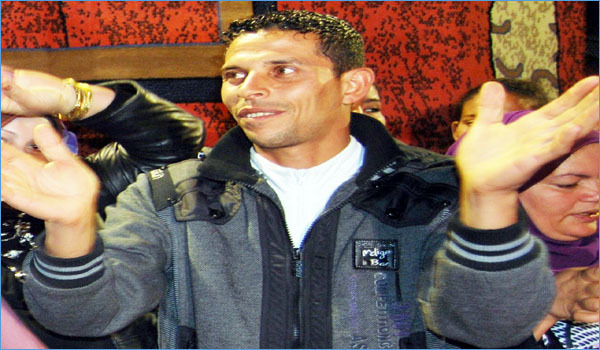

Voor de nieuwste ontwikkelingen, bekijk hieronder:
klik op bovenstaand logo
Hieronder een serie artikelen of links naar bijdragen (nationaal en internationaal), die ik, om verschillende redenen, de moeite waard vind. Het materiaal zal waarschijnlijk dagelijks worden aangevuld
“Ik begrijp jullie nu.” Een zichtbaar aangedane Zine el Abidine Ben Ali, de Tunesische Gerhard Schröder, wiens haren met de jaren almaar zwarter werden, begrijpt na 23 jaar tirannie eindelijk wat de mensen willen. Hij heeft daarom maar meteen het vliegtuig gepakt en het land verlaten.
In 1987 kwam hij via een staatsgreep aan de macht. Hij verdreef de 84 jarige Habib Bourguiba die het land al sinds de jaren 50 leidde en die sterk Westers georiënteerd was en uiterst seculier. Zo werden Tunesiërs aangemoedigd niet te vasten tijdens de ramadan. Bourguiba voerde hervormingen door en moderniseerde het land, maar ook hij kon geen afstand nemen van de macht en werd voor het leven benoemd tot hij in 1987 door Zine el Abidine werd verstoten en onder huisarrest geplaatst tot zijn dood in 2000. Tijdens zijn leiderschap werkte Bourguiba aan een decadent familiemausoleum waar hij na zijn dood is bijgezet.
Nu, 23 jaar later, is de man die zich als een verlosser presenteerde dan verdreven. Door het volk.
In alle jaren dat ik de Arabische media en ontwikkelingen bijhoud, was Tunesië het minst toegankelijke land. De binnenlandse kranten hadden elke dag weer Zinedine als hoofdnieuws en betrouwbaar nieuws vinden was lastig. Afgelopen jaar kwam ik af en toe een bericht tegen over een journalist in hechtenis of de onderdrukking, maar het was minimaal.
Verder lezen op http://www.frontaalnaakt.nl/archives/tunesie.html
The Independent, Wednesday, 26 January 2011: http://www.independent.co.uk/opinion/commentators/fisk/robert-fisk-a-new-truth-dawns-on-the-arab-world-2194488.html
The Palestine Papers are as damning as the Balfour Declaration. The Palestinian “Authority” – one has to put this word in quotation marks – was prepared, and is prepared to give up the “right of return” of perhaps seven million refugees to what is now Israel for a “state” that may be only 10 per cent (at most) of British mandate Palestine. And as these dreadful papers are revealed, the Egyptian people are calling for the downfall of President Mubarak, and the Lebanese are appointing a prime minister who will supply the Hezbollah. Rarely has the Arab world seen anything like this. To start with the Palestine Papers, it is clear that the representatives of the Palestinian people were ready to destroy any hope of the refugees going home.
It will be – and is – an outrage for the Palestinians to learn how their representatives have turned their backs on them. There is no way in which, in the light of the Palestine Papers, these people can believe in their own rights. They have seen on film and on paper that they will not go back. But across the Arab world – and this does not mean the Muslim world – there is now an understanding of truth that there has not been before. It is not possible any more, for the people of the Arab world to lie to each other. The lies are finished. The words of their leaders – which are, unfortunately, our own words – have finished. It is we who have led them into this demise. It is we who have told them these lies. And we cannot recreate them any more. In Egypt, we British loved democracy. We encouraged democracy in Egypt – until the Egyptians decided that they wanted an end to the monarchy. Then we put them in prison. Then we wanted more democracy. It was the same old story. Just as we wanted Palestinians to enjoy democracy, providing they voted for the right people, we wanted the Egyptians to love our democratic life. Now, in Lebanon, it appears that Lebanese “democracy” must take its place. And we don’t like it. We want the Lebanese, of course, to support the people who we love, the Sunni Muslim supporters of Rafiq Hariri, whose assassination – we rightly believe – was orchestrated by the Syrians. And now we have, on the streets of Beirut, the burning of cars and the violence against government. And so where are we going? Could it be, perhaps, that the Arab world is going to choose its own leaders? Could it be that we are going to see a new Arab world which is not controlled by the West? When Tunisia announced that it was free, Mrs Hillary Clinton was silent. It was the crackpot President of Iran who said that he was happy to see a free country. Why was this? In Egypt, the future of Hosni Mubarak looks ever more distressing. His son, may well be his chosen successor. But there is only one Caliphate in the Muslim world, and that is Syria. Hosni’s son is not the man who Egyptians want. He is a lightweight businessman who may – or may not – be able to rescue Egypt from its own corruption. Hosni Mubarak’s security commander, a certain Mr Suleiman who is very ill, may not be the man. And all the while, across the Middle East, we are waiting to see the downfall of America’s friends. In Egypt, Mr Mubarak must be wondering where he flies to. In Lebanon, America’s friends are collapsing. This is the end of the Democrats’ world in the Arab Middle East. We do not know what comes next. Perhaps only history can answer this question.
 Wednesday, January 26, 2011 – 2:31 PM
The popular uprising in Tunisia has surprised many — Western observers, theArab elites, and even those who have generated this remarkable episode. Thesurprise seems justified. How could one imagine that a campaign of ordinaryTunisians in just over one month would topple a dictator who presided over apolice state for 23 years? This is a region where the life expectancy of‘presidencies’ match only the ‘eternal’ rule of its sheiks, kings, andAyatollahs who bank on oil and political rent (western protection) to hang ontotheir power and subjugate their people. But the wonder about the Jasminerevolution — and the subsequent mass protests in Algeria, Yemen, Jordan, andmore spectacularly in Egypt’s numerous cities on Jan. 25, 2011 — also comesfrom a common mistrust among the Arab elites and their outside allies about theso called ‘Arab street’ — one that is simultaneously feared and pitied for its‘dangerous irrationality’ and ‘deplorable apathy.’
But history gives us a more complex picture. Neither ‘irrational’ and proneto riots nor ‘apathetic’ and ‘dead,’ the Arab street conveys collectivesentiments and dissent expressed by diverse constituencies who possess few orno effective institutional channels to express discontent. The result is astreet politics where Arabs nonetheless find ways to express their views andinterests. Today the Arab street is shifting. With new players and meansof communication, it may usher some far reaching changes in the region’spolitics. Verder lezen op: http://mideast.foreignpolicy.com/posts/2011/01/26/a_new_arab_street
Asef Bayat is Professor of Sociology and Middle East Studies at theUniversity of Illinois, Urbana-Champaign. He is the co-author of “BeingYoung and Muslim“ (Oxford University Press, 2010) and author of “Lifeas Politics: How Ordinary People Change the Middle East“ (StanfordUniversity press, 2010).
http://english.aljazeera.net/indepth/features/2011/01/2011126121815985483.html
The tragic life of a street vendor |
|||||||
Al Jazeera travels to the birthplace of Tunisia’s uprising and speaks to Mohamed Bouazizi’s family.Yasmine Ryan Last Modified: 20 Jan 2011 15:00 GMT
|
|||||||
In a country where officials have little concern for the rights of citizens, there was nothing extraordinary about humiliating a young man trying to sell fruit and vegetables to support his family. Yet when Mohamed Bouazizi poured inflammable liquid over his body and set himself alight outside the local municipal office, his act of protest cemented a revolt that would ultimately end President Zine El Abidine Ben Ali’s 23-year-rule. Local police officers had been picking on Bouazizi for years, ever since he was a child. For his family, there is some comfort that their personal loss has had such stunning political consequences. “I don’t want Mohamed’s death to be wasted,” Menobia Bouazizi, his mother, said. “Mohamed was the key to this revolt.” Simple, troubled life Mohamed Bouazizi was 10 years old when he became the main provider for his family, selling fresh produce in the local market. He stayed in high school long enough to sit his baccalaureate exam, but did not graduate. (He never attended university, contrary to what many news organisations have reported). Bouazizi’s father died when he was three years old. His elder brother lives away from the family, in Sfax. Though his mother remarried, her second husband suffers from poor health and is unable to find regular work.
“He didn’t expect to study, because we didn’t have the money,” his mother said. At age of 19, Mohamed halted his studies in order to work fulltime, to help offer his five younger siblings the chance to stay in school. “My sister was the one in university and he would pay for her,” Samya Bouazizi, one of his sisters, said. “And I am still a student and he would spend money on me.” He applied to join the army, but was refused, as were other successive job applications. With his family dependant on him, there were few options other than to continue going to market. By all accounts, Bouazizi, just 26 when he died earlier this month, was honest and hardworking. Every day, he would take his wooden cart to the supermarket and load it would fruit and vegetables. Then he would walk it more than two kilometres to the local souk. Police abuse And nearly everyday, he was bullied by local police officers. “Since he was a child, they were mistreating him. He was used to it,” Hajlaoui Jaafer, a close friend of Bouazizi, said. “I saw him humiliated.”
The abuse took many forms. Mostly, it was the type of petty bureaucratic tyranny that many in the region know all too well. Police would confiscate his scales and his produce, or fine him for running a stall without a permit. Six months before his attempted suicide, police sent a fine for 400 dinars ($280) to his house – the equivalent of two months of earnings. The harassment finally became too much for the young man on December 17. That morning, it became physical. A policewoman confronted him on the way to market. She returned to take his scales from him, but Bouazizi refused to hand them over. They swore at each other, the policewoman slapped him and, with the help of her colleagues, forced him to the ground. The officers took away his produce and his scale. Publically humiliated, Bouazizi tried to seek recourse. He went to the local municipality building and demanded to a meeting with an official. He was told it would not be possible and that the official was in a meeting. “It’s the type of lie we’re used to hearing,” said his friend. Protest of last resort With no official wiling to hear his grievances, the young man brought paint fuel, returned to the street outside the building, and set himself on fire. For Mohamed’s mother, her son’s suicide was motivated not by poverty but because he had been humiliated. “It got to him deep inside, it hurt his pride,” she said, referring to the police’s harassment of her son. The uprising that followed came quick and fast. From Sidi Bouzid it spread to Kasserine, Thala, Menzel Bouzaiene. Tunisians of every age, class and profession joined the revolution. In the beginning, however, the outrage was intensely personal. “What really gave fire to the revolution was that Mohamed was a very well-known and popular man. He would give free fruit and vegetables to very poor families,” Jaafer said.
It took Ben Ali nearly two weeks to visit Mohamed Bouazizi’s bedside at the hospital in Ben Arous. For many observers, the official photo of the president looking down on the bandaged young man had a different symbolism from what Ben Ali had probably intended. Menobia Bouazizi said the former president was wrong not to meet with her son sooner, and that when Ben Ali finally did reach out to her family, it was too late – both to save her son, and to save his presidency. He received members of the Bouazizi family in his offices, but for Menobia Bouazizi, the meeting rang hollow. “The invite to the presidential palace came very late,” she said. “We are sure that the president only made the invitation to try to derail the revolution.” “I went there as a mother and a citizen to ask for justice for my son.” “The president promised he would do everything he could to save our son, even to have him sent to France for treatment.” The president never delivered on his promises to her family, Menobia Bouazizi said. Contagious uprising But by the time Menobia Bouazizi’s son died of his burns on January 4, the uprising had already spread across Tunisia. Fedya Hamdi, the last police officer to antagonise the street vendor, has since fled the town. She was reportedly dismissed, but her exact whereabouts are unknown. Meanwhile, the body of the man who started a revolution now lies in a simple grave outside Sidi Bouzid, surrounded by olive trees, cactuses and blossoming almond trees. He is sorely missed by his family, whose modest house is now one of the busiest in Sidi Bouzid, with a steady flow of journalists who have only just discovered the town where it all began. “He was very sincere,” Basma Bouazizi, his shy 16-year-old sister, said. “We are like soulless bodies since he left.” “We consider him to be a martyr,” Mahmoud Ghozlani, a local member of the Progressive Democratic Party (PDP), said in an interview metres away from the spot where the street vendor set himself on fire. Proof itself of the progress made in four short weeks: such an interview with an opposition activist on the streets of Sidi Bouzid would not have been possible until the day Bouazizi inspired the revolt. Part One of a two-part series. See also: How the people of Sidi Bouzid launched a revolution. Follow Yasmine Ryan on Twitter @yasmineryan |
How Tunisia’s revolution began |
||
From day one, the people of Sidi Bouzid broke through the media blackout to spread word of their uprising.Yasmine Ryan Last Modified: 26 Jan 2011 14:39 GMT
|
||
Sidi Bouazid, Tunisia – The people of Sidi Bouzid overcame heavy censorship and police repression to ensure that their uprising did not go unnoticed in silence. Protesters took to the streets with “a rock in one hand, a cell phone in the other,” according to Rochdi Horchani – a relative of Mohamed Bouazizi – who helped break through the media blackout. Since the same day of the self-immolation of the 26-year-old street vendor that triggered riots causing the Tunisian leadership to flee the country, family members and friends used social media to share the news of what was happening in Sidi Bouzid with international media. Breaking through the media blackout Mohamed Bouazizi was not the first Tunisian to set himself alight in an act of public protest. Abdesslem Trimech, to name one of many cases occurred without any significant media attention, set himself ablaze in the town of Monastir on March 3 after facing bureaucratic hindrance in his own work as a street vendor. Neither was it evident that the protests that begin in Sidi Bouzid would spread to other towns. There had been similar clashes between police and protesters in the town of Ben Guerdane, near the border with Libya, in August. The key difference in Sidi Bouzid was that locals fought to get news of what was happening out, and succeeded. “We could protest for two years here, but without videos no one would take any notice of us,” Horchani said. On December 17, he and Ali Bouazizi, a cousin of Mohamed Bouazizi, posted a video of a peaceful protest led by the young man’s mother outside the municipality building. That evening, the video was aired on Al Jazeera’s Mubasher channel. Al Jazeera’s new media team, which trawls the web looking for video from across the Arab world, had picked up the footage via Facebook. Tunisian media, in contrast, ignored the growing uprising until Nessma TV broke the silence on December 29. And aside from a solid core of activists, most Tunisians did not dare repost the videos on Facebook or even to “like” them, until president Zine El Abidine Ben Ali’s final hours. Yet even if a muted majority did not actively share news of the protests online until mid-January, Tunisia’s 3.6 million internet users – a third of the population, one of the highest penetration rates on the African continent, according to Internet World Stats – were able to follow news of the uprising on social media thanks to a solid core of activists. Throughout the uprising, Tunisian protesters relied on Facebook to communicate with each other. Facebook, unlike most video sharing sites, was not included in Tunisia’s online censorship. Non-internet users kept abreast of the protests via satellite news channels including Al Jazeera, France 24 and, playing catch-up on its competitors, Al Arabiya. The hashtags on Twitter tell the tale of how the uprising went from being local to national in scope: #bouazizi became #sidibouzid, then #tunisia. Media wars get physical The Tunisian authorities in the region tried every means possible to thwart the flow of videos. There were internet and power outages in Sidi Bouzid and neighbouring towns. On January 3, a string of web activists were struck by a systematic, government-organised “phishing” operation aimed at wiping out their online dissent. Bloggers, web activists and a rapper who had published a song criticising the government on YouTube were arrested on January 7. In spite of the attempts to silence them, people went to extreme lengths to make sure their videos were posted on the web. Ali Bouazizi still has a black eye where police struck him in retaliation for his videos. From the courtroom to Facebook Dhafer Salhi, a local lawyer who witnessed Mohamed Bouazizi’s act of self-immolation, said he asked the head of police to meet with the young man’s family that day to try to defuse the anger on the street. “I told [the head of police] that if you don’t get [the Bouazizi family] in, the country will be burned,” Salhi said. “He refused, by arrogance and ignorance.” Frustrated by the lack of accountability by officials, Salhi became an active participant in the protests. The lawyer used Facebook to organise protests, sending out invites to his friends. He was one of the web activists targeted by the Tunisian authorities in the phishing operation. They managed to hijack his Facebook account, but Salhi simply created a new account. Protesters get organised The protests that erupted in Sidi Bouzid were indeed spontaneous, yet they were marked by a level of organisation and sophistication that appears grounded in the sheer determination of those who participated in them. The Sidi Bouzid branch of the UGTT was engaged in the uprising from day one. While the national leadership of the Tunisian General Labour Union (UGTT) is generally viewed as lacking political independence from the ruling class, its regional representatives have a reputation for gutsy engagement. “The major driving force behind these protesters is the Sidi Bouzid union, which is very strong,” said Affi Fethi, who teaches physics at a local high school. For Fethi, it was when police killed protesters in nearby towns including Menzel Bouziane and Regueb that the regional protests became a nationwide uprising. “The person who helped this revolt the most is Ben Ali himself,” he said. “Why didn’t he make [the police] use rubber bullets?” Everyone interviewed for this article agreed that no opposition party – to the extent that independent parties existed under Ben Ali’s rule – was involved in co-ordinating the early protests, or even in offering moral support. Grassroots members of some opposition movements did, however, play an active role as individual activists (Ali Bouazizi, for instance, is a member of the Progressive Democratic Party). Watching the political theatre from afar Students, teachers, the unemployed and lawyers joined forces in Sidi Bouzid and neighbouring towns, braving torture and arrest. Nacer Beyaou, a student, said the uprising was about freedom and employment. The people of Sidi Bouzid feel their region is neglected, he said, and suffer from “abject destitution”. Yet now that the political momentum has moved to the capital, many locals fear that their region is once again being sidelined. “They’ve forgotten about us completely. There’s not a single minister from Sidi Bouzid,” the student said. Summing up the combination of poverty and humiliation that many people in Sidi Bouzid say pushed them to rise up in protest, another man put it this way: “Every day I ask my father to give me one dinar [70 cents], and I’m thirty years old.” A sign of the uncertainty that many are feeling here, the man was forthright in his political views, but said he preferred not to give his name “in case Ben Ali comes back”. Now that the politicians in Tunis have taken over, he said it was like sitting back and watching the theatre. With the initial euphoria that came when Ben Ali fled the country fast fading, the question here is whether or not there will be any tangible political and economic gains for Sidi Bouzid in the “new” Tunisia. The conclusion of a two-part series. See also: “The tragic life of a street vendor,” the story of Mohamed Bouazizi. Follow Yasmine Ryan on Twitter @yasmineryan. |
http://www.eutopiainstitute.org/2011/01/proud-to-be-a-tunisian/
 Proud to be a Tunisian
Yunus Khazri has lived half his life outside Tunisia. When he was a young man, he left his native country for Paris hoping to liberate himself from what he experienced as a suffocating and conservative context. His father was an Imam and he was among the few in his family who had a passion for texts, so he was trained in Islamic theology and law by his father and studied Islamology in France. Shortly after his arrival in France, Ben Ali came to power in Tunisia. At that time, Yunus was worried and could not know that he would not return to his country for many years. Today, he feels proud to be a Tunisian. When I visited him in his house in Amsterdam, he could not have looked happier.

“I hope that they know what they’re doing. Of course, I am worried that this revolution could turn out very badly, but at the moment I am very hopeful. In Tunisia, people just want more freedom. We don’t have a terrifying ideological leader – we are Muslims but not Islamists – and are not looking to impose only one view. The people just want democracy, something that will hopefully inspire other Arab countries. Some say that it is better to live in poverty than to live under Ben Ali. This is really essential. It’s an insight about human dignity and the importance of freedom. In the beginning, he wasn’t that terrible but later on things changed for the worse. In the West, no one paid much attention to Tunisia. If something happens in for example Iran, the entire media writes about it. But in the case of Tunisia, no one cared really. Moreover, even though a dictator was running the country, Tunisia was an ally of the West. President Chirac once even said that in Tunisia there is enough food, education and no war, so people should stop complaining. But the opposition in France thought differently and today we see that reality resists such discriminating simplifications. People are not satisfied with just bread. They too want what everybody has in rich countries such as France: freedom! Liberté! Tunisia is a country where an individual such as Mohamed Bouazizi, who set himself on fire in a desperate act of protest, can become a symbol of resistance against the status quo. He and they are a phoenix that will rise from the ashes.”
As Yunus and I were looking at Youtube videos of the events unfolding in Tunisia his niece Lobna, who lives there, called him. Lobna is a young undergraduate student. She studies French and Yunus is very proud that the girls in his family can educate themselves more than in the past. “Now we are independent!” she said enthusiastically. It was hard not to hear how happy and emotional she was. Yunus showed me a picture of her as a teenager, holding an electric guitar. “Young people like rap music, but to me it sounds awkward. Times are changing and they should create new words and a new language. They should not wait for their elders. Thank God for the Internet! Thanks to the new social media, the dictator cannot hope to control everything, for example these new forms of music. For the first time, I really feel proud to be a Tunisian. Of course it is terrible that people have already been killed, but unfortunately freedom is not free. I’m not saying this to justify their deaths for a greater cause. It’s just an unfortunate truism that needs to be learned again and again. Today, I am so happy that these young people have the courage to resist the dictator. Today, I feel as if my dignity as a person has been restored.”
Yunus even opened a bottle of champagne for us to drink and celebrate the resistance in Tunisia. In his enthusiasm he couldn’t help reading a verse from the Qur’an (16: 67): “And from the fruits of the palm trees and grapevines you take intoxicant and good provision. Indeed in that is a sign for a people who reason.”
This entry was posted in Midden-Oosten, Wereld. Bookmark the permalink. Pooyan Tamimi Arab | Monday 24 January 2011

Cairo
| Uitgegeven: | 28 januari 2011 09:20 |
| Laatst gewijzigd: | 28 januari 2011 09:20 |

”Ik ben er zeker van dat er geen nieuwe kandidatuur komt van Mubarak of een machtsoverdracht aan zijn zoon.”
De 65-jarige Marzouki leidt de Congres Partij voor de Republiek (CPR). De partij zet zich in voor een democratisch Tunesië en was verboden onder president Ben Ali. De president is deze maand het land ontvlucht wegens aanhoudende betogingen van de ontevreden bevolking.
Hij verwacht ook dat de leider van Algerije zal vallen, terwijl die van Syrië in moeilijkheden komt. ”Een lente van democratie in de Arabische wereld”, zei hij.
| © ANP |
(http://www.nu.nl/buitenland/2433470/lente-van-democratie-in-arabische-wereld.html)
Washington needs a friendly regime in Cairo more than it needs a democratic government
Simon Tisdall (bron: http://www.guardian.co.uk/commentisfree/cifamerica/2011/jan/28/obama-clinton-wobble-egypt-mubarak )
guardian.co.uk, Friday 28 January 2011 18.20 GMT
 Anti-government protestors clash with riot police in Cairo in the challenge to President Hosni Mubarak’s 30-year rule. Photograph: Ben Curtis/APCaught off guard by the escalating unrest in Egypt, the Obama administration is desperate to avoid any public appearance of taking sides. But Washington’s close, longstanding political and military ties to President Hosni Mubarak’s regime, plus annual financial support worth about $1.5bn, undermine its claims to neutrality.
While the US favours Egyptian political reform in theory, in practice it props up an authoritarian system for pragmatic reasons of national self-interest. It behaved in much the same way towards Saddam Hussein’s regime in the 1980s, when Iraq was at war with Iran. A similar tacit bargain governs relations with Saudi Arabia. That’s why, for many Egyptians, the US is part of the problem.
Like tottering tightrope walkers, the balancing act performed by Barack Obama and the secretary of state, Hillary Clinton, has been excruciating to watch. When the protests kicked off, Clinton urged all parties “to exercise restraint”. This phrase is useful when politicians are unsure of their ground.
Clinton also struck a lopsided note. “Our assessment is that the Egyptian government is stable and is looking for ways to respond to the legitimate needs and interests of the Egyptian people,” she said. Against a backdrop of street battles, beatings-up, teargas, flying bricks, mass detentions and attempts to shut information networks, her words sounded unreal, even foolish.
Mohamed ElBaradei, the establishment rebel who joined the protests, was flabbergasted. “If you would like to know why the United States does not have credibility in the Middle East, that is precisely the answer,” he said.
Clinton’s emphasis shifted the next day, as if to correct the balance. Mubarak must allow peaceful protests, she said. “I do think it’s possible for there to be reforms and that is what we are urging and calling for.”
Today she said: “We are deeply concerned about the use of violence by Egyptian police and security forces against protesters. We call on the Egyptian government to do everything in its power to restrain security forces.” Still she tried to face both ways: “At the same time, protesters should also refrain from violence and express themselves peacefully.”
Obama maintained he had “always” told Mubarak that reform was “absolutely critical”. But he also wobbled back in the other direction, saying the Egyptian leader was a good friend. “Egypt’s been an ally of ours on a lot of critical issues. Mubarak has been very helpful,” Obama said.
Amid the juggling, one fact may be pinned down: the US would not welcome Mubarak’s fall and the dislocation a revolution would cause in Egypt and across a chronically unstable region. Gradual reforms of the kind Clinton discussed in a recent speech in Doha about the Arab world, and a competitive presidential election this autumn, would probably be Washington’s preferred prescription. As matters stand now, this is the least likely outcome.
Either the regime will suppress the unrest, possibly by ever more brutal means, as happened in Iran in 2009; or the uprising will spiral out of control and the regime will implode, with unpredictable consequences, as in Tunisia. In this latter scenario, one outcome could be a military takeover in the name of national salvation. It has happened before in Egypt, in 1952, when the Free Officers Movement forced King Farouk to abdicate. If it happened again, the US might be expected to endorse it.
That’s because, in the final analysis, the US needs a friendly government in Cairo more than it needs a democratic one. Whether the issue is Israel-Palestine, Hamas and Gaza, Lebanon, Iran, security for Gulf oil supplies, Sudan, or the spread of Islamist fundamentalist ideas, Washington wants Egypt, the Arab world’s most populous and influential country, in its corner. That’s the political and geostrategic bottom line. In this sense, Egypt’s demonstrators are not just fighting the regime. They are fighting Washington, too.
Een bijzonder filmpje dat ik kreeg toegestuurd door een Iraakse vriend

Demonstratie in Amsterdam (Dam), 1-2-2011 (foto Floris Schreve)
New York Times 1-2-2011 http://www.nytimes.com/2011/02/02/world/middleeast/02egypt.html?_r=2&hp

A man held an Egyptian flag during a massive rally in Tahrir Square on Tuesday in Cairo. More Photos »
Cairo – In a test of wills that seemed to be approaching a critical juncture, more than 100,000 people crammed into Cairo’s vast Tahrir Square on Tuesday, seeking to muster a million protesters demanding the ouster of President Hosni Mubarak.
Their mood was jubilant, as though they had achieved their goals, even though Mr. Mubarak remained in power a day after the Egyptian military emboldened the protesters by saying they would not use force against them and the president’s most trusted adviser offered to negotiate with his adversaries.
There were reports that the government was seeking to choke off access to the capital to thwart the demonstrators’ ambitions for the most decisive show of strength so far. But the scale of the protest was far bigger and more tumultuous than in the previous week, suggesting that the authorities had been unable to prevent the uprising from reaching what had been seen by all sides as a potential turning point. Tens of thousands of people also took to the streets of Alexandria, Egypt’s second city north of Cairo on the Mediterranean coast.
Events around the region have taken unpredictable turns in recent weeks. On Tuesday afternoon, King Abdullah II of Jordan, a small and generally stable nation, made the surprise announcement that he had dismissed the government in response to protesters’ demands for greater freedoms.
The crowd in Cairo offered a remarkable tapestry of Egypt’s society, from the most westernized to the most traditional, from young women with babies to old men with canes. “Look at the faces of the old men — they are young again,” said Ahmed Zemhom, 37, a former math teacher who makes a living as a cab driver.
Seeking to impose some kind of order, the military set up checkpoints to search people entering the square, presumably for hidden weapons, separating them by gender so that women could be patted down only by other females. But there were no immediate reports of clashes, and little sign of any security police.
The fast-moving developments appeared to weaken Mr. Mubarak’s grip on power just two weeks after a group of young political organizers called on Facebook for a day of protest inspired by the ouster of another Arab strongman, in Tunisia.
A Western diplomat, who spoke in return for anonymity because of the sensitivity of the situation, said Monday night’s moves by the military were believed to be part of choreographed maneuvers by the most senior people around Mr. Mubarak to set the stage for his eventual exit.
If that belief is borne out by events, however, it remained to be seen whether protesters would be satisfied by Mr. Mubarak’s departure or would demand more far-reaching change, as demonstrators in Tunisia did after its strongman president, Zine el-Abidine Ben Ali, fled in mid-January.
In Tahrir, or Liberation, Square, the chants of the huge crowd suggested that the demonstrators would not stop at Mr. Mubarak’s departure. “The people of Egypt want the president on trial,” some chanted for the first time, while others chorused: “The people of Egypt want the government to fall.”
“Nobody wants him, nobody,” said El-Mahdy Mohamed, one of the demonstrators. “Can’t he see on the TV what’s happening?”
As opposition groups sought to stake out positions, Mohamed ElBaradei, the former head of the International Atomic Energy Agency and a Nobel laureate who has emerged as a potential rallying point for opposition, said on Tuesday that Mr. Mubarak must leave the country before any dialogue can start between the opposition and the government, Reuters reported.
“There can be dialogue but it has to come after the demands of the people are met and the first of those is that President Mubarak leaves,” he told Al Arabiya television. “I hope to see Egypt peaceful and that’s going to require as a first step the departure of President Mubarak. If President Mubarak leaves, then everything will progress correctly.”
His words were apparently a first response to an offer of talks on Monday night by Omar Suleiman, Mr. Mubarak’s right-hand man and newly appointed vice president.
By Tuesday morning, as a formal curfew that many have ignored was lifted, vast crowds flooded into Tahrir Square — a plaza that for some has assumed some of the symbolic importance of Tiananmen Square in Beijing during pro-democracy demonstrations there in 1989.
But, in marked contrast to those events, the military’s promise not to use force has emboldened demonstrators sensing that the political landscape of the country has shifted as decisively as at any moment in Mr. Mubarak’s three decades in power. The military seemed to aggressively assert itself as an arbiter between two irreconcilable forces: a popular uprising demanding Mr. Mubarak’s fall and his tenacious refusal to relinquish power.
And even as the square itself filled up, rivers of protesters flowed from side streets.
Overnight, soldiers boosted their presence around the square, with tanks and armored personnel carriers guarding some of its entrances and stringing concertina wire to block off some streets. The black-clad police — reviled by many protesters as a tool of the regime — also seemed to have been deployed in larger numbers, though not on the same scale as when the protests started a week ago.
News reports said the authorities had sought to isolate Cairo from the rest of the country, throwing up roadblocks on main highways and canceling train and bus services to prevent demonstrators from reaching the city. There was no official confirmation of the report but witnesses said many people who had been stopped at roadblocks simply walked into the center of Cairo.
In a further token of the paralysis of normal business, news reports said, the Cairo stock exchange announced that it would remain closed for a fourth successive day on Wednesday.
Busy schedule? Click here to keep up with Truthout with free email updates.
Thousands of foreigners have fled the capital, around 1,200 of them on evacuation flights arranged by the American Embassy that began on Monday. By mid-afternoon on Tuesday, two more flights chartered by the State Department had left Cairo for Istanbul, while passengers were boarding other planes for Athens and Larnaca, Cyprus, officials said. Many more flights were likely on Wednesday.
How far Mr. Mubarak is offering to bend in negotiations remains to be seen, and it appeared to be too soon to write off the survival of his government. In Washington, the State Department on Monday dispatched a veteran diplomatic troubleshooter, Frank Wisner, a former ambassador in Cairo and elsewhere, to meet Mr. Mubarak and other officials.
In a further diplomatic twist, Prime Minister Recep Tayyip Erdogan of Turkey — whose country is often held up as a model of Western-style democracy within a predominantly Islamic nation — canceled a visit to Egypt planned for next week, urging Mr. Mubarak to “listen to people’s outcries and extremely humanistic demands” and to “meet the freedom demands of people without a doubt,” Reuters reported.
The week-old uprising here entered a new stage about 9 p.m. on Monday when a uniformed military spokesman declared on state television that “the armed forces will not resort to use of force against our great people.” Addressing the throngs who took to the streets, he declared that the military understood “the legitimacy of your demands” and “affirms that freedom of expression through peaceful means is guaranteed to everybody.”
A roar of celebration rose up immediately from the crowd of thousands of protesters still lingering in Tahrir, or Liberation, Square, where a television displayed the news. Opposition leaders argued that the phrase “the legitimacy of your demands” could only refer to the protests’ central request — Mr. Mubarak’s departure to make way for free elections.
About an hour later, Mr. Suleiman, the vice president, delivered another address, lasting just two minutes.
“I was assigned by the president today to contact all the political forces to start a dialogue about all the raised issues concerning constitutional and legislative reform,” he said, “and to find a way to clearly identify the proposed amendments and specific timings for implementing them.”
The protesters in the streets took Mr. Suleiman’s speech as a capitulation to the army’s refusal to use force against them. “The army and the people want the collapse of the government,” they chanted in celebration. Even some supporters of Mr. Mubarak acknowledged that events may have turned decisively against him after the military indicated its refusal to confront the protesters.
There were some faint dissident voices, however. In Alexandria on Tuesday, young women handed out leaflets to motorists in Alexandria urging people not to attend Tuesday’s demonstrations. “Do not turn yourselves over to outside forces trying to create chaos in our country,” the leaflets said. The argument seemed unlikely to dissuade protesters who had set up tents in front of the Misr train station in central Alexandria.
Mr. Mubarak’s previously unquestioned authority had already eroded deeply over the preceding three days. On Friday, hundreds of thousands of unarmed civilian protesters routed his government’s heavily armed security police in a day of street battles, burning his ruling party’s headquarters to the ground as the police fled the capital. On Saturday, Mr. Mubarak deployed the military in their place, only to find the rank-and-file soldiers fraternizing with the protesters and revolutionary slogans being scrawled on their tanks.
And on Sunday, leaders of various opposition groups met to select Mr. ElBaradei to negotiate for them in anticipation of talks with Mr. Mubarak about forming a transitional unity government — an idea Mr. Mubarak’s surrogate embraced Monday.
Mr. Mubarak’s government came under pressure from another front as well: the swift deterioration of the economy. The protests, and the specter of looting that followed the police withdrawal, have devastated tourism, the source of half of Egypt’s foreign income, and shut down transportation.
On Monday foreign embassies scrambled to book charter flights to evacuate their citizens as thousands of people jammed the Cairo airport trying to flee the country. International companies, including those in the vital oil and natural gas industries, shuttered their operations.
As late as midday, however, Mr. Mubarak seemed to be trying to wait out the protesters. He appeared on television soberly shaking the hands of a new roster of cabinet ministers in a public demonstration that even though protesters may control the streets, he remained head of state.
David D. Kirkpatrick reported from Cairo, and Alan Cowell from London . Reporting was contributed by Mona El-Naggar, Kareem Fahim, Anthony Shadid and Robert F. Worth from Cairo; and Nicholas Kulish from Alexandria.
http://opinie.volkskrant.nl/artikel/show/id/7753/Arabische_lente
Een spook waart door het Midden-Oosten. In Egypte komt het volk in opstand tegen een autoritair regime dat duizenden politieke gevangenen in de cel heeft gegooid. Een regime dat politieke tegenstanders martelt. Een regime dat maling heeft aan de vrijheid van meningsuiting en zonder pardon televisiekanalen en het internet afsluit.
Elke democraat zou moeten juichen bij deze revolutie. Zoals de in Amerika woonachtige Egyptische journaliste Mona Eltahawy (volg haar! @monaeltahawy) in een tweet schreef: Moebarak is de Berlijnse muur. ‘Down, down, down with him.’ Hierin klinkt de hoop door van een omwenteling die het hele Midden-Oosten zal bevrijden.
Retoriek
En toch regeert bij velen niet de hoop, maar de angst. De angst dat in Egypte straks islamisten aan de macht komen. Het is een echo van de retoriek waarmee Mubarak al jarenlang zijn ijzeren greep op Egypte rechtvaardigt. Hij presenteert zich als het laatste bastion tegen een tweede Iran aan de Nijl. Het is de retoriek waarmee hij miljarden steun van de Amerikanen heeft binnengeharkt.
Het is niet moeilijk om deze angst voor de politieke macht van islamisten te voeden. Uit een opiniepeiling van Pew Research van vorig jaar blijkt dat ruim driekwart van de Egyptisch moslims voorstander is van steniging als straf voor overspel en van het afhakken van handen van dieven. Van de Egyptische moslims is 85 procent voorstander van een grote rol van de islam in de politiek. Het zijn cijfers die velen doen huiveren. Maar uit dezelfde opiniepeiling blijkt ook dat een grote meerderheid van de Egyptische moslims zich keert tegen Al Qaida en dat vooral onder jongeren een meerderheid niks moet weten van Hezbollah of Hamas.
Praktisch
Het is waar dat de Moslim Broederschap een straf georganiseerde oppositiebeweging is. Maar de Moslim Broederschap staat absoluut niet op één lijn met de machthebbers in Iran. Het is een teken aan de wand dat ze hun steun hebben uitgesproken aan de seculiere ElBaradei als vertegenwoordiger van de oppositie. Bovendien is het opvallend dat in deze opstand de Moslim Broederschap niet het voortouw heeft. De leuzen en eisen zijn niet religieus, maar praktisch: Mubarak moet aftreden. Het gaat deze activisten niet om de kleding van de vrouwen, maar om vrijheid, banen en brood.
In de angst voor de islamisten openbaart zich een diepgeworteld wantrouwen of democratie en islam wel kunnen samengaan. Mensen die geloven dat dit onmogelijk is presenteren zich graag als realisten. Zij durven de pijnlijke waarheid onder ogen te zien. Maar die pijnlijke waarheid leidt ook tot pijnlijke politieke conclusies. Het betekent namelijk dat landen waarvan de meerderheid van de bevolking moslim is, maar in twee smaken komen. Of een autoritair regime houdt met behulp van het leger de islamitische massa in bedwang of de islamitische meerderheid laat zich gelden en dan komt er een tweede Iran. De naïviteit van deze zogenaamde realisten is dat ze denken dat die autoritaire strategie op lange termijn houdbaar is.
Derde weg
De protesten in Egypte voeden de hoop dat er een derde weg mogelijk is. Een democratische rechtsstaat waar islamitische politieke partijen niet verboden zijn, maar waar die partijen zich wel conformeren aan de spelregels van de democratische rechtsstaat, zoals de vrijheid van godsdienst, de vrijheid van meningsuiting en de bescherming van minderheden. Mensen die geloven dat zo’n derde weg, zo’n Arabische lente mogelijk is, zoals de Arabiste Petra Stienen die het boek schreef Dromen van een Arabische Lente, worden vaak weggezet als naïeve dromers.
Er is inderdaad geen garantie dat deze derde weg in Egypte zal overwinnen. Maar waarom wordt hoop als emotioneel afgeserveerd en angst als realistisch verkocht? Angst is ook een emotie en Egypte laat zien dat wie zich door angst laat leiden, kiest voor een strategie die onhoudbaar en dus naïef is.
Spook
Er waart een spook door Egypte. En iedereen die zich wijs maakt dat dit een islamistisch spook is, doet zichzelf tekort. Hij doet de democratische krachten in Egypte tekort. Hij doet de jongeren tekort die de straat op gaan, omdat ze wel naar de universiteit zijn geweest, maar nu geen baan kunnen vinden. Hij doet de politieke gevangenen tekort die vanwege hun opvattingen jarenlang gevangen hebben gezeten. Hij doet de mensen tekort die dag na dag het uitgaansverbod aan hun laars lappen om op het plein van de bevrijding de naam van dat plein eer aan te doen.
http://daralhayat.com/print/230234


It is no longer a question of whether Egypt is going to change, for it is changing. The question is about the limits of this change: how will it take place? At what frequency? To what extent? Are we faced with a partial reform of the regime or are we on the path to a full-fledged transformation? One might say that some change has taken place through the wave of protests that is invading Egypt. The issue of legacy [of the presidency to Jamal Mubarak] is not on the table anymore, as shown by the appointment of Omar Suleiman as Vice-President. The structure of the government that was announced yesterday and the absence of businessmen in it also enter within the same context. What is taking place in the ruling party confirms this trend.
In light of the current situation, it can also be said that it is entirely unlikely that President Husni Moubarak will be a candidate in the upcoming presidential elections next fall. The events also imposed a third point, which is the acknowledgment from inside the regime itself that the last legislative elections were rigged on a large scale. The fall of Ahmed Ezz from his position in the party was like an admission of the validity of the accusations that were made against these elections. The fourth point is the increased conviction that it is impossible to exit the current crisis except through a broad national dialogue that would translate the decision to listen to people. Dialogue means being ready to at least look into the amendments to the constitution that are being demanded by the opposition.
Thus, the participants in the protests can say that their movement has imposed some change on the situation that has been in the country for three decades. The decision-maker realized that it is impossible to deal with the emerging situation with the security tools. The appointments were a clear recognition. The regime certainly preferred the return of calm and the imposition of security before making any change or appointment. But it concluded that going back to the previous methods is impossible. What is happening is completely new and unprecedented and cannot be treated with the medication that belongs to a bygone era.
The time factor holds exceptional importance in such great crises. Sometimes hours or days are spent in hesitation, cautiousness, or trying to renew the wager on an old lexicon or in fear. Time is golden in great crises. You might have to accept on Thursday what is worse than what you rejected on Monday. And what is accepted on Thursday might be outdone by time on Saturday, as the voice of the street burns phases and half solutions.
The protest movement made Egypt enter a transitory phase. The question is about who is leading this phase and what are its reins. Here, we must turn to the army, from which ranks the President has come for sixty decades. The past few days have shown that the army, which dealt very wisely with the protests movement, has great acclaim in the country. We saw the protestors welcome and greet the army tanks and write some of their demands on them. The army refrained from repressing the protests movement, but this absolutely doesn’t mean that it decided to fully bow to the street movement and that it will be ready to accept the determination of the regime’s future in the street itself.
It is evident that the recent appointments did not convince the protestors. Any success of the one-million-person protest that protestors called for organizing today will mean the draining of any positive impact that the appointments could have made. The success will raise the ceiling of demands and push them towards the claim for turning the page immediately. The attention is shifted towards the army and its readiness to accept a full change that goes beyond the president to encompass the regime itself. The army might consider such change to hold some risks in the absence of a clear leadership by the opposition and in the absence of a great, effective, and accepted opposition force with which the army can reach a settlement, and which would not cause a change in the regime’s foundations and Egypt’s position.
Egypt is approaching the hour of the decisive test. It is most probable that some generals are looking at their watches. The phase of overthrows is over, but the loss of the game from the army’s hands will be dangerous. Hence, a “road map” is needed to come out of the crisis, one that is based on listening to people and setting stability regulators for a transitory phase that has clear features and goals.
http://daralhayat.com/print/230234
http://s.nos.nl/swf/nos_video_embed.swf
Toespraak Mubarak
http://english.aljazeera.net/news/middleeast/2011/02/201121191413252982.html
 |
|||||||||||||||||||||||||||||||||||||||||
|
|||||||||||||||||||||||||||||||||||||||||
NRC, 1-2-2011, http://www.nrc.nl/nieuws/2011/02/01/protesteren-tegen-het-regime-in-egypte-noem-jezelf-khaled-said/
 Betogers tonen foto’s van Khaled Said. Van voor en na de marteling. Foto AFP
Corruptie, politiegeweld, onderdrukking. Stuk voor stuk reden om de straat op te gaan. Maar voor massaprotest is een prikkel nodig. Een concreet incident dat raakt aan gedeeld ongenoegen.
Politieslachtoffer Khaled Said werd het symbool van de protesten in Egypte. Maar de drijvende kracht achter de symbolisering van Said wil geen bekendheid, laat staan roem. Op 6 juni 2010 werd de 28-jarige Said door agenten doodgeschopt voor een internetcafé. De reden was waarschijnlijk een filmpje, waarop Said laat zien hoe de politie drugsgeld onderling verdeelt. De moord maakte van Said echter nog geen symbool. Daarvoor was meer nodig.
Het doel was aanvankelijk een internetprotest tegen politiegeweld, maar na de protesten in Tunesië en de val van president Ben Ali werd het initiatief concreter en fysieker. El Shaheeed noemde een datum, dinsdag 25 januari. Nooit eerder demonstreerden zoveel mensen op straat tegen het regime van president Mubarak.
Of El Shaheeed de protesten van 25 januari op zijn conto kan schrijven is de vraag. Zeker is wel dat hij 375.000 volgers heeft. Als El Shaheeed iets schrijft verschijnt het op de Facebook-pagina’s van 375.000 mensen, voornamelijk Egyptenaren.
Facebook als vliegwiel, meer niet
In een interview met Newsweek – via Gmail Chat – is El Shaheeed bescheiden over zijn rol. Hij geeft niet echt orders, maar investeert in de interactie met zijn fans op Facebook. Discussies, peilingen, berichten doorplaatsen. Ook kunnen bezoekers via zijn pagina’s protestflyers downloaden, zodat de mensen die geen internet hebben toch bereikt worden. “Het is mijn taak om mensen te motiveren, te informeren en hen aan te moedigen deelgenoot te worden van dit evenement. Niet slechts verslaggeving.” Hij hoopt op een vliegwieleffect: door mensen klaar te stomen voor het protest wordt het protest onstuitbaar. El Shaheeed heeft nooit persoonlijke details van zichzelf weggegeven. En dat wil hij zo houden, zelfs als het doel bereikt is en hij niets heeft te vrezen.
Het succes van El Shaheeed is deels te danken aan zijn taalgebruik. Hij vermijdt al te politieke en religieuze uitspraken. Dat drijft groepen alleen maar uiteen, vindt hij. Het Egyptische volk moet samen optrekken. “Hij praat niet tegen de mensen”, zegt een activist over hem. “Hij praat met de mensen.”
Maar El Shaheeed is de laatste die de eer op zal strijken. “Dit gaat niet over mij”, zei hij tegen Newsweek. “Dit gaat over de mensen van Egypte. Ik wil straks mijn echte leven terug. Ik wil geen roem. Het was nooit mijn intentie dit te starten.” Met ‘dit’ bedoelt hij de massale betogingen op straat.
De betogingen stoppen kan hij niet, wil hij niet. Toen de regering internet afsloot – en El Shaheeed zijn Facebook-pagina’s niet kon bijwerken – gingen de protesten namelijk gewoon door. Als El Shaheeed dit al in gang heeft gezet, dan heeft hij zichzelf inmiddels overbodig gemaakt.
Vandaag, tijdens het grootste protest tot nu toe, is El Shaheeed weer aan het communiceren met zijn volgers. Vanmiddag richtte hij zich even tot journalisten. “Ik krijg maar vragen over mijn ideologie. Maar ik heb er geen één!”, schreef hij. “Deze revolutie is van iedereen. En iedereen zou er aan deel moeten nemen.”
Een ‘Nieuw Revolutionair’ clipje op Youtube, zoals er inmidddels al veel van zijn gemaakt
Posted: 01 Feb 2011 04:38 AM PST
Guest Author: Linda Herrera
Khaled SaidThe events in Tunisia and Egypt have riveted the region and the world. The eruptions of people power have shaken and taken down the seeming unbreakable edifices of dictatorship. (At the time of writing Mubarak has not formally acknowledged that he has been toppled, but the force of the movement is too powerful and determined to fathom any other outcome). Events are moving at breakneck speed and a new narrative for the future is swiftly being written. In the throes of a changing future it merits returning to the stories of two young men, the two faces that stoked the flames of revolution thanks to the persistence of on-line citizen activists who spread their stories. For in the tragic circumstances surrounding their deaths are keys to understanding what has driven throngs of citizens to the streets.
Mohammed Bouazizi has been dubbed “the father of Arab revolution”; a father indeed despite his young years and state of singlehood. Some parts of his life are by now familiar. This 26 year old who left school just short of finishing high school (he was NOT a college graduate as many new stories have been erroneously reporting) and worked in the informal economy as a vendor selling fruits and vegetable to support his widowed mother and five younger siblings. Overwhelmed by the burden of fines, debts, the humiliation of being serially harassed and beaten by police officers, and the indifference of government authorities to redress his grievances, he set himself on fire. His mother insists that though his poverty was crushing, it was the recurrence of humiliation and injustice that drove him to take his life. The image associated with Mohammed Bouazizi is not that of a young man’s face, but of a body in flames on a public sidewalk. His self-immolation occurred in front of the local municipal building where he sought, but never received, justice.
The story of 28 year old Egyptian, Khaled Said, went viral immediately following his death by beating on June 6, 2010. Two photos of him circulated the blogosphere and social networking sites. One was a portrait of his gentle face and soft eyes coming out of a youthful grey hooded sweatshirt; the face of an everyday male youth. The accompanying photo was of the bashed and bloodied face on the corpse of a young man. Though badly disfigured, the image held enough resemblance to the pre-tortured Khaled to decipher that the two faces belonged to the same person. The events leading to Khaled’s killing originated when he posted a video of two police officers allegedly dividing the spoils of a drug bust. This manner of citizen journalism has become commonplace since 2006. Youths across the region have been emboldened by a famous police corruption case of 2006. An activist posted a video on YouTube of two police officers sodomizing and whipping a minibus driver, Emad El Kabeer. It not only incensed the public and disgraced the perpetrators, but led to their criminal prosecution. On June 6, 2010, as Khaled Said was sitting in his local internet café in Alexandria two policemen accosted him and asked him for his I.D. which he refused to produce. They proceeded to drag him away and allegedly beat him to his death as he pleaded for his life. The officers claimed that Khaled died of suffocation when he tried to swallow a package of marijuana to conceal drug possession. But the power of photographic evidence combined with eyewitness accounts and popular knowledge of scores of cases of police brutality left no doubt in anyone’s mind that he was senselessly and brutally murdered by the very members of the police that were supposed to protect them. The court case of the two officers is ongoing.
Mohammed Bouazizi was not the first person to resort to suicide by self immolation out of desperation, there has been an alarming rise in such incidents in different Arab countries. And Khaled Said is sadly one of scores of citizens who have been tortured, terrorized, and killed by police with impunity. But the stories of these two young men are the ones that have captured the popular imagination, they have been game changers.
 Cartoon from the Facebook Group We are all Khaled Said
For the youth of Egypt and Tunisia, the largest cohort of young people ever in their countries, the martyrdoms of Khaled Said and Mohamed Bouaziz represent an undeniable tipping point, the breaking of the fear barrier. The youth have banned together as a generation like never before and are crying out collectively, “enough is enough!” to use the words of a 21 year old friend, Sherif, from Alexandria. The political cartoon of Khaled Said in his signature hoodie shouting to the Intelligence Chief, also popularly known “Torturer in chief” and now Mubarak’s Vice President, to “wake up Egypt” perfectly exemplifies this mood (from the Facebook group, We are all Khaled Said). No longer will the youth cower to authority figures tainted by corruption and abuses. These illegitimate leaders will cower to them. The order of things will change.
And so on January 25, 2011, inspired by the remarkable and inspiring revolution in Tunisia that toppled the twenty-three year reign of the dictatorship of Zine El Abidine Ben Ali, Egyptian youth saw it was possible to topple their dictator, Hosni Mubarak, of 31 years. Activists used different on-line platforms, most notably the April 6 Youth Movement and the “We are all Khaled Said” Facebook group to organize a national uprising against “Torture, Corruption, Poverty, and Unemployment.”
It is not arbitrary that civil rights, as exemplified in torture and corruption (recall Khaled Said), topped the list of grievances, followed by economic problems. For youth unemployment and underemployment will, under any regime, be among the greatest challenges of the times.
 Banner of the Egyptian uprising
No one could have anticipated that this initial call would heed such mass and inclusive participation. Youths initially came to the streets braving tanks, rubber bullets, tear gas (much of which is made in the US and part of US military aid, incidentally), detention, and even death. And they were joined by citizens of all persuasions and life stages; children, youth, elderly, middle aged, female, male, middle class, poor, Muslim, Christians, Atheists.
Contrary to a number of commentators in news outlets in North America and parts of Europe the two revolutions overtaking North Africa are not motivated by Islamism and there are no compelling signs that they will be co-opted in this direction. Such analyses are likely to be either ideologically driven or misinformed. In fact, Islam has not figured whatsoever into the stories of Bouazizi and Said. These are inclusive freedom movements for civic, political, and economic rights. To understand what is driving the movement and what will invariably shape the course of reforms in the coming period we need to return to these young men. Their evocative if tragic deaths speak reams about the erosion of rights and accountability under decades of corrupt dictatorship, about the rabid assault on people’s dignity. They remind us of the desperate need to restore a political order that is just and an economic order that is fair. Mohamed Bouazizi and Khaled Said have unwittingly helped to pave a way forward, and to point the way to the right side of history.
Linda Herrera is a social anthropologist with expertise in comparative and international education. She has lived in Egypt and conducted research on youth cultures and educational change in Egypt and the wider Middle East for over two decades. She is currently Associate Professor, Department of Education Policy, Organization and Leadership, University of Illinois at Urbana-Champaign. She is co-editor with A. Bayat of the volume Being Young and Muslim: New Cultural Politics in the Global North and South, published by Oxford University Press (2010).
Van http://palestinechronicle.com/:

Unravelling The Illusion: Democracy That Never Was – By William Cook, Palestine Chronicle (3/2/11) |
 |
 |
 |
| By William Cook, Palestine Chronicle |
| Wednesday, 02 February 2011 23:55 |
|
// 0diggsdigg
The Egyptian peoples’ revolution against their government forces to the fore the unfortunate reality that America’s friendship is an illusion created for its own benefit, a strategy, if you will, that creates a mirage of trust, compassion, and good will for the people while it disfranchises them from power, enriches the “inner circle,” establishes a brutal police force to control them, providing thereby a resident dictator that will do the bidding of America’s military-industrial complex to sustain its enormous need for on-going wars and a budget that saps the wealth of the nation itself. Mark that Egypt’s military spends 6 billion a year to maintain its million soldiers and absorbs another 1.3 billion of U.S “aid” to buy American warplanes, tanks, and helicopters. Virtually nothing is left for humanitarian needs or domestic relief. The people have had enough. Consider Iran, perhaps our most graphic undemocratic entrance into the greater middle-east. Our CIA assassinated the democratically elected Prime Minister, Mohammed Mossadegh, and installed our own “beholden” King, the Shah of Iran. He in turn created the SAVAK police to control the people enriching his benefactors by using American tax dollars to buy weapons from United States munitions’ industries. Clever, even demonic. But the Iranian people revolted. Twenty five years of undemocratic, dictatorial rule beneficial to U.S. and Israeli interests if understood in weapons sales and oil to say nothing of the Shah’s recognition of our puppet state, but disastrous for the Iranian people and America that now sees Iran as a major enemy in the mid-east. But we do not learn. Now, Mubarak’s 30 year strangulation of the Egyptian people appears to be unraveling while our administration and the Netanyahu governments look on in disbelief and fear. What do we do with our 1.5 billion that has served our dictator yearly for these many decades as a guarantee of peace with Israel? To whom will it go if, as Eli Shaked observes above, the “inner circle” alone in Egypt supports that agreement and they too are deposed? The Muslim Brotherhood? Mohammad ElBaradei? The Egyptian military? An “existential” quandary certainly! Israel’s Michael Ledeen, writing in Pajamas Media, states “Mohammed ElBaradei is one of the last men I would choose for leading Egypt to a ‘peaceful transition’ to greater democracy. He doesn’t like America and he’s in cahoots with Iran and the Muslim Brotherhood.” How does America protect its client state of Israel now? Consider what happens if Mubarak is dethroned: nearly half of Israel’s natural gas is imported from Egypt, gas needed by its own population as well as its military; Israel’s military planning relies on Mubarak’s government and its complicity in guarding the southern border of Gaza much to the dismay of the Egyptian people, a border that has already been punctured by escaped Hamas prisoners who have fled home through the tunnels; changes could be made in the control of the Suez Canal to the detriment of Israel, and, perhaps most importantly, Jordan and Saudi Arabia could become the next dominoes to fall toward Israel leaving it isolated in a landscape dominated by people unfriendly to it because of its undemocratic subjugation of the Palestinian people. It’s enlightening to peep in on the Daily Alert, the daily report prepared for the Conference of Presidents of Major Jewish Organizations by the Jerusalem Center for Public Affairs. If anything reflects the mindset of the lobbies that support unconditionally the Israeli state, it’s this Alert. Given the conditions outlined above from both Iran under the Shah and Egypt under Mubarak in their respective alliances with the U.S. and Israel, one might expect some reflection on what drives people into the streets to overthrow their governments. Obviously the conditions created by the American strategy of shoring up dictators guarantees a steady rise in citizen anger against the regime and, concurrently, a rising hatred for the power that feeds the dictator while suppressing the people. America’s interest resides in its weapons sales that seed internal conflicts and manufactured “wars” against neighbors as we witness in Iraq, Afghanistan and Pakistan. It’s why we have in excess of 737 military installations around the globe supported by 1,840,062 military and domestic personnel; it’s why we strategize to turn factions in a country against each other; it’s why we want Israel to exist, to foster unrest in the mid-east as it stealthily grabs more and more land from its neighbors claiming they are victims of Arab aggression to wipe Israel off the map; it’s why we need an overwhelming presence in the mid-east with Israel serving as our largest military base to ensure that our industrial complex controls the oil and gas that’s needed to maintain our dominance in the world markets; unfortunately, it’s also why America has become the most hated nation on the planet because its propaganda expressing freedom and liberty, human rights and democracy for all is now understood to be a lie, a fabrication of deceit designed to dehumanize not liberate, to subjugate not free, to enslave not acknowledge, with respect, the dignity of the individual. The Alert responds to the reality above because the audience they serve is a recipient of America’s largesse; indeed, their Israel is the recipient of more federal aid than any other nation coming to an estimated 1.8 trillion “including special trade advantages, preferential contracts, or aid buried in other accounts.” (“The Costs to American Taxpayers of the Israeli-Palestinian Conflict,” Thomas Stauffer, Washington Report on Middle East). What does Israel do with all this money? Most importantly it buys U.S. weapons from private corporations with tax dollars to create the fourth largest military in the world (Israel estimate) to protect 6 million people, the vast majority foreigners to the land, while it subjugates approximately 4 million Palestinians under occupation stealing their land so that only 22% remains, and, in addition, lays siege to Gaza for the past three years causing an estimated 60% unemployment and forces 80% to live in poverty. This siege includes all access and possession of the natural gas and oil reserves that exist off of the Gaza coast thus depriving the Palestinian people of approximately 3500 billion cubic meters of gas deposits and 1.8 billion barrels of oil. (“Arabs keep out! Israel lays claim to all the resources,” Veterans Today, Manlio Dinucci, Voltairenet.org). Additionally, the IDF has destroyed the infrastructure, restricted water consumption drastically, sabotaged electricity to the area, and prevented entrance for medical supplies and basic food stuffs, suffocating the people in intolerable conditions and in complete disregard for international law. And in one of the most recent atrocities perpetrated by this true “friend” of America, it invaded Gaza killing over 1400, decimating homes, schools, storage facilities, hospitals, and UN buildings in a slaughter seen and heard around the world. It is not lost on the Arab world, or the rest of the world for that matter, that Israel’s “democracy” is exclusive and totally unique in the world. Nor is it lost on the Arab world that Israel exists because America subsidizes its existence and gives it the means to occupy and subjugate while it touts to the world that it believes “that all people yearn for certain things: the ability to speak your mind and have a say in how you are governed, confidence in the rule of law and the equal administration of justice; government that is transparent and free of corruption; and the freedom to live as you choose. These are human rights, and we support them everywhere.” Interestingly enough, despite the evidence listed above, nothing in the Alert papers suggests that Israel should reconsider its policy of military force and occupation. Indeed, even with the disclosure of the Palestine Papers released by Wikileaks that describes in horrific detail the collaboration of American diplomats with Israeli counterparts to undermine by bribery and coercion the Palestinian negotiators, Mahmoud Abbas and Saeb Erekat, displaying for all to see the duplicity of America and Israel as they manipulate the peace process to achieve their ends, regardless of the illegality or injustice inflicted upon the Palestinian people, Israel finds no need to reconsider its approach to the Arab world. Rather, they emphasize what Netanyahu proclaims, that all their European friends must defend Mubarak lest the unrest come to haunt Israel. That the Egyptian people have expressed their anger at the undemocratic, dictatorial policies of his regime means nothing to Israel, that bastion of democratic values, which calls upon the U.S. Congress and the state department to back Mubarak lest conditions force Israel into a confrontation with the Egyptian military, the one supplied by America and ranked as number 10 in the world. How ironic: American F-16s fighting American F-16s above the Sinai. Perhaps our Congress might reflect on what America has become since it spawned the rogue state of Israel into this militaristic monster that conceives of force as the only solution to international conflicts. Perhaps it might consider that it, too, should learn something from the Egyptian people who see virtue in true freedom of expression, value in the rights of humankind, and respect and dignity in being part of the government, not its slave. Perhaps our Congress should see the world they have created for this illusionary democracy, where a cauldron of millions live on two dollars a day, where children starve, mothers are famished, the old and the infirm deprived of joy at the very end of their lives, the young made fodder for the elite who rule the world, a world of misery and despair made possible by our corporate complex of munitions manufacturers that suck the lifeblood of the masses to enrich their own. Perhaps, then, they can face themselves and ask, What manner of men can distance themselves from their kin? What beast of prey have they become to devour so many Without compassion or remorse, able to wield Weapons of unimaginable force against unseen foes, Who hear the screaming cry of the angel of death Hurtling from the sky, Where life itself should be the only force: The warmth of the sun, the gentle cooling rain, The promise of spring, the hope that comes again. |
 In addition to his polemics, he writes plays (The Unreasoning Mask, co-authored with his wife, D’Arcy, and The Agony of Colin Powell), satires (see “Advancing the Civilized State: Inch by Bloody Inch” in The Rape), and poetry (Psalms for the 21st Century). His most recent fictional work creates a morality tale based upon real life figures that haunt our lives, The Chronicles of Nefaria He can be reached at wcook@laverne.edu or www.drwilliamacook.com..
The Plight of the Palestinians: a Long History of Destruction is a collection of voices from around the world that establishes in both theoretical and graphic terms the slow, methodical genocide taking place in Palestine beginning in the 1940s, as revealed in the Introduction. From Dr. Francis A. Boyle’s detailed legal case against the state of Israel, to Uri Avnery’s “Slow Motion Ethnic Cleansing,” to Richard Falk’s “Slouching toward a Palestinian Holocaust,” to Ilan Pappe’s “Genocide in Gaza,” these voices decry in startling, vivid, and forceful language the calculated atrocities taking place, the inhumane conditions inflicted on the people, and the silence that exists despite the crimes, nothing short of state-sponsored genocide against the Palestinians.
http://desertpeace.wordpress.com/2011/02/01/israel-doing-its-bit-to-keep-mubarak-in-power/
February 1, 2011 at 16:52 (Corrupt Politics, Egypt, War Crimes, zionist harassment)

In the statement circulated by the International Network, it was disclosed that Egyptian security forces received the complete cargoes on three Israeli planes which were, it is claimed, carrying an abundant supply of internationally proscribed gas to disperse unwanted crowds. If the reports are accurate, this suggests that the Egyptian regime is preparing for the worse in defence of its position, despite the country sinking into chaos.
On Sunday 30 January, Prime Minister Benjamin Netanyahu addressed Israeli government ministers in a public statement saying: “Our efforts aim at the continued maintenance of stability and security in the region… and I remind you that peace between the Israeli establishment and Egypt has endured for over three decades… we currently strive to guarantee the continuity of these relations.” Netanyahu added, “We are following the events unfolding in Egypt and the region with vigilance… and it is incumbent at this time that we show responsibility, self-restraint and maximum consideration for the situation… in the hope that the peaceful relations between the Israeli establishment and Egypt continue…”
The Israeli prime minister urged Israeli government ministers to refrain from making any additional statements to the media.
And, of course America’s hands are far from clean in all of this…..
Posted by Joseph Dana
People in the street confronting police and army soldiers with revolutionary aspirations. Some youth throw stones in symbolic acts of resistance as the elders try to calm down their rage and focus on chants of unity. Armed forces reply with tear gas and rubber-coated steel bullets. This is a regular occurrence in the West Bank in villages like Nabi Saleh, Ni’ilin and Beit Umar. Over the past week, it has been unfolding on the streets of Cairo, Suez and Alexandria as well. From Ni’ilin to Cairo, the tear gas that is being employed against demonstrations is made in the United States. The story of American made tear gas in Egypt has recently entered the chaotic international news cycle to the dismay of the American government. But journalists have been focusing only on the fact that the tear gas is supplied by the United States.Tweets and media reports from Egypt are full of photos of and references to tear gas canisters “Made in the USA” and produced by Combined Systems Inc. in Jamestown, Pennsylvania.
 Demonstrator Moments After Being Hit Directly with a Tear Gas Projectile. Picture Credit: Joseph Dana/popularstruggle.org
 Standard aluminum tear canisters, which are being used in Egypt, have injured thousands in the West Bank over the past eight years of demonstrations against the Separation Barrier. Soldiers regularly break army regulations and fire canisters directly at protesters– turning the canister into a large bullet– and almost never face punishment. Three weeks ago, a soldier fired a tear gas canister directly at me from a distance of 15 meters in Beit Ummar. Luckily I was able to get out of the way. Last summer, an American Jew was not as lucky as me and lost her eye in a demonstration when a tear gas canister was fired directly at her head. The soldier who fired the canister was cleared of any wrongdoing.
According to international coverage of the demonstrations in Egypt, there has been little coverage of police or army using tear gas canisters as large bullets. As the demonstrations slow down, more evidence could emerge that tear gas canisters were used offensively as they are used in the West Bank. However, it seems unlikely given the fact that there have been almost no reports about this to come out of Egypt in the past seven days.
The United States provides countries all over the world with military products with little regard of how the products are used. When it comes to tear gas, the issue is not that the United States is providing Israel and Egypt with the tear gas. The issue is how the gas is used and who it is used against. It is legitimate for a state to use tear gas in crowd control situations. It is not legitimate to use tear gas canisters as large bullets with the intention to kill or injure protesters.
Posted AT
http://www.elsevier.nl/web/Opinie/Afshin-Ellian/288172/Geen-Arabische-lente-maar-storm-op-komst.htm
door Afshin Ellian
dinsdag 1 februari 2011 15:04
 De protesten in Egypte duren al acht dagen
Teheran, februari 1979. Op het vliegveld Mehrabad stapt uit een Amerikaans militair vliegtuig de Amerikaanse vier sterrengeneraal Robert Huyser. Generaal Husyer (1924-1997) is in opdracht van de Amerikaanse president Jimmy Carter in Teheran om de Iraanse militairen en de mannen van ayatollah Khomeini, de leider van de Iraanse revolutie, te spreken. ‘Mission to Tehran’ zou de laatste missie van een Amerikaanse generaal in Teheran blijken.
Volgens de Sjah was dit een mysterieuze missie. Achteraf begreep hij dat Carter reeds in Parijs contacten had laten leggen met de Khomeini. Maar wat deed Husyer in Teheran? Wat was zijn missie? Huyser ging rechtstreeks met de Iraanse legerleiding spreken. Daarnaast sprak hij met Mehdi Bazargan (1907-1995) die net terug was uit Parijs. In Parijs voerde Bazargan gesprekken met Khomeini.
Volgens de Sovjetkrant Pravda was generaal Huyser in Teheran bezig om een staatsgreep voor te bereiden. Maar in werkelijkheid was hij bezig om het bevriende leger, het Iraanse leger, te redden door een pact aan te gaan met Khomeini.
Neutraal
Generaal Huyser heeft twee zaken kunnen bewerkstelligen: de Sjah moest weg en het Iraane leger moest zich neutraal verklaren tegenover de demonstranten, de aanhanger van Khomeini. In de ogen van Carter zou het behoud van het Iraanse leger ertoe kunnen leiden dat indien Khomeini tot een Fidel Castro transformeert, het leger een staatsgreep kan plegen.
Waarom waren de Amerikanen zo optimistisch? Uit de Amerikaanse documenten is gebleken dat ‘there was clearly no hint of clerical despotism’. Dit dachten de Amerikanen gedurende de maanden januari en februari 1979.
Vandaag heeft het Egyptische leger zich neutraal verklaard tegenover de demonstranten en de Moslimbroederschap. Dit hebben ze ongetwijfeld gedaan in opdracht van de Amerikaanse president Barack Obama. Mubarak is al finished. Wellicht gaat hij nog enig verzet plegen voordat hij Egypte levend of dood verlaat. En Mohammad ElBaradei?
De Iraanse staatsmedia waarschuwen de Amerikanen dat ze de nalatenschap van de Egyptische Farao, president Mubarak, niet meer kunnen redden. Wat komt na een autoritair regime in Egypte? Chaos of het islamisme?
Jihadisten
En de democratie en de Arabische lente? Ja, de Arabische lente heb ik al gezien; zelfs de doden, mummies waren niet veilig voor de oprukkende plunderaars, de toekomstige jihadisten. Toevallig moest ik denken aan Irak. Wellicht zal het leger nadat een plein in Caïro naar Mohammad Atta wordt genoemd, een militaire junta willen vestigen. Dan zijn we weer terug naar het Egypte van Mubarak.
Vrienden, er komt geen lente in de Arabische wereld. Een storm is op komst.
Tot zover Afshin Ellian. Hoewel ik het met het meeste niet eens ben (want waarom was de missie van Bush in Irak wel goed? Mogen er alleen door Amerika georkestreerde democratische omwentelingen plaatsvinden? Daar heeft ook Iran prettige ervaringen mee, zie Mosadegh, Ellian welbekend), kan ik een ding nog wel begrijpen. Afgelopen weekend sprak ik een Iraanse dichter die precies hetzelfde zei. Dat was inderdaad de ervaring met het verdrijven van de Shah. Die vrees lijkt mij vanuit Iraans perspectief legitiem en het is iets waar zeker rekening mee moet worden gehouden. Maar wat mij betreft is het antwoord niet om dan maar dictators in stand te houden. Juist de ervaring met Mossadegh laat zien dat dan de uiteindelijke klap nog veel heviger en vooral meer anti-westers kan worden, zie de gebeurtenissen in Iran. Hopelijk worden deze fouten nu niet weer gemaakt (zie nu ook Israëls steun aan Mubarak).
Zie ook Hans Jansen op Hoeiboei, Mubarak. Verder maakt men zich op Hoeboei, in de beste traditie van de ministeries van informatie in het Midden Oosten, of onze goeie oude communistische krant ‘De Waarheid’ (die toen de opstand in Hongarije in 1956 werd neergeslagen door de Russen opende met de schreeuwende kop ‘Nasser sluit het Suez kanaal’), vooral druk over ‘Boer zoekt Vrouw’. Zie Feit en Fictie. Overigens een mooie dubbelzinnige titel, maar die slaat dan vooral op de fictie van de Nederlandse Bauerntum Romantik, waarin de Hoeiboeiers zich graag mogen wentelen als er opeens uit de echte wereld signalen doorkomen dat er in de Arabische wereld voor meer vrijheid en democratie gedemonstreerd wordt. Dat kan natuurlijk niet, want dat past niet in het idee-fixe der verlichte Hoeiboeigeesten. Overigens krijgt het fenomeen ‘Handen schudden’, een van de kernwaarden van de Verlichting (had boegbeeld van diezelfde Verlichting Rita Verdonk daar niet al eens op gewezen?), op dit moment wel uitgebreide aandacht, zie http://hoeiboei.blogspot.com/2011/02/laat-me-raden.html. Ik heb er maar een kwalificatie voor: puur escapisme! ‘Het land van ooit’, vrij naar Ayaan Hirsi Ali 😉 (maar dan net een beetje anders)
Het regime van Mubarak begint terug te slaan:
//

VK urgent AMSTERDAM/CAÏRO – De dag na de miljoenenmars is de sfeer in Caïro explosiever dan ooit. Lees de laatste ontwikkelingen, tweets ter plaatse en volg updates van onze correspondent Rob Vreeken ter plaatse.
Rob Vreeken
23.01 uur Volgens een dokter ter plaatse zijn er nog veel meer gewonden gevallen bij de rellen vandaag. Hij spreekt over meer dan 1.500, meldt Reuters.
22.54 uur Ook tegen middernacht is het nog altijd onrustig in Caïro. Het Tahrirplein staat nog altijd vol met mensen. Demonstranten vrezen actie van de politie nu zij denken dat het leger hen niet langer zal beschermen. Maar toch een grootscheepse aanval van een van beide kanten lijkt het ook niet te komen. Veel demonstranten zullen waarschijnlijk weer de hele nacht op het plein blijven.
22.37 uur Het aantal doden dat gevallen is tijdens de ongeregeldheden vandaag in Caïro is opgelopen naar drie. Dat heeft de minister van Volksgezondheid gezegd op de Arabische televisiezender Al Alabiya.
Op het Tahrirplein staan betogers inmiddels nog altijd tegenover Mubarak-aanhangers. Op televisie is te zien dat beide partijen elkaar bestoken met Molotovcocktails. Het lijkt er niet op dat de demonstranten van plan zijn naar huis te gaan, waartoe vice-president Suleiman had opgeroepen.
22.21 uur Het aantal betogers op het Tahrirplein (Bevrijdingsplein) is woensdagavond laat aanzienlijk geslonken, maar het plein is zeker nog niet leeg. De nog resterende demonstranten gaan pas weg als Mubarak per direct opstapt. Omstanders brengen de volhardende betogers in het donker eten en drinken, meldt Al Jazeera. Er zijn geruchten dat het leger vanavond nog wil ingrijpen, en het plein wil schoonvegen.
21.48 uur De Amerikaanse minister van Buitenlandse Zaken Hillary Clinton heeft vandaag gesproken met de Egyptische vice-president Suleiman. Zij heeft benadrukt hoe belangrijk het is dat degenen die het geweld in Caïro aanwakkerden, daarvoor verantwoordelijk worden gehouden, en dat de machtsoverdracht nu moet beginnen.
21.24 uur Het lijkt weer onrustiger te worden in de Egyptische hoofdstad Caïro. Op de televisiezenders Al Jazeera en CNN is te zien hoe nog steeds veel mensen zich hebben verzameld op het Tahrirplein. Er zijn schoten gehoord, en vanaf omringende daken worden molotovcocktails gegooid. De betogers houden zich niet aan de avondklok, maar protesteren door.
21.02 uur Het aantal gewonden van de rellen van vandaag is gestegen tot 611, volgens de minister van Volksgezondheid.
20.52 uur De Egyptische vice-president heeft alle demonstranten opgeroepen naar huis te gaan en de avondklok in acht te nemen om zo de rust te bewaren. Hij benadrukte dat zijn oproep zowel bedoeld is voor tegenstanders van Mubarak als voor zijn aanhangers. Volgens de vice-president kan er pas een dialoog met de oppositie plaatsvinden als de protesten zijn afgelopen.
20.50 uur De Egyptische oppositieleider Mohammed ElBaradei heeft het leger opgeroepen een einde te maken aan de aanvallen van aanhangers van president Hosni Mubarak op antiregeringsbetogers. Het leger moet ingrijpen om de levens van burgers beschermen, zei ElBaradei woensdagavond tegen de Arabische nieuwszender al-Jazeera, die in Egypte al enkele dagen niet meer te ontvangen is.
20.26 uur Volgens Mark Rutte zijn in Egypte ‘snelle en praktische hervormingen op politiek, sociaal en economisch terrein’ nodig. Hij zal dat vrijdag bepleiten op de Europese top in Brussel, zo liet zijn woordvoerder woensdag weten.
20.22 uur Barack Obama heeft gisteravond ook gesproken met koning Abdullah van Jordanië over de situatie in Egypte.
20.06 uur Ook NOS-correspondente Nicole Le Fever meldt dat het weer rustiger wordt in de stad. ‘Er zijn al een tijdje geen gevechten geweest of schoten gelost. Ook zijn de brandjes geblust. Maar de sfeer is nog wel zeer gespannen.’
19.47 uur Het lijkt weer iets rustiger te worden in de Egyptische hoofdstad. Er zijn weinig berichten meer van schietpartijen of branden in de stad.
19.31 uur De Amerikaanse president Barack Obama heeft de Egypische president Hosni Mubarak ‘duidelijk overgebracht’ dat ‘de tijd voor verandering is gekomen’. Dat heeft de woordvoerder van het Witte Huis gezegd.
19.09 uur De belangrijke functionaris uit het bericht hieronder zegt ook dat een loyale aanhanger van Mubarak de pro-Mubarak aanhangers vandaag de straten opstuurde om de Egyptische betogers te intimideren.
19.07 uur Een belangrijke Amerikaanse functionaris denkt dat er onder de vertrouwelingen van Mubarak debat heerst of de president niet meer zou moeten doen, om aan de eisen van de betogers tegemoet te komen, meldt persbureau Reuters. Het geweld op de straten zou ertoe kunnen leiden dat ook het leger de druk daartoe verhoogt.
19.04 uur Volgens de minister van Volksgezondheid zijn de gewonden geraakt door stenen of andere projectielen. Schotwonden zijn er niet gemeld.
18.49 uur: De Egyptische minister van Volksgezondheid heeft op de staatstelevisie gemeld dat er vandaag één dode en 403 gewonden zijn gevallen.
18.46 uur: Ook CNN meldt niet schoten en molotovcocktails op het Tahrirplein, en in de omliggende straten.
18.35 uur: Er is onduidelijkheid over de ernst van de situatie in Caïro. Grote nieuwsstations melden dat het rustiger wordt, maar Volkskrantverslaggever Rob Vreeken meldt dat er zojuist recht voor zijn hotel nog geschoten werd. Ook is daar veel geschreeuw en lawaai op straat. Het Tahrirplein is erg groot, dus als er aan de ene kant van het plein iets gebeurd, is dat aan de andere kant van het plein niet eens te zien.
18.16 uur: Even teruglezen wat er vandaag allemaal is gebeurd? Lees hier een overzicht van de gebeurtenissen van vandaag.
18.14 uur: De rust lijkt nog meer terug te keren in Caïro. Zelfs Al Jazeera is nu aan het terugblikken.
18:00 uur: Twee Molotov cocktails zouden zijn gegooid op de stoep van het Nationaal Museum.
17.44 uur: Op het Tahrirplein zelf zijn nu een stuk minder mensen en is het betrekkelijk kalm. In de straten rondom het plein is het nog wel onrustig
17.38 uur: Ook persbureau AFP meldt dat er vandaag minimaal 500 gewonden zijn gevallen op en rond het Tharirplein. AFP baseert haar cijfers op gegevens van de medische instanties.
17.25 uur: In de tweede stad van Egypte, Alexandria is het vandaag niet tot confrontaties gekomen, zo meldt CNN.
17.14 uur: De waterkanonnen zijn inderdaad gebruikt om de vlammen van vier brandbommen, te doven, meldt Reuters. CNN spreekt van Molotov cocktails.
17.04: Reactie Catherine Ashton, de hoge vertegenwoordiger van Buitenlandse Zaken van de EU op Al Jazeera:
‘Het is essentieel dat er geen geweld wordt gebruikt. Mubarak moet een plan laten zien. Hij moet in contact komen met de Egyptenaren, zodat er een ordentelijke transitie kan plaatsvinden. Het moet weer kalm worden. Als het volk verandering wil, moet de regering daar naar luisteren.’
16.58 uur: Er worden waterkanonnen ingezet, Het is nog niet duidelijk of ze worden gebruikt om het plein schoon te vegen of om kleine brandjes te blussen.
16.46 uur: Voor het eerst proberen ambulances het plein te bereiken. Al Jazeera spreekt inmiddels van vijfhonderd gewonden.
16.42 uur: Terwijl de duisternis invalt op het Tahrirplein duurt de chaos voort. Supportest van Mubarak zouden grote stenen blokken vanaf daken van gebouwen gooien, meldt persbureau AFP. Al Jazeera heeft beelden laten zien van een brandend object dat van een gebouw werd gegooid.
16.39 uur: De VS roepen beide partijen nogmaals op om geen geweld te gebruiken.
15.29 uur Verslaggever Rob Vreeken
‘Ik hoorde zojuist geweerschoten op het Tahrirplein. Het geluid komt uit de buurt van Talaat Harb. Er is heel veel gejoel en geschreeuw. Er is geen sprake van traangas.
‘De anti-Mubarakmensen staan nog steeds op het plein. Ik sta nu op mijn balkon met uitzicht op het plein. Het is buiten te gevaarlijk.
‘Over een uur valt de duisternis over het plein. Dan wordt de sfeer vaak nog grimmiger.’
15.25 uur: Reuters meldt dat het ministerie van Buitenlandse Zaken van Egypte niet wil dat de Verenigde Staten zich met de interne politieke aangelegenheden bemoeien.
15.17 uur: Een vrouwelijke anti-Mubarakbetoger vertelt aan Al Jazeera: ‘De hele week zijn er geen gewonden geweest en ging alles goed. Nu is het zo chaotisch. Er zijn hier duizenden vrouwen en kinderen. Ze proberen ons af te sluiten, maar wij geven niet op. We gaan door.’
Update:
Nu zouden de drie legervoertuigen weer door anti-Mubarakbetogers zijn overgenomen. Dat geeft maar weer aan hoe diffuus en chaotisch de situatie is.
15.11 uur: De Egyptische overheid ontkent dat er politiemannen in burger actief zijn onder de pro-Mubarakbetogers.
15.05 uur: Er lijken geweerschoten te klinken op het Tahrirplein. Dat zouden waarschuwingsschoten kunnen zijn. Drie legervoertuigen zijn overgenomen door pro-Mubarak activisten, meldt Al Jazeera.
15.01 uur: De EU roept Mubarak op om de transitie van de macht ‘zo snel mogelijk’ te starten.
14.50 uur: Ook CNN praat weer over gevechten. Al Jazeera stelt zelfs dat supporters van Mubarak machetes bij zich hebben. Het leger grijpt nog steeds niet in.
14.45 uur: Volgens CNN wordt er niet meer met stenen gegooid op het Tahrirplein, maar zingen de verschillende groeperingen samen ‘we zijn allen één’. Andere media bevestigen dit nog niet.
14.44 uur: Sterverslaggever Anderson Cooper van CNN zou een aantal keer op zijn hoofd zijn geslagen door pro-Mubaraksupporters, meldt The Guardian.
14.36 uur: Het kabaal op en rond het Tahrirplein is oorverdovend. Verslaggevers komen maar moeilijk boven de herrie uit. Mensen schreeuwen, er klinken toeters. Iedereen rent woedend achter elkaar aan.
14.33 uur: Volgens de oppositie bevinden zich veel politie-agenten in burger onder de aanhangers van Mubarak. Het leger grijpt nog steeds niet in.
14.27 uur: Reuters spreekt inmiddels van tientallen gewonden. Al Jazeera houdt het op ‘minstens honderd in het afgelopen uur’.
14.23 uur: Ondertussen zendt de Egyptische staatstelevisie beelden uit van vreedzame pro-Mubarak betogingen.
14.22 uur: Al Jazeera meldt dat een verslaggever van Al Arabya is neergestoken. Ook zouden de pro-Mubarakbetogers op zoek zijn naar verslaggevers van Al Jazeera. Volgens The Guardian zijn een aantal Spaanse journalisten omsingeld door aanhangers van Mubarak.
‘Acht mannen op een paard + één op een kameel reden net in op de muur van anti-regeringsbetogers. Geschifte toestanden die ik nog nooit heb meegemaakt!’ ‘De regeringstroepen grijpen nog niet in.’
14.10 uur: Inmiddels is op beelden te zien dat de situatie steeds verder uit de hand loopt. Overal raken mensen slaags met elkaar. Het is vaak onduidelijk wie bij welke groepering hoort. Overal rennen mensen, het lawaai is enorm, de sfeer enorm opgewonden.
13.54 uur: Rob Vreeken:
‘De aanhangers van Mubarak zijn weer van het Tahrirplein verdwenen. Er waren schermutselingen en ze waren ver in de minderheid.
‘De sfeer is totaal anders dan gisteren, toen het eigenlijk één groot feest was.’
13.45 uur: Ook in de zijstraten van het Tahrirplein zijn voor- en tegenstanders slaags geraakt.
13.38 uur: Al Jazeera spreekt van chaotische toestanden op het Tahrirplein. Volgens een verslaggeefster wordt er volop met stenen naar elkaar gegooid en is er sprake van een paniekerige situatie, waarbij honderden mensen opeens in paniek probeerden weg te vluchten.
13.29 uur Correspondent Rob Vreeken vanaf het Tahrirplein:
‘De sfeer hier is uiterst gespannen. Opeens is er van alles aan de hand. Een klein half uur geleden kwam een groepje van zo’n 200 pro-mubaraksupporters het plein om marcheren. Ze staan met z’n allen op een verhoging, roepen leuzen en dragen foto’s van Mubarak.
‘De anti-Mubarak’ers staan daar in grote getale omheen. De mensen zijn slechts gescheiden door een ring van vrijwilligers. De politie is nergens te bekennen. Het is een uiterst opgefokte situatie.
‘In tegenstelling tot gisteren zijn er nu wel een aantal gewonden, die worden weggedragen naar de moskee. Ook worden er onruststokers uit de menigte geplukt. Nu liggen er zo’n vijf arrestanten op een hoopje voor me in een zijstraatje.
‘Dit moet wel uit de hand lopen. Er is een grote kans op provocaties.’
13.19 uur: Voor- en tegenstanders van de Egyptische president Hosni Mubarak zijn vandaag op het Tahrir-plein in Caïro met elkaar slaags geraakt. Een fotograaf van AP zag dat mensen elkaar te lijf gingen met stokken. Er is een onbekend aantal gewonden gevallen.
//
Journaal 24
Maar beter (meer op locatie en sneller up to date):
klik op bovenstaand logo
De inmiddels alweer tachtig jaar oude beroemde Egyptische arts, schrijfster, feministe en voormalig presidentskandidate Nawal al-Saadawi heeft zich bij de demonstranten gevoegd. Ze wordt door het NOS journaal geïnterviewd, al heeft heeft men bij het journaal niet door met welke prominent ze te maken hebben, althans het wordt niet verder uitgelegd (zie ook Stan van Houcke)

Dr. Nawal El Saadawi, a leading Arab feminist, with protesters in Tahrir Square (http://www.nytimes.com/imagepages/2011/02/04/opinion/04kristofnawalimg.html )
Hieronder wat informatie over Kefaya, een Egyptische beweging/actiegroep, die al een aantal jaar actie voert om Mubarak weg te krijgen:
THE EGYPTIAN MOVEMENT FOR CHANGE (EMC) also referred to as Kefaya (enough) was announced in 2004. Almost immediately its importance to Egyptian political life was recognized, though not understood. Both Egyptian and Western analysts have mischaracterized the movement. Interpretations have been either too narrow, focusing on specific details and ignoring the movement’s broad vision or too broad, mistaking Kefaya for a generic social movement in the Western mode. All such approaches fail to grasp Kefaya’s real contribution. This paper argues that Kefaya’s significance lies in its transformative potential as a broad political force of a new type that is uniquely suited to the needs of the moment in Egypt. It is at once a cross-ideological force that has the potential, in the long run, of creating a new mainstream and, at the same time, a movement of a new kind that is creating a distinctive and promising form of politics for Egypt.
At the beginning of the twenty-first century, Egypt’s political system has reached a dead end. The opposition political parties are locked in their headquarters, unable to communicate with the public. Virtually acquiescing to the siege of an arsenal of restrictive laws, those political parties have for years suffered from an increasingly diminishing membership, lack of operational funds, and internecine internal feuds.
The “illegality” of the Muslim Brothers (MB) has paradoxically liberated that organization from restrictions that come with governmental licensing. However, the ideology, posture, secrecy and political tactics of the grassroots-based MB all engender the mistrust of many political forces, including some Islamists. At the same time, the secularist-Islamist polarization hinders the possibility of reaching any meaningful consensus on critical issues. This blockage is not lost on the regime, the clear beneficiary of such divisions among its adversaries, and it does not augur well for the future of the Brotherhood in a lead role in shaping Egyptian political life.
With seething political discontent on the one hand and ideologically based mistrust among oppositional political forces on the other, Egypt needs today, more than ever, a new form of politics that pulls together diverse forces from across the political spectrum to forge a new national project. Amidst this political disarray, a new generation of Egyptians holds the promise for transforming politics in Egypt. They have found a home and an instrument in Kefaya and, in the process have invented a new form of politics. Their innovations are historically grounded in the specifics of Egypt’s political life in recent decades. Unique Egyptian circumstances have shaped their experiences, aspirations, and vision for the future.
Throughout more than a decade, this group of activists and intellectuals have interacted across ideological lines to reach common ground. Kefaya emerged as one manifestation of these efforts and an important illustration of the possibilities of this new politics. While such collaborative work across ideological lines is not unique in democratic experiences around the world, Kefaya represents the first successful effort of that new kind of politics in modern Egyptian history.
This essay is based on primary sources including open-ended interviews, statements, newspaper articles and reports, as well as unpublished documents, is composed of three main parts. The first part explains in more detail the reasons why Kefaya has been widely mischaracterized; the second illustrates why and how Kefaya represents a new force with the potential of creating a new mainstream; and the third explores the new politics invented by Kefaya.
In any assessment of Kefaya, analysis must proceed on two levels. The first deals with Kefaya as a protest movement and the second looks at it as a manifestation of a more important phenomenon, namely the new form of interactive politics across ideological lines that is behind it. This paper argues that only by taking into account the innovative dimensions of the Kefaya experience, highlighted by the second level of analysis, can an accurate measure of Kefaya’ s real contribution be made.
MISUNDERSTANDING KEFAYA
Since its early days, there have been various critical interpretations of Kefaya by politicians and intellectuals alike, at times citing deficiencies in the movement’s profile, actions and approach, while at other times dismissing the movement outright as being a “foreign puppet” or the past-time of “a bunch of kids”. The most serious and widely noted critique of Kefaya is that it has been essentially an “elitist” protest movement targeting President Mubarak personally without putting forward an alternative candidate or articulating a constructive vision for political transformation. (1)
The critique along these lines has gained more momentum after the 2005 Presidential Election. Since Kefaya’s main slogan was the rejection of a fifth term for Mubarak as well as the succession of his son, the argument goes, Kefaya lost its raison d’etre with the end of the election. “Except for rejecting the election results, symbolized by the slogan of “Batel” (invalid) nothing new was produced.” When Kefaya played a leading role in the formation of the National Front for Change on the eve of the subsequent parliamentary elections, it was criticized as “passing the torch to the old opposition parties, the very same entities whose inaction it has been formed to face.” (2) The EMC has been “dragged into sitting together with the leaders of the tamed opposition, instead of putting forward a demand for changing the electoral system.” (3)
verder lezen op: http://findarticles.com/p/articles/mi_m2501/is_1_29/ai_n27223613/
 » De twee kampen op het Tahrirplein in Caïro vanmorgen APTN Toegevoegd: donderdag 3 feb 2011, 10:33
Update: donderdag 3 feb 2011, 12:47
Voor de tiende dag op rij wordt in Egypte gedemonstreerd tegen president Mubarak. Het Tahrirplein, dat de afgelopen dagen in handen was van de demonstranten, lijkt nu te zijn overgenomen door de voorstanders van Mubarak. Overzicht van de gebeurtenissen van vandaag (een kaart van het centrum van Caïro staat onderaan deze pagina).
Egyptische autoriteiten meldden eerder dat NOS cameraman Eric Feijten door de douane is en al in het hotel is aangekomen. Maar de NOS ploeg ter plaatse heeft nog geen contact met hem gehad, Eric Feijten is nog niet in het hotel gesignaleerd.
NOS correspondent Nicole le Fever meldt dat buitenlandse journalisten doelwit zijn van aanhangers van president Mubarak. “Ze worden hard aangepakt”, zegt ze.
http://s.nos.nl/swf/embed/nos_audio_embed.swf?tcmid=tcm-5-893279
NOS cameraman Eric Feijten is terecht. Feijten werd vannacht rond twee uur op het vliegveld van Caïro tegengehouden, zijn apparatuur werd in beslag genomen en enkele uren lang was er geen contact met hem. Feijten is inmiddels door de douane en onderweg naar het NOS team bij het Tahrirplein.
De Arabische televisiezender Al Jazeera en persbureau Reuters melden dat tanks van het Egyptische leger in actie zouden zijn gekomen. Volgens berichten die bij Al Jazeera binnenkomen, duwen de tanks aanhangers van Mubarak weg van het Tahrirplein, waar de tegenstanders zich hebben verschanst.
Een verslaggever van Al Jazeera meldt dat Egyptische militairen een menselijke keten hebben gevormd tussen de groepen betogers. Het leger probeert voorstanders van Mubarak te beletten bij de tegenstanders op het Tahrirplein te komen. Toch houden tegenstanders van Mubarak rekening met geweld, ze hebben barricades opgeworpen.
Een groep van 22 Hezbollah-gevangenen in Egypte heeft gebruik gemaakt van de chaos in Egypte: ze zijn ontsnapt. Dat meldt de Egyptische krant al Rai. De mannen waren veroordeeld voor het plegen van aanslagen in Egypte. Ze zijn inmiddels terug in Libanon, de thuisbasis van Hezbollah.
Gewapende aanhangers van president Mubarak proberen de bevoorrading van de betogers op het Tahrirplein af te snijden. Getuigen melden op de Arabische zender Al Jazeera dat groepjes Mubarak-aanhangers op alle wegen die naar het plein leiden mensen tegenhouden die voedsel en water naar het plein proberen te brengen.
Frankrijk, Groot-Brittannië, Duitsland, Italië en Spanje hebben in een gezamenlijke verklaring opgeroepen tot een onmiddelijke overgang naar een nieuwe regering in Egypte. De EU-landen maken zich zorgen over het geweld in Egypte.
De Egyptische premier Shafiq geeft ‘zometeen’ een persconferentie, meldt de Arabische televisiezender Al Jazeera.
Mohamed ElBaradei en de Islamitische Broederschap hebben een uitnodiging van premier Shafiq om te onderhandelen, afgewezen. Ze willen pas gaan praten met de regering als Mubarak is opgestapt en er een einde is gekomen aan het geweld op het Tahrirplein. Andere, kleinere oppositiebewegingen zouden wel op de uitnodiging zijn ingegaan.
Volgens persbureau AP gaat de VN 350 personeelsleden uit Egypte evacueren. De VN zet twee toestellen in om het personeel naar Cyprus over te brengen. De eerste vlucht komt naar verwachting om 13.00 uur aan op het vliegveld van Larnaca.
De Arabische televisiezender Al Jazeera meldt dat de Egyptische premier Ahmed Safiq zijn excuses heeft aangeboden voor het geweld van afgelopen nacht rond het Tahrirplein in Caïro. De premier heeft een onderzoek naar de gebeurtenissen beloofd.
Cameraman Eric Feijten van de NOS is vannacht op het vliegveld van Caïro aangehouden. Zijn apparatuur is in beslag genomen. Sinds vijf uur vanmorgen heeft de NOS geen contact met hem kunnen krijgen.
Persbureau Reuters meldt dat een groep gewapende aanhangers van Mubarak onderweg is naar het Tahrirplein. Ze zouden messen bij zich hebben.
Persbureau Reuters meldt dat het Egyptische leger voor het eerst sinds het begin van het geweld rond het Tahrirplein in actie is gekomen. Militairen hebben zich opgesteld tussen aanhangers en tegenstanders van Mubarak, in een poging een bufferzone te creëren. De twee groepen staan nu op ongeveer tachtig meter afstand van elkaar.
Buitenlandse journalisten op en rond het Tahrirplein zijn mishandeld door Mubarak-aanhangers. Sommige journalisten werden gearresteerd nadat ze waren mishandeld. Ook GPD-correspondent Harald Doornbos werd aangevallen. “We werden in een taxi opeens omsingeld en door aanhangers van Mubarak uit de taxi gesleurd. Ze zetten ongeveer letterlijk machetes op onze keel. Het zag er heel slecht uit. We zijn door een soldaat gered, hij probeerde ons te beschermen en we zijn uiteindelijk door het leger ontzet. Ik zit al lang in dit vak van crisisverslaggeving, maar dit is me nog nooit overkomen.”
http://s.nos.nl/swf/embed/nos_audio_embed.swf?tcmid=tcm-5-893158
Op het Tahrirplein in Caïro hebben aanhangers van president Mubarak vannacht geschoten op anti-regeringsbetogers. In de rechtstreekse uitzending van de Arabische nieuwszender al-Jazeera waren minutenlang schoten te horen.
http://s.nos.nl/swf/embed/nos_video_embed.swf?tcmid=tcm-5-893103
Bij ongeregeldheden op het Tahrirplein zijn volgens de minister van Gezondheid de afgelopen nacht vijf doden en dertien gewonden gevallen. “De meeste slachtoffers vielen toen er gegooid werd met stenen en mensen met stokken en metalen buizen werden aangevallen. Vanmorgen rond het ochtendgloren werd ook geschoten op het plein.” Volgens de minister zijn er in totaal 836 mensen gewond geraakt bij de protesten. Daarvan liggen nog 86 mensen in het ziekenhuis.
http://s.nos.nl/swf/embed/nos_video_embed.swf?tcmid=tcm-5-893105
http://s.nos.nl/swf/embed/nos_video_embed.swf?tcmid=tcm-5-893682
De beroemde schrijfster en feministe, de inmiddels tachtigjarige Nawal al-Saadawi, heeft zich aangesloten bij de demonstranten (NOS Journaal)
Ondertussen in Jemen:
Uit de Huffington Post:

Yemeni President Ali Abdullah Saleh, a key U.S. ally against al Qaeda, said on Wednesday he will not seek to extend his presidency in a move that would end his three-decade rule when his current term expires in 2013.
Eyeing protests that brought down Tunisia’s leader and threaten to topple Egypt’s president, Saleh also vowed not to pass on the reins of government to his son, but asked the opposition to hold down on protests.
“I present these concessions in the interests of the country. The interests of the country come before our personal interests,” Saleh told his parliament, Shoura Council and members of the military.
“No extension, no inheritance, no resetting the clock,” he said, making reference to ruling party proposals to institute term limits that had been seen as allowing him to run again.
His remarks came a day before a planned large rally, dubbed a “Day of Rage,” organized by the opposition that was seen as a barometer of the size and strength of the Yemeni people’s will to follow Egypt and Tunisia in demanding a change of government.
“I call on the opposition to freeze all planned protests, rallies and sit-ins,” Saleh said.
verder lezen op http://www.huffingtonpost.com/2011/02/02/ali-abdullah-saleh-yemen-_n_817311.html
Media in the line of fire in Egypt |
||
|
Domestic and foreign journalists have come under siege amid the turmoil in Egypt.
Al Jazeera’s online producer Last Modified: 03 Feb 2011 13:34 GMT
|
||
Journalists in Egypt – domestic and foreign – are increasingly under siege, with Egyptian authorities detaining reporters and gangs of young men roaming the streets looking for anyone with camera equipment. Some of the pressure has come from the government: Six Al Jazeera journalists were detained for several hours earlier this week, and while they were eventually released, their equipment remains with the police. Two New York Times reporters were reportedly arrested – or “taken into protective custody”, as the government termed it. Spotters stand outside many hotels, watching balconies with high-powered binoculars. When they see balconies with camera equipment or photographers, they use radios to call in the details. Egyptian police sources say that information from those spotters has been used to conduct several raids on journalists’ hotel rooms in recent days. And the government has reportedly pressured several hotels not to extend the reservations of foreign journalists. But most of the intimidation and violence has come from unofficial sources: Young men loiter outside the hotels where many reporters are staying, shouting at (and sometimes attacking) anyone with equipment. Hotel lobbies are filled with journalists and camera crews wearing bandages, and many have been restricted to watching the events in Tahrir Square from their hotel balconies. Egyptian state television has actively tried to foment the unrest by reporting that “Israeli spies” have infiltrated the city – which explains why many of the gangs who attack reporters shout “yehudi!” (“Jew!”). The area around Tahrir Square has become a virtual no-go zone for camera crews, which were assaulted on Wednesday almost as soon as they entered the area controlled by supporters of Egyptian president Hosni Mubarak. Several of them were mistaken for Al Jazeera crews, and were chased off by young men wielding sticks and chanting, “Jazeera! Jazeera!”. CNN anchor Anderson Cooper said his crew was also assaulted on Tuesday night after being mistaken for an Al Jazeera crew. A reporter for the Al Arabiya network was kidnapped for several hours during Wednesday’s protest. The violence has come exclusively from the Mubarak supporters: There have been no reports of pro-democracy demonstrators attacking or intimidating the media. Egyptian journalists, too, have been the victims of angry mobs, all of them affiliated with the pro-Mubarak crowd. Sarah El Sirgany, an editor with the Daily News Egypt, tweeted that her brother was assaulted while trying to protect a group of reporters attacked by an angry mob. An Al Jazeera reporter was held at knifepoint by a group of young men on Thursday morning. One man’s face was still bloodied from the previous night’s fighting. Bloggers, too, have become targets: The popular Egyptian blogger Sandmonkey has reportedly been arrested (it’s unclear by who). |
||
|
Source:
Al Jazeera
|
||
The Economist http://www.economist.com/blogs/newsbook/2011/02/egypts_revolt
The regime sends in the thugs Feb 2nd 2011, 21:29 by M.R. | CAIRO
Opinion |
||
Tahrir: Shock and awe Mubarak style |
||
|
Pro-Mubarak thugs weren’t enough to deter the calls of democracy from the crowds gathering in Tahrir square.
Al Jazeera writer in Cairo Last Modified: 03 Feb 2011 14:29 GMT
|
||
Between the Monday of January 31 until Hosni Mubarak’s quaint speech late in the night night (1 February), the pro-democracy protest in Tahrir Square was the most diverse gathering that I have ever witnessed in Egypt. In normal times, Cairo is devoid of socially porous spaces where people of all classes can mix comfortably. The crowds in Tahrir Square, larger each night since the ministry of interior’s security force was broken on January 28th, created a spontaneous Bohemia. As befits the label given to the uprising – thaurat al-shabab (revolt of the youth) – there were plenty of mid-teens to early 30s men and women in the pro-democracy camp. But with them were children, the elderly, the ultra-pious and the slickest cosmopolitans, workers, farmers, professionals, intellectuals, artists, long-time activists, complete neophytes to political protest, and representatives of all political persuasions outside the National Democratic Party, whose headquarters were sacked and burned last Friday, and still emitting a faint ashy smell by Monday. A well-adjusted mob The behaviour of the crowd was impeccable. Volunteers manned all entry points to the Square, checking the identity cards of everyone who entered. Egyptian identity cards state the profession of their holders, hence anyone whose card indicated that he worked for the ministry of interior was barred from entering the Square. The goal was to prevent government-sponsored incitement, ensuring that the atmosphere would remain purposeful and free of violence. That goal was entirely fulfilled up to the moment of Mubarak’s speech. Until Mubarak offered his dubious “concessions”, the crowd was euphoric, but at the same time firmly grounded in its mission to effect deep-rooted changes to Egyptian political practise. There is no doubt that Egyptians were substantially united in their conviction that the Mubarak regime must end; in the current environment, remaining support for Mubarak is motivated more by material interests than by conviction. As the world knows very well, immediately after Mubarak’s speech his supporters began to attack the demonstration. Releasing the hounds The attacks were already underway by the early hours of Wednesday morning (February 1, 2011), and as all news sources – save Egyptian state media – have reported, attacks on the pro-democracy protesters have increased in intensity throughout Wednesday (2 February) and continuing on into Thursday. The regime’s shock troops have certainly used “white weapons” – knives and other sharp objects, chains or other bits of metal that can maim – but there are also reports that they have used propane gas tanks, Molotov cocktails, tear gas and possibly even live ammunition. What the army is doing is unclear, but there is no doubt that it has not protected the pro-democracy demonstrators. It is true, as many news sources have reported, that the pro-Mubarak forces include an element of criminals that have long been employed by the regime to break up demonstrations and intimidate elections. There is also no doubt that members of the defeated Central Security Forces were among the shock troops used by the regime in its counterattack against the pro-democracy movement. But the waves of pro-Mubarak demonstrators marching through downtown Cairo toward Tahrir Square on Wednesday were not entirely devoid of ordinary Egyptian citizenry. It is likely that not all of these citizens are acting out of conviction. There are reports that government ministries have told public-sector employees that their jobs depend on supporting the regime. Aside from these semi-coerced supporters of Mubarak, there are people who have always regarded the pro-democracy movement as troublemakers on the grounds that the order maintained by the regime’s security apparatus is more valuable than the cost paid in curtailed civil liberties. It must be emphasised that the sum of all these elements of pro-Mubarak sentiment is remarkably more socially homogeneous than the pro-democracy movement. Cunning and motives Of course there are tacitly pro-regime supporters witnessing events from afar. But of those who are willing to put their bodies on the line – as the pro-democracy movement has done – the social profile is overwhelmingly male and lower to lower-middle class. The bottom line is that while it may be true that support for the regime has a broader social base than the stereotype of “criminals and semi-coerced public sector employees” suggests, there is at the same time no political philosophy animating the pro-regime supporters. If the rule of Mubarak and/or the National Democratic Party survives the pro-democracy uprising, it will be purely through force. The motivations of the pro-democracy movement, by contrast, are undoubtedly more diverse than the euphoric atmosphere of Monday and Tuesday suggest. The elephant in the room though is the Muslim Brotherhood. The MB has thus far played a skillful political game of supporting the pro-democracy movement without trying to lay claim to it – far more skillful, for example, than Mohamed ElBaradei’s relatively amateurish interventions. In truth the driving force of the pro-democracy movement is emphatically not the Muslim Brotherhood. As everyone knows, the Muslim Brotherhood is a powerful force in Egyptian politics, but there are generational and social divisions within the movement which may in fact make a Muslim Brotherhood power grab unfeasible, assuming that it actually aspires to such a goal. The pro-democracy uprising was propelled by a non-partisan coalition of young activists, who at long last tapped into a current of popular revulsion at the police-state techniques that the regime used to maintain its grip on power. Whose public interest? The opposition parties have a role to play in creating an alternative to Mubarak’s rule. They are not necessarily well prepared to play this role after decades of hopeless marginalisation by the ruling NDP. In order to bring about structural change to Egyptian politics they will have to focus not on the social context that makes regime’s downfall possible (police state suppression, unemployment and poverty), but on Egypt’s laws and constitution. An end to torture as a primary tactic for maintaining the regime’s power will require reforms in a legal system that combines powers of criminal prosecution with police investigation. These two functions are separate in the legal systems of Europe and the United States, but combined in Egypt and in many socialist countries. The result in Egypt is that the office of public prosecutor (al-niyaba al-‘amma) has the authority to gather evidence in the criminal cases that it pursues. This would be considered an obvious conflict of interest in the United States. In Egypt it means that a prosecutor who represents “the public interest” (aka the state) possesses powers of police investigation. This leads to systematic torture justified on grounds of it being “in the public interest”. It is no coincidence that when the power of the state was broken on the “day of rage” (January 28th), the pro-democracy protesters attacked many police stations throughout the country. Police stations, not just the ministry of interior’s Central Security Forces, were targeted because the Egyptian public has been subject to systematic torture by a police-judiciary nexus throughout the 30 years of Mubarak’s rule. The minimum demands of the pro-democracy movement must include that the prosecution function be separated from the function of police investigation. The rule of law executed by an independent judiciary would be the best guarantor of civil liberties in Egypt. Assembling a new future After that, more obvious demands follow. The current People’s Assembly (maglis al-sha’b) must be abolished on the grounds that its election was blatantly fraudulent; it cannot under any circumstances be allowed to direct the course of reform. Mubarak’s speech on Tuesday in fact called for the “reform” of the constitution by the People’s Assembly. This is impossible while the People’s Assembly consists entirely of representatives “elected” in the hopelessly compromised elections held just a few weeks ago at the end of 2010. The only feasible exit from the current confrontation between Mubarak’s thugs and the pro-democracy movement is the appointment of a national unity government constituted from a broad spectrum of the opposition parties, on the condition that articles 76 and 77 of the Egyptian constitution be reformed (specifically, the articles stipulating that the president can run for successive terms and narrowing the conditions under which a candidate can stand for the presidency to the point that almost nobody can mount a campaign against the party in power). In practical terms, the current parliament must be dismissed, and the constitution must essentially be re-written. The validity of the old constitution is in any case dubious in light of the experience of thirty years of living under the “emergency law” that was in force since the assassination of Anwar Sadat in 1981. Egypt’s laws must be reconstituted from scratch. If, that is, the pro-democracy movement survives the regime’s crude attempts to snuff it out by force. The next big demonstration by the pro-democracy forces is scheduled for Friday. The army could stop it if the regime orders it to and the soldiers obey their orders – I doubt the regime’s thugs are strong enough to do the job by themselves. The views expressed in this article are the author’s own and do not necessarily reflect Al Jazeera’s editorial policy. |
||
|
Source:
Al Jazeera
|
||
| http://english.aljazeera.net/indepth/opinion/2011/02/20112310224495606.html |
http://www.nytimes.com/2011/02/04/world/middleeast/04brotherhood.html?_r=1&ref=egypt&pagewanted=all
WASHINGTON — After maintaining a low profile in protests led largely by secular young Egyptians, the Muslim Brotherhood, the country’s largest opposition force, appeared to be taking a more assertive role on Thursday, issuing a statement asking for President Hosni Mubarak to step aside for a transitional government.
“We demand that this regime is overthrown, and we demand the formation of a national unity government for all the factions,” the Brotherhood said in a statement broadcast by Al Jazeera.
The Obama administration has spoken cautiously about the future role of the Brotherhood, which has long been banned by Mr. Mubarak’s government, saying only that all parties must renounce violence and accept democracy. But one of the few near certainties of a post-Mubarak Egypt is that the Muslim Brotherhood will emerge as a powerful political force.
The unanswered question, according to experts on the region, is whether that will prove a manageable challenge for the United States and Israel or a catastrophe for American interests in the Middle East.
The Brotherhood, founded in Egypt in 1928, is the oldest and largest Islamist movement in the world, with affiliates in most Muslim countries and adherents in Europe and the United States.
Its size and diversity, and the legal ban that has kept it from genuine political power in Egypt for decades, make it hard to characterize simply. As the Roman Catholic Church includes both those who practice leftist liberation theology and conservative anti-abortion advocates, so the Brotherhood includes both practical reformers and firebrand ideologues.
Which of those tendencies might rise to dominance in a new Egypt is under intense discussion inside the Obama administration, where officials say they may be willing to consult with the Brotherhood during a political transition.
Bruce Riedel, a veteran observer of the Muslim world at the Brookings Institution, said the United States had no choice but to accept the group’s role.
“If we really want democracy in Egypt, the Muslim Brotherhood is going to be a big part of the picture,” said Mr. Riedel, who was the Egypt desk officer at the Central Intelligence Agency when Mr. Mubarak came to power in 1981. “Rather than demonizing them, we ought to start engaging them now.”
American politicians and pundits have used the Brotherhood as a sort of boogeyman, tagging it as a radical menace and the grandfather of Al Qaeda. That lineage is accurate in a literal sense: some Qaeda leaders, notably the terrorist network’s Egyptian second-in-command, Ayman al-Zawahri, have roots in the organization. But Qaeda leaders despise the Brotherhood because it has renounced violence and chosen to compete in elections.
“The Brotherhood hates Al Qaeda, and Al Qaeda hates the Brotherhood,” said Shadi Hamid, director of research at the Brookings Doha Center in Qatar. “So if we’re talking about counterterrorism, engaging with the Brotherhood will advance our interests in the region.”
Mr. Hamid said the Muslim Brotherhood’s deep hostility to Israel — which reflects majority public opinion in Egypt — would pose difficulties for American policy. Its conservative views on the rights of women and intolerance of religious minorities are offensive by Western standards. But he said that the group was far from monolithic and that it was divided between those who would never accept Israel’s right to exist and those who accepted a two-state solution in which Israel and Palestine exist side by side.
“Yes, in their heart of hearts, they hate Israel,” Mr. Hamid said. “But they know they have to live in this world and respect the geopolitical scene.”
The Muslim Brotherhood was founded by an Egyptian schoolteacher and imam, Hassan al-Banna, as a grass-roots association whose goal was to promote the reform of Muslim society by a greater adherence to Islam, through preaching, outreach and the provision of social services.
“It was a bottom-up, gradual process, beginning with the individual and ultimately reaching all of society,” said Carrie Rosefsky Wickham, a political scientist at Emory University and the author of “Mobilizing Islam,” a 2002 book on Egypt and the Muslim Brotherhood. “It’s roughly analogous to the evangelical Christian goal of sharing the gospel. Politics were secondary.”
But Mr. Banna did speak of jihad, too, as a struggle against colonialism and Zionism, Ms. Wickham said. Quotations from the Brotherhood’s founder have been highlighted in recent years by Western critics who portray the movement as a militant threat.
In the 1970s, after years of brutal repression by the state, the Egyptian president at the time, Anwar el-Sadat, permitted the Brotherhood to operate quietly and to open a Cairo office, and the Brotherhood formally renounced violence as a means of achieving power in Egypt. The group did not, however, reject violence in other circumstances, and its leaders have endorsed acts of terrorism against Israel and against American troops in Iraq.
A prominent Brotherhood thinker, Sayyid Qutb, who was imprisoned by the Egyptian government and executed in 1966, was an important theorist of violent jihad and a spiritual progenitor of Osama bin Laden, the founder of Al Qaeda, and Anwar al-Awlaki, the American-born radical preacher now hiding in Yemen. But the Brotherhood took a different direction after Mr. Qutb’s death, and Qaeda leaders came to hold the organization in contempt.
A milestone in the Brotherhood’s evolution in Egypt came in 1984, when its leaders decided to compete in parliamentary elections. Since then, it has been alternately tolerated and repressed in Egyptian politics, where most estimates of its actual support begin at 20 percent of the electorate.
“The paradox has been that the better the Brotherhood performs, the more repression it has attracted,” Ms. Wickham said. After it won 88 seats in Parliament in the 2005 elections, Mr. Mubarak’s government responded with a new crackdown.
In an interview just before the current wave of protests began in Egypt, Essam el-Erian, a leading figure in the Brotherhood, said the group did not seek to monopolize power. “We want an atmosphere for fair competition now that can allow us to compete for power in the future,” Mr. Erian said. “And we want stability and freedom for people, not chaos.”
The Brotherhood, whose leaders are mostly much older than the protest organizers, joined the demonstrations only after they were under way. The hesitancy may reflect in part the grim history of the state’s ruthlessness, said Abdel Halim Qandil, the general coordinator of Kifaya, a secular opposition movement.
White House, Egypt Discuss Plan for Mubarak’s Exit (February 4, 2011)
I’ve just left the presidential palace in Cairo where I sat down for an exclusive 30-minute interview with President Hosni Mubarak.


//
He told me that he is troubled by the violence we have seen in Tahrir Square over the last few days but that his government is not responsible for it. Instead, he blamed the Muslim Brotherhood, a banned political party here in Egypt.
I asked President Mubarak about the violence that his supporters launched against the anti-government protesters in Liberation Square.
Tune in for a special one-hour “Nightline” with ABC News’ Christiane Amanpour reporting from Cairo TONIGHT at 11:35 p.m. ET.
He told me, “I was very unhappy about yesterday. I do not want to see Egyptians fighting each other.”
I asked how he felt after giving the speech Monday night, saying he would not run for president again, and he told me he felt relief.

When I asked him what he thought seeing the people shouting insults about him and wanting him gone, he said, “I don’t care what people say about me. Right now I care about my country, I care about Egypt.”
The interview took place on day when the mood here is getting increasingly tense. This afternoon, my ABC News team and I left our offices in three cars and started a drive to the Presidential Palace.
<!– REMOVE
–>
It’s time for Obama to say Kefaya! |
||
|
He took the White House armed with hope and promise of change, but has Obama already been beaten down by Washington?
Mark LeVine Last Modified: 25 Jan 2011 18:55 GMT
|
||
Please read the second update (2/2/11) at the end of this article. The democracy protests that swept Tunisian President Zine el Abedine Ben Ali from power are going viral, but sadly President Obama and other Western leaders seem immune. Indeed, it is quite likely that the president and his colleagues in Europe are as frightened of the potential explosion of people power across the Middle East and North Africa as are the sclerotic autocratic leaders of the region against whom the protests are being directed. The question is, why? Why would Obama, who worked so hard to reach out to the Muslim world with his famous 2009 speech in Cairo, be standing back quietly while young people across the region finally take their fate into their own hands and push for real democracy? Shouldn’t the president of the United States be out in front, supporting non-violent democratic change across the world’s most volatile region? The known knowns The answer, as is increasingly the case, comes from the ever-growing cache of leaked documents from WikiLeaks and other sources that are providing inside evidence of America’s true interests and intentions in the Middle East. Specifically, as The Palestine Papers revealed by al Jazeera demonstrate (and which I will analyse in more detail in my next column), the US under Obama-as much if not more so than under his predecessor-demands that leaders remain in place who will do its bidding even if it means subverting the will of the citizens of a country and maintaining a system that manifestly harms their interests. Thus the administration at least twice threatened to cut funding to the Palestinian Authority if elections were called and anyone other than Mahmoud Abbas and Salam Fayyad remained in power. And it actively works with Israeli and Palestinian security services to deny the democratic will of Palestinians. What is clear, then, is that Obama not only prefers the status quo, but the United States will actively subvert democracy in order to ensure that governments that will follow its policies remain in power. If the administration has taken such an anti-democratic line with Palestinians, imagine how it must feel about the protests that have just exploded in Egypt, where substantive democratic change and a truly representative government would no doubt be far less amenable to US policies and strategic objectives regarding Israel and the war on terror than is Mubarak’s. Such a position is as tragic as it is stupid, as the president has been offered an unprecedented and until a few weeks ago unimaginable opportunity to back radical but peaceful change that is not stained by Western intervention in a region that everyone believes must undergo such change in order to prevent it becoming even more of a hotbed for terrorism and anti-Western sentiments. There is no one in the intelligence community who does not know this, and as the numerous diplomatic cables brought to light by WikiLeaks have revealed, our diplomats across the region are equally aware of the corrosive effects of rampant government corruption, violence and authoritarianism on their societies as well. The tyranny of the status quo So the question really needs to be asked – whose interests is President Obama serving by remaining silently supportive of the status quo when he could, and by any measure, should, be lending vocal, public support for the peoples of the Arab world as they finally rise up against their leaders? Is it companies like Lockheed Martin, the massive defence contractor whose tentacles reach deep into every part of the fabric of governance (as revealed by William Hartung’s powerful new book, Prophets of War: Lockheed Martin and the Making of the Military Industrial Complex)? Is it the superbanks who continue to rake in profits from an economy that is barely sputtering along, and who have joined with the military industrial complex’s two principal axes-the arms and the oil industries-to form an impregnable triangle of corrupt economic and political power? It’s hard to think of any other candidates at the present time. Tonight in his State of the Union address the world will learn whether President Obama has any of his once celebrated vision, courage and audacity left in him, or if he’s been so thoroughly beaten down by the forces that actually run Washington that he can barely muster support for the young people around the Arab world who are increasingly saying “Kefaya“, Enough!, to their governments, and the larger global system that has kept them in power for so long. It’s probably too much to ask the President to say “Kefaya” to the forces that have so circumscribed his once progressive vision. But it would be nice if he could at least offer a few words of support to the people of Tunisia, and now Egypt and other countries across the region, who are actually following the example of the United States and fighting for their freedom. Update: In his State of the Union speech, the President did not mention Egypt at all. He did mention Tunisia, declaring “we saw the desire to be free in Tunisia, where the will of the people proved more powerful than the writ of a dictator. And tonight, let us be clear: The United States of America stands with the people of Tunisia, and supports the democratic aspirations of all people. “That is a nice sentiment, but it’s both a “day late,” since the revolution has already succeeded, and glaring in its omission of Egypt, whose capitol was burning as he made the speech. Indeed, earlier in the day Secretary of State Clinton declared, “Our assessment is that the Egyptian government is stable and is looking for ways to respond to the legitimate needs and interests of the Egyptian people.” If this is Obama’s official policy, then the intifada in Egypt risks becoming a revolution against the US as much as against Mubarak, with far reaching consequences across the Muslim world. Update II (2/2/11): As I write this, the curfew in in Cairo has prevented my flight from arriving there. For the last week President Obama has apparently worked with the leadership of Egypt to formulate a plant to ease Mubarak out while retaining the existing political-military-security structure in place. It must be remembered here that the tanks in Egypt’s streets are American made Abrams; the planes that buzzed Tahrir square are paid for by American tax dollars. The newly appointed Vice President, Omar Suleiman, isn’t just the former intelligence chief, but is someone who personally supervised the detention and torture of victims of CIA-rendition. He is, as much as Mubarak, “America’s man.” The evidence strongly points to the attacks on protesters as being regime-authorised and organised– Unorganised mobs don’t truck in camels and horses from the pyramids or arrive by the busload. The frightening part is, it is highly unlikely that US intelligence officials weren’t aware of Mubarak’s and Soliman’s plans to foment chaos and violence, order the army to stand by while it unfolded, and then have them call for protesters to leave, thus providing a pretext for further violence against protesters. And yet Obama has continued to resist endorsing the protesters’ call for his immediate resignation. These are the wages of Obama’s unwillingness to take a direct, early, public and forceful stand in full support of the pro-democracy movement. His wavering and sending back-door diplomats only gives the impression that the US is either working with the regime to help quash the protests and enable Mubarak to stay on long enough to ensure a new government continues to follow American policies, or at the very least has done nothing to stop this process from unfolding. But Egyptians will remember this, and whether or not Mubarak succeeds in holding on to power till the fall, it is likely that the Egyptian people will hold President Obama and the United States at least partly responsible for the bloodshed that is threatening to destroy their revolution.
Mark LeVine is a professor of history at UC Irvine and senior visiting researcher at the Centre for Middle Eastern Studies at Lund University in Sweden. His most recent books are Heavy Metal Islam (Random House) and Impossible Peace: Israel/Palestine Since 1989 (Zed Books).
The views expressed in this article are the author’s own and do not necessarily reflect Al Jazeera’s editorial policy. |
WASHINGTON — The Obama administration is discussing with Egyptian officials a proposal for President Hosni Mubarak to resign immediately, turning over power to a transitional government headed by Vice President Omar Suleiman with the support of the Egyptian military, administration officials and Arab diplomats said Thursday.
Even though Mr. Mubarak has balked, so far, at leaving now, officials from both governments are continuing talks about a plan in which, Mr. Suleiman, backed by Sami Enan, chief of the Egyptian armed forces, and Field Marshal Mohamed Tantawi, the Defense Minister, would immediately begin a process of constitutional reform.
The proposal also calls for the transitional government to invite members from a broad range of opposition groups, including the banned Muslim Brotherhood, to begin work to open up the country’s electoral system in an effort to bring about free and fair elections in September, the officials said.
Senior administration officials said that the proposal is one of several options under discussion with high-level Egyptian officials around Mr. Mubarak, though not him directly, in an effort to convince him to step down now.
The officials cautioned that the outcome depended on several factors, not least of all the mood of the protesters on the streets of Cairo and other Egyptian cities and the dynamics within the Egyptian government. Some officials said there was not yet any indication that either Mr. Suleiman or the military were willing to abandon Mr. Mubarak.
The Egyptian government will be tested again by massive new protests on Friday, which the demonstrators were calling the “day of departure” for Mr. Mubarak, when they plan to march on the presidential palace. The military’s pledge not to fire on the Egyptian people will be tested as well.
The discussions about finding a way out of the crisis in Cairo comes amid new questions about whether American spy agencies, after the collapse of the Tunisian government, adequately warned the White House and top lawmakers about the prospects of an uprising in Egypt.
During a Senate hearing on Thursday, both Democrats and Republicans pressed a senior Central Intelligence Agency official about when the C.I.A. and other agencies notified President Obama of the looming crisis, and whether intelligence officers even monitored social networking sites and internet forums to gauge popular sentiment in Egypt.
“At some point it had to have been obvious that there was going to be a huge demonstration,” said Dianne Feinstein, the California Democrat who is chairwoman of the Senate Intelligence Committee. She said that intelligence agencies never sent a notice to her committee about the growing uprising in Egypt, as is customary for significant global events.
Stephanie O’Sullivan, the C.I.A. official, responded that the agency has been tracking instability in Egypt for some time and had concluded that the government in Cairo was in an “untenable” situation. But, Ms. O’Sullivan, “We didn’t know that the triggering mechanism would be.”
Even as the Obama administration is coalescing around a Mubarak-must-go-now posture in private conversations with Egyptian officials, Mr. Mubarak himself remains determined to say until the elections in September, American and Egyptian officials said. His backers forcibly pushed back on Thursday against what they viewed as American interference in Egypt’s internal affairs.
“What they’re asking cannot be done,” one senior Egyptian official said, citing clauses in the Egyptian constitution that bars the vice president from assuming power. Under the constitution, the speaker of Parliament would succeed the president. “That’s my technical answer. My political answer is they should mind their own business.”
In an interview with Christiane Amanpour of ABC News, Mr. Mubarak said that he was “fed up” with being president but that he could not step down for fear of sowing chaos in the country. Because of the fervor in Egypt, one Obama administration official said, Mr. Mubarak’s close aides expressed concern that they weren’t convinced that Mr. Mubarak’s resignation would satisfy the protesters.
“The worry on Mubarak’s part is that if he says yes to this, there will be more demands,” said Leslie H. Gelb, president emeritus of the Council on Foreign Relations. “And since he’s not dealing with a legal entity, but a mob, how does he know there won’t be more demands tomorrow?”
A number of high-level American officials have reached out to the Egyptians in recent days. While administration officials would not give details of alternative scenarios, they made it clear that their preferred outcome would be Mr. Suleiman as the transitional figure.
Vice President Biden spoke by phone to him on Thursday, the White House said in a statement, urging that “credible, inclusive negotiations begin immediately in order for Egypt to transition to a democratic government that addresses the aspirations of the Egyptian people.”
Mr. Biden’s phone call came after a mission by Mr. Obama’s private emissary, Frank G. Wisner, was abruptly ended when Mr. Mubarak, angry at Mr. Obama’s toughly worded speech Tuesday night, declined to meet with the envoy a second time, official said.
Defense secretary Robert M. Gates has made three calls since the weekend to Egypt’s powerful defense minister, Field Marshal Tantawi, who served on the coalition side in the 1991 Gulf War. Pentagon officials declined on Thursday to describe the specifics of the calls, but indicated that Mr. Gates’ messages were focused on more than urging the Egyptian military to exercise restraint.
“Officials familiar with the dialogue between the administration and Cairo say that American officials have told Egyptian officials that if they support another ‘strong man’ to replace Mr. Mubarak — but without a specific plan and timetable for moving toward democratic elections — the U.S. Congress might react by freezing military assistance. On Thursday, the Senate passed a resolution calling on Mr. Mubarak to begin the transfer of power to an “inclusive, interim caretaker government.”
American officials have pointed to the Anthony H. Cordesman, an expert on the Egyptian military at the Center for Strategic and International Studies in Washington, said that a transition government of Mr. Suleiman and the military, with pledges to move toward democratic elections, was in his mind “the most probable case.” But he said the administration had to proceed with extreme caution.
“Everybody working this issue knows that this is a military extremely sensitive to outside pressure,” he said.
, adding that Even as the administration ratcheted up the pressure on Egypt, it has reaffirmed its support for other Arab allies facing popular unrest. The White House released a statement saying that President Obama called President Ali Abdullah Saleh of Yemen on Wednesday to welcome Mr. Saleh’s recent “reform measures” –the Yemeni President promised not to run again in 2013.
And on Thursday, Secretary of State Hillary Rodham Clinton called King Abdullah of Jordan to say the United States looked forward to working with his new Cabinet—recently announced–and to underline the importance of the relationship between Jordan and the United States.
Philip J. Crowley, the State Department spokesman, declined to say whether Mrs. Clinton had enlisted him in an effort to ease out Mr. Mubarak. But he praised the king for responding to the unrest in Jordan. “He’s doing his best to respond to this growing aspiration,” Mr. Crowley said. “And we appreciate the leadership he’s shown.”
Endit
Elisabeth Bumiller, Mark Mazzetti and Thom Shanker contributed reporting
President Hosni Mubarak
//

CAÏRO – De 6 April Beweging werd in 2008 opgericht op internet om stakende arbeiders in de industriestad Mahalla al-Kubra te helpen. Een beweging van jongeren uit de Egyptische middenklasse, die plots strijden om de macht in het land.
De ‘Facebookgeneratie’ die de drijvende kracht is achter de democratische opstand in Egypte, is in werkelijkheid een losvaste groep, met een lemma op Wikipedia en een naam die bij voorbaat geschiedenis lijkt te willen schrijven: de 6 April Beweging.
Deze groep deed, samen met een Facebooknetwerk dat zich ‘Wij zijn allen Khaled Said’ noemt, de oproep uitgaan voor de eerste betoging op het Tahrirplein, dinsdag 25 januari. Het was bedoeld als een soort flashmob - waarbij een grote groep personen uit het niets bij elkaar lijkt te komen -, maar het pakte veel groter uit dan de organisatoren hadden gedacht. Het gaf deze jongeren uit de middenklasse, maar weldra burgers van alle leeftijden en standen, plotseling het idee: wat de Tunesiërs konden, kunnen wij ook.
Verantwoordelijkheid
De 6 April-jongens zagen hun kans, maar beseften meteen hun verantwoordelijkheid. Binnen een etmaal was hun actie veranderd in een acute uitdaging aan het regime van Hosni Mubarak. Voor vrijdag de 27ste werd een grote demonstratie aangekondigd, opnieuw op het Tahrirplein. Er moest razendsnel een volwassen alternatief voor de regering-Mubarak worden gesmeed.
Oppositiegroep na oppositiegroep haakte, het momentum voelende, in na die cruciale dinsdag. Vorige week donderdag al vond het eerste beraad plaats tussen vertegenwoordigers van de 6 April Beweging en leiders van de belangrijkste oppositiegroepen – zowel oude partijen als de nieuwe National Association for Change (NAC) van Nobelprijswinnaar Mohamed ElBaradei.
 Voor de Westerse wereld lijken stevige Arabische regimes een belangrijker doel om eigen belangen te dienen dan dat er wordt geluisterd naar de angst, onvrede en belangen van gewone burgers.
Angst
Voor de Westerse wereld lijken stevige Arabische regimes een belangrijker doel om eigen belangen te dienen dan dat er wordt geluisterd naar de angst, onvrede en belangen van gewone burgers. Zij leefden tussen een sociaal-economisch minimum dat net voldoende was om geen honger te hebben en de angst voor repressief optreden van hun machthebbers. Het is een Westers sprookje om te denken dat jonge mensen dit blijven accepteren en toont een gebrek aan lange termijn visie.
Door de financiële en economische crisis en oplopende voedselprijzen is dat veranderd. Met behulp van nieuwe technologieën, het falen van officiële censuur en een hele jonge boze bevolking is de angst voor repressie doorbroken. Het betrekkelijke gemak waarmee in Tunesië de belangrijkste machthebber het land moest verlaten, toonden hen dat doorzetten resultaat oplevert. Bovendien inspireert de kracht van gewone mensen, hele volksstammen die gekluisterd achter de laptop of de TV deze ontwikkelingen nauwgezet volgen.
Voorbeeld
De opkomst van mobiele technologieën, sociale media die formele censuur omzeilen, en de aandacht van satelliet zenders voor de gewone man of vrouw, maakte Tunesië een voorbeeld voor omringende landen.
Dezelfde trends zijn ook waarneembaar in Egypte, Algerije en Jordanië. En zijn niet onopgemerkt in andere Arabische landen als Libië, Marokko en Syrië. Met de onthulling van de slaafsheid van de Palestijnse Autoriteit na het uitlekken van onderhandelingsmemo’s via Al-Jazeera, de zogenaamde Palestine Papers, werd nog eens het onvermogen getoond van regeringsleiders om te luisteren naar haar eigen jonge bevolking. Zwart op wit viel te lezen op welke wijze de Palestijnse Autoriteit in hun handelen afhankelijk zijn van hun donoren ten koste van hun eigen mensen.
Om meteen een einde te maken aan een ander Westers sprookje: Democratie gaat niet uitsluitend om verkiezingen maar om de mogelijkheid van gewone mensen verantwoording af te dwingen. Regeringsleiders moeten uitleggen waarom hun land ervoor staat zoals het ervoor staat en de keuzes maakt, die het maakt. De enorme financiële en militaire steun die deze regimes de afgelopen decennia hebben mogen ontvangen van Westerse landen, maakte deze regimes niet verantwoordingsplichtig aan hun eigen mensen maar aan hun bondgenoten.
Schamel
Terwijl de Amerikaanse overheid met flinke sommen geld en militaire steun regimes als Egypte ($ 2 miljard per jaar) zonder randvoorwaarden blijvend ondersteunt, maakt de EU zich vooral druk over immigratie en terrorismebestrijding en gaf wat politieke hervormingen betreft niet thuis. Zo had de EU bijna een miljard beschikbaar voor het tegengaan van immigratie en een schamele tien miljoen ter bevordering van mensenrechten in de regio. Ook als het gaat om diplomatie en politieke druk waren Europese regeringsleiders vooral bezig met migratie, terrorisme en het mislukte vredesproces en was het volledig stil als het ging om het repressieve karakter van Arabische regimes.
Arabische mensenrechten activisten denken dat Europese retoriek over hervormingen meer te maken heeft met het dienen van een Amerikaanse agenda dan dat het echt gaat om de steun van bewegingen van onderop. Vooralsnog betekent het gebrek aan Westerse zelfkritiek ten aanzien van dit buitenlandse beleid weinig concrete verandering.
Islamisten
Het is niet verwonderlijk dat als het om de toekomst van Egypte gaat, de Amerikaanse president eerst praat met spelers als Saudi Arabië, Turkije en Israël om opvolging te organiseren, in plaats van echt te begrijpen waarom de gewone Egyptische man of vrouw, de straat opgaat. Hoewel het Westen vooral bang is dat islamisten aan de macht zouden kunnen komen, heeft juist die angst er voor gezorgd dat de diversiteit aan meningen de afgelopen decennia in de Arabische wereld de kop is ingedrukt.
Het is daarom in het belang van mensenrechten en stabiliteit dat de politiek meer zijn oor te luisteren legt bij de gewone man en vrouw in de Arabische straten. Het is niet genoeg om als Nederlandse overheid een paar mensenrechten organisaties te steunen in het Midden-Oosten. We moeten de mensen daar versterken om hun wens voor verantwoording en inspraak gehoord te krijgen en te realiseren. Wat het gevolg ook moge zijn voor ons. Op de lange termijn is dit het beste voor iedereen.
Egypt’s ‘final push’ protests begin |
||||||
|
Protesters flood Tahrir Square, for ‘Day of Departure’ against a president who has said he is ready to go but not yet.
Last Modified: 04 Feb 2011 12:58 GMT
|
||||||
Chants urging President Hosni Mubarak to leave are reverberating across Cairo’s Tahrir Square, the focal point of protests in Egypt, where hundreds of thousands have gathered for what they have termed the “Day of Departure”. As the country entered its eleventh day of unrest, mass demonstrations commenced after Friday prayers. Thousands gathered in the city of Alexandria, holding up placards and chanting “He must go!” an Al Jazeera correspondent there reported. Three thousand people also joined demonstrations in Giza. “The feel here is that today is the final day for Mubarak, it’s time for him to go,” Gigi Ibrahim, a political activist told Al Jazeera from Tahrir [Liberation] Square. “This whole process has been about who is more determined and who is not willing to give up. And everyday [the protesters] get more and more determined,” Ibrahim said. Mohamed Hussein Tantawi, Egypt’s defence minister, also visited the square earlier on Friday. He talked with the protesters and other military commanders. Amr Moussa, Egypt’s former foreign minister and current secretary-general of the Arab League, also visited the square. Earlier, Ahmed Shafiq, Egypt’s new prime minister, said the interior minister should not obstruct Friday’s peaceful marches. And Mubarak, on his part said he wanted to leave office, but feared there will be chaos if he did. Speaking to America’s ABC television he said, “I am fed up. After 62 years in public service, I have had enough. I want to go.” But he added: “If I resign today, there will be chaos.” Mubarak’s government has struggled to regain control of a nation angry about poverty, recession and political repression, inviting the Muslim Brotherhood – Egypt’s most organised opposition movement – to talks and apologising for Wednesday’s bloodshed in Cairo. Transition government
In a bid to calm the situation, Omar Suleiman, the vice-president, said on Thursday that the banned Muslim Brotherhood, Egypt’s largest opposition political movement, and others had been invited to meet the new government as part of a national dialogue. An offer to talk to the banned but tolerated group would have been unthinkable before protests erupted on January 25, indicating the gains made by the pro-democracy movement since then. But sensing victory, they have refused talks until Mubarak goes. Opposition actors including Mohamed ElBaradei, the former UN nuclear watchdog head, and the Muslim Brotherhood said again that Mubarak, who wants to stay on until elections scheduled for September, must go before they would negotiate with the government. “We demand that this regime is overthrown, and we demand the formation of a national unity government for all the factions,” the Muslim Brotherhood said in a statement broadcast by Al Jazeera. The government’s overture came after Shafiq, the prime minister, apologised for Wednesday’s violence and the breakdown in law and order. Shafiq also said he did not know who was responsible for the bloodshed, blamed by protesters on undercover police. In an important move, Mohammed Al-Beltagi, a leading member of Muslim Brotherhood, told Al Jazeera on Friday that his organisation has no ambitions to run for the presidency. The developments come as the New York Times reports, quoting US officials and Arab diplomats, that the US administration is discussing with Egyptian officials a proposal for Mubarak to resign immediately and hand over power to a transitional government headed by Omar Suleiman, the newly appointed vice-president. This report, though unconfirmed by the White House, comes after Mubarak’s statements on Tuesday this week, where he agreed to give up power in September at the end of his current term. Mohamed Talaat El-Sadat, brother of the late Egyptian president Anwar El-Sadaat has backed Suleiman for the top post. He told Al Jazeera on Friday that he supported the youth revolution but did not want Egypt to go to civil war. “We don’t want chaos and call for meeting [the] demands of demonstrators who should stay at Tahrir Square,” he said, adding “I expect Mubarak will voluntarily and openhandedly step down and transfer power to Omar Suleiman.” Bloody clashes
At least 13 people have died and scores were injured, most over the last two days when Mubarak loyalists launched a counter-revolution on pro-democracy protesters. The army took little action while the fighting raged in Tahrir Square over the past two days. However, there was a more visible military presence on Thursday; but this did not prevent new clashes. The interior ministry has denied it ordered its agents or officers to attack prior pro-democracy demonstrations. Vice president Suleiman told ABC Television that the government would not forcefully remove protesters. “We will ask them to go home, but we will not push them to go home,” he said. Ahead of Friday’s mass protests, eyewitnesses told Al Jazeera that thugs, with the assistance of security vehicles, were readying to attack Tahrir Square. They said protesters were preparing to confront them. Protesters also reported finding petrol bombs on security personnel dressed in civilian clothes. An Al Jazeera correspondent, who spent Thursday night in Tahrir Square, said “the numbers did not die down one bit” through the night. He added that there was an atmosphere of defiance among all the protesters he had spoken to. The army’s role in shaping events is crucial. Only on Thursday did soldiers set up a clear buffer zone around the square to separate factions after having stood by. That did not prevent new clashes as opposing groups pelted each other with rocks. Though less numerous than earlier in the week, there were demonstrations on Thursday in Suez and Ismailia, industrial cities where inflation and unemployment have kindled the sort of dissent that hit Tunisia and which some believe could ripple in a domino effect across other Arab police states. |
||||||
|
Source:
Al Jazeera and agencies
|
||||||
King Moves to Widen Outreach in Jordan (February 4, 2011)
Crackdown in Egypt Widens but Officials Offer Concessions (February 4, 2011)
Nicholas D. Kristof: We Are All Egyptians (February 4, 2011)
Roger Cohen: Hosni Mubarak Agonistes (February 4, 2011)
Timothy Egan: Bonfire of American Vanities (February 3, 2011)
Editorial: Egypt’s Agonies (February 4, 2011)
Op-Ed Contributor: An Exit Plan for Mubarak (February 4, 2011)
Op-Ed Contributor: Egypt’s Brotherhood (February 3, 2011)
“The Brotherhood was rebuilt over the last three decades as a social religious movement,” Mr. Qandil said. “They are having difficulty transforming that into a political movement.”
Mr. Qandil nonetheless estimated that in a free election, the Brotherhood would win about a third of the seats in Parliament, support that he suggested might ebb as competing parties gained attention.
Asked about the Muslim Brotherhood, Robert Gibbs, the White House spokesman, said Monday that the United States would work with any group that showed “adherence to the law, adherence to nonviolence, and a willingness to be part of a democratic process, but not use that democratic process to simply instill yourself into power.” Some experts on the Brotherhood say the group has met the requirements of nonviolence and participation in elections in Egypt for decades.
But even among specialists, the degree of uncertainty about the Brotherhood’s future is striking. Several admitted they could not say for sure whether participation in government would have a moderating effect on the group, or whether moderation might prove to have been a convenient false front to be cast off if the group attained real power.
Skeptics point to the example of the Palestinian group Hamas, the Brotherhood offshoot that has often used terrorism. Ms. Wickham, of Emory, said Hamas was a national resistance that was fighting Israeli occupation and thus was not a model for a future Egyptian Brotherhood.
But she admitted that after 20 years of studying the group, whose internal deliberations are secret, she found it difficult to predict what it might do after Mr. Mubarak left power. Is the Brotherhood willing to be one party among equals in Egyptian politics, or is it merely biding its time before seeking a monopoly?
The answer is elusive, Ms. Wickham said, even though the Brotherhood “has a 30-year behavior as actors in a competitive political process.” That is why it is crucial, she said, that Egypt’s electoral laws and Constitution be rewritten during a transition, as widely discussed, to prevent any party from seizing absolute control.
“Institutional checks and balances are critical,” she said.
 | Corinne op Neo-Nazi elements sold as… |
 | wordclaas op De culturen en de geschiedenis… |
| Vitale vrouwen : Isr… op Drie tot nadenken stemmende ar… | |
 | Floris Schreve op Putins hetze tegen homose… |
 | Caesar Lion Cachet op Putins hetze tegen homose… |
| Floris Schreve op Putins hetze tegen homose… |
 | Caesar Lion Cachet op Putins hetze tegen homose… |
| Floris Schreve op Van Eurabië tot de Ondergang v… |
| Floris Schreve op Van Eurabië tot de Ondergang v… |
 | mnb0 op Van Eurabië tot de Ondergang v… |
 | The Balkans Chronicl… op Meedeinen op het ‘gezonde volk… |
| Floris Schreve op Putins hetze tegen homose… |
| The Balkans Chronicl… op Putins hetze tegen homose… |
| ‘Ik voelde iet… op Géén sprake van rassenleer in… | |
 | Arie Brand op Een repliek aan Ratna Pelle, b… |


 Graphic


 Mijn hersenspinsels en gedachtekronkels
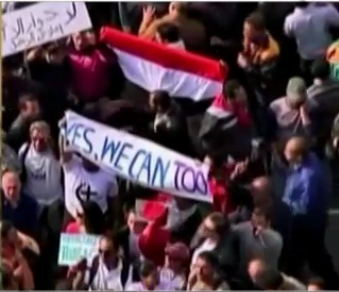

leave a comment